
Pikliz: The Haitian Condiment That Wakes Up the Whole Plate
By: Yvonne Mag-usara
A plate can be generous and well seasoned yet still need something sharp. In Haitian cooking, a spoonful of pikliz often supplies that final contrast: crisp vegetables, bright acidity, and enough pepper to catch your attention.
Pikliz is especially familiar alongside fried food, but its importance goes beyond heat. This guide explains what it contributes to a meal, how to make a refrigerator batch, and the Haitian Creole words you can learn while preparing it.
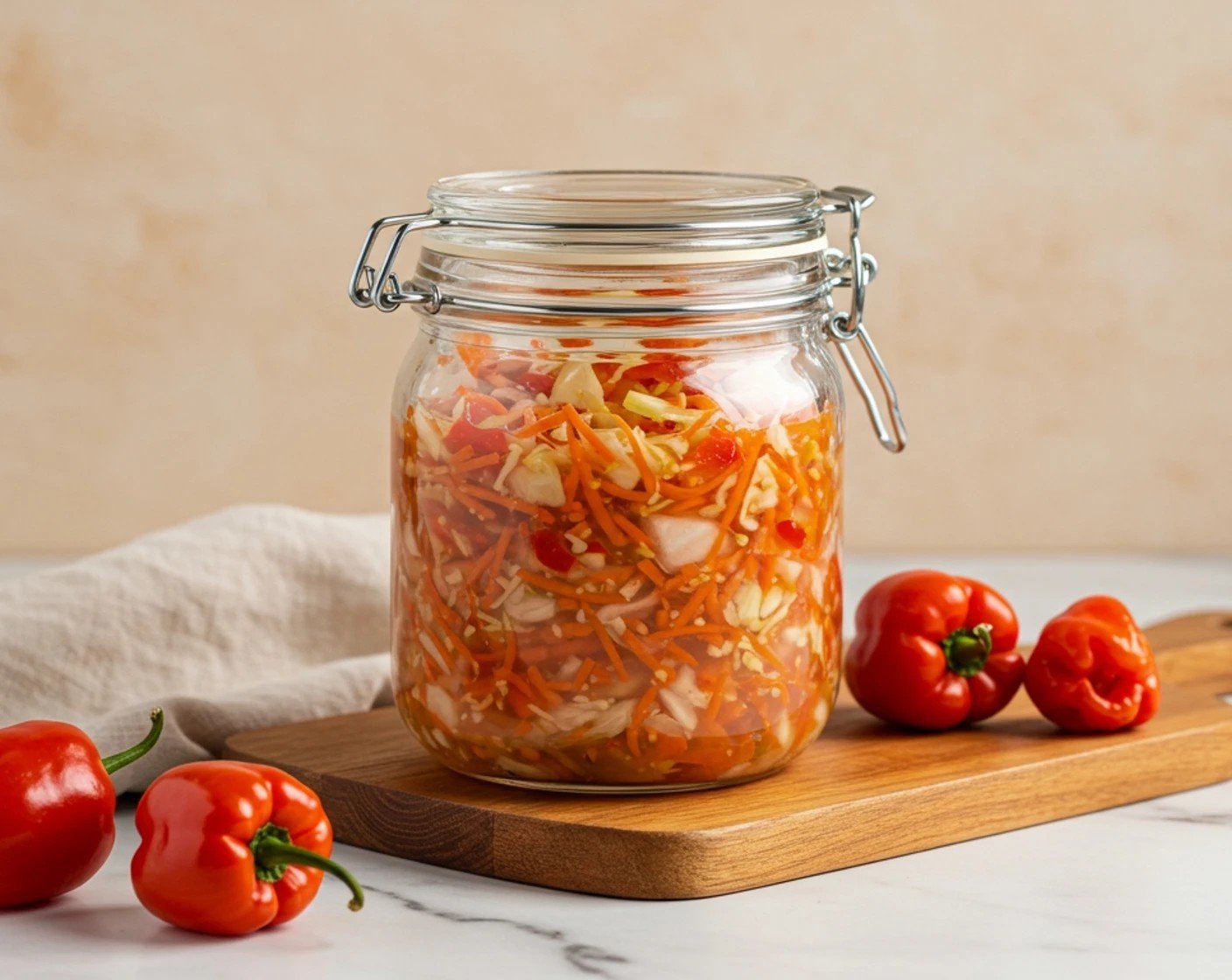
Credit: SideChef
Cabbage, carrots, and peppers come together in pikliz, the sharp, spicy Haitian condiment that brings balance to rich meals.
What Is Pikliz?
Pikliz is a Haitian condiment made with finely shredded vegetables and hot peppers in an acidic liquid, commonly white vinegar. Cabbage and carrots form a familiar base; onion, bell pepper, citrus, cloves, and other seasonings vary by cook.
It is often described as spicy slaw, although its role is closer to a pickle or relish. A small portion brings crunch and sharpness to a larger meal.
What Does Pikliz Taste Like?
The first impression is usually sour and peppery, followed by the cabbage’s crunch and the carrot’s mild sweetness. Scotch bonnet peppers contribute a fruity aroma as well as heat.
The vinegar-based recipe below is a refrigerator pickle. It does not require a separate
Why Pikliz Matters at the Haitian Table
Pikliz has a particularly close relationship with fritay, the Haitian category of fried foods. Plantains, fritters, and fried meats offer richness; pikliz adds the acidity and crisp texture that change the next bite.
Visit Haiti describes both its importance to fritay and the differences between individual vendors’ preparations. One cook’s version may be hotter, more finely shredded, or differently seasoned than another’s.
Its exact historical origin is not firmly established. A review in the Journal of Ethnic Foods acknowledges that uncertainty while documenting its cultural significance in Haiti and the diaspora.
For someone reconnecting with family cooking, those household differences offer a useful starting point. Ask which peppers a relative uses, how thinly they cut the cabbage, or what they always serve alongside it. The answers can teach you more than one supposedly universal recipe.
The Ingredients That Build Its Flavor
Each ingredient has a job:
Green cabbage → Provides the main crunch and carries the pickling liquid.
Carrot → Adds color and gentle sweetness.
Scotch bonnet pepper → Supplies heat and fruity pepper flavor. Habanero is a practical alternative.
White vinegar → Gives the condiment its sharp acidic character.
Onion and bell pepper → Add aroma, sweetness, and texture.
Salt and black pepper → Season the mixture.
Some versions include garlic, cloves, citrus juice, or thyme. These differences reflect the range of published Haitian preparations rather than one mandatory formula.
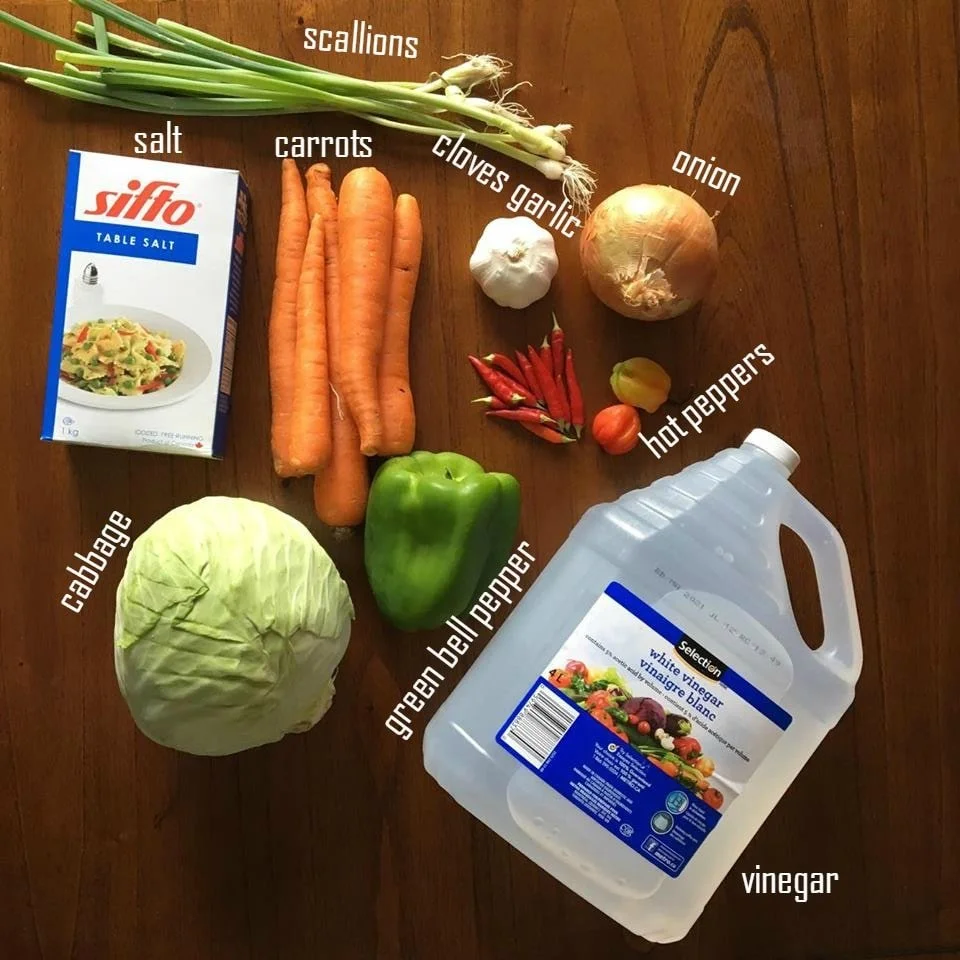
Credit: Marielle Altenor / Lady Marielle
Cabbage, carrots, peppers, onion, scallions, garlic, salt, and vinegar form the foundation of Lady Marielle’s homemade pikliz.
How to Make Pikliz
This home-style version combines a familiar cabbage-and-carrot base with onion, bell pepper, and a straightforward vinegar dressing. Published recipes vary in pepper quantity and seasoning.
Preparation: About 20 minutes
Resting: At least 24 hours in the refrigerator; 48 hours gives the flavors more time to develop
Cooking: None
Ingredients
3 cups finely shredded green cabbage
1 large carrot, peeled and coarsely grated
½ medium onion, very thinly sliced
½ bell pepper, thinly sliced
2 Scotch bonnet or habanero peppers, finely sliced
2 cups distilled white vinegar labeled 5% acidity, plus more if needed
1 teaspoon fine salt
¼ teaspoon ground black pepper
Method
Prepare the jar. Wash and sterilize a suitable glass jar according to the manufacturer’s instructions. Clean the work surface and wash the vegetables.
Cut everything finely. Shred the cabbage, grate the carrot, and thinly slice the onion and bell pepper.
Handle the hot peppers carefully. Wear gloves, remove the stems, and slice the peppers. Avoid touching your eyes or face.
Combine the vegetables. Toss everything in a large bowl with the salt and black pepper.
Pack and cover. Transfer to the jar, pressing gently. Pour in the vinegar until the vegetables are submerged. Use another jar if necessary.
Refrigerate. Cover, date the jar, and refrigerate immediately. Let the flavors develop for 24–48 hours before serving. Use a clean utensil each time.
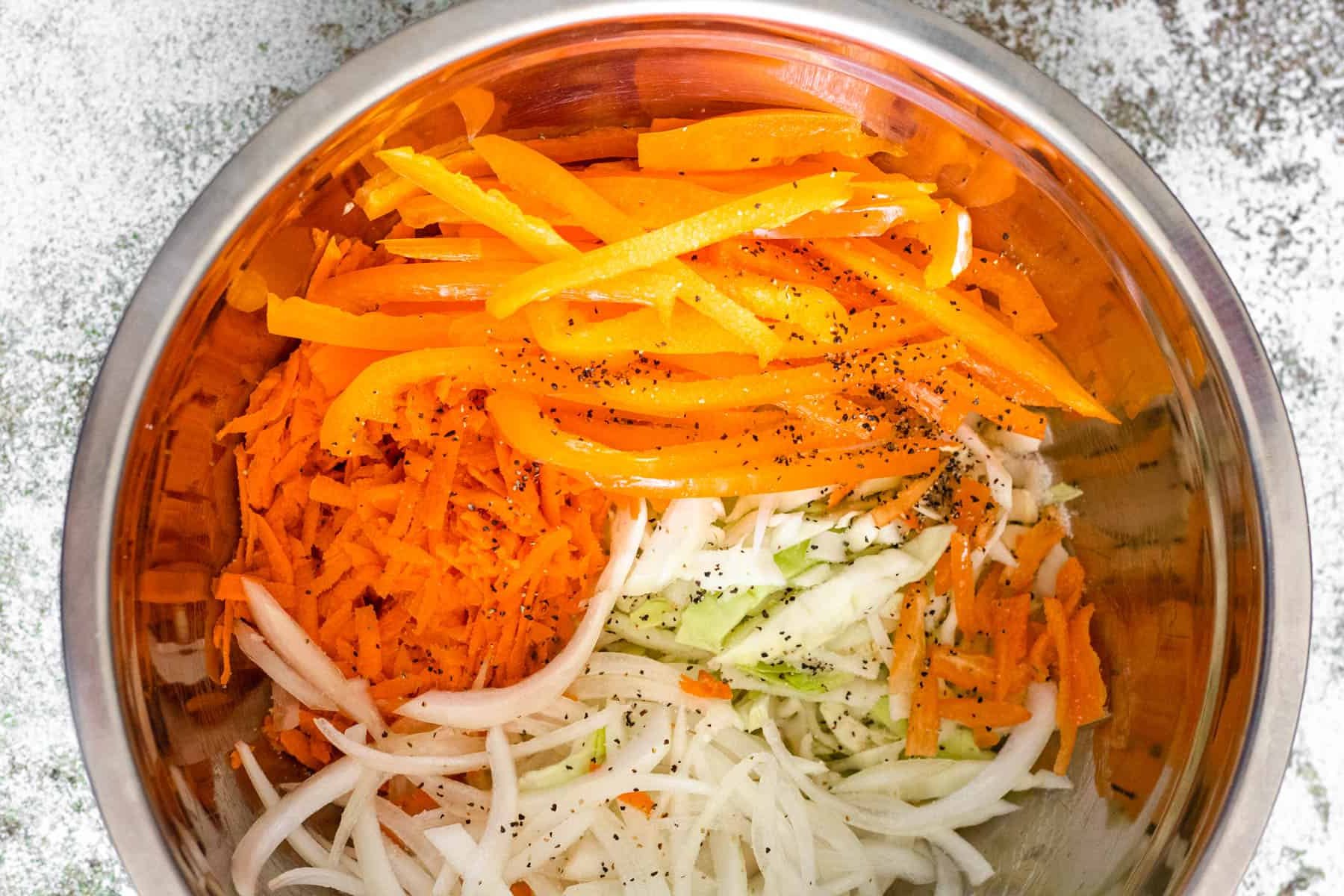
Credit: The Foreign Fork / Alexandria Drzazgowski
Thinly cut vegetables are combined with seasonings before being packed into jars and covered with vinegar.
Keeping Your Pikliz Fresh
Keep this batch refrigerated and plan to use it within two weeks. Refrigerator pickles require cold storage; vinegar and a closed lid do not make a homemade jar suitable for the pantry. University of Maine guidance also recommends a two-week storage period for its refrigerator pickles.
Keep vegetables under the liquid, and do not top up an old batch with fresh vegetables. Start each new batch with fresh pickling liquid.
What to Serve With Pikliz
Start with a small spoonful beside the main food so you can judge the heat.
Familiar pairings include:
Griyo, also written griot → Seasoned fried pork.
Bannann peze → Flattened, twice-fried green plantains.
Akra → Malanga fritters.
Fried fish or chicken → Crisp foods that welcome an acidic accompaniment.
Rice and beans → A hearty base for the condiment’s sharpness.
Pikliz can also sit beside diri ak djon djon, Haitian mushroom rice. Add it a little at a time so the rice’s earthy flavor remains recognizable.
Try one bite of plantain or pork by itself, then another with a few strands of pikliz. That comparison makes the condiment’s purpose clear.
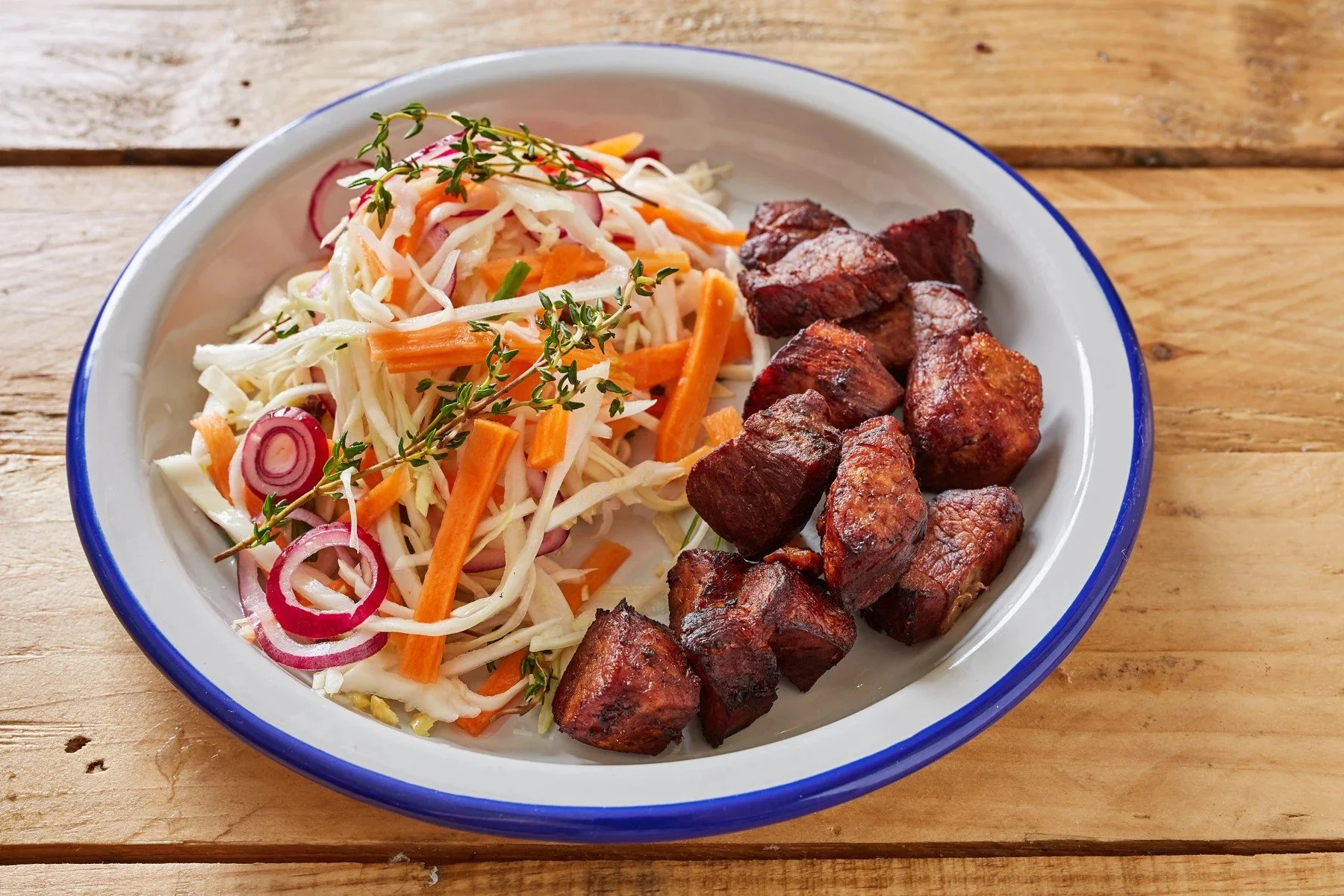
Credit: Great British Chefs
Crisp fried pork meets sharp, crunchy pikliz, with the pickled vegetables balancing the richness of the meat.
Learning Haitian Creole Through the Recipe
A kitchen gives new vocabulary something concrete to attach to. You can connect a word with the ingredient in your hand or the flavor you have just tasted.
Start with:
Chou → Cabbage
Piman → Hot pepper
Vinèg → Vinegar
Manje → Food; also “to eat”
Pike → Spicy or stinging, depending on context.
One useful sentence is:
Manje a pike. → The food is spicy.
Notice that this describes pepper heat. Cho, meaning hot, can describe temperature. A cold spoonful of pikliz can still be pike.
For heritage learners, preparing the recipe with a relative creates an easy opening for conversation: name the ingredients, compare your preferred heat level, and ask how they learned to make it.
Continue that connection through NKENNE’s exploration of Haitian Creole identity and history.
FAQs
Is pikliz the same as coleslaw?
Both can contain shredded cabbage and carrot. Pikliz is usually a hot, acidic condiment rather than a creamy dressed salad, although recipes vary.
Do you cook pikliz?
The vegetables in this recipe remain raw. They are sliced, seasoned, covered with vinegar, and refrigerated.
How long should pikliz sit before eating?
For this version, allow at least 24 hours in the refrigerator. Waiting 48 hours gives the vegetables and pepper more time to flavor the liquid.
Can I make pikliz less spicy?
Yes. Start with one hot pepper instead of two and remove the inner membranes for less heat. Wear gloves when preparing it. The result will be milder, though pepper remains important to its character.
Does homemade pikliz need refrigeration?
This recipe does. Refrigerate immediately, use clean utensils, and plan to finish the batch within two weeks. It is not a tested canning recipe.
Conclusion
Pikliz shows how a small part of a meal can shape the whole experience.
The cabbage stays crisp, the vinegar brings sharpness, and the pepper changes how the next bite tastes. A spoonful gives fried pork or plantain a different balance.
Making it also leaves room for family knowledge. Someone may prefer more carrot, insist on a particular pepper, or remember exactly whose pikliz was hottest. Those details are worth asking about and passing on.
A jar can hold a useful condiment. Preparing it together can preserve the conversations around it.
Learn Haitian Creole Through Food and Culture With NKENNE
With NKENNE, you can learn Haitian Creole while exploring the foods, family conversations, and everyday expressions that give the language meaning.
Start with the ingredients you can name, then keep learning until you can join the conversation around the table.
