
The Birth of a People: How the Haitian Revolution Forged Haitian Creole Identity
By: Yvonne Mag-usara
Most revolutions end with a new flag. Haiti’s revolution did something bigger: it helped create a new people. Before Haiti was Haiti, it was Saint-Domingue, a French colony where enslaved Africans from different regions were forced into one of the most brutal plantation economies in the Atlantic world.
Out of that pressure came Kreyòl, a language shaped by African memory, French colonial contact, and the everyday need to communicate across difference. Haitian Creole identity is the result of revolution, survival, cultural creativity, and the decision to become a people after a system tried to make people disappear.
In this blog, you’ll learn how the Haitian Revolution shaped Haitian Creole identity, how Kreyòl developed, and why the language still matters for Haiti and the diaspora today.
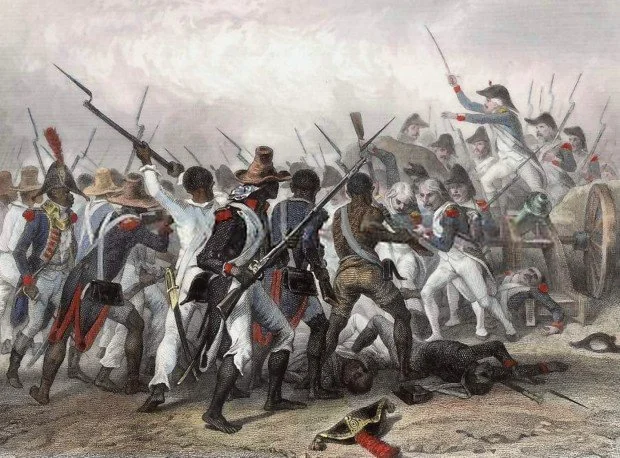
Credit: Wikimedia Commons
The Battle of Vertières became one of the defining moments of Haitian independence.
What Was Saint-Domingue Before Haiti?
Before Haiti became Haiti, it was the French colony of Saint-Domingue.
By the 1760s, Saint-Domingue had become the most profitable colony in the Americas, driven by sugar and coffee production and the forced labor of enslaved Africans. Its wealth was built on a brutal plantation system where Africans made up the overwhelming majority of the population.
This is the world where Haitian Creole identity began to take shape. Not in calm cultural exchange, but inside a society designed to divide people by race, legal status, birthplace, skin color, class, and access to power.
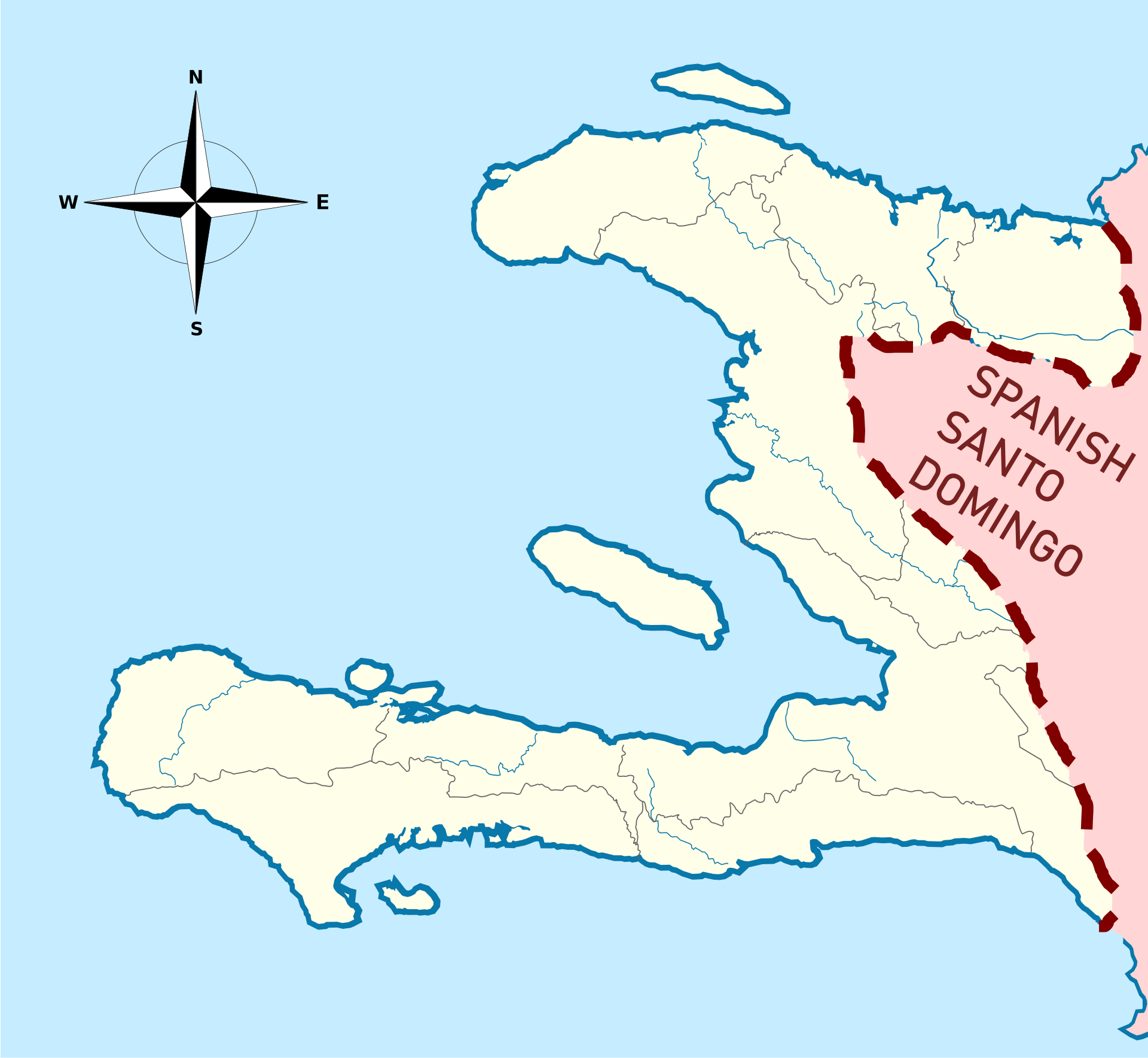
Credit: Wikimedia Commons
Saint-Domingue occupied the western part of Hispaniola before becoming independent Haiti.
Saint-Domingue brought together enslaved Africans from different regions, French colonists, free people of color, and people born in the colony. They did not all share the same language, social position, or cultural background.
Daily life still required communication. People had to work, trade, worship, raise families, pass warnings, and eventually organize. Under those conditions, language became more than useful. It became survival.
How the Haitian Revolution Changed World History
The Haitian Revolution was one of the most important revolutions in the modern world.
From 1791 to 1804, enslaved people, free people of color, colonists, and European armies were involved in a long and complicated struggle. France, Britain, and Spain all became part of the conflict at different points.
The result was extraordinary. Haiti became an independent nation founded by people who had been enslaved or descended from enslaved people. That challenged the entire logic of the Atlantic slave system.
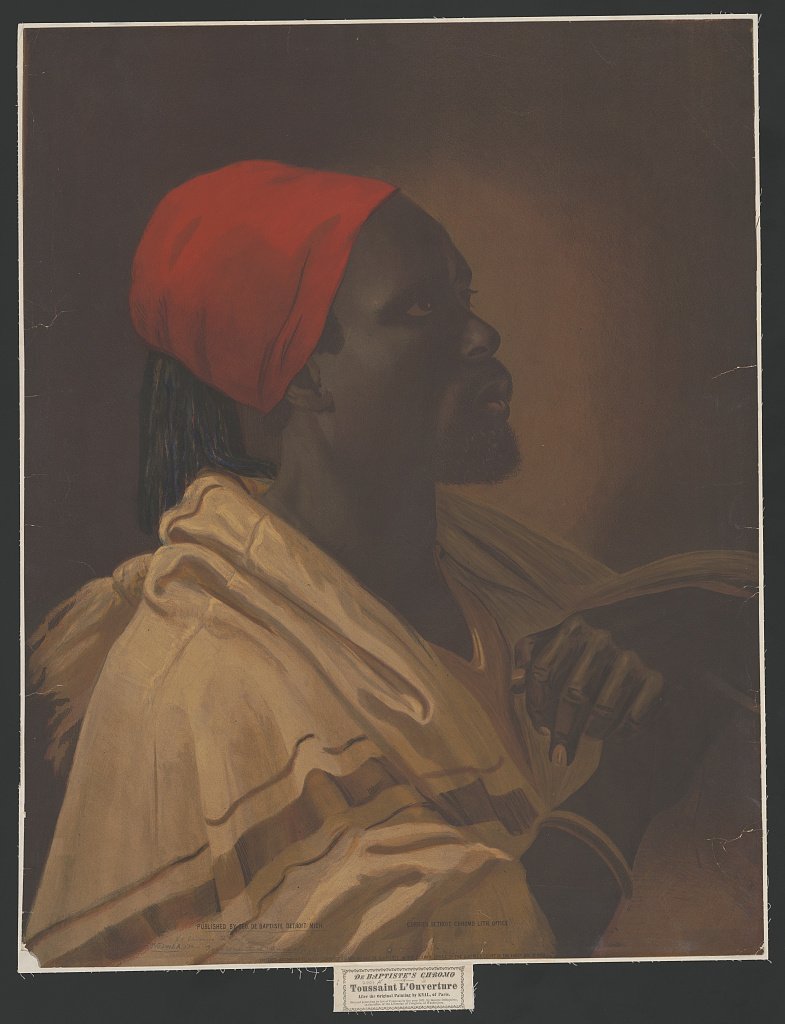
Credit: Library of Congress
Toussaint Louverture was one of the most important leaders of the Haitian Revolution.
For slaveholding societies across the Americas, Haiti’s independence was frightening. It proved that enslaved people could organize, fight, govern, and define freedom on their own terms.
That is why Haitian identity carries such historical weight. It was forged in resistance, then tested through the harder work of building a country after slavery.
How the Haitian Creole Language Developed
The Haitian Creole language, or Kreyòl ayisyen, developed in colonial Haiti through contact between French colonists and enslaved Africans. Britannica describes Haitian Creole as a French-based language that developed in the late 17th and early 18th centuries, mainly on Haiti’s sugarcane plantations.
A common mistake is calling Haitian Creole “broken French.” That misses the point.
Kreyòl has its own grammar, pronunciation, rhythm, structure, and expressions. It carries French influence, but it developed as a full language shaped by African linguistic patterns, colonial contact, and daily use.
Kreyòl grew because people needed to communicate in real situations: working together, exchanging goods, warning one another, comforting children, worshipping, telling stories, and passing information.
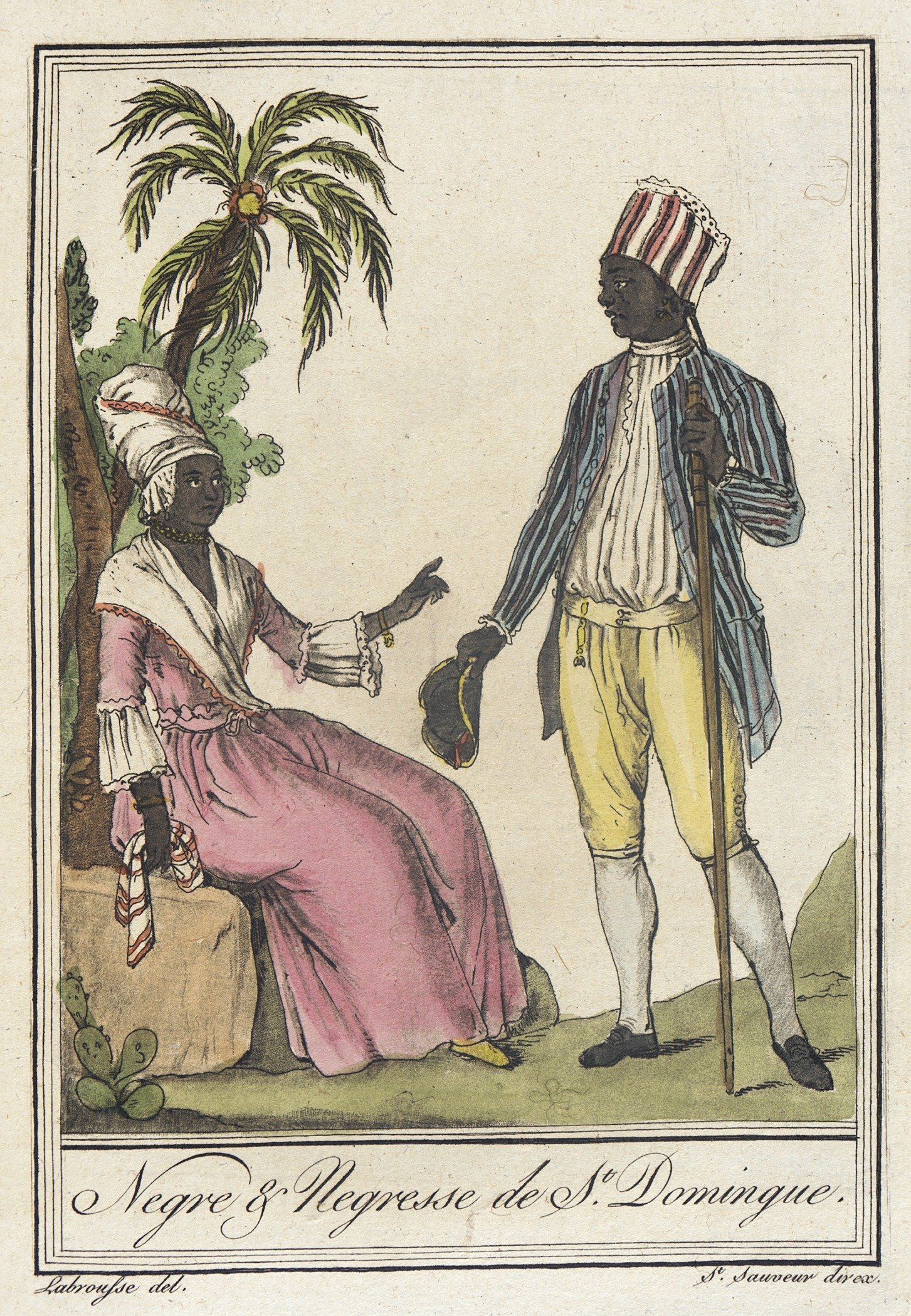
Credit: Jacques Grasset de Saint-Sauveur / LACMA, Public Domain
This 18th-century illustration from Saint-Domingue reflects the colonial world where Kreyòl developed through contact, labor, trade, and daily community life.
That is what gives the Haitian Creole language its cultural power. It did not begin as a prestige language reserved for elites. It grew from the everyday life of the people.
Why Kreyòl Became Central to Haitian Creole Identity
Haitian Creole identity is difficult to understand without Kreyòl.
During and after the Haitian Revolution, language helped connect people across African origins and colonial social divisions. It did not remove class tension, color politics, or power struggles. Haiti’s history is more complex than that. But Kreyòl gave ordinary people a shared voice.
French remained tied to colonial administration, formal education, and elite power. Kreyòl belonged to home, markets, oral tradition, religious life, humor, and everyday survival.
For many Haitians, Kreyòl is the language of closeness. It carries family conversations, elder advice, jokes that lose their taste in translation, and parental warnings that somehow sound more serious than the same words in English.
Even a word like lakay can mean more than “home.” It can carry belonging, return, rootedness, and memory. That is where language becomes culture.
How Haitian Independence Redefined Black Identity
Haitian independence forced the world to confront a new reality: Black people who had been enslaved had created a sovereign nation.
The colonial world had used Blackness to justify slavery, labor exploitation, and social exclusion. Independent Haiti changed that meaning within its own national project. Blackness became connected to citizenship, freedom, sovereignty, and survival.
The 1805 Constitution of Haiti rejected colonial racial categories and identified Haitians under a shared Black identity. This was a direct challenge to the old hierarchy that ranked people by whiteness, skin tone, ancestry, and social status.
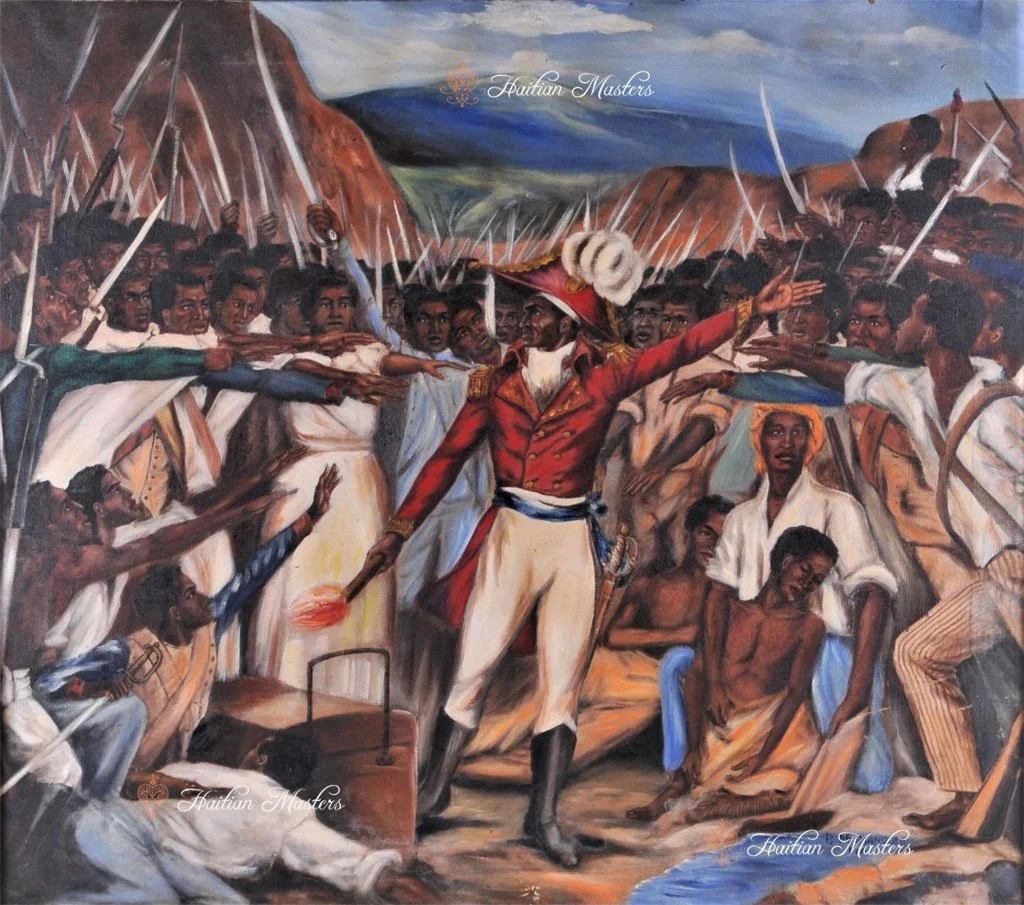
Credit: Art: Jean Jacques Dessalines “La Crête-à-Pierrot” by P. Desmangles
Jean-Jacques Dessalines became one of the defining figures of Haitian independence and Black sovereignty.
This helps explain why Haitian Creole identity is not only about language. It is also about how people redefined themselves after slavery.
Haitians did not simply inherit a nation. They built one from rupture, struggle, and cultural creativity.
Haitian Culture After the Revolution
After independence, Haiti had to build a society from the remains of a plantation colony.
African spiritual traditions, Catholic influence, French colonial history, Indigenous memory, Caribbean geography, and Kreyòl expression all shaped Haitian life. The result was not a copy of Africa or France. It was something distinct.
It was Haitian.
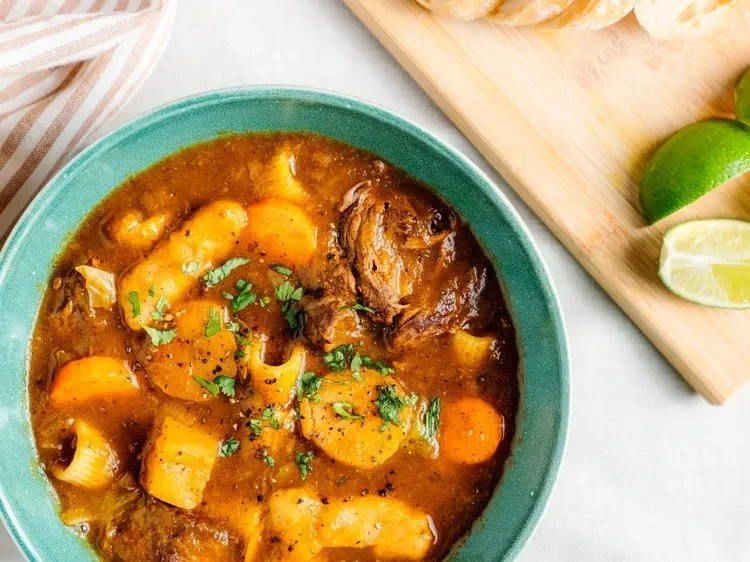
Credit: Ashia Aubourg, Allrecipes
Soup joumou is closely associated with Haitian Independence Day and national memory.
Food is one clear example. Many Haitian families eat soup joumou on January 1, Haiti’s Independence Day, as a symbol of freedom and national pride.
Music carries memory too. Haitian rhythms, religious songs, kompa, rara, and other forms of expression preserve history in sound. Kreyòl ties these practices together, giving Haitian culture its everyday voice.
Why Haitian Creole Still Matters Today
Haitian Creole is not only a historical language. It is a living language spoken by Haitians in Haiti and across the diaspora.
The 1987 Haitian Constitution recognizes Creole and French as official languages, and it states that all Haitians are united by one common language: Creole.
That line recognizes what Haitian people already knew. Kreyòl is the language that connects the nation.
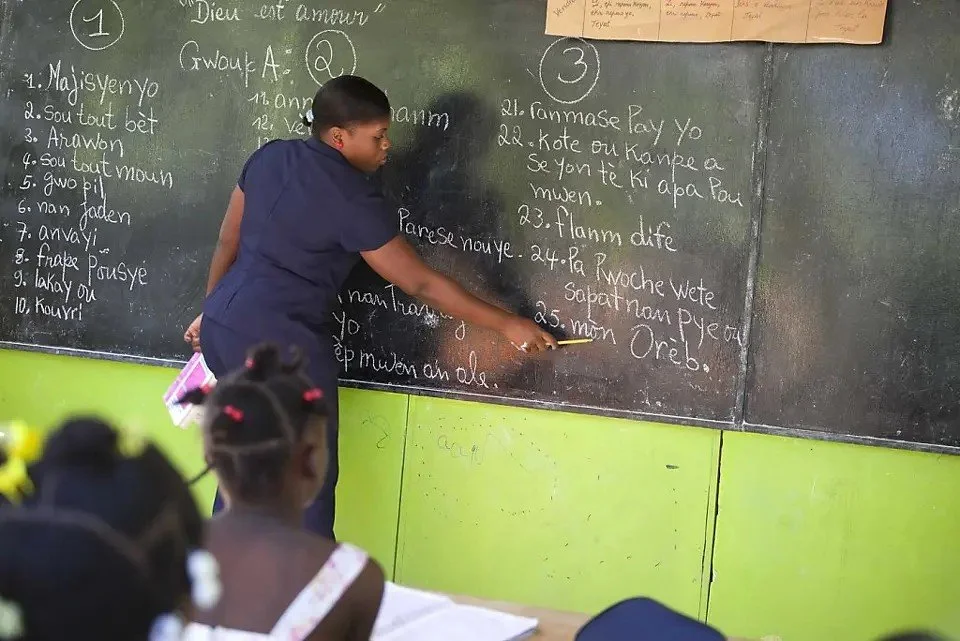
Credit: Dieu Nalio Chery / The Associated Press, SFGATE
Haitian students take notes during a Creole class at the Louverture Cleary School in Santo, Haiti. The image highlights why Kreyòl matters in education, access, and everyday national life.
What the Haitian Diaspora Can Learn From This History
For many people in the Haitian diaspora, Kreyòl feels close and distant at the same time.
Some understand it but do not speak it confidently. Some know greetings, food words, church phrases, or the exact tone an elder uses when correction is coming. Migration often creates these language gaps.
That does not mean the connection is gone. It means it needs care.
Start with the practical parts of the language:
Greetings and respect phrases
Family titles
Food vocabulary
Everyday questions
Numbers and time
Proverbs and common sayings
Phrases used with elders
Words connected to home, faith, and celebration
Learning Kreyòl as a diaspora Haitian is not about proving you are “Haitian enough.” It is better to begin with curiosity and consistency.
Even one phrase can become a bridge. A greeting can change how you speak to an elder. A proverb can help you understand how your family thinks.
One phrase can bring you closer than you expect.
FAQs
What is Haitian Creole identity?
Haitian Creole identity is shaped by Haiti’s history, African heritage, revolution, language, spirituality, food, music, and national memory. Kreyòl is central because it connects Haitians across Haiti and the diaspora.
How did the Haitian Revolution shape Haitian identity?
The Haitian Revolution transformed Saint-Domingue from a French slave colony into independent Haiti. It shaped Haitian identity around freedom, resistance, Black sovereignty, and cultural survival.
Is Haitian Creole the same as French?
No. Haitian Creole has French influence, but it has its own grammar, pronunciation, structure, and expressions. It is a full language, not broken French.
Why is Kreyòl important in Haiti?
Kreyòl is Haiti’s common language and the language most closely tied to everyday life, from homes and markets to music, religion, politics, humor, and storytelling.
Why do some Haitians speak both French and Kreyòl?
French has historically been used in education, government, and elite spaces. Kreyòl has been the everyday language of the majority. Today, both are official languages of Haiti.
How can I start learning Haitian Creole?
Start with practical phrases: greetings, family words, food vocabulary, common questions, and expressions used in real conversation. Music, family dialogue, and guided lessons can help build confidence.
Conclusion
The Haitian Revolution did more than create a new country. It helped create a people with a shared memory, a shared struggle, and a shared language.
Haitian Creole identity grew from survival, resistance, and cultural invention. Kreyòl became one of its strongest foundations because it carried the everyday life of the people who built Haiti: their humor, prayers, warnings, songs, markets, family stories, and ideas of home.
Understanding this history helps us see Haiti more clearly. Not only as a place marked by struggle, but as a nation that transformed language and culture into tools of survival and self-definition.
For the Haitian diaspora, learning Kreyòl is one way to reconnect with that inheritance. It is not about perfection. It is about access, respect, and return.
