
Diri ak Djon Djon: How Black Mushroom Rice Became a Haitian Celebration Dish
By: Yvonne Mag-usara
You can spot diri ak djon djon before you taste it.
Its deep charcoal colour comes not from black rice, but from the broth of dried djon djon mushrooms, which gives each grain an earthy, savoury depth unmistakably tied to Haitian cooking.
That striking colour is also part of why the dish feels special. At weddings, First Communions, parties, and family gatherings, a pot of diri ak djon djon signals that this is more than an everyday meal. For many Haitians, it carries the taste of celebration, abundance, and home.
In this guide, you’ll learn what makes diri ak djon djon special, how to cook it at home, and the best ways to serve it.
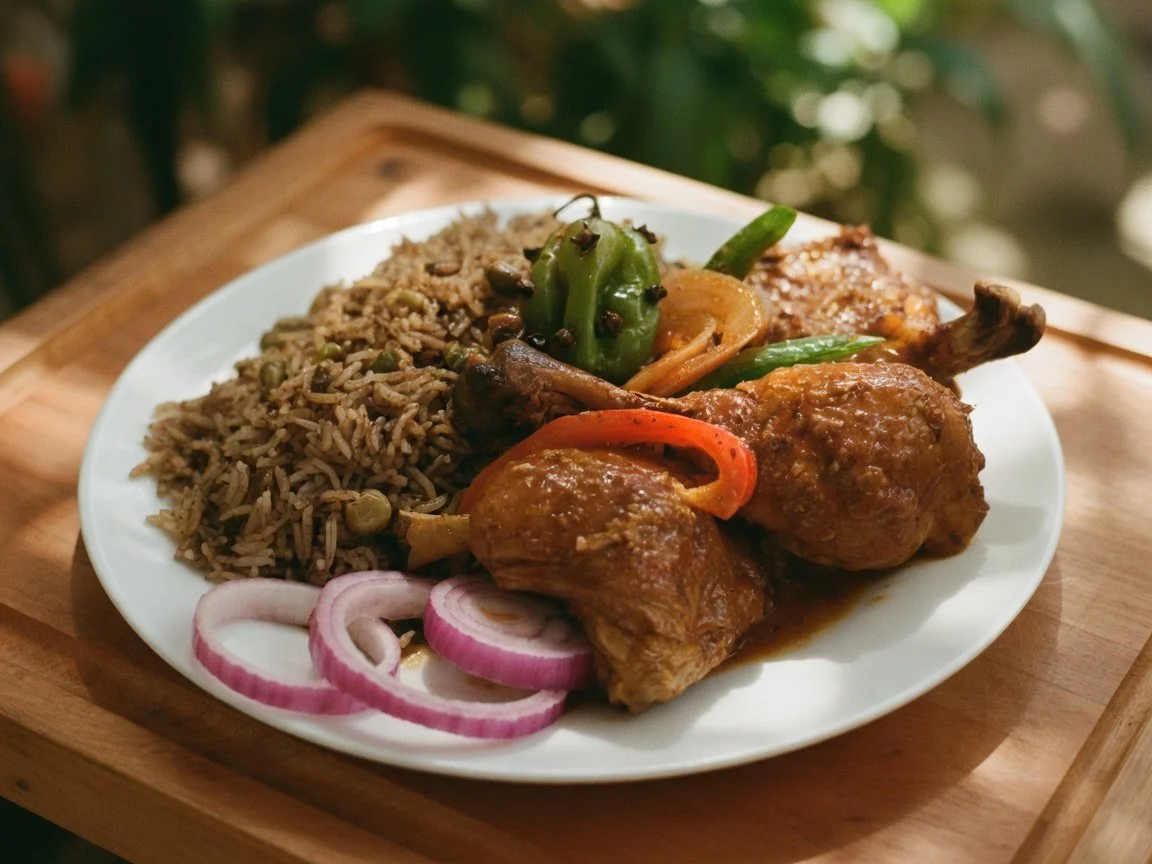
Diri ak djon djon turns simple rice into something unmistakably Haitian, with deep colour, earthy flavour, and a place at tables worth gathering around.
What Makes Diri ak Djon Djon Different?
The name tells you what is on the plate: diri ak djon djon, rice prepared with djon djon. The dish is also commonly shortened to diri djon djon. Haitian Creole teaching materials have long used diri ak djondjon as an everyday food expression.
What looks like black rice begins with regular long-grain rice. The difference comes from cooking it in dark mushroom broth with aromatics such as onion, garlic, thyme, cloves, and Scotch bonnet pepper. Beans or peas are also common additions.
That is why “black mushroom rice” is more precise than simply “black rice.” Haitian chefs have argued that leaving djon djon out of the name hides the ingredient that gives the dish its identity.
The Mushroom Behind the Colour
Djon djon are small dark mushrooms gathered in Haiti and traditionally dried before cooking. Ethnobotanical research documents their collection in the wild and their use as a seasoning in Haitian food.
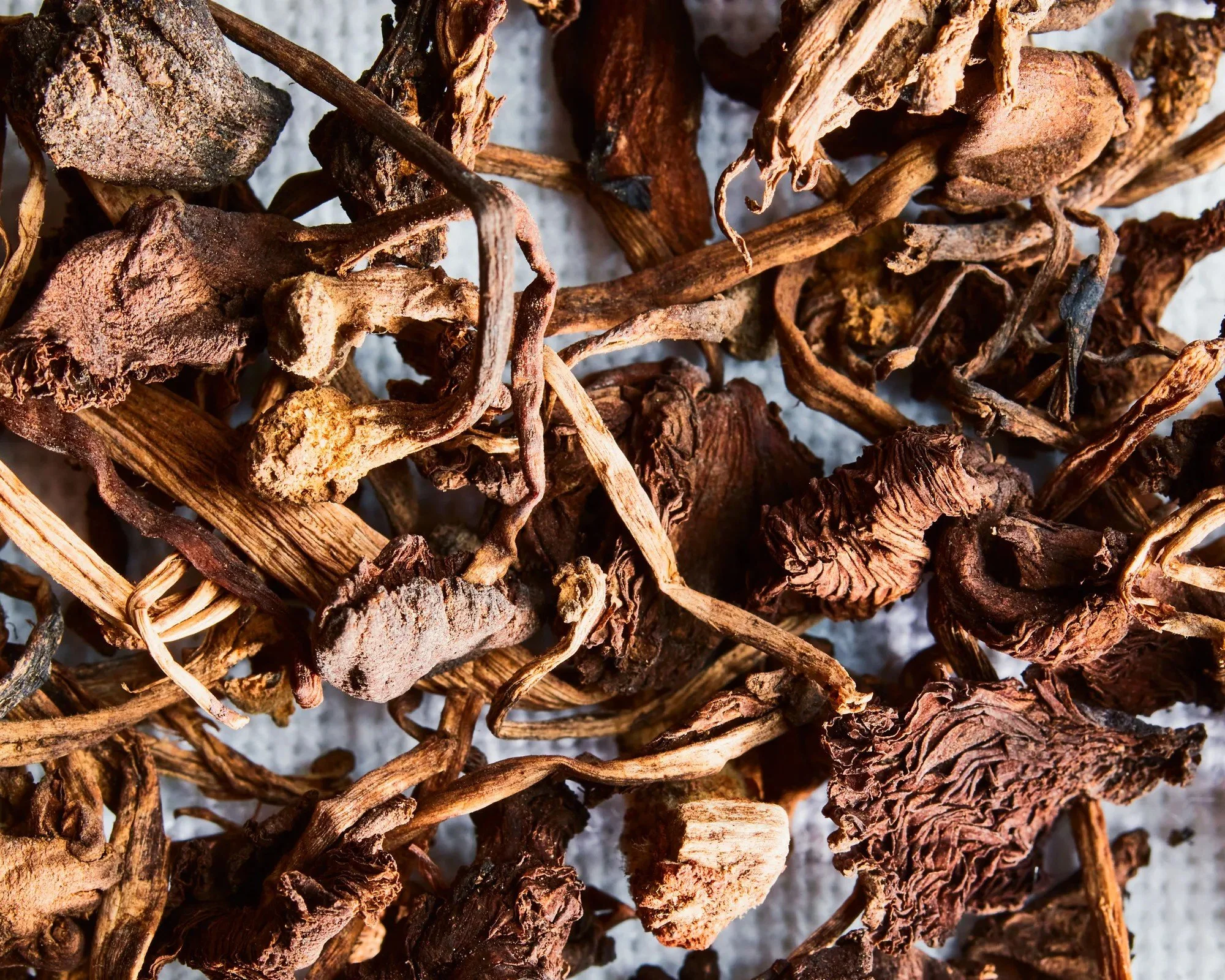
Credit: Epicurious / Travis Rainey, Food Styling by Rebecca Jurkevich
Dried djon djon mushrooms release the dark, savoury broth that gives the rice its distinctive colour and flavour.
The mushrooms themselves are not usually what ends up in the finished rice. They are soaked or boiled in water, releasing a dark, intensely flavoured liquid. The mushrooms are then strained out, and that broth becomes the cooking liquid for the rice.
Djon djon is often associated with northern Haiti, although Haitians also report finding it elsewhere in the country. Saveur specifically documents the mushrooms around the mountainous Artibonite Valley, while Haitian cooks interviewed by Epicurious describe regional variation in where they grow.
How Djon Djon Became Celebration Food
Part of the dish's status comes from scarcity.
Authentic dried djon djon can be difficult and expensive to obtain, particularly outside Haiti. Diaspora families may receive it from relatives travelling from Haiti or search for it in Haitian markets.
That makes serving the real ingredient feel intentional. Haitian cooks interviewed by Epicurious describe djon djon as a food for parties, special meals, Sunday dinners, weddings, and First Communions. One describes its presence on the table as a sign of festivity.
That celebration happens within a wider culture where meals help hold families together. NKENNE’s article on Haitian family life explores how shared cooking and eating remain important parts of multigenerational and community relationships.
Djon Djon Ingredients
A straightforward pot of diri ak djon djon does not require a long ingredient list.
For about one family-sized pot:
2 cups dried djon djon mushrooms
4 cups water
2 cups long-grain rice
2 tbsp olive or neutral oil
1 small onion, chopped
3 garlic cloves, minced
1 can lima beans or green peas
1 tsp ground cloves
1 to 2 sprigs thyme
1 whole Scotch bonnet pepper
2 tsp salt
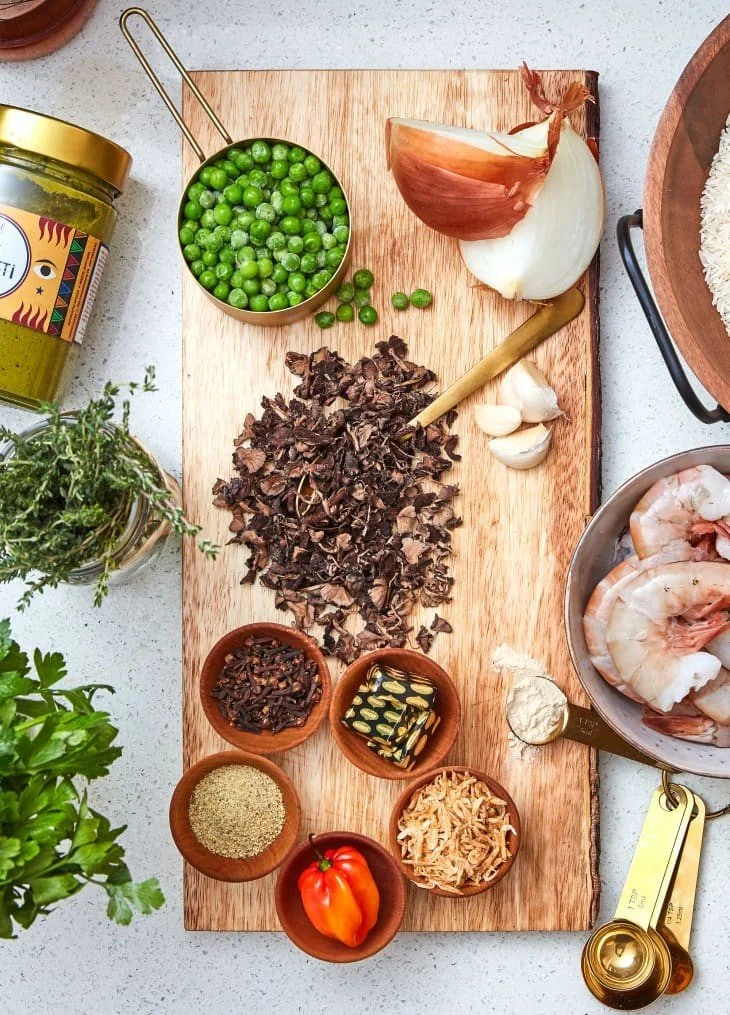
Credit: The Kitchn / Paul Crispin Quitoriano
The ingredients behind diri djon djon bring together dark mushroom stock, rice, epís, herbs, Scotch bonnet, peas, and aromatics for a deeply seasoned Haitian dish.
This closely follows a traditional-style preparation published by Haitian Cooking. Families vary the formula, and versions may include cashews, shrimp, lobster, or other additions.
The most important ingredient is still the mushroom broth. Without it, you can make seasoned rice, but you will not get the same earthy flavour that defines genuine diri djon djon.
How to Make Diri ak Djon Djon
1. Extract the mushroom broth
Soak the dried djon djon in about four cups of water for 10 minutes, then simmer for another 10 minutes.
Strain carefully and keep the dark liquid. The mushrooms themselves can be discarded.
2. Build the aromatic base
Heat the oil in a large pot. Add the onion and garlic and cook until fragrant.
Add the rice and stir for several minutes so the grains become coated with the seasoned oil.
3. Add the djon djon broth
Pour in the mushroom liquid, then add salt, ground cloves, and the lima beans or peas.
Bring everything to a boil and cook until most of the visible liquid has been absorbed.
4. Steam until fluffy
Lower the heat. Add the thyme and whole Scotch bonnet pepper, keeping the pepper intact if you want aroma without intense heat.
Cover and steam for about 15 minutes, then fluff gently before serving.
The finished rice should be separate and fluffy rather than wet, with a deep grey-to-black colour and an earthy aroma.
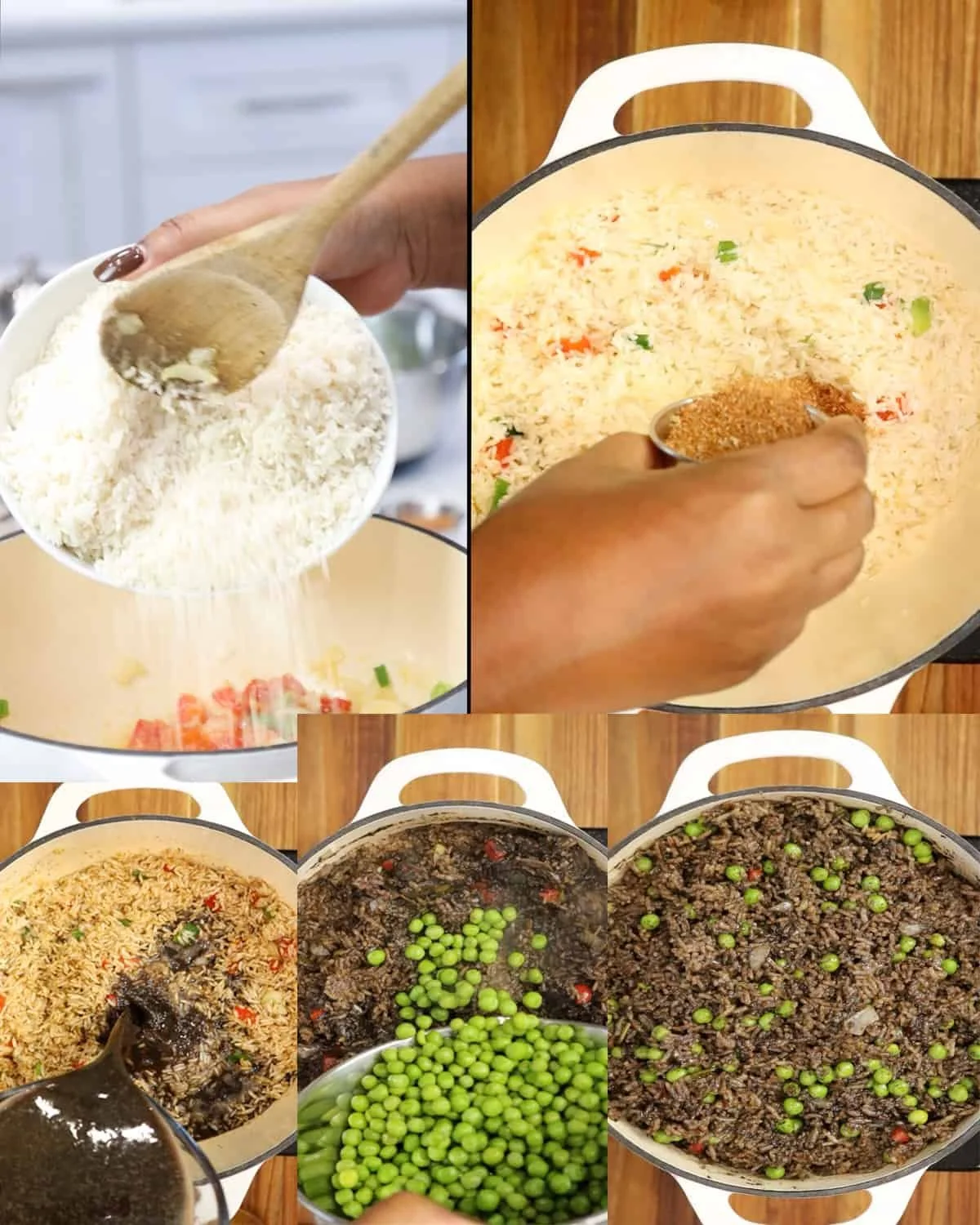
Credit: Savory Thoughts
Djon djon broth is poured into seasoned rice, carrying its deep colour and earthy flavour into every grain as the dish comes together.
What Haitians Serve With It
Diri ak djon djon works as a foundation rather than a meal that must stand alone.
Traditional recipes commonly pair it with meat or fish. Haitian cooks also serve versions alongside chicken, conch, shrimp, or lobster, while vegetarian preparations let the mushroom remain the dominant flavour.
At a larger Haitian table, it can sit comfortably beside dishes such as griot, chicken, seafood, plantains, salad, or pikliz.
There is no single mandatory combination. What matters is that the rice has enough character to hold its own next to richly seasoned mains.
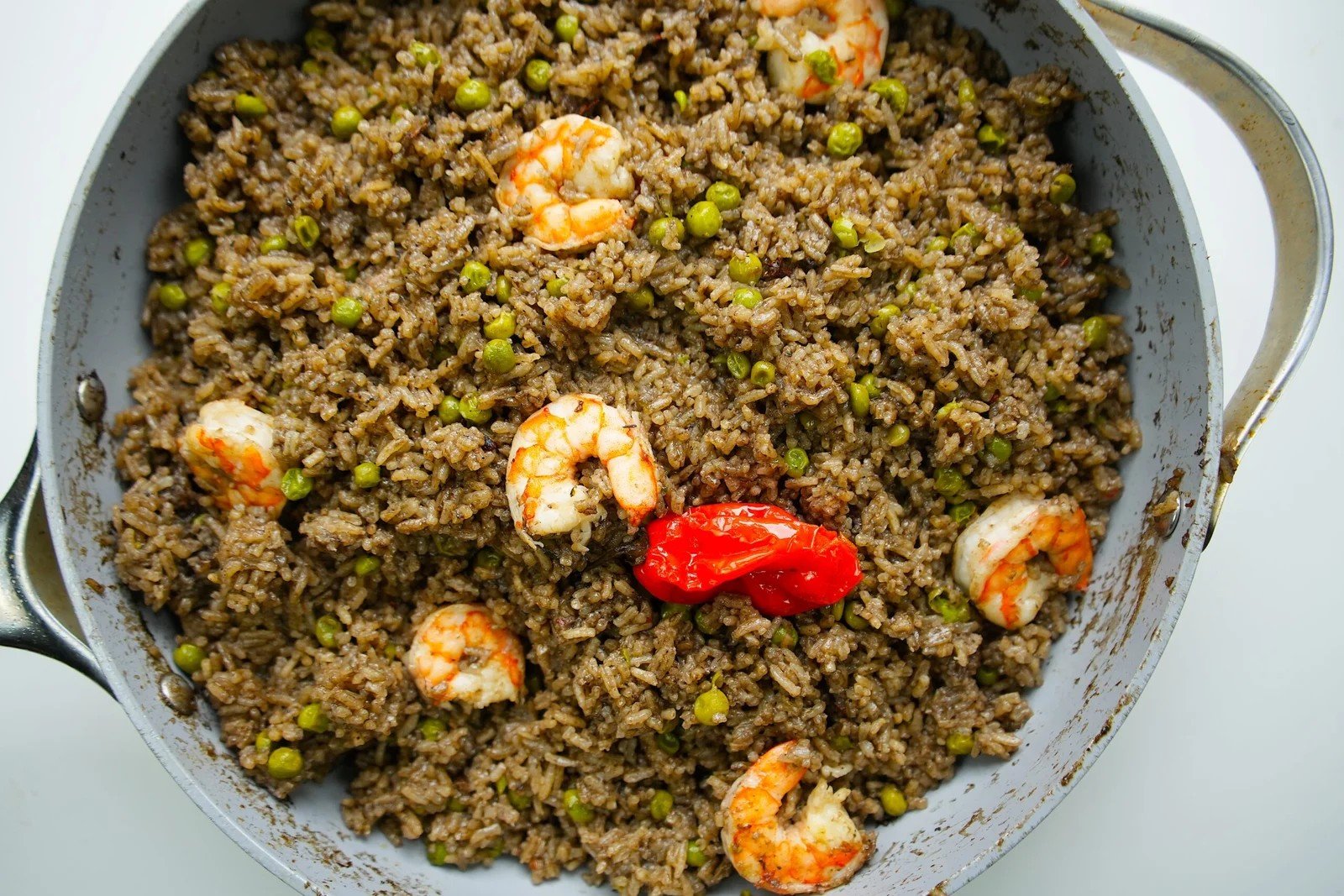
Credit: Food Sturvs / Iddy Akanni
Diri ak djon djon often shares the table with richly seasoned meats, seafood, plantains, and pikliz, turning the rice into part of a fuller Haitian spread.
A Few Kreyòl Words for the Kitchen
Kreyòl in English
diri = rice
djon djon = the mushrooms used in the dish
pwa = beans
dlo = water
manje = food / to eat
lakay = home / at home
Food is one of the easiest ways into Kreyòl because these are words you hear around real tables, markets, kitchens, and family conversations. NKENNE’s exploration of Haitian Creole identity also shows why everyday language became such an important carrier of Haitian culture.
FAQs
Is diri ak djon djon actually made with black rice?
No. Traditional versions use white rice. Its dark colour comes from the liquid extracted from djon djon mushrooms.
Do you eat the djon djon mushrooms?
Usually, the mushrooms are soaked or boiled and then strained out. Their dark, flavourful liquid is what cooks the rice, although some cooks use the mushrooms themselves too.
What does djon djon taste like?
It gives food a rich, earthy, savoury character. Haitian cooks often prize the mushrooms as much for their aroma and depth as for the striking colour they produce.
Why is diri djon djon served at celebrations?
Djon djon can be scarce and relatively expensive, giving dishes made with it a special status. It is strongly associated with parties, weddings, First Communions, Sunday meals, and other gatherings.
Can I substitute a djon djon bouillon cube?
Djon djon-flavoured bouillon cubes are widely used when the mushrooms are unavailable, especially outside Haiti. They provide convenience and colour, but Haitian cooks interviewed by Epicurious note that the taste and aroma differ from the real mushroom.
Can diri djon djon be vegetarian?
Yes. The rice itself is often prepared without meat, allowing the mushroom flavour to lead. Seafood such as shrimp or lobster may also be added in other versions.
Conclusion
Diri ak djon djon earns attention before the first bite. Its unusual dark colour immediately tells you that this is not an ordinary pot of rice.
But the dish matters because of more than appearance.
Dried mushrooms gathered in Haiti are transformed into a broth that carries their colour, aroma, and savoury depth into every grain. Their scarcity helped make the dish something people save, share, and proudly place on tables when the occasion matters.
For Haitians at home and across the diaspora, making diri ak djon djon can also be a way of keeping a familiar taste within reach.
Learn Haitian Creole Through Food and Culture
With NKENNE, the language does not have to stop at vocabulary lists.
Learn the Kreyòl behind the foods, family conversations, celebrations, and everyday moments that make the language feel alive, then continue your learning in the NKENNE app.
