
Taasu: How Wolof Spoken Word Turns Praise and Satire Into Rhythm
By: Yvonne Mag-usara
Spoken words can do more than describe a celebration. In taasu, they can praise a family, advise a bride, tease a guest, recall a reputation, or correct someone without stopping the rhythm.
Taasu is a Senegambian verbal art closely associated with women performers, griot families, Wolof-language expression, and sabar drumming. Its history is wider than one ethnic group, but it has become an important part of Wolof-speaking public culture in Senegal.
Understanding taasu reveals how language gains authority through timing, memory, humor, and the presence of a listening community.
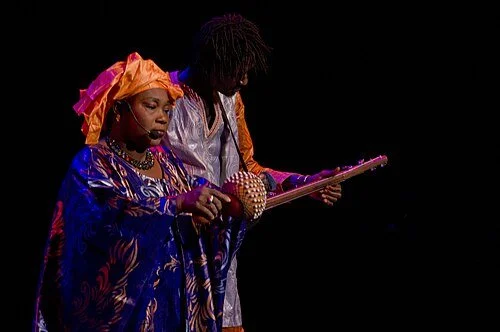
Credit: Celic Valdez / Secretaría de Cultura CDMX / Wikimedia Commons, CC BY-SA 2.0
Members of Mali’s Trio Da Kali perform in Mexico City in 2016. Their Mande jeli tradition is distinct from Wolof taasu, but both demonstrate the authority of hereditary oral artists in West African public life.
What Is Taasu?
Taasu, also written as tassou or tassu, is a form of rhythmic spoken poetry performed at ceremonies, celebrations, and public gatherings. A practitioner is called a taasukat.
Rather than singing a continuous melody, the performer delivers words with speed, control, and a strong sense of pulse. The voice works closely with drums, clapping, movement, and the reactions of the audience.
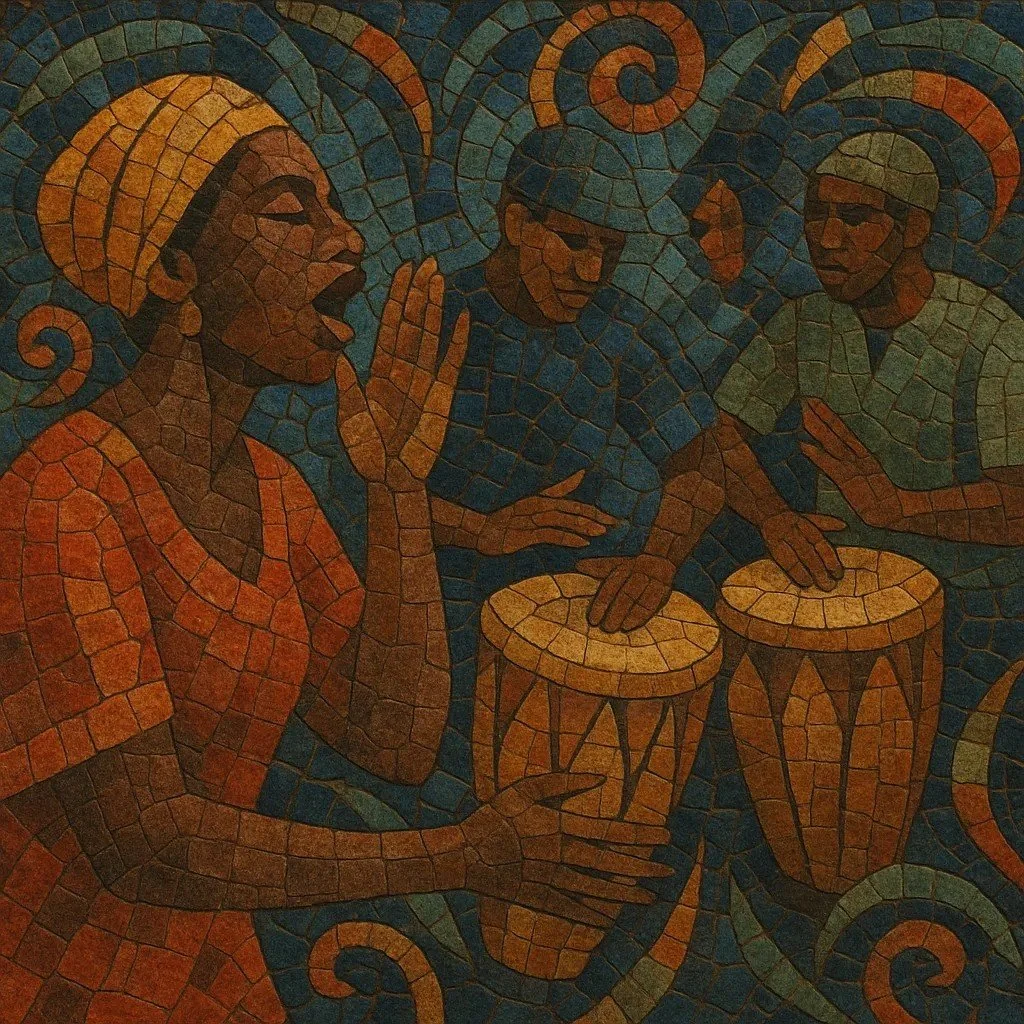
Credit: Melodigging
Taasu places the spoken voice inside the rhythm, allowing praise, genealogy, humor, and social commentary to move alongside the drums.
Taasu has circulated across the wider Senegambian region. It should not be presented as the exclusive creation of a single community. In contemporary Senegal, however, it is strongly associated with Wolof-language performance and urban cultural life.
A taasu performance may appear during:
Weddings and naming ceremonies
Family celebrations
Neighborhood gatherings
Public cultural events
Popular music performances
Occasions honoring a particular person or family
The words change with the setting. A wedding performance may address the couple, their parents, and their responsibilities. At another event, the performer may praise a host, remember an elder, or draw laughter by commenting on people in the gathering.
How Voice and Sabar Create the Rhythm
The power of taasu comes from the relationship between language and percussion. The performer must place each phrase inside a rhythmic structure without losing clarity or meaning.
The sabar is both a family of Senegalese drums and the name used for musical and dance gatherings built around them. Different drums contribute distinct sounds, while clapping and audience responses strengthen the pulse.
A skilled taasukat can accelerate, pause, repeat a name, or stretch a phrase to build anticipation. The audience listens not only for what is being said, but also for exactly when each word arrives.
Wolof sabar traditions also include bàkk, rhythmic drum phrases derived from spoken language. This connection helps explain why words and percussion can seem to answer one another. The drum does not merely accompany speech. It can carry the shape of speech itself.
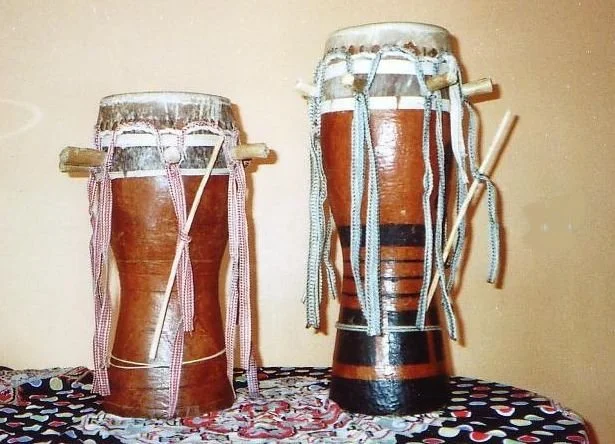
Credit: Michael Brouwer / Wikimedia Commons, CC BY-SA 3.0
Sabar drums provide the rhythmic language around which taasu, dancing, clapping, and audience responses can unfold.
Praise, Advice, and Satire in Taasu
Praise in taasu is not simply a list of compliments. It can connect a person to family history, generosity, courage, hospitality, or the reputation of earlier generations.
The performer may repeat a name until it becomes part of the rhythm. Listeners who understand the family references hear more than praise. They hear a public account of who the person is expected to be.
Taasu can also offer advice. At a wedding, a performer might address patience, respect, family responsibility, or the work required to maintain a household. The words may be entertaining, but the social lesson remains serious.
Satire gives the form another kind of authority. A taasukat can point toward pride, stinginess, poor behavior, or a broken promise through exaggeration and humor. The audience may laugh, but the person being addressed usually understands the message.
This balance requires judgment. Praise that feels empty loses its force. Satire that becomes needlessly cruel can damage relationships. A respected performer knows how far to go and how to bring the gathering back together.
Women, Géwël, and Public Voice
Women have been especially prominent in taasu, although the form is not practiced only by women. Their performances create a space where a woman can speak rapidly, publicly, and directly while commanding the attention of a large gathering.
Many well-known performers come from géwël families. The word is often translated as “griot,” but the role can include praise-singing, genealogy, oral history, music, mediation, and the preservation of family knowledge.
These abilities are usually developed through long exposure. A young performer may learn by listening to older relatives, observing ceremonies, remembering names, and studying how experienced speakers respond to changing situations.
That background matters because taasu is not only about verbal speed. The performer must understand relationships in the room. She needs to know who can be praised, what can be joked about, and which memories should be handled carefully.
To understand the historical place of géwël families more fully, read NKENNE’s guide to Wolof social structure and griot storytellers.
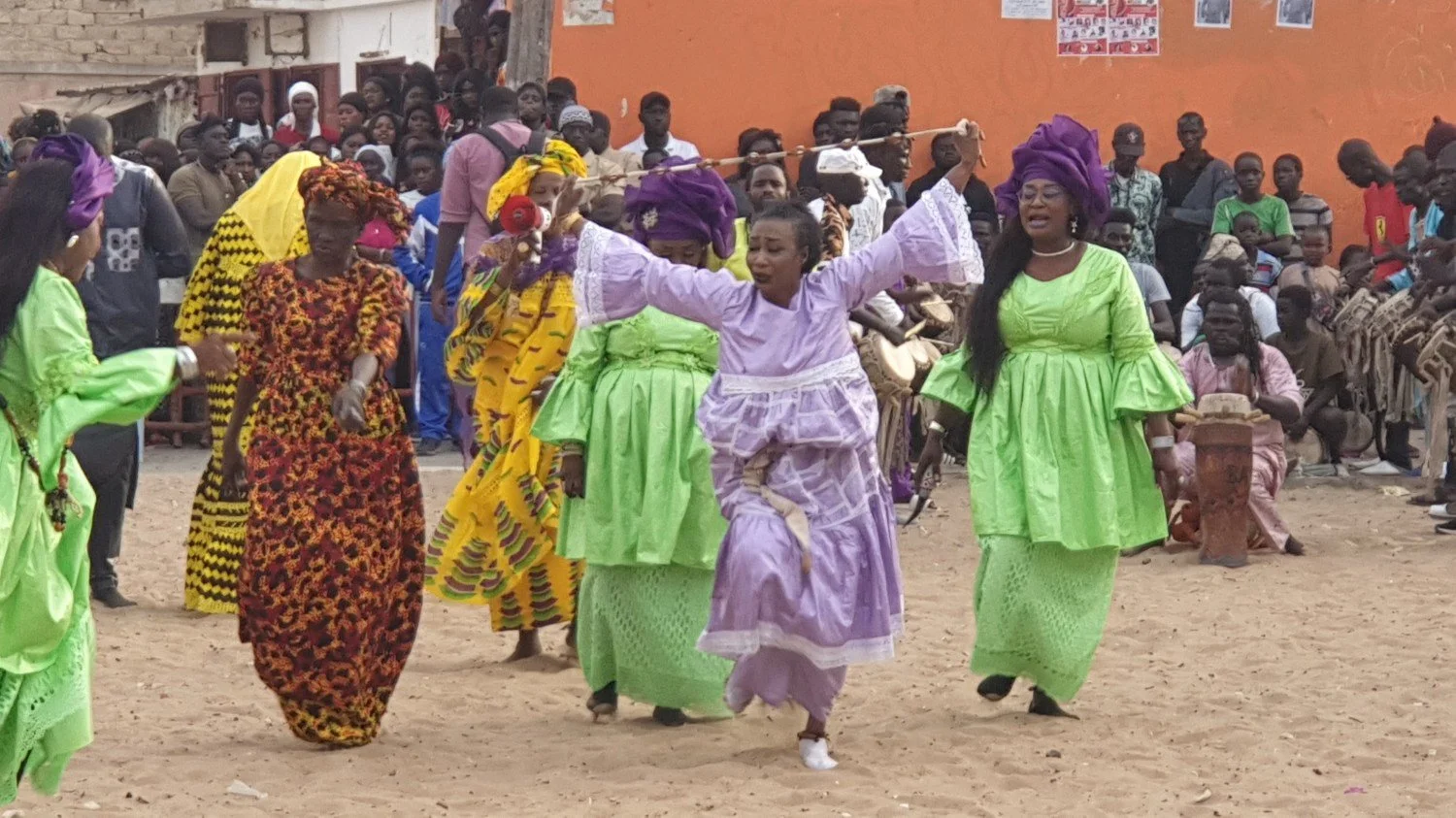
Credit: Sophie Sabar
Women and sabar drummers share the performance space at a celebration in Dakar, where rhythm, movement, and public expression depend on one another.
Aby Ngana Diop and Liital
Aby Ngana Diop remains one of the most important recorded voices associated with taasu. She was a Senegalese géwël and sought-after taasukat who performed at weddings, naming ceremonies, parties, and other gatherings in Dakar.
Her 1994 cassette Liital brought taasu into a recorded arrangement built around mbalax percussion, keyboards, choruses, and popular dance rhythms. It is often described as the first commercial recording to place a traditional female taasukat over modern mbalax accompaniment.
The result did not turn taasu into an imitation of foreign rap. Diop’s vocal authority came from an existing Senegalese practice shaped by ceremonial performance, sabar rhythm, Wolof expression, and the responsibilities of the géwël.
She died in 1997. When Liital was reissued internationally in 2014, a new generation encountered a voice that had once moved through ceremonies and cassette players across Dakar.
Her recording preserves only one part of taasu. The form still belongs to live exchange, where a performer responds to the people, histories, and emotions present in the room.
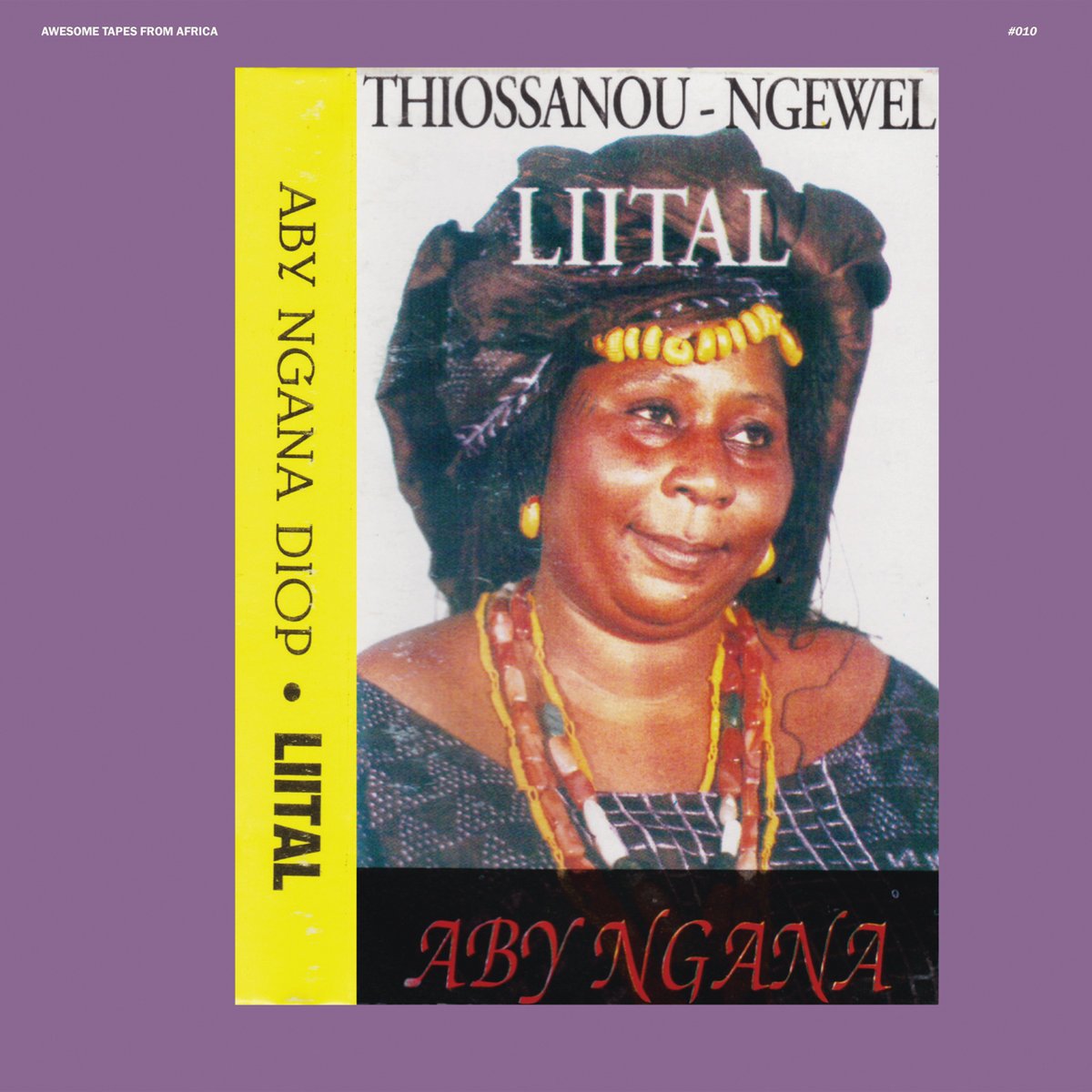
Credit: Aby Ngana Diop / Awesome Tapes From Africa
Aby Ngana Diop’s Liital brought the speed, humor, and authority of taasu into a landmark recording shaped by mbalax and Senegalese percussion.
FAQs
What does taasu mean?
Taasu is a Senegambian form of rhythmic spoken poetry. It commonly combines praise, advice, humor, social commentary, and rapid verbal delivery with percussion.
Is taasu a Wolof tradition?
Taasu has a wider Senegambian history and should not be claimed as exclusively Wolof. It is strongly associated with Wolof-language performance in Senegal today.
Who performs taasu?
A performer is called a taasukat. Women, particularly women from géwël families, have been highly visible in the tradition, although men may also perform related forms of rhythmic speech.
Is taasu the same as rap?
No. Taasu and rap share features such as rhythm, verbal speed, repetition, and social commentary, but they developed in different cultural settings.
When is taasu performed?
It may be heard at weddings, naming ceremonies, family celebrations, neighborhood events, cultural programs, and popular music performances.
Who was Aby Ngana Diop?
Aby Ngana Diop was a respected Senegalese taasukat and géwël. Her 1994 recording Liital joined traditional taasu delivery with modern mbalax arrangements.
Conclusion
Taasu shows that public speech does not have to choose between beauty and responsibility.
A performer can honor someone while reminding them what honor requires. She can make a room laugh while exposing behavior that needs to change. She can turn a family name into rhythm and make memory audible to everyone present.
For Wolof learners, taasu is a reminder that fluency is more than translating individual words. Meaning also lives in timing, relationships, humor, and the knowledge shared between speaker and audience.
Learn Wolof Through Culture
With NKENNE, you can learn Wolof while exploring the music, family relationships, oral traditions, and everyday expressions that give the language its meaning.
The closer you listen to the culture, the more the language begins to speak beyond the dictionary.
