
How to Call Someone “My Friend”, “My Brother”, “My Sister” in Igbo
By: Chimdindu Ken-Anaukwu
In Igbo culture, calling someone “my friend,” “my brother,” or “my sister” is more than just words. These phrases create instant warmth and closeness. They turn strangers into people you can relate to.
Whether you are meeting someone new in the market, chatting with a colleague, or speaking to family, using the right term shows respect and builds connection fast.
In this practical guide, you will learn the most natural and commonly used phrases, when to use them, and how to sound warm and authentic.
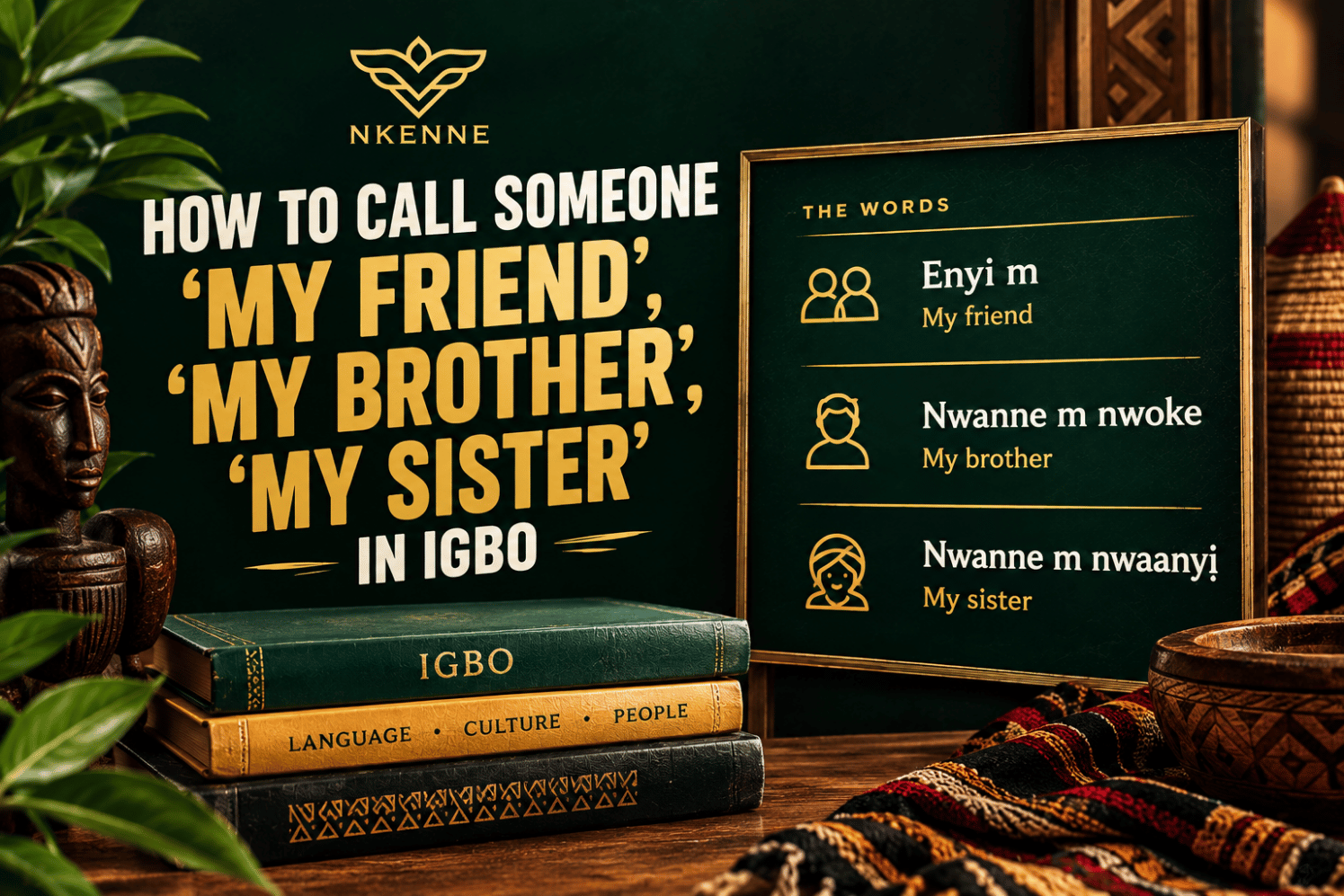
Why These Phrases Matter in Igbo
Igbo people value relationship and community. Addressing someone with kinship or friendship terms shows you see them as more than a stranger.
Using these phrases correctly makes conversations warmer and more natural. It also helps you fit into social settings more easily.
How to Say “My Friend”
The two most common words for friend are:
Enyi (eh-nyee)
Ọyi / Ọyị (oh-yee)
My friend becomes:
Enyi m (eh-nyee m)
Ọyi m (or-yee m)
You can also specify gender when needed:
Male friend: Enyi nwoke or Ọyi nwoke
Female friend: Enyi nwanyị or Ọyi nwanyị
When to use it:
Casual conversations with peers, colleagues, or people you are getting to know. Both “enyi m” and “ọyi m” sound natural and friendly.
How to Say “My Brother”
The standard phrase is:
Nwanne m nwoke (nwah-neh m nwoh-keh)
Many people simply say:
Nwanne m (nwah-neh m)
This shorter version is extremely common and warm.
When to use it:
For actual brothers, male cousins, or close male friends. “Nwanne m” works well even with men you have just met in friendly situations.
How to Say “My Sister”
The full phrase is:
Nwanne m nwanyị (nwah-neh m nwah-nyee)
Again, the shorter and very popular version is:
Nwanne m
When to use it:
For actual sisters, female relatives, or close female friends. “Nwanne m” is used freely and creates a strong sense of connection.
The Power of “Nwanne m”
“Nwanne m” literally means “my sibling.” In everyday Igbo, it is one of the warmest and most flexible terms you can use.
People use it for:
Real brothers and sisters
Close friends of either gender
People they want to treat with kinship and respect
This single phrase can instantly make a conversation feel closer. It is one of the most useful address terms in Igbo social life.
Practical Mini-Dialogues
With a new acquaintance:
You: Kedu?
Person: Ọ dị mma.
You: Nwanne m, kedu ka ị mere?
(My brother/sister, how have you been?)
With a friend:
You: Enyi m, bia ka anyị rie nri.
(My friend, come let’s eat.)
With a close male friend:
You: Nwanne m nwoke, ị nọ ebee?
(My brother, where are you?)
With a close female friend:
You: Nwanne m, daalụ.
(My sister, thank you.)
Quick Practice Tips
Start with “Nwanne m.” It is the safest and most versatile phrase.
Practice saying the phrases out loud until they feel natural.
Use them when greeting people. Pair them with “Kedu?” for a warm opening.
Listen to how native speakers use them in markets, churches, and gatherings.
Common mistake: Overusing formal English-style address. In Igbo settings, kinship terms feel more natural and friendly.
Challenge: This week, greet three people using “Nwanne m” or “Enyi m” and notice how the conversation changes.
Frequently Asked Questions
Can I call a stranger “Nwanne m”?
Yes, especially in friendly situations. It shows warmth and is commonly accepted.
What is the difference between enyi and ọyi?
Both mean “friend.” “Enyi” and “ọyi” are used interchangeably in many areas. “Ọyi” is very common in everyday speech.
Should I always add “nwoke” or “nwanyị”?
Not always. “Nwanne m” alone works for both genders in casual conversation. Add the gender words when you want to be specific.
Is it okay to use these terms with older people?
Be careful with much older people. For elders, more respectful terms are better. With people around your age or slightly older, “nwanne m” is usually fine.
Can women call men “nwanne m”?
Yes. Both men and women freely use “nwanne m” for people of either gender.
Conclusion
Learning how to call someone “my friend,” “my brother,” or “my sister” in Igbo opens doors. These simple phrases carry warmth, respect, and a sense of belonging.
Start using them in your conversations. You will notice people respond more openly and warmly.
You now have practical tools to build real connection through language.
Want to hear these phrases spoken clearly and practice them with audio? With NKENNE, the first African language learning app, you can listen, repeat, and master everyday Igbo expressions that help you connect. Download today and start speaking with confidence.