
Hadrawi: Poetry, Memory, and the Somali Public Imagination
By: Yvonne Mag-usara
Somali poetry has never belonged only to books. A poem can become a public argument, a warning, a love song, a historical record, or a line remembered decades after its first recitation.
Few modern poets carried that responsibility as visibly as Maxamed Ibraahin Warsame, commonly known as Hadrawi or Hadraawi. His words moved through radio, theatre, music, prison, exile, and ordinary conversation.
Understanding Hadrawi means learning why poetry holds such public power in Somali culture and why language can become a place where a people preserve both memory and disagreement.
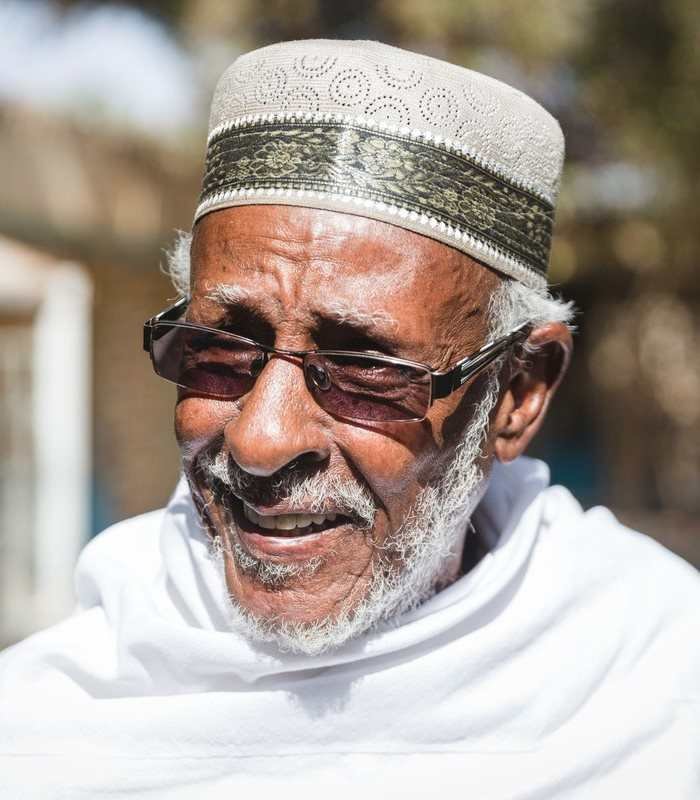
Credit: Saaro Arts / Wikimedia Commons
Maxamed Ibraahin Warsame, known as Hadrawi, used poetry to address love, justice, language, identity, and the responsibilities people carry toward one another.
Who Was Hadrawi?
Hadrawi was born in 1943 in the Togdheer region, in what was then British Somaliland and is now Somaliland. As a child, he moved to Aden, where he attended school and later worked as a teacher.
He eventually relocated to Mogadishu and worked with Radio Mogadishu, the Department of Information, and Lafoole University. He also wrote plays, poems, and lyrics performed by some of the best-known Somali singers of his era.
The name Hadraawi has been interpreted as “master of speech” or “father of speech.” It suited someone celebrated not only for what he said, but for the control, rhythm, and moral seriousness with which he said it.
The Poetry Translation Centre credits him with more than 200 poems and 70 lyric songs. Yet numbers alone cannot explain his place in Somali culture. His influence came from the way his work entered public memory.
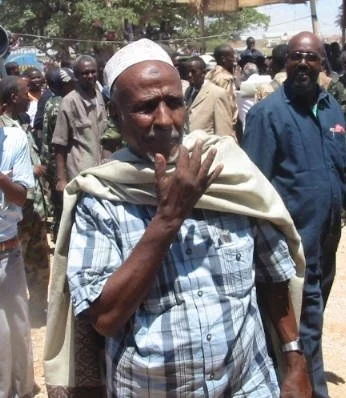
Credit: Dhawaaq / Wikimedia Commons, CC BY-SA 3.0
Hadrawi attends a garaad’s coronation in 2006, reflecting the presence respected poets can hold beyond literary and artistic spaces.
Why Poetry Matters in Somali Public Life
Somalia is often described as a nation of poets. The phrase reflects a long tradition in which verse has carried history, praise, criticism, grief, political argument, and guidance.
Before recordings and printed collections became widely available, poems travelled through recitation. Listeners memorized them, repeated them, and sometimes answered them with new compositions.
A poet’s audience was therefore not passive. People discussed a poem’s argument, remembered its strongest lines, and judged whether the poet had spoken truthfully or responsibly.
Hadrawi inherited this tradition while working in a changing media environment. Radio and recorded music carried his language far beyond the place where a poem was first performed. A verse could move from the poet’s voice to a singer, a broadcast, and eventually a family living thousands of miles away.
From Radio Mogadishu to Prison
Hadrawi’s early work was broadcast and performed widely. As his political criticism became sharper, however, the government stopped broadcasting his work.
In 1973, the military government of Siad Barre imprisoned him. He remained in prison for five years without abandoning poetry.
After his release, he participated in poetic debates in which writers responded to one another through linked or “chain” poems. He later joined the opposition Somali National Movement and spent part of his life in exile.
Censorship did not stop his work from circulating. Poems composed in secret could be memorized and carried from person to person. The state could control a radio station more easily than it could control collective memory.
This is central to Hadrawi’s public importance. He held no elected office, yet his language gave people a way to examine power, responsibility, and the direction of society.
Poems Carried by Voice, Song, and Memory
Hadrawi wrote about politics, but his work was never limited to protest. He also explored love, motherhood, mortality, knowledge, community, and the difficulty of living according to one’s principles.
Notable works include:
Sirta Nolosha, or “Life’s Essence”: A reflection on human character and the search for a meaningful life
Bulsho, or “Society”: A meditation on collective life and social responsibility
Gudgude: A long social vision shaped by political struggle and questions of leadership
Dabo Huwan: An extensive poem addressing colonialism, dictatorship, history, and Somali modernity
Jacayl Dhiig Ma Lagu Qoraa?: A celebrated love lyric associated with the singer Magool
Dhigaalka Far Soomaaliga: A poem engaging with the writing and development of the Somali language
English titles can vary between translators. More importantly, translation cannot fully reproduce the sound pattern, alliteration, and rhythm experienced by a Somali-speaking listener.
When singers performed Hadrawi’s lyrics, his poetry entered another form of memory. Someone might know his words first as a song heard at home, only later discovering the poet behind them.
How Hadrawi Used the Somali Language
work was carefully structured, but it could still speak directly to people outside formal literary institutions.
Somali verse often relies on strict patterns of metre and sustained alliteration. A repeated sound is not simply decoration. It helps organize the poem and gives listeners a structure they can recognize and remember.
Useful words for approaching his work include:
Abwaan = Poet, composer, or creative intellectual
Suugaan = Literature or creative verbal art
Maanso = A poetic composition
Gabay = A major classical Somali verse form
Hees = Song
Jacayl = Love
Nabad = Peace
Xusuus = Memory
Af-Soomaali = The Somali language
The Somali Latin alphabet was officially adopted in 1972, during Hadrawi’s early public career. His generation therefore stood between a deeply established oral tradition and a new period of expanded literacy, publishing, radio, and written preservation.
A heritage learner can approach his poetry in three stages:
Listen to a Somali recitation before reading a translation.
Notice which consonant sounds return across the lines.
Compare the Somali and English versions to see what meaning or sound changes.
Even when every word is not yet familiar, listening reveals that the poem is built to live in the voice.
Legacy, Peace, and the Somali Diaspora
Hadrawi returned to Somaliland after years abroad. In 2004, he travelled through Somali regions as part of a peace initiative calling for reconciliation and an end to violence.
In 2012, he received a Prince Claus Award recognizing his contribution to peace, social justice, and Somali cultural life. He died in Hargeisa on August 18, 2022, at the age of 79.
His legacy continues through recordings, songs, translations, classrooms, literary centres, and conversations within the Somali diaspora. His work gives younger generations a way to encounter Somali history through the language people used to question it.
For diaspora readers, this matters deeply. A poem learned from a parent or grandparent can preserve pronunciation, metaphor, history, and emotional memory at the same time.
Hadrawi’s work also reminds learners that fluency is not only the ability to complete a conversation. It is the ability to recognize why a particular word, image, or line has stayed with a community.
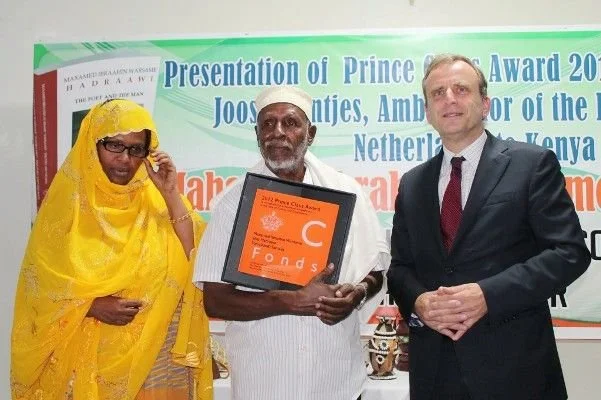
Credit: Prince Claus Fund Archive
Hadrawi was named a Prince Claus Laureate in 2012 for using literature to advance free expression and strengthen Somali cultural memory.
FAQs
Who was Hadrawi?
Hadrawi was the pen name of Maxamed Ibraahin Warsame, a Somali poet, playwright, songwriter, teacher, and public intellectual who lived from 1943 to 2022.
What does Hadrawi mean?
The name is commonly interpreted as “master of speech” or “father of speech.” It became closely associated with his command of storytelling, poetry, and public language.
Why was Hadrawi imprisoned?
The Siad Barre government imprisoned him in 1973 after his work became increasingly critical of the military regime. He remained imprisoned for five years.
What language did Hadrawi write in?
Hadrawi composed in Somali. His work drew from both classical poetic language and everyday speech, using metre, imagery, and alliteration that can be difficult to reproduce fully in translation.
What are Hadrawi’s best-known works?
His notable works include Gudgude, Dabo Huwan, Sirta Nolosha, Bulsho, and Jacayl Dhiig Ma Lagu Qoraa? English spellings and translated titles may vary.
Why is Hadrawi important to the Somali diaspora?
His poetry preserves language, history, political memory, and cultural values. Recordings and songs allow diaspora families to remain connected to Somali speech even when they live far from the Horn of Africa.
Conclusion
Hadrawi showed that poetry can carry more than personal expression. It can carry a society’s arguments about justice, love, leadership, memory, and the future.
His poems survived censorship because people remembered them. His lyrics reached new audiences because singers gave them another voice. His legacy continues because Somali speakers still find language in his work for questions that remain unfinished.
For heritage learners, listening to Hadrawi is an invitation to hear Somali as more than vocabulary. It is a language shaped for memory, public thought, and the responsibility of speaking carefully.
Learn Somali Through Culture With NKENNE
With NKENNE, you can learn Somali while exploring the poetry, music, history, and everyday expressions that give the language its meaning.
The closer you come to the language, the more clearly you can hear what earlier generations chose to remember.
