
By: Yvonne Mag-usara
In the 1920s, a dispute over grazing land and wells became one of the longest-running arguments in Somali literary history. Poets took opposing positions, answered one another in verse, and kept the exchange alive for years.
This was part of a much older tradition in which Somali poetry carried news, defended reputations, challenged leaders, and influenced public opinion. Among its most respected forms was gabay, a demanding style of oral poetry whose rhythm and alliteration gave weight to the arguments it carried.
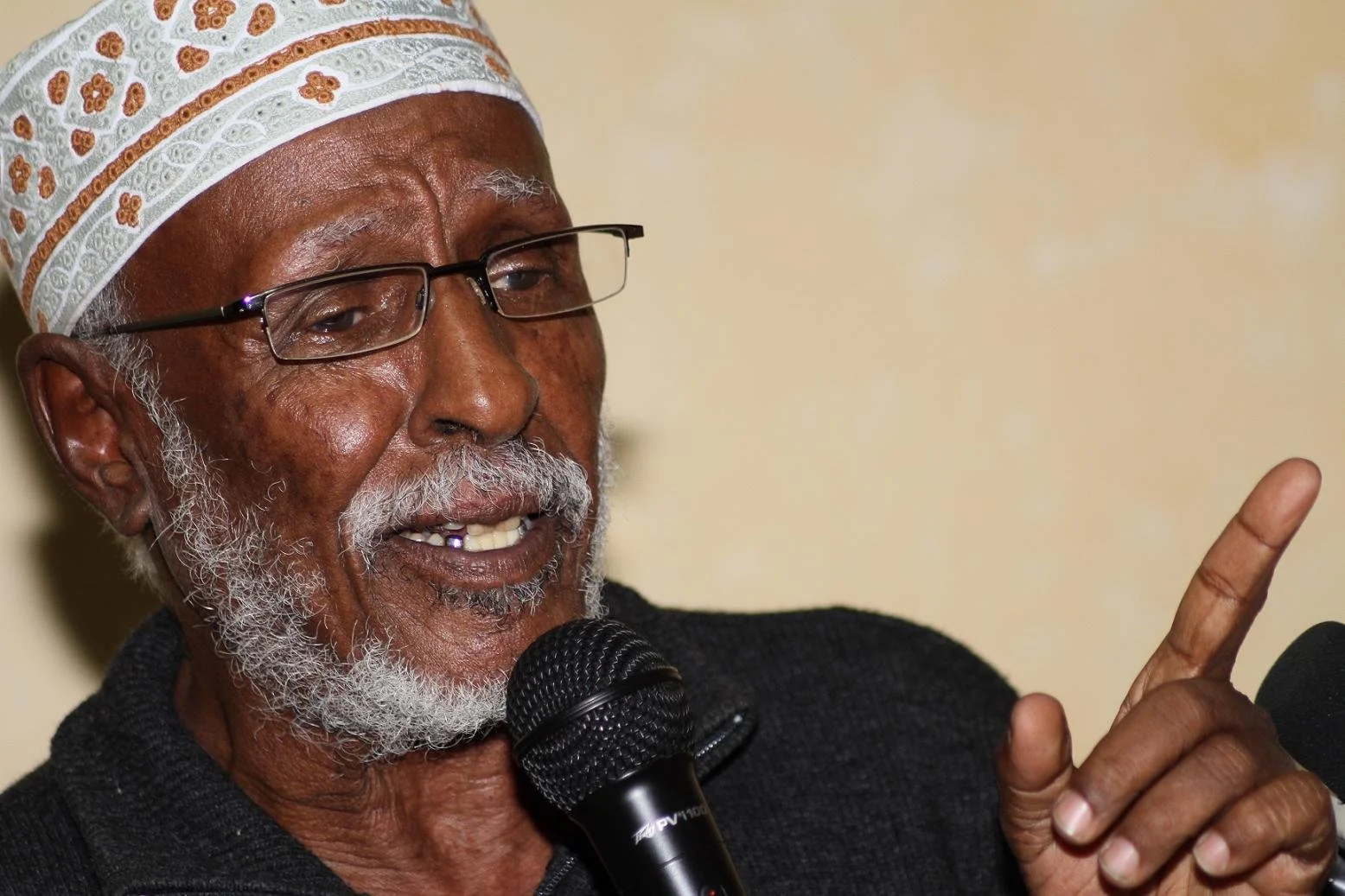
Credit: Waxsansheeg News / Wikimedia Commons.
Hadraawi, one of Somalia's most influential modern poets, continued a literary tradition in which poetry was closely connected to public life.
What Is Gabay in Somali Culture?
Gabay is a classical form of Somali oral poetry known for its long lines, strict rhythm, and carefully controlled alliteration. It belongs to maanso, a broader category of composed Somali poetry traditionally used to explore serious subjects such as politics, morality, history, and social responsibility.
One of its defining features is xarafraac, the repetition of a particular alliterative sound throughout a composition. Gabay also follows a quantitative metre, meaning the rhythm depends on patterns of vowel length. A poet must satisfy these rules while communicating ideas clearly and persuasively.
This combination of linguistic skill and thoughtful expression helps explain why accomplished Somali poets, known as abwaanno, have historically held considerable cultural influence.
When Somali Poetry Carried the News
Before newspapers and radio became common sources of information, Somali communities exchanged news through travellers, conversations, and oral performances. Poetry became an important way to communicate events, particularly when a poet wanted to preserve a story or influence how others understood it.
A gabay could describe a conflict, commemorate an important figure, or criticize a political development. Its structured language helped listeners remember and repeat the message, allowing compositions to travel beyond their original audiences.
These poems also preserved historical memory, although they were not always impartial accounts. Different poets could describe the same event from opposing perspectives, revealing how communities understood and debated their experiences.
When Somalia adopted a standardized Latin-based writing system in 1972, an already rich oral literary tradition gained additional opportunities for preservation through books, schools, and archives.
Gabay as a Public Argument
Somali poets sometimes responded to one another through connected compositions known as silsilad, or chains of poetry. These exchanges allowed disagreements to develop across several poems, with each contributor challenging or supporting earlier arguments.
One famous example is the Guba poetry debates, which began in the 1920s and continued for more than two decades. Poets including Cali Dhuux Aadan and Qamaan Bulxan addressed disputes involving livestock, grazing land, wells, and community honor.
Their compositions reflected competing positions on retaliation, justice, and relationships between communities. Listeners could compare the arguments as new poems circulated, making poetry an important form of public debate.
The Guba exchange demonstrates how words could influence real disagreements. A poem might encourage reconciliation, but it could also deepen divisions by strengthening grievances or challenging another community's reputation.
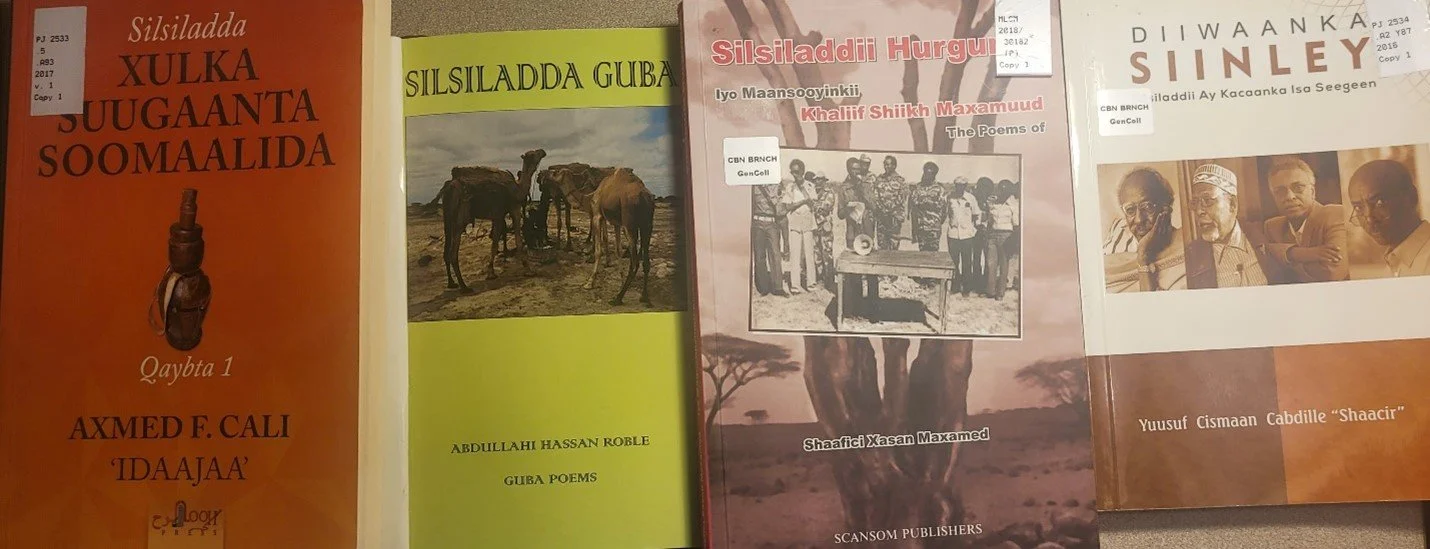
Credit: Abdulahi Ahmed / Library of Congress.
Published collections of Somali poetry, including the Guba debates, preserve arguments that were once passed between communities through oral recitation.
Poetry, Customary Law, and Reconciliation
Somali customary law, known as xeer, developed through established agreements, precedents, and mediation practices. Although gabay was not itself a legal code, poetry could influence discussions about justice, honor, and community responsibilities.
One example involves the early twentieth-century poet Salaan Carrabey. According to Conciliation Resources, two related groups were preparing to fight after earlier mediation attempts had failed. Salaan intervened with Waar Tolow Colka Jooja, a poem urging them to stop the conflict.
The composition, which belonged to the geeraar form rather than gabay, appealed to their shared relationships and warned against violence. The account describes how the opposing groups withdrew, preventing an immediate confrontation.
This example shows that Somali oral poetry could carry more than criticism or praise. In the right circumstances, it could encourage people to reconsider their actions and pursue peace.
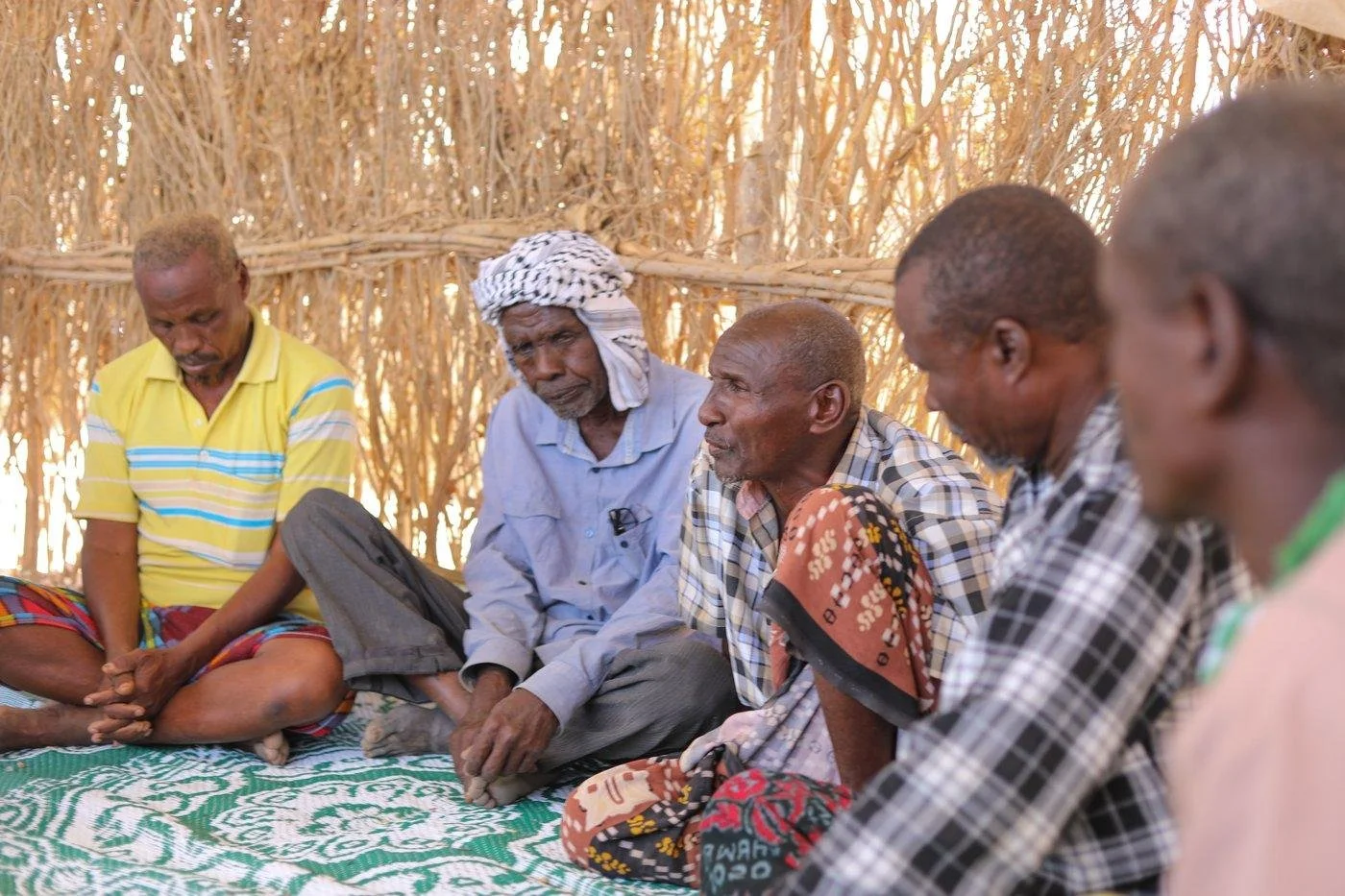
Credit: Abdulkadir Mohamed / Norwegian Refugee Council.
Community members in Beletweyne discuss a dispute, reflecting the continuing importance of mediation and dialogue in Somali society.
Somali Poets Who Challenged Power
Poetry also became an important form of political expression during periods of colonial resistance and authoritarian rule. Accomplished poets could challenge opponents, communicate political ideas, and rally support through compositions that circulated between communities.
Sayyid Maxamed Cabdulle Xasan, the leader associated with the Dervish resistance movement in the early twentieth century, used poetry to communicate his beliefs and respond to political and military opponents. His work demonstrated how literary authority could become closely connected to political leadership.
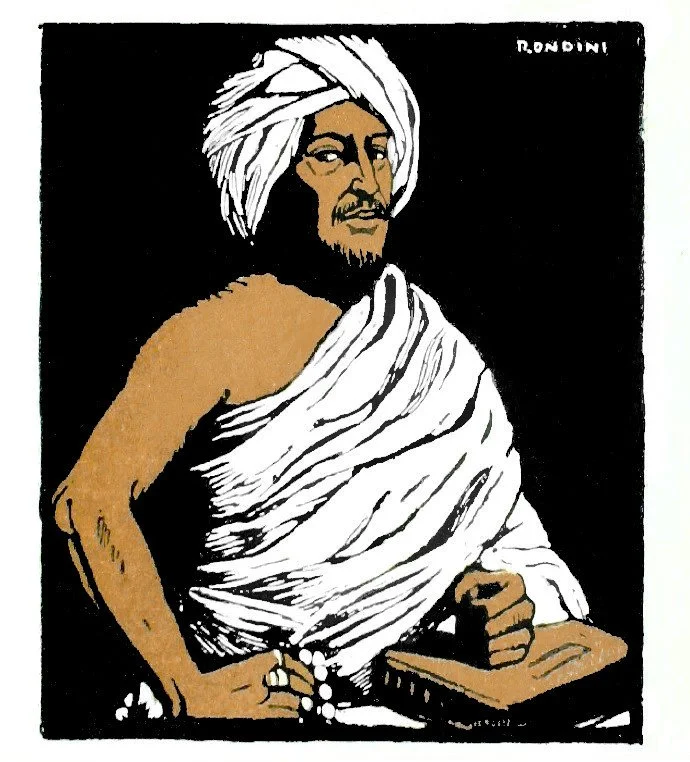
Credit: Illustration attributed to Rondini, published in Douglas James Jardine's Il Mullah del Paese dei Somali (1928).
An early illustration of Sayyid Maxamed Cabdulle Xasan, whose poetry helped communicate political ideas during the Dervish resistance movement.
Decades later, Maxamed Ibraahin Warsame, known as Hadraawi, became another influential voice in Somali public life. His poetry addressed political repression and social responsibility, and his criticism of Siad Barre's government contributed to his imprisonment in the 1970s.
Hadraawi later participated in the Deelley poetic exchange, continuing the wider Somali tradition of using poetry to question authority and debate matters affecting society. For a closer look at his life and writing, read NKENNE's Hadrawi: Poetry, Memory, and Somali Public Life.
Why Gabay Still Matters Today
Somali poetry continues to occupy an important place in cultural expression, even as younger generations encounter it through books, recordings, performances, and digital platforms. The settings have changed, but poets still use language to discuss identity, relationships, social responsibilities, and the experiences of their communities.
In 2021, the Home of Somali Poetry initiative launched an archive and annual poetry awards with support from the United Nations Development Programme. The project created opportunities to preserve established works while recognizing contemporary poets, including women and younger writers.
Somali women have also contributed to distinct oral poetry traditions, including buraanbur, a form closely associated with women's expression and community gatherings. Recognizing these different genres is important because Somali literary heritage includes much more than the work of classical gabay poets.
In 2024, UNDP profiled Zahra Abdihagi, a young Somali poet and storyteller whose work uses poetry and digital media to encourage peace and reconciliation. Her approach connects an established tradition of public expression with the ways younger audiences communicate today.
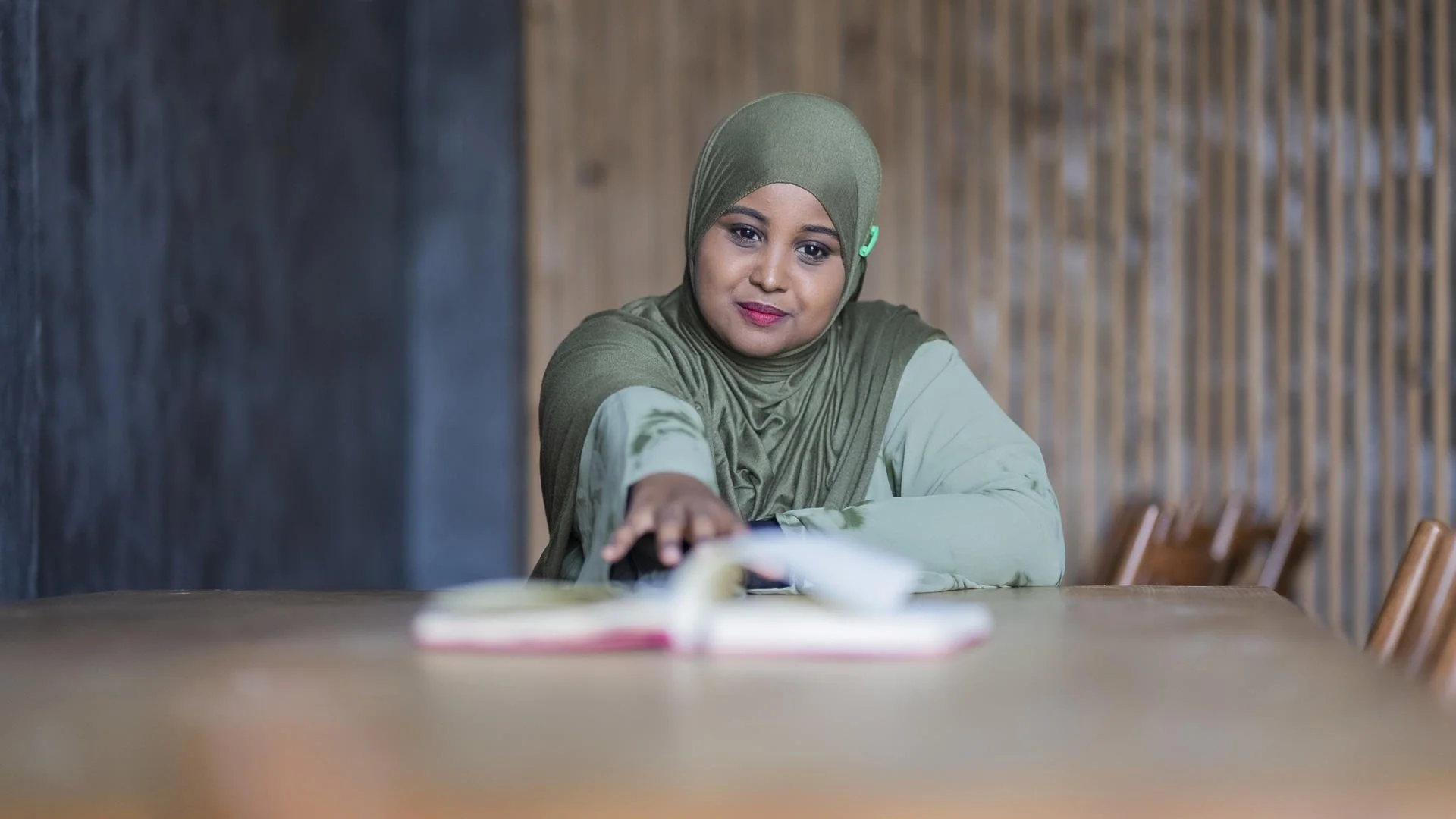
Credit: UNDP Somalia / Said Musse.
Somali poet Zahra Abdihagi uses poetry and storytelling to encourage dialogue and preserve cultural knowledge for younger generations.
For Somali language learners, gabay offers another way to understand how words carry cultural meaning. Expressions such as nabad (peace), dood (discussion or argument), and abwaan (poet) gain additional depth when encountered through stories about responsibility and public debate.
Listening to a recorded poem, recognizing repeated sounds, or asking an older family member about a familiar verse can turn language learning into a connection with Somali history and cultural memory.
FAQs
What does gabay mean in Somali?
Gabay is a classical form of Somali poetry characterized by strict quantitative metre, alliteration, and long poetic lines. It traditionally addresses serious subjects such as politics, morality, and history.
Why is poetry important in Somali culture?
Somali poetry has historically helped preserve events, communicate ideas, defend reputations, and discuss social or political disagreements. Poets could influence public opinion through compositions shared by oral recitation.
What is a silsilad in Somali poetry?
A silsilad is a sequence of connected poems in which poets respond to one another. These exchanges often involve competing arguments or commentary on important events. The Guba debates are a well-known example.
How is gabay different from buraanbur?
Gabay is a classical form of poetry traditionally associated with male poets and serious public subjects. Buraanbur is a distinct Somali poetic tradition particularly associated with women's expression and community performances.
Did gabay influence Somali customary law?
Gabay and other poetic forms could influence public discussions about justice, honor, and reconciliation. However, they did not replace xeer, the system of Somali customary law maintained through agreements, precedents, and mediation.
Conclusion
Gabay's importance was never limited to the skill of its poets. Its influence came from the way their words entered public life, shaping how people remembered events, challenged authority, and understood their responsibilities toward one another.
For those reconnecting with Somali today, this tradition offers a reminder that language carries more than vocabulary. It preserves the arguments, experiences, and values of generations who used their voices to make themselves heard.
Understanding those words brings you closer to the people and histories behind them..
Learn Somali Through Culture With NKENNE
With NKENNE, you can develop your Somali language skills through everyday expressions and the cultural contexts that give them meaning. Begin with words you recognize, practice using them in conversation, and keep listening for the stories and ideas that make the language your own.
