
By: Chimdindu Ken-Anaukwu
Some desserts are made to impress. Thiakry is made to be shared.
It is a bowl of tiny millet grains folded into cool, tangy curdled milk, sweetened, spiced with a little nutmeg, and dotted with raisins. It is creamy and light at the same time, and it tastes best eaten slowly with a spoon on a hot afternoon.
In Senegal and The Gambia, thiakry shows up everywhere: at breakfast, after lunch, in tied plastic bags at street stalls, and in big bowls passed around on feast days.
In this guide, you will learn what thiakry is, the Wolof words behind it, how to make it at home, and why it holds a special place at Tabaski and Korité.
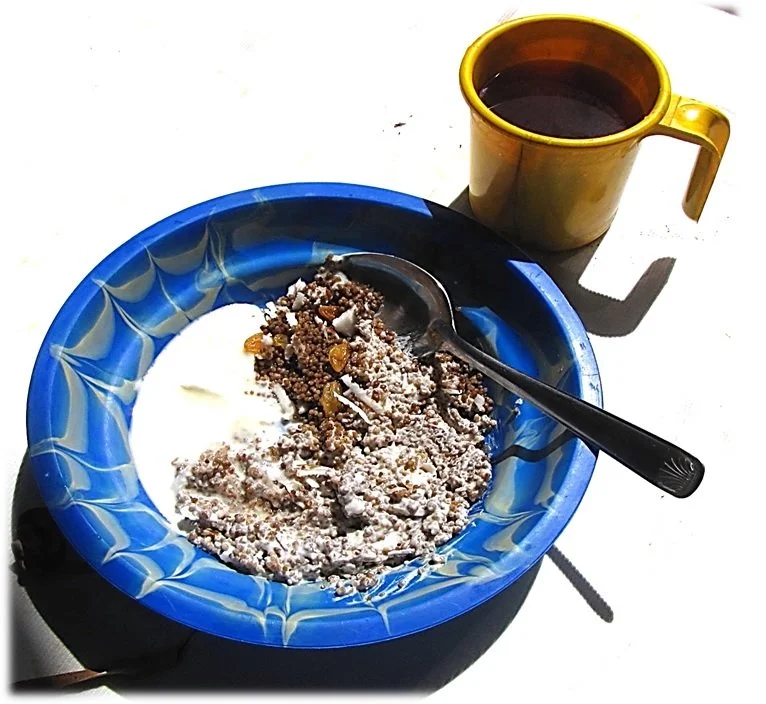
Thiakry served with a cup of kinkeliba tea. Photo: T.K. Naliaka, CC BY-SA 4.0, via Wikimedia Commons
What Is Thiakry?
Thiakry is a sweet dessert made from millet granules mixed with curdled milk or yogurt. The grains are steamed until soft, cooled, and then stirred into a sweetened milk base flavoured with vanilla, nutmeg, or orange blossom water.
The texture sits somewhere between a pudding and a thick drinkable yogurt. Every spoonful has soft, slightly nutty grains suspended in cool, tangy cream.
The name comes from the Wolof word cakri. "Thiakry" is the French-influenced spelling you will see on menus and packets in Senegal, while in The Gambia it is often written "chakery." Across the wider region, the same dessert goes by other names. Fulani speakers call it bodé, and in Mali and Burkina Faso it is known as dèguè.
Thiakry is usually eaten cold. Many families make a big batch in the morning and keep it chilled for the rest of the day.
The Wolof Words Behind the Bowl
One of the best ways to learn Wolof is through the food on the table. Thiakry gives you a small, useful vocabulary list:
Cakri – thiakry, the dessert itself
Dugub – millet
Araw – the small rolled millet granules used for thiakry and porridge
Soow – curdled milk, the tangy fermented milk known in French as lait caillé
Laax – a related millet porridge, also served with curdled milk
Neex na! – "It's delicious!"
The next time someone hands you a bowl, take a spoonful and say it with feeling: Neex na!
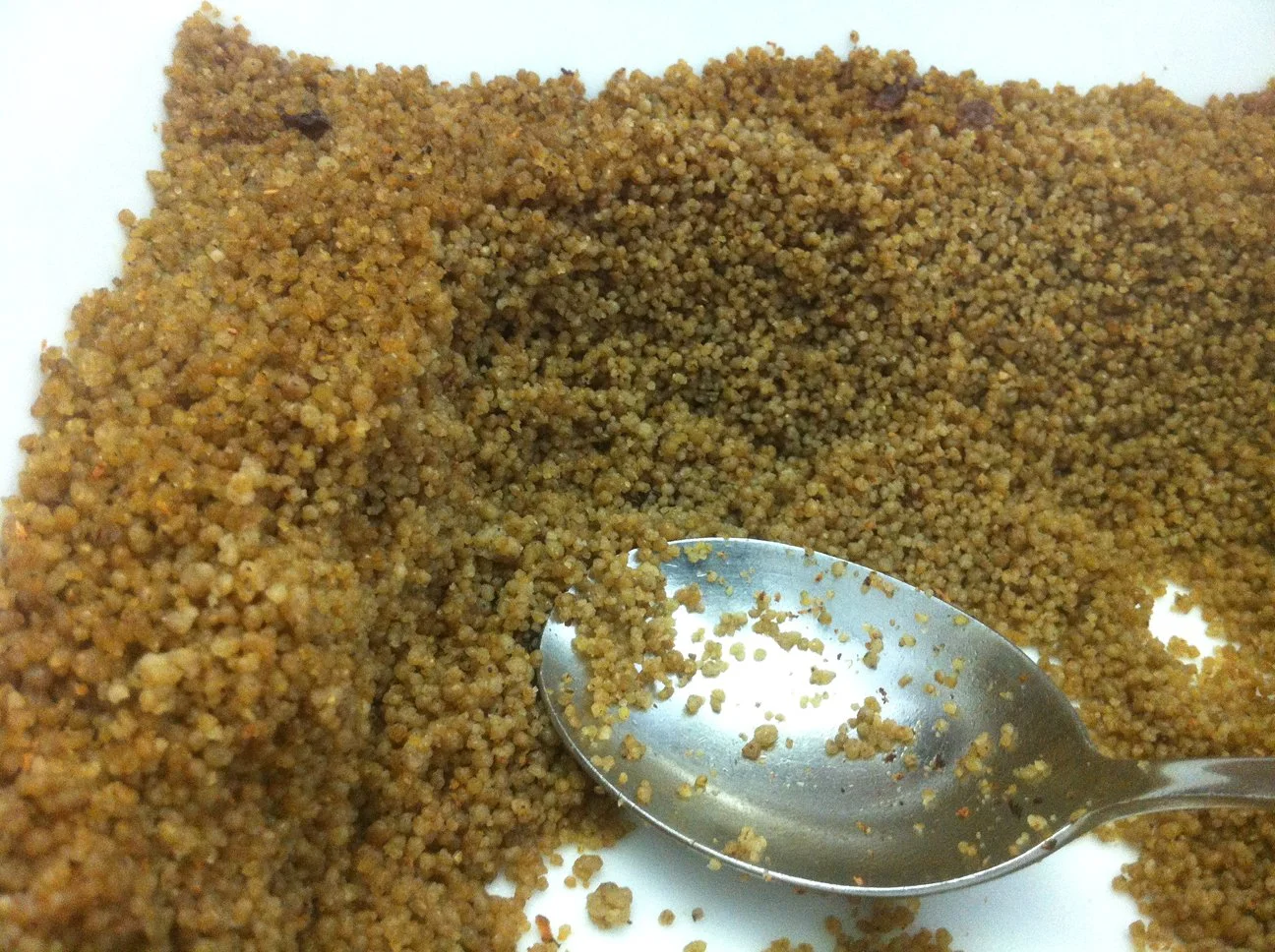
Steamed millet granules, the base of thiakry. Photo: Fanyavizuri, CC BY-SA 3.0, via Wikimedia Commons
Key Ingredients
Millet granules (araw). These are the heart of the dish. In Senegal, women traditionally roll millet flour by hand with a little water until it forms tiny pellets, then steam them. Today you can buy ready-made thiakry grains in African grocery stores and online. If you cannot find them, fine millet couscous or even regular wheat couscous will work, although the texture will be softer.
Curdled milk (soow) or yogurt. Traditional thiakry uses soow, which gives the dessert its pleasant sourness. Plain yogurt is the easiest substitute. Many cooks mix the two, or loosen thick yogurt with a little milk.
Something sweet. Sugar works, but sweetened condensed milk is a popular choice because it adds sweetness and creaminess at once.
Flavourings. Vanilla and nutmeg are the classic pair. Some cooks add orange blossom water, cinnamon, or a little grated lemon zest.
Extras. Raisins are the most common addition. Desiccated coconut, chopped dates, or fresh fruit such as mango and papaya are also popular.
Easy Thiakry Recipe
Prep time: 15 minutes
Cook time: 25 minutes
Chilling time: at least 2 hours
Serves: 6
Ingredients
2 cups thiakry millet granules (araw) or fine millet couscous
About 1 cup water
A pinch of salt
1 tablespoon butter (optional)
4 cups plain yogurt or curdled milk (soow), or a mix of both
¾ cup sweetened condensed milk, or ½ cup sugar, adjusted to taste
1 teaspoon vanilla extract
½ teaspoon ground nutmeg
½ cup raisins
1 teaspoon orange blossom water (optional)
2 tablespoons desiccated coconut (optional)
Step-by-Step Guide
Place the millet granules in a large bowl. Sprinkle with about half a cup of water and the salt, then rub the grains gently between your fingers so they absorb the water evenly without forming clumps.
Steam the grains for 15 minutes in a couscous steamer, or in a fine sieve lined with a clean cloth set over a pot of simmering water. Keep the lid on.
Tip the grains back into the bowl, break up any lumps with a fork, and sprinkle over the remaining water. Steam again for 10 minutes until the grains are soft all the way through.
Stir in the butter while the grains are hot, if using. Spread them out on a tray and let them cool completely. This step matters, because warm grains will thin out the yogurt.
In a separate bowl, whisk the yogurt or soow with the condensed milk, vanilla, nutmeg, and orange blossom water until smooth. Taste and adjust the sweetness.
Fold the cooled grains and raisins into the creamy mixture.
Cover and refrigerate for at least 2 hours so the grains soften further and the flavours come together.
Stir before serving. Add a splash of milk if it has thickened too much, then finish with coconut or fresh fruit.
Quick method: Some packaged thiakry grains are pre-cooked. If yours are, simply pour over boiling water, cover for 10 minutes, fluff, and cool before mixing with the yogurt. Always check the packet instructions.
Helpful tips
Make it the day before a gathering. Thiakry tastes even better after a night in the fridge.
For a tangier, more traditional flavour, use more soow and less condensed milk.
Thiakry thickens as it sits. Keep a little milk nearby to loosen it.
It keeps for two to three days in a covered container in the fridge.
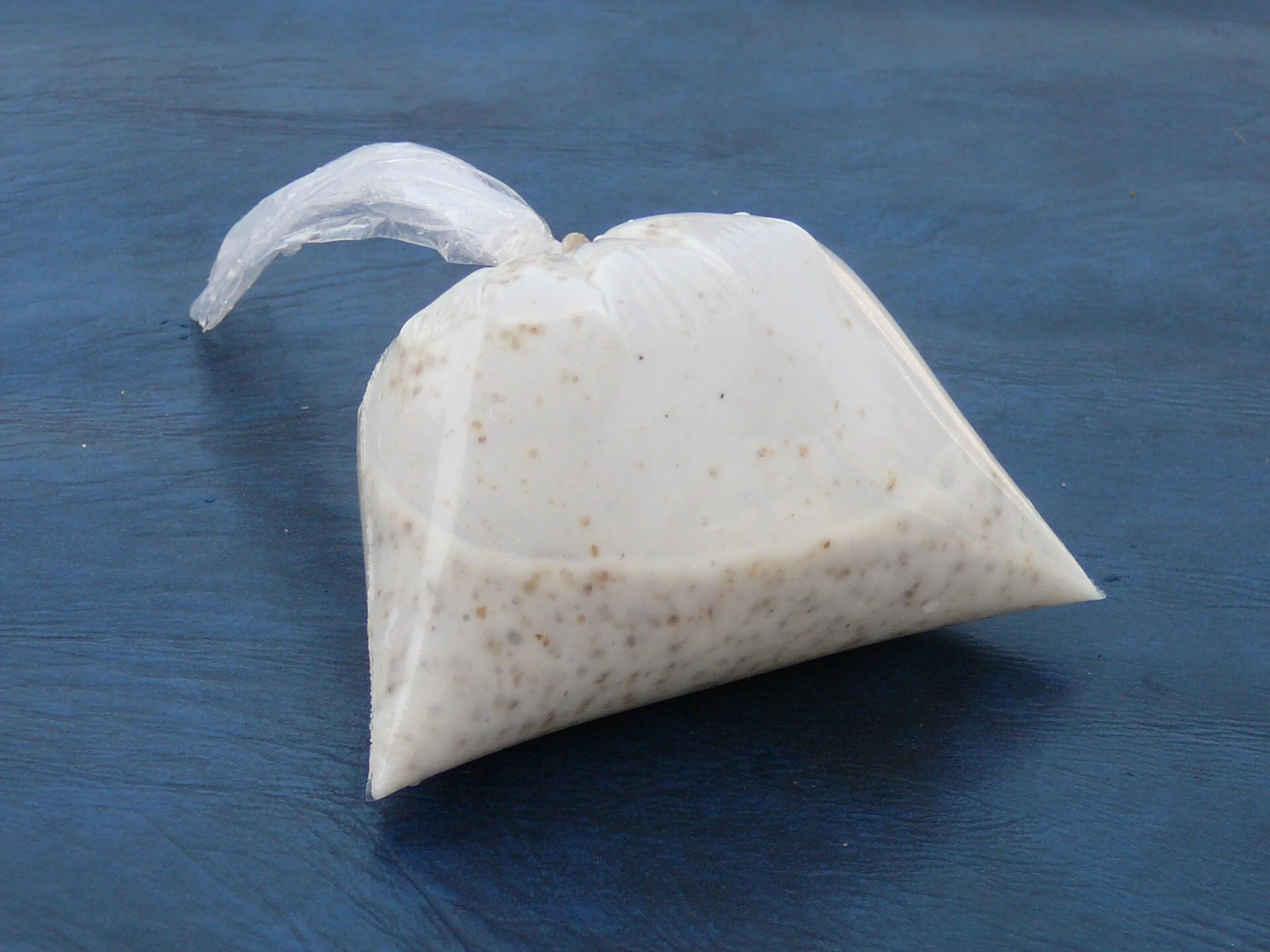
Chakery sold in a tied bag, as it often is at stalls in The Gambia. Photo: Atamari, CC BY-SA 3.0, via Wikimedia Commons
Thiakry at Tabaski, Korité, and Family Gatherings
Thiakry is an everyday treat, but it truly shines on special days.
At Tabaski, the Senegalese name for Eid al-Adha, homes fill with the smell of grilled and stewed mutton. After the heavy meal, a cold bowl of thiakry is the perfect way to finish. In parts of northern Senegal, women bring thiakry to the shared meals that bring families and neighbours together on the day, and Senegalese communities abroad still serve it as dessert when they gather to celebrate Tabaski far from home.
At Korité, which marks the end of Ramadan, sweet millet desserts are part of the joy of breaking the long month of fasting. Bowls are prepared in advance, shared with relatives and neighbours, and offered to visitors who come by to greet the family.
Thiakry also appears at weddings, naming ceremonies, and any occasion where many guests are expected. It is easy to make in large quantities, it does not need to be served hot, and it stretches beautifully to feed a crowd. Offering a bowl to a guest is a small but real expression of teranga, the Senegalese spirit of hospitality.
Thiakry is sometimes confused with ngalakh, another sweet millet dish. Ngalakh is made with baobab fruit and peanut paste, and it is famously shared by Christian families with their Muslim neighbours at Easter. Both are beloved, but they are different desserts.
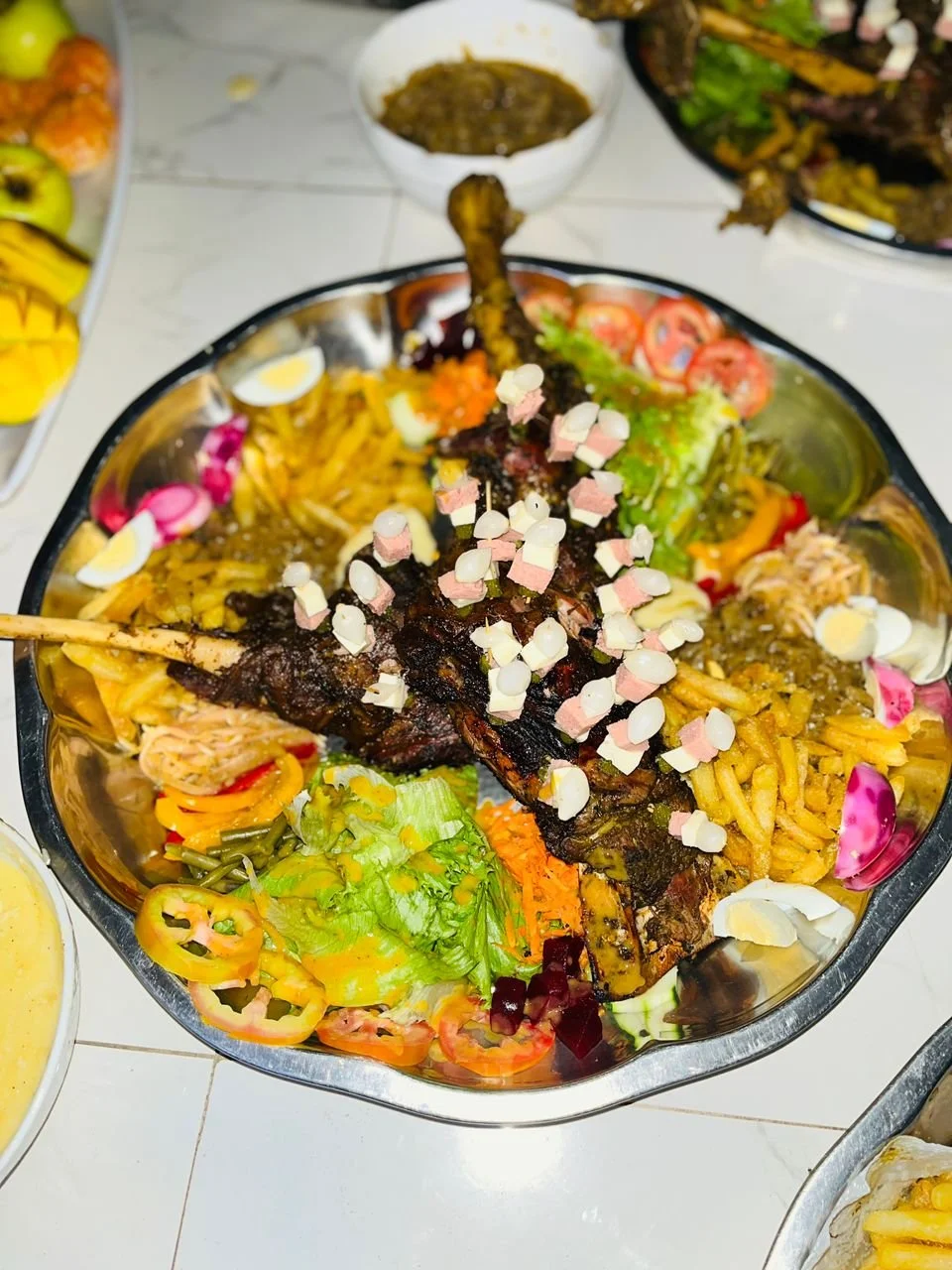
A Tabaski meal in Senegal, 2025. Photo: Yvonneberthe, CC0, via Wikimedia Commons
Variations Across West Africa
Thiakry travels well, and every country gives it a slightly different personality.
Senegal: Classic thiakry with soow or yogurt, condensed milk, vanilla, nutmeg, and raisins.
The Gambia: Known as chakery, often sold chilled in small tied plastic bags as a refreshing street snack.
Mali and Burkina Faso: Called dèguè, sometimes made thinner so it can be sipped from a cup.
Fruit versions: Newer recipes and packaged mixes add mango, papaya, or baobab for extra flavour and colour.
Grain swaps: Some cooks use fonio, another ancient West African grain, or wheat couscous when millet is hard to find.
Whatever the version, the formula stays the same: soft grains, cool tangy milk, and just enough sweetness.
Millet: The Grain Behind Senegal's Comfort Food
Thiakry is only one of many dishes built on millet, or dugub in Wolof. Long before rice became the everyday grain in Senegalese cities, millet fed families across the Sahel. It grows in dry, sandy soil, survives short rainy seasons, and stores well, which made it a reliable crop for farmers in the countryside.
The same small grain turns up at almost every time of day:
Laax – a thick millet porridge, often eaten with soow or with a sweet peanut and baobab sauce.
Cere – steamed millet couscous, served with a sauce of meat, beans, or fish. You will often see it written thiéré in French spelling.
Fondé – small millet balls cooked in a creamy, sweetened milk porridge.
Ngalakh – the Easter dessert made with millet, baobab, and peanut paste.
Preparing millet by hand is real work. The grain is pounded in a large wooden mortar, sifted, and then rolled with water into granules of different sizes. Fine granules become couscous, slightly larger ones become araw for thiakry and laax. In many households, this work is shared by women of the family, and the sound of pestles hitting mortars is still a familiar part of village mornings.
Today, busy cooks in Dakar and abroad often buy millet that has already been processed and dried, which is why packaged thiakry grains are so popular. Whether hand-rolled or store-bought, the grain connects every bowl of thiakry to generations of Senegalese farming and cooking.
Frequently Asked Questions
What does thiakry mean?
Thiakry comes from the Wolof word cakri, the name of the dessert itself. It is also spelled thiacry or chakery.
Is thiakry the same as dèguè?
Yes. Dèguè is the name used in Mali and Burkina Faso for the same family of millet and milk desserts. Recipes vary slightly from country to country.
Can I make thiakry with regular couscous?
Yes. Wheat couscous works well when millet granules are not available. The flavour is milder and the texture softer, but the result is still delicious.
Is thiakry a dessert or a breakfast?
Both. It is commonly eaten after meals, but many people enjoy it for breakfast or as an afternoon snack.
How long does thiakry keep?
Stored in a covered container in the fridge, it keeps for two to three days. Stir well and add a little milk before serving.
What is the difference between thiakry and ngalakh?
Thiakry is made with curdled milk or yogurt. Ngalakh uses baobab fruit and peanut paste and is especially associated with Easter in Senegal.
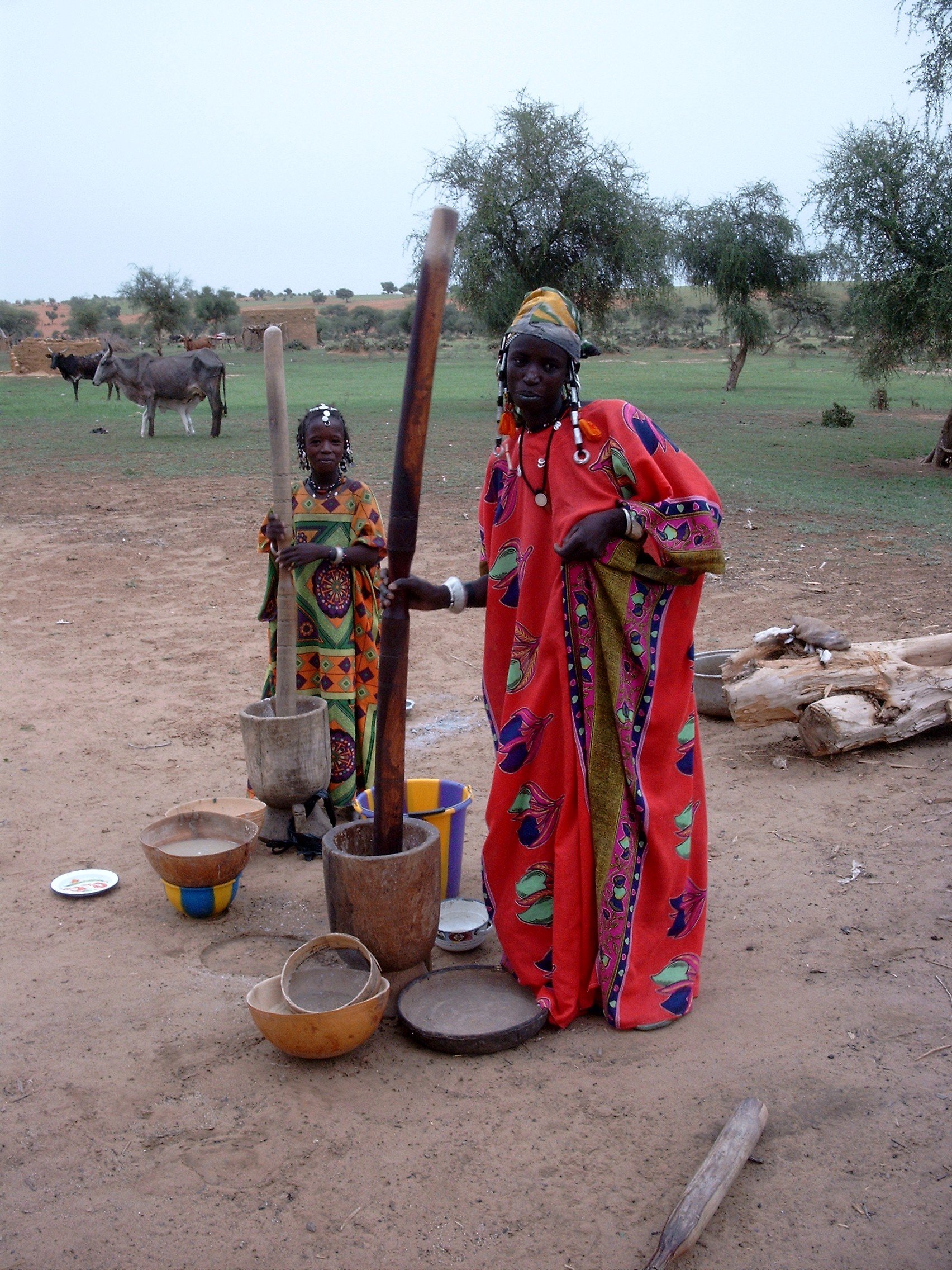


Women pounding millet in a wooden mortar in Burkina Faso, the hard work behind every bowl of millet. Photo: Marco Schmidt, CC BY-SA 2.5, via Wikimedia Commons

Thiakry is proof that the simplest ingredients can carry the warmest traditions. Millet from the fields, milk from the herds, and a little sweetness turned into a dish that brings people together at every celebration.
Make a bowl this week, chill it well, and share it with the people around your table.
If this recipe brought the flavours of Senegal closer to you, keep exploring with NKENNE. We are here for the real Wolof dishes, the language, and the everyday culture that make every meal meaningful.
Jërëjëf for cooking with us. Neex na! 🥣