
By: Yvonne Mag-usara
Kiswahili had poets long before Shaaban Robert. What made him extraordinary was how he helped the language express the concerns of a changing world.
At a time when East Africa was living under colonial rule, Robert wrote about justice, human dignity, education, and the responsibilities people owe one another. He showed that Swahili could carry serious philosophical and political ideas while remaining connected to everyday life.
Today, he is remembered as one of the most influential writers in Swahili literature. His story reveals how a language can preserve a people's values while helping them imagine a different future.
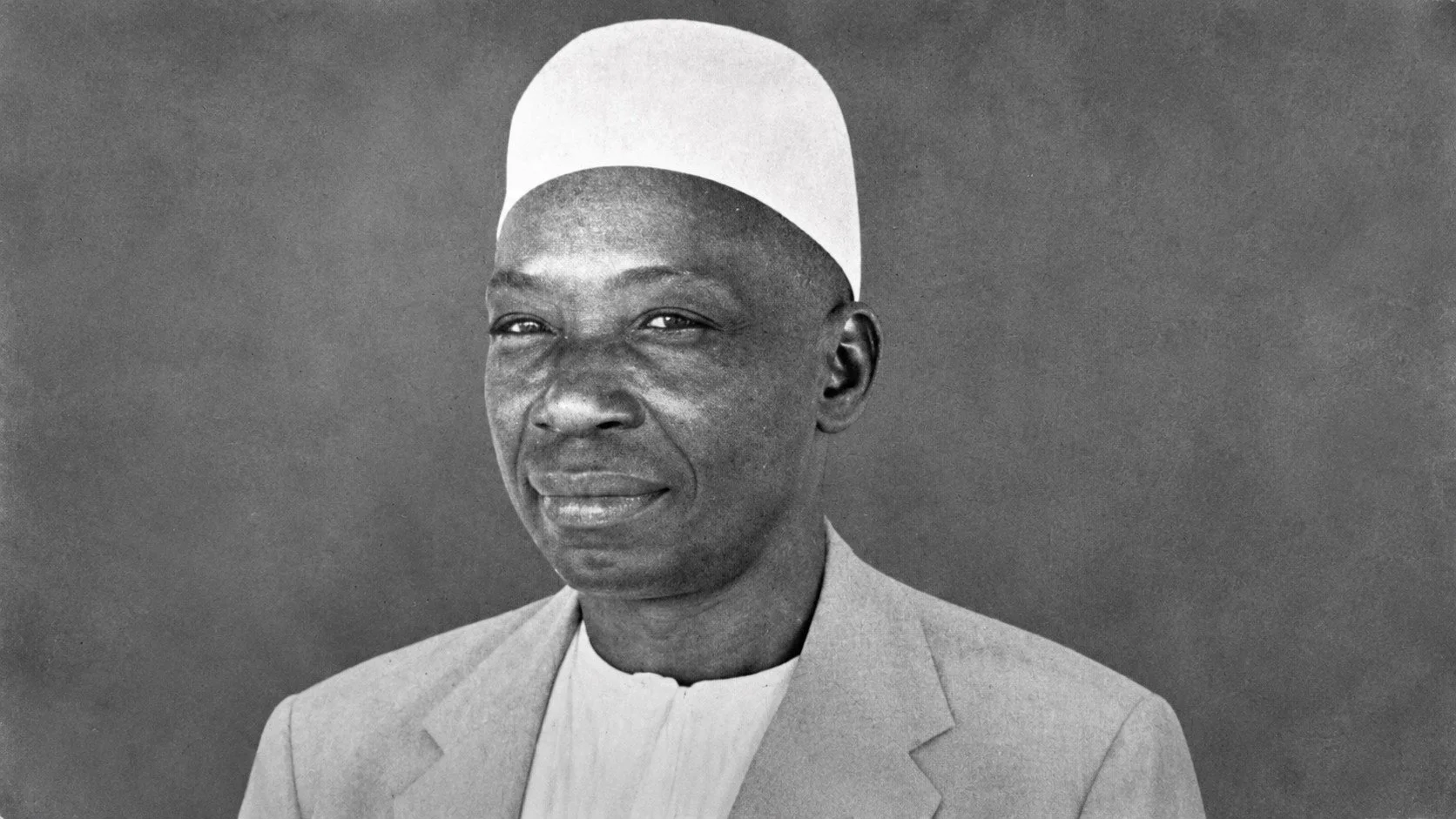
Credit: Nasser Youth Movement.
Shaaban Robert (1909–1962), the Tanzanian poet and writer who helped shape modern Swahili literature.
Who Was Shaaban Robert?
Shaaban Robert was a Tanzanian poet, novelist, essayist, and intellectual born on January 1, 1909, near Tanga, in what was then German East Africa.
He grew up in a Swahili-speaking coastal environment shaped by Islamic education, local storytelling traditions, and the cultural exchanges that had long connected East Africa with the Indian Ocean world.
His education brought together religious learning, Swahili literary traditions, and Western-style schooling. These influences would later become important foundations of his writing.
A Writer Who Also Worked as a Civil Servant
Robert did not spend his entire life working as a professional author. Much of his career was spent in government service during the colonial period.
He worked in different administrative departments while developing his literary career, eventually producing more than twenty works across poetry, fiction, biography, and essays.
His writing frequently returned to questions of human behavior, fairness, and responsibility. He was interested in what makes someone a good person and what happens when a society abandons those values.
Robert died in 1962, but his work had already helped establish him as a major figure in East African literature.
The Swahili Literary Tradition He Inherited
To understand Shaaban Robert's contribution, it helps to understand the literary world he inherited.
Swahili poetry had existed for centuries before his birth. Along the East African coast, poets used verse to preserve religious teachings, recount historical events, offer moral guidance, and reflect on human relationships.
Much of this literary tradition developed through oral performance and manuscripts written in an adapted Arabic script, commonly called Ajami.
One important form was the utenzi, a style of narrative poetry often organized into four-line stanzas. These poems could tell extended stories while following established patterns of rhythm and rhyme.
From Coastal Poetry to Modern Literature
By the early twentieth century, Kiswahili was undergoing significant changes.
Colonial administrations, schools, newspapers, and publishers were helping shape standardized written forms of the language, increasingly using the Roman alphabet.
This did not mean Swahili literature was beginning from nothing. Its written and oral traditions were already well established.
The challenge was how to carry those traditions into a new literary environment.
Robert became an important figure in that transition. He understood the forms earlier Swahili poets had developed, but he also recognized that literature needed to respond to contemporary life.
His work connected the rich literary heritage of the coast with the changing social and political realities of twentieth-century East Africa.
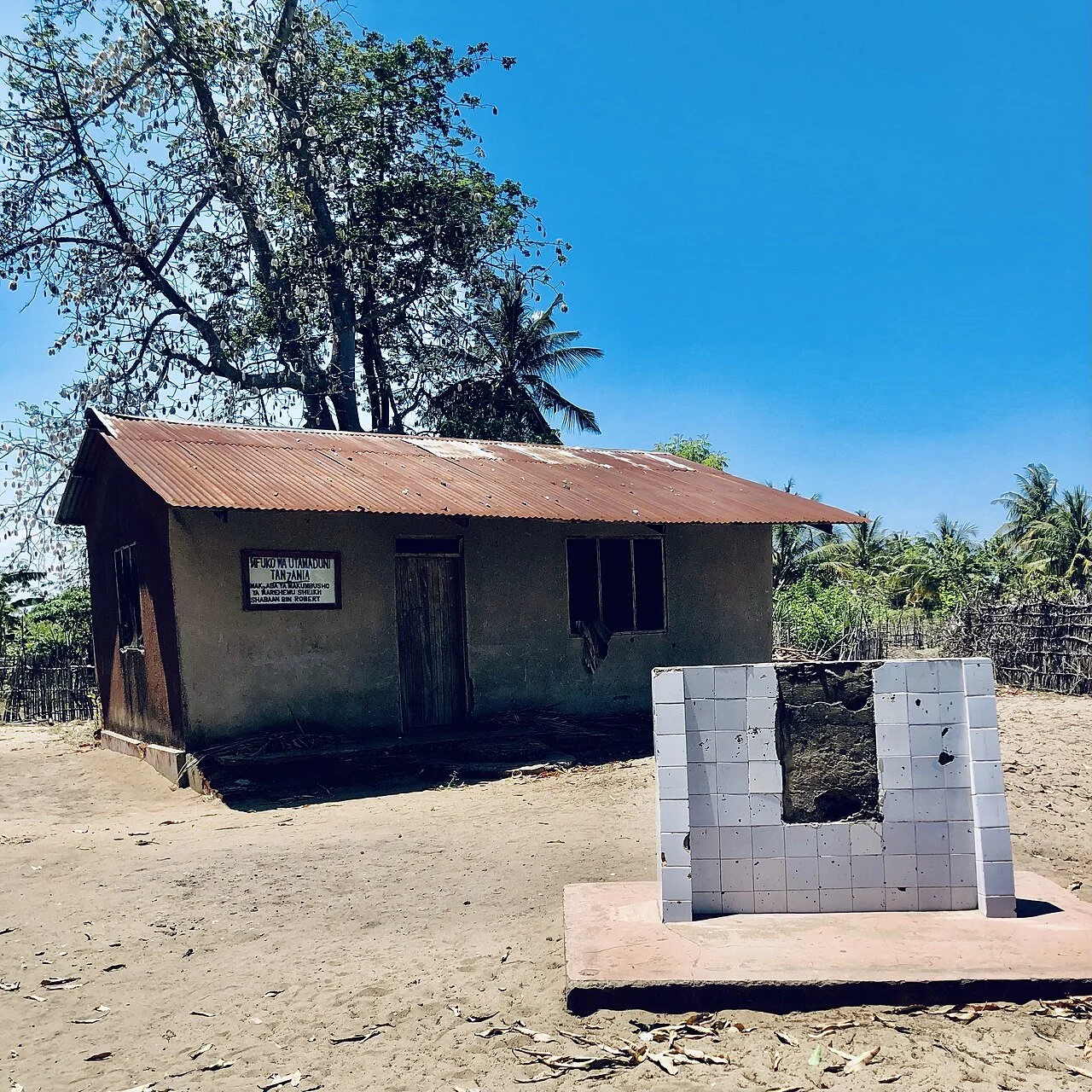
Credit: Halidtz / Wikimedia Commons, CC BY-SA 4.0
Shaaban Robert's legacy remains part of Tanga's cultural history, where his life and contributions to Kiswahili continue to be remembered.
How Shaaban Robert Transformed Swahili Poetry
Shaaban Robert is often described as the poet laureate of Kiswahili.
His importance came from his ability to use established poetic traditions while bringing new subjects and perspectives into them.
His poems explored morality, religion, politics, love, aging, and the responsibilities of human life.
These were not distant ideas reserved for scholars. They were questions that ordinary people faced in their relationships, work, and communities.
Poetry as a Way to Examine Life
Three Kiswahili concepts help explain the concerns that appear throughout his writing:
Utu: Humanity, human dignity, or personhood.
Haki: Justice, fairness, or what is right.
Hekima: Wisdom and the ability to make thoughtful judgments.
Robert returned to these ideas because he believed character should be demonstrated through conduct.
Someone might speak beautifully about justice but fail to treat others fairly. His writing encouraged readers to examine that difference.
In collections such as Koja la Lugha, he explored human life through questions about knowledge, wisdom, health, and moral responsibility.
His poetry invited readers to reflect on their own choices rather than simply accept a lesson.
A Poem Dedicated to Kiswahili Itself
One of his most revealing works was Kiswahili, a poem published in 1960.
Robert defended the importance of the language and expressed a deeply personal relationship with it.
He used images of nourishment and motherhood to communicate what Kiswahili meant to him.
For Robert, the language had helped shape his understanding of the world. It deserved respect because of what it already meant to its speakers.
The poem reminds us that a mother tongue carries more than information. It can also hold affection, memory, and a person's sense of belonging.
Stories That Questioned Power and Injustice
Although Robert was best known for his poetry, his prose became equally important to the development of modern Swahili literature.
He used fictional stories to explore difficult social questions without turning his writing into direct political speeches.
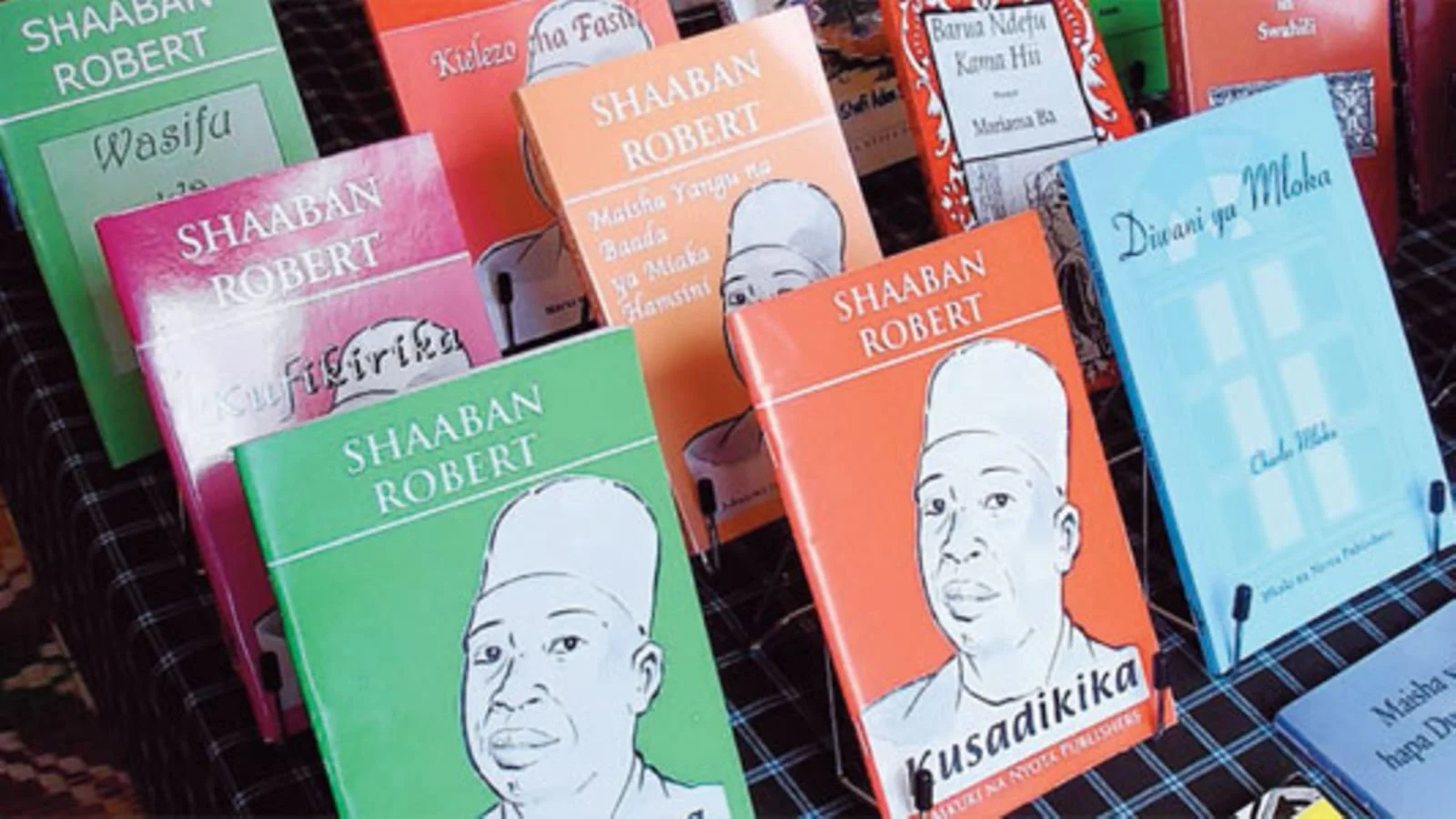
Credit: The Citizen
A collection of Shaaban Robert's published works, including Kusadikika, one of his best-known contributions to Swahili fiction.
Kusadikika: An Imaginary Country With Familiar Problems
One of his most celebrated books is Kusadikika, first published in 1951.
Its story takes place in an imaginary country where injustice and the abuse of authority shape public life.
Through allegory, Robert examined the relationship between those who hold power and those who must live under it.
The fictional setting allowed him to explore questions that were particularly relevant during the colonial period.
What makes authority legitimate? What happens when people are punished for pursuing truth? Can a society call itself just when its institutions behave unfairly?
These questions remain familiar even outside the historical conditions in which the book was written.
Adili na Nduguze: The Importance of Character
Another important work is Adili na Nduguze, a story centered on moral conduct and relationships.
Its themes include justice, good judgment, and the importance of balancing personal interests with responsibilities toward others.
Robert did not present morality as something that existed only in religious instruction or formal education.
It was something a person had to practice.
A person's choices, especially when dealing with others, revealed whether they genuinely understood the values they claimed to hold.
This is one reason Robert's writing continues to interest scholars of African philosophy as well as literature.
His stories offered ways to think about ethics through Kiswahili concepts and familiar human situations.
Preserving History and Strengthening Kiswahili
Robert's interest in human dignity also appeared in the real lives he chose to document.
His writing extended beyond fictional characters and poetic reflections. He believed that personal experiences and the achievements of other Africans were worthy of serious literary attention.
Remembering Siti binti Saad
One of his significant biographical works was Wasifu wa Siti binti Saad, which documented the life of the celebrated Zanzibari singer.
Siti binti Saad was an influential figure in the development of taarab music, particularly through her performances in Kiswahili.
Writing about her life was significant because it placed the achievements of an East African woman and cultural performer within the written historical record.
Robert's biography helped preserve a story that might otherwise have remained more dependent on personal recollection and oral accounts.
He also turned to autobiography in Maisha Yangu, meaning My Life, and the related work Baada ya Miaka Hamsini.
These writings offered readers an opportunity to encounter the person behind his literary ideas.
Making Kiswahili a Language of Intellectual Discussion
Robert also contributed to the development of Kiswahili as a language of modern literature and intellectual discussion.
During the colonial period, African languages often faced unequal treatment in education, administration, and publishing.
European languages held considerable institutional authority, even where African languages remained central to everyday communication.
Robert's writing demonstrated what Kiswahili could accomplish when given space in serious literary and intellectual work.
He participated in language and literary institutions, including the East African Swahili Committee, which supported the development and standardization of written Kiswahili.
His literary works helped connect older poetic traditions with emerging forms of fiction, autobiography, and modern prose.
Most importantly, they demonstrated that complex questions about justice, reason, and humanity could be explored through an African language.
Shaaban Robert's Legacy Today
More than six decades after his death, Shaaban Robert remains an important figure in the study of Kiswahili.
His books continue to be read in schools and universities, while literary scholars examine his contributions to African philosophy, poetry, and modern fiction.
His name is also part of Tanzania's public memory.
Yet preserving that legacy requires more than recognizing his achievements. His writings and historical records must remain accessible to future generations.
What His Work Means for Swahili Learners
For someone learning Kiswahili today, Robert offers an opportunity to understand the language beyond greetings and basic vocabulary.
His writing introduces words associated with values, relationships, social responsibility, and the ways people understand their communities.
You do not need to begin by reading an entire novel or lengthy poem.
A more approachable way to engage with his work is to start with a few important ideas.
Consider the words utu, haki, and hekima. Learn their meanings, then think about the situations in which people might use them.
A conversation about treating someone fairly can introduce haki. A discussion about making a thoughtful decision can introduce hekima.
Learning these words in context helps reveal how language carries cultural ideas.
For diaspora learners especially, that can be meaningful.
A language you may have heard only in greetings, music, or family conversations becomes a language through which you can encounter history, philosophy, and the perspectives of earlier generations.
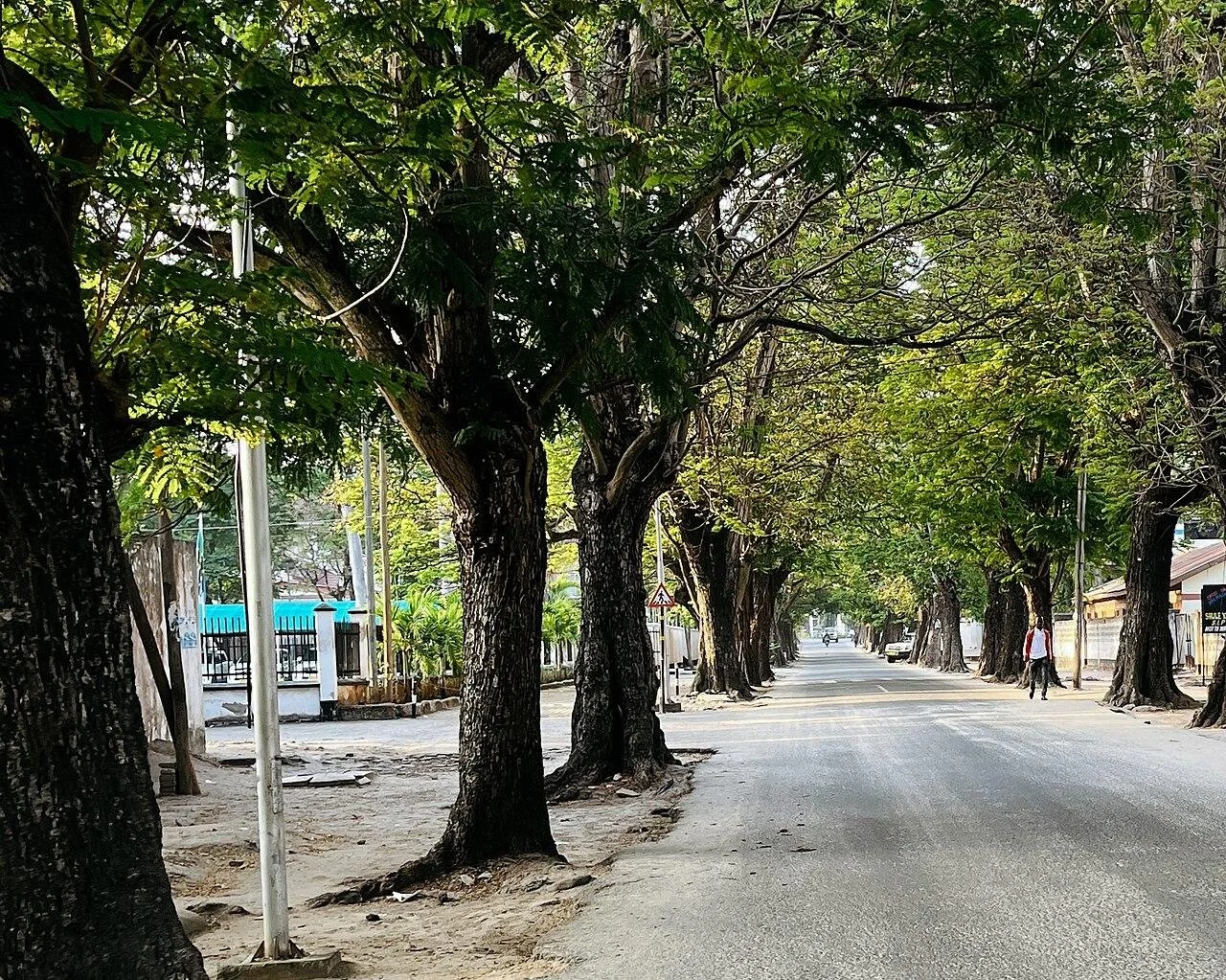
Credit: Halidtz / Wikimedia Commons, CC BY-SA 4.0.
Shaaban Robert Street in Dar es Salaam, one of the public reminders of the writer's lasting cultural legacy.
FAQs
1. Who was Shaaban Robert?
Shaaban Robert (1909–1962) was a Tanzanian poet, novelist, essayist, and intellectual. He became one of the most influential figures in modern Swahili literature through his poetry, fiction, biographies, and contributions to written Kiswahili.
2. Why is Shaaban Robert called the father of Swahili literature?
He is sometimes given this title because of his major influence on modern Kiswahili writing. However, Swahili literature existed for centuries before his birth. His achievement was helping expand and modernize an established literary tradition.
3. What are Shaaban Robert's most famous works?
His well-known works include Kusadikika, Adili na Nduguze, Kufikirika, Maisha Yangu, Wasifu wa Siti binti Saad, and Utenzi wa Vita vya Uhuru, 1939 hata 1945. His writing covers themes ranging from morality and justice to personal experience and historical events.
4. What did Shaaban Robert write about in his poetry?
His poems examined human character, wisdom, religion, love, politics, and social responsibility. He also wrote about Kiswahili itself, expressing the importance of the language to cultural identity and intellectual life.
5. Why is Shaaban Robert important to African literature today?
Robert demonstrated that an African language could support sophisticated literary and philosophical expression. His works continue to offer valuable perspectives on justice, human dignity, and the relationship between language and identity.
Conclusion
Shaaban Robert understood something that remains important today: a language needs people who will use it, develop it, and pass it on.
He inherited a literary tradition shaped by generations of Swahili speakers and contributed his own ideas to it. Through poetry and storytelling, he helped make Kiswahili a lasting part of East Africa's modern intellectual and cultural life.
For anyone reconnecting with an African language, his story offers a meaningful reminder.
Learning a language is not only about becoming fluent enough to speak. It is also about gaining access to the thoughts, memories, and experiences that earlier generations chose to preserve in their own words.
The more you learn, the more of that inheritance becomes available to you.
Continue Your Swahili Journey With NKENNE
With NKENNE, you can build your Kiswahili skills through lessons that help you understand and use the language in everyday life.
Start with a word, continue with a conversation, and gradually discover more of the history and culture carried through the language.
