
Nnoboa: How Akan Communities Turned Farm Work Into Mutual Aid
By: Yvonne Mag-usara
Before money changed hands, labour could.
A farmer who needed help clearing, planting, or harvesting did not always have to hire workers. Through nnoboa, a group worked together on one member’s farm, then moved to another when their turn arrived.
The arrangement turned time and physical effort into shared resources. Labour, food, responsibility, and trust moved through the group until everyone had benefited.
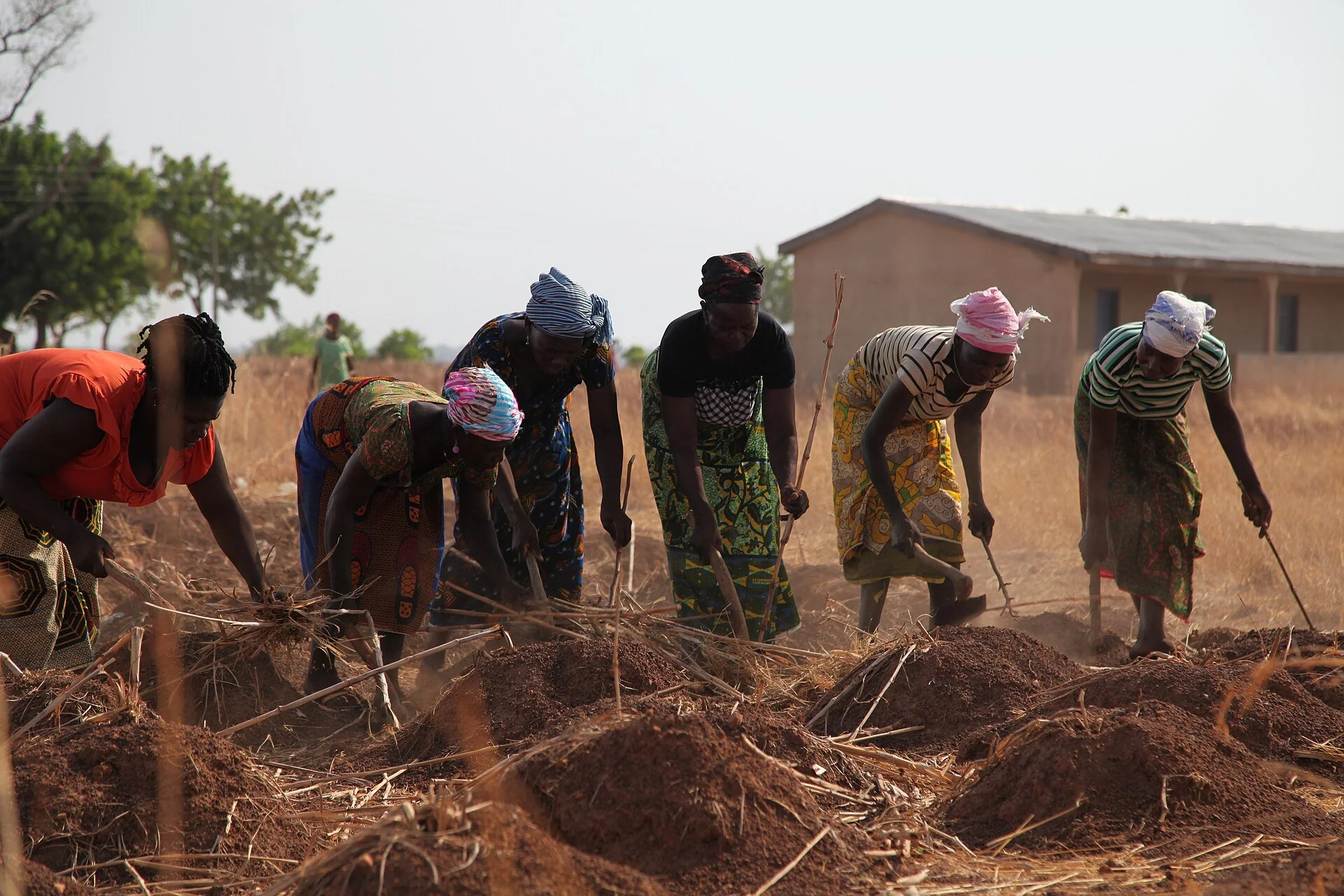
Credit: Rob Partridge / Global Justice Now, via Wikimedia Commons, CC BY 2.0.
Farmers preparing a field together in Ghana, reflecting the shared labour that has long helped communities complete demanding agricultural work.
What Nnoboa Really Means
Nnoboa is an Akan cooperative practice built around reciprocal assistance. Within Akan society, where family roles and community responsibilities have long been closely connected, farmers formed groups to work on one another’s land in rotation.
Sources translate the term in different ways, including “mutual weeding aid,” “let us cultivate together,” and “you help me, I help you.” The spelling nnobua also appears in some communities and publications.
This was more than spontaneous kindness. Every member received help because every member was expected to contribute when another farm’s turn came.
An Akan saying captures the wider principle:
Wiase yi mu yedi no nnoboa.
It can be understood as “life is an enterprise of mutual aid.” The idea reaches beyond farming: no one moves through life entirely alone.
How the Rotation Worked
Members agreed on a schedule and moved from farm to farm. On one day, they might clear or weed a field. On another, they would plant, harvest, process crops, or transport produce for someone else.
The rotation continued until every member had received the group’s labour. It could begin again when new work appeared during the farming season.
Several people working together could finish in a day what might take one farmer much longer. Nnoboa also reduced the immediate need for cash during planting and harvesting, when labour was most urgently needed.
There was no single formula followed everywhere. Group size, crops, tasks, and participation differed according to the needs of each community.
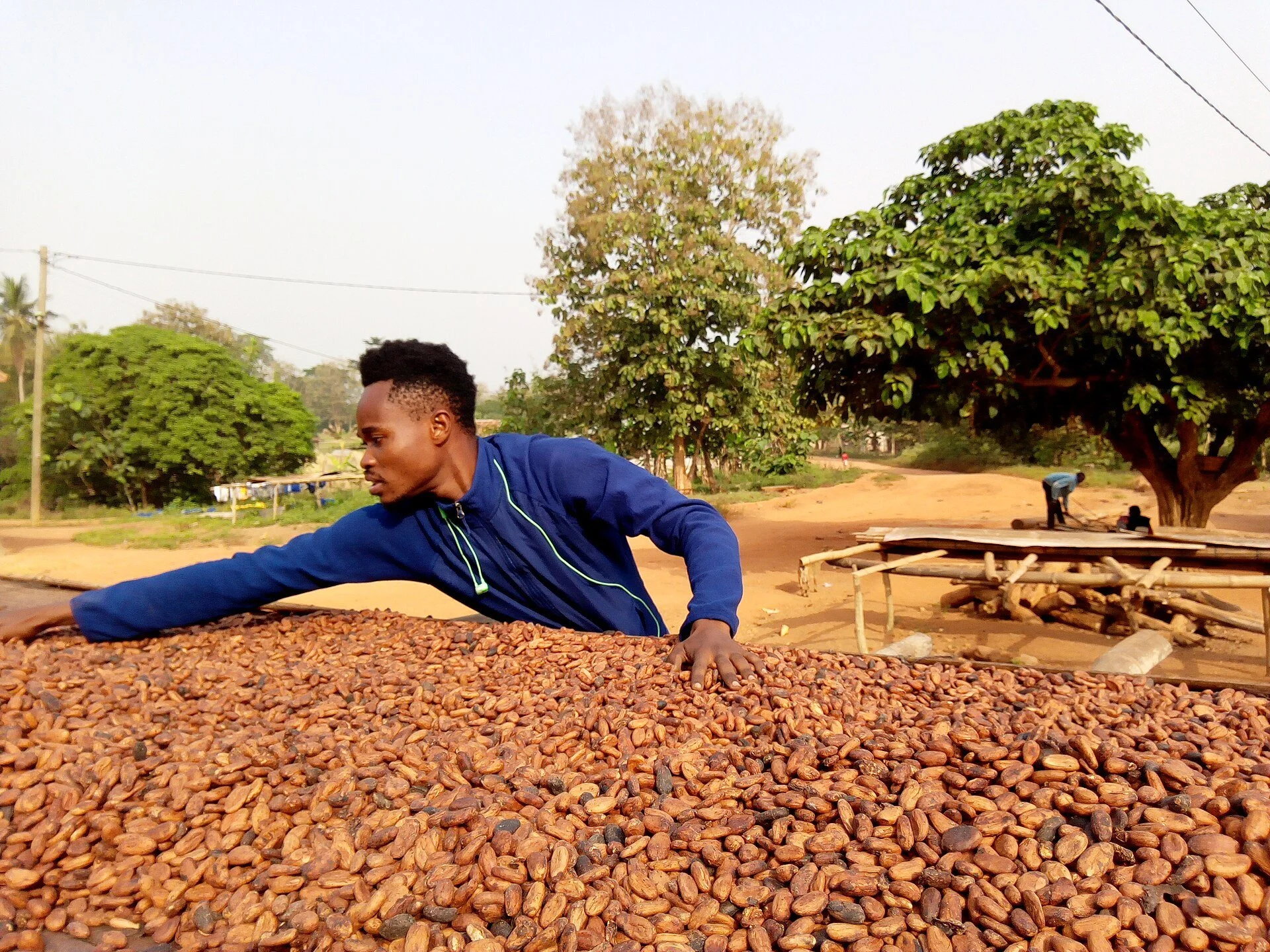
Credit: Wikimedia Commons / King Bangaba, CC BY-SA 4.0.
A cocoa farmer dries beans in Juaben Municipal, Ashanti Region, one of the agricultural settings where cooperation between farmers has long mattered.
The Meal Was Part of the Agreement
The farmer whose land was being worked commonly provided food for the group or covered the cost of feeding them.
This was practical because farm work required energy. Yet eating together also strengthened the relationships behind the arrangement. Members exchanged news, discussed farming challenges, and spent time together beyond the physical task.
In some communities, people who could not perform heavy labour still contributed through cooking, money, or other forms of support.
The meal was therefore not simply a reward after the work. It was part of the exchange that kept the group functioning.
Trust Was the Real Currency
Nnoboa worked only when members believed that today’s effort would be returned later.
A farmer might receive help before working on every other member’s farm. The system therefore depended on punctuality, commitment, and confidence that no one would disappear after receiving their turn.
Repeated lateness or absence could weaken the entire group. Cooperation, responsibility, tolerance, and a willingness to honour agreements were essential.
This made nnoboa different from one-directional charity. Help moved in a circle.
Each member became both a giver and a receiver. Reputation was built through showing up and doing the work.
What Farmers Shared Beyond Labour
Working together gave farmers access to more than additional hands.
Members could exchange knowledge about seeds, tools, crop varieties, buyers, agricultural inputs, and sources of credit. Some groups also purchased supplies together, helping members negotiate better prices.
The combined workforce allowed farmers to cultivate larger areas without immediately hiring labourers. This was especially valuable for people with limited access to cash.
Nnoboa also created a dependable social network. A farmer facing difficulty was already connected to people familiar with their work, family, and circumstances.
The farm benefited, but so did the relationships surrounding it.
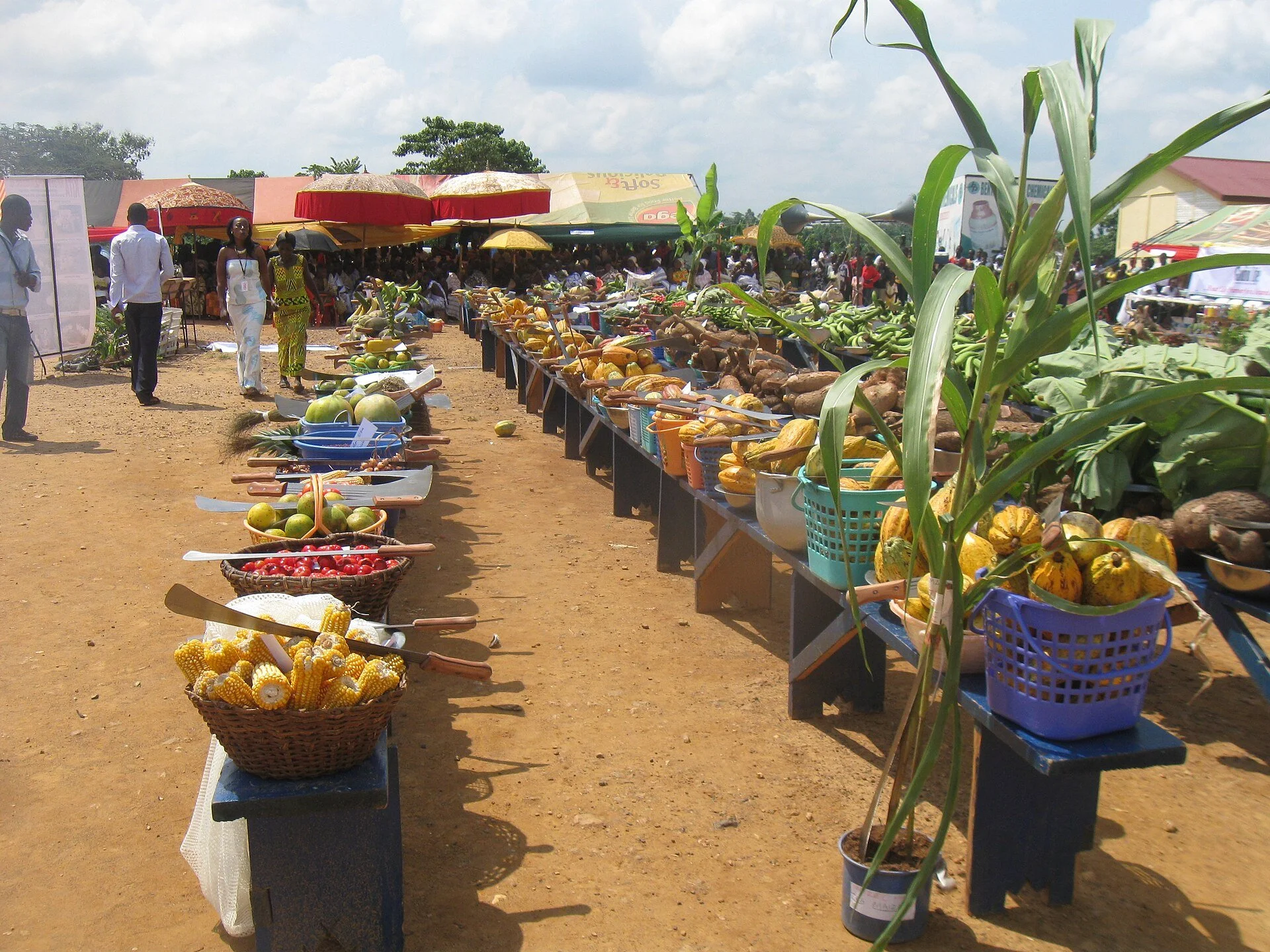
Credit: Wikimedia Commons / Trees ForTheFuture, CC BY 2.0.
Farmers gather during National Farmers’ Day in the Ashanti Region, reflecting the wider networks through which agricultural communities exchange recognition, knowledge, and experience.
From Farm Groups to Susu and Cooperatives
The rotating logic of nnoboa did not remain limited to agricultural labour.
Researchers have connected it to susu, a savings arrangement in which members contribute money and take turns receiving the pooled amount. Nnoboa rotates labour, while susu rotates access to money.
Both systems depend on regular contributions, patience, and trust. Members must continue supporting the group even after receiving their own benefit.
The same cooperative spirit can also be seen in community fundraising, producer groups, savings circles, and modern cooperatives. Yet nnoboa’s farming roots remain important because the practice developed in response to real labour needs.
It also reveals a broader understanding of wealth. A community’s resources include not only money, but also time, knowledge, meals, tools, relationships, and the willingness to help.
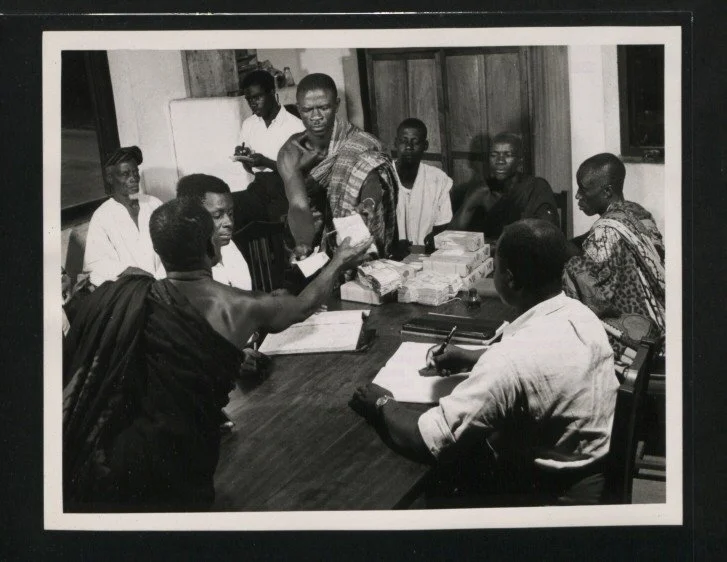
Credit: The National Archives UK, via Wikimedia Commons, Open Government Licence v1.0.
The Kumasi Co-operative Union meets in 1957. Its network brought together around 60 rural societies and thousands of farmers, showing how collective agricultural organisation developed in Ashanti beyond informal labour exchange.
FAQs
What is nnoboa?
Nnoboa is an Akan cooperative labour system in which members work on one another’s farms in rotation. Each farmer contributes labour and later receives the group’s assistance.
Does nnoboa involve payment?
Traditional nnoboa generally exchanged labour rather than wages. The host farmer often provided meals, while members contributed their time and physical effort.
What kind of farm work was done?
Groups could clear land, plant, weed, harvest, process crops, or transport produce. The tasks depended on the season and each farmer’s needs.
Was nnoboa practised only by men?
No single pattern applied everywhere. Participation and responsibilities varied between communities, crops, and local social arrangements.
Is nnoboa the same as communal labour?
They are closely related, but nnoboa is specifically reciprocal and rotational. Members work on individual farms in turn, while other forms of communal labour may focus on a shared public project.
How is nnoboa connected to susu?
Both systems organise contributions through rotation. Nnoboa circulates labour among farmers, while susu pools and distributes money among members in turn.
Is nnoboa still relevant today?
Its traditional form may vary, but its principles remain visible in cooperatives, savings circles, community projects, and other systems based on reciprocal support.
Conclusion
Nnoboa began with a simple problem: one farmer had more work than one pair of hands could finish.
The Akan response was not occasional assistance. Communities created a rotation in which labour moved from person to person until every participating farm had received attention.
The system depended on more than physical strength. Members had to arrive, work seriously, feed one another, and honour commitments after their own needs had been met.
That is why nnoboa remains more than an old farming method.
It expresses an understanding of progress in which individual success becomes possible because other people are willing to take part in it.
Learn Twi Through Akan Culture
With NKENNE, you can begin learning Twi through practical greetings and introductions while exploring the customs and community values that give the language deeper meaning.
Start with the language of work, cooperation, and shared responsibility, then continue your learning in the NKENNE app.
