
Who Are the Wolof People? Origins, Empire, and the Making of a Dominant West African Identity
By: Chimdindu Ken-Anaukwu
The Wolof are the largest ethnic group in Senegal and one of the most culturally influential peoples in West Africa. Their language dominates urban life, media, and daily conversation across much of the country. Their social patterns, music, cuisine, and religious practices shape national identity far beyond their numbers. Understanding who the Wolof are requires looking at their origins, the rise and fall of the Jolof Empire, and the long process that made their culture central to modern Senegal.

Early Origins and Migration Patterns
The precise origins of the Wolof remain debated. Archaeological and linguistic evidence places their ancestors in the Senegambia region (the area between the Senegal and Gambia rivers) for many centuries. Some traditions and scholarly views suggest earlier movements from the north or east, possibly linked to pressures from Saharan groups or broader West African population shifts.
By the time written records appear in the 15th century (Portuguese accounts), the Wolof were already established as a distinct people with organized states. They practiced agriculture (including wet rice), herding, and fishing. Oral traditions describe interactions and sometimes displacement of earlier groups such as the Soce and Serer in northern Senegal. Over time, Wolof language and customs spread through intermarriage, political incorporation, and cultural influence.
The Rise of the Jolof Empire
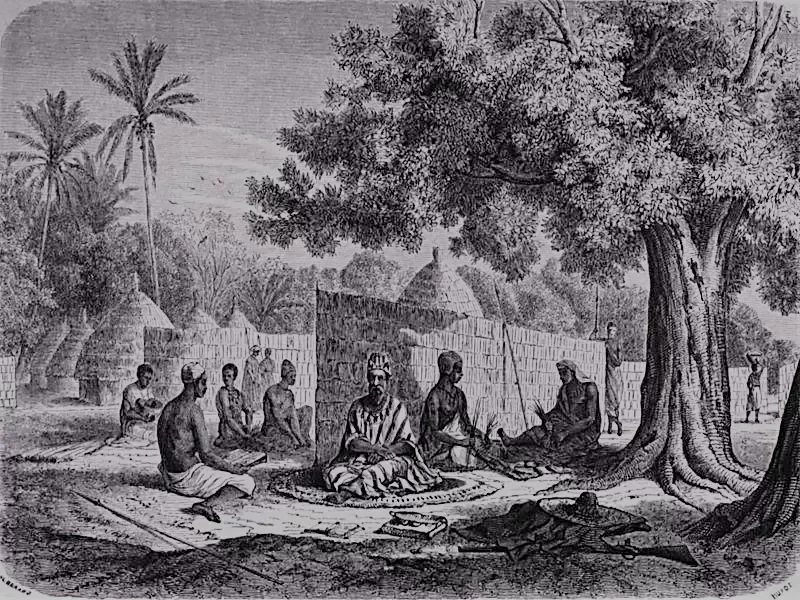
Around the mid-14th century (commonly dated to the 1350s), the Jolof Empire (also called the Wolof Empire or Great Jolof) emerged as a major political force. Traditional accounts credit its founding to the legendary figure Ndiadiane Ndiaye (also spelled Njaajaan Njaay). Stories about his background vary. Some link him to Islamic or northern lineages, others emphasize local Senegambian roots. What matters more historically is that he is remembered as a unifier who brought different groups into a larger political order.
The empire formed as a confederacy rather than a purely conquest-based state. Smaller kingdoms and chiefdoms recognized Jolof’s leadership, paid tribute, and participated in a shared political system while keeping significant local autonomy. This structure allowed the empire to expand influence across much of present-day northern and central Senegal and into neighboring areas.
Structure and Power of the Empire
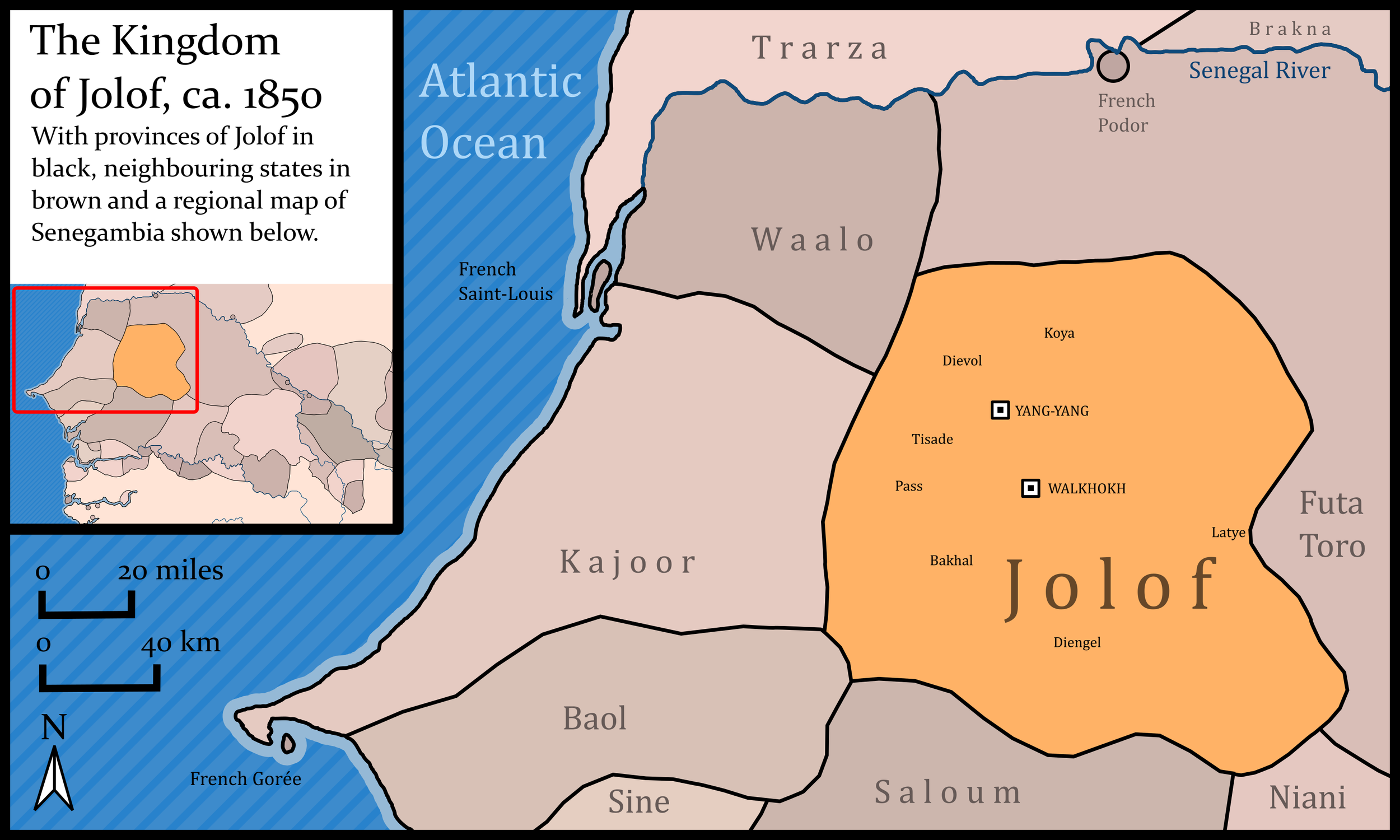
At its height, the Jolof Empire included core Wolof-speaking states such as Jolof itself, Waalo (Walo), Cayor (Kayor), and Baol (Bawol), along with influence over Serer kingdoms like Sine and Saloum and other neighboring territories. The ruler, known as the Buurba (or Burba) Jolof, held the highest authority from an inland capital.
The empire participated in regional trade networks, including trans-Saharan routes and later Atlantic exchanges after Portuguese contact in the 15th century. Society was stratified, with freeborn nobles and commoners, specialized artisan castes, and enslaved people. This social organization left lasting marks on Wolof culture that continue to influence relationships and status today.
The Breakup and Aftermath
The empire’s unity ended after the Battle of Danki in 1549. Cayor, under the leadership of Amari Ngoone Sobel Fall, defeated Jolof forces and broke away. Other vassal states followed, and the large confederacy dissolved. Jolof continued as a smaller independent kingdom for centuries, but it no longer dominated the region.
The former vassal states (especially Cayor, Baol, and Waalo) became important players in the Atlantic trade era. Despite political fragmentation, Wolof language, social patterns, and cultural practices continued to spread. Later French colonial rule further elevated Wolof influence because colonial administration and urban centers favored the language and networks already strongest among the Wolof.
How the Wolof Became Culturally Dominant in Senegal
Several factors combined to make Wolof culture central:
Historical political experience through the Jolof system gave Wolof elites early organizational advantages.
Demographic weight and expansion into fertile and coastal zones increased their presence.
Urbanization, especially around Dakar, turned Wolof into the main language of markets, media, music, and inter-ethnic communication.
Colonial and post-colonial administration often worked through existing Wolof networks.
Cultural prestige in music (mbalax), fashion, cuisine, and religious life (particularly Sufi brotherhoods with strong Wolof participation) reinforced its status.
Today many non-Wolof Senegalese speak Wolof as a second language. The culture has become a shared national reference while remaining rooted in specific historical experiences.
FAQ: Key Questions About Wolof History and Identity
When did the Jolof Empire exist?
It rose in the mid-14th century and effectively broke apart after 1549, though a smaller Jolof kingdom continued until the late 19th century.
Who founded the Jolof Empire?
Traditional accounts name Ndiadiane Ndiaye as the founder. Historical details mix legend and fact.
Are the Wolof the original inhabitants of Senegal?
No single group is. The region saw successive migrations. Wolof ancestors became dominant in northern and central areas over centuries through a combination of movement, political power, and cultural influence.
Why is Wolof so widely spoken in Senegal today?
Historical political structures, demographic presence, urbanization, and its role as a lingua franca in trade and daily life made it dominant.
Did the Jolof Empire control all of modern Senegal?
No. It was strongest in the north-central regions between the Senegal and Gambia rivers and held varying degrees of influence over neighboring states.
Wrapping Up: A Living Legacy
The Wolof people carry a history of political innovation, cultural adaptation, and long-term influence. From the confederacy of the Jolof Empire to their present role as cultural anchors in Senegal, their story shows how language, social organization, and historical experience shape identity across centuries.
Understanding this background deepens appreciation for Wolof language, customs, and contemporary life. NKENNE’s resources connect this history with practical language learning and cultural insight so you can engage more fully with the living heritage of the Wolof people. Start exploring today.