
By: Chimdindu Ken-Anaukwu
In KwaZulu-Natal, a young woman dances out into an open arena with a spear in her hand. Her friends sing, older women ululate, and guests step forward to press money into her hat. It is her day, and the whole community has come to celebrate it.
This is umemulo, the Zulu coming-of-age ceremony for young women. It marks the moment a daughter is recognised as a grown woman, and it is one of the proudest days a Zulu family can share.
In this guide, you will learn what umemulo is, why families hold it, what happens during the week of preparation and on the big day, and how the tradition is celebrated today. You will also pick up the Zulu words you are most likely to hear at an umemulo.
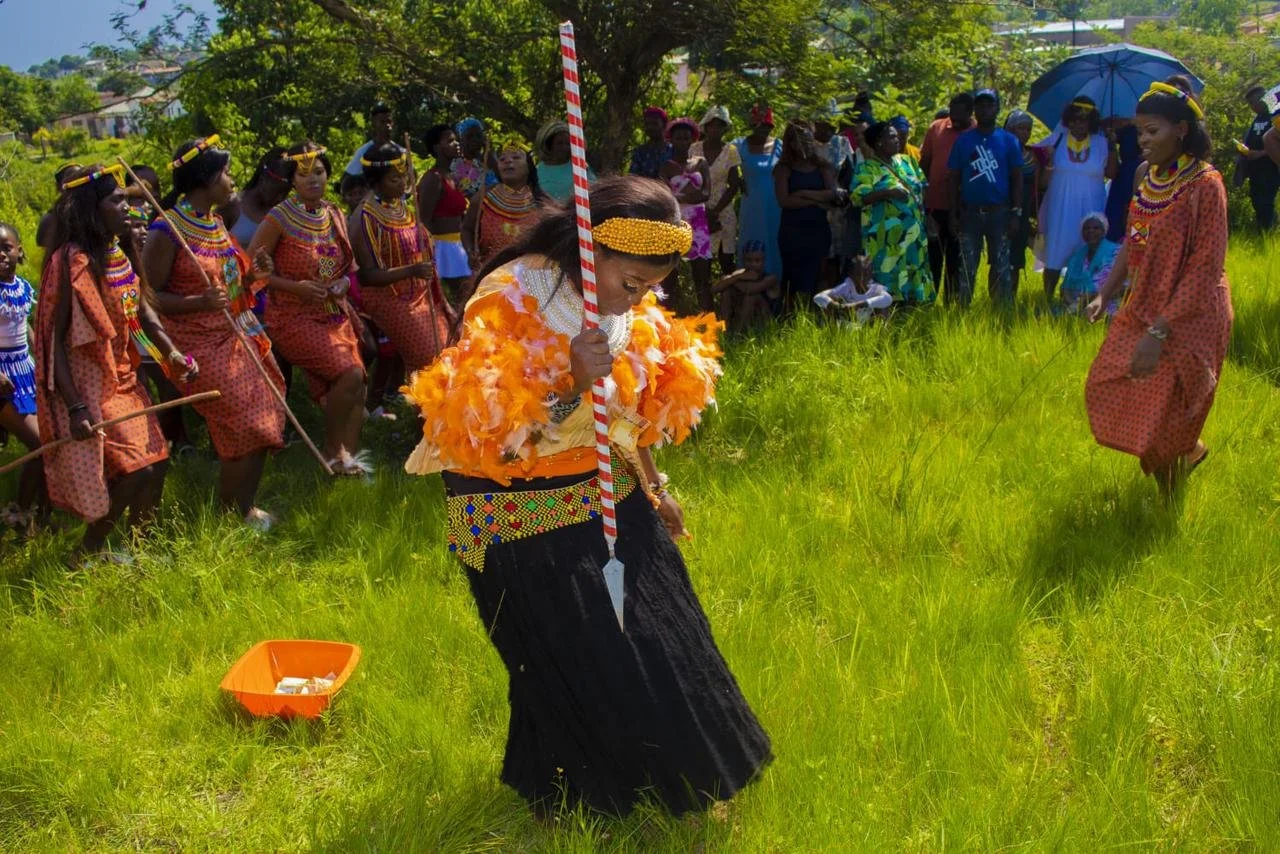
A young woman dances with her spear in the arena at her umemulo. Photo: Makhosonke23, CC BY-SA 4.0, via Wikimedia Commons
What Is Umemulo?
Umemulo is a traditional Zulu ceremony held for a young woman, usually when she is around 21 years old. The exact age is flexible, and each family chooses a time that suits them.
The ceremony announces to the community that the young woman, the intombi, has reached adulthood. Traditionally, it also signals that she is ready for marriage, although many women today hold an umemulo long before they have any plans to marry.
Umemulo is a family celebration, but it is also a public one. Relatives, neighbours, friends, and members of the wider community come to witness it, sing, dance, and give gifts.
Zulu words to know
Umemulo: the coming-of-age ceremony itself
Intombi: a young woman or maiden
Umkhonto: spear
Ukusina: traditional dancing
Isigcawu: the open arena or dancing ground
Amadlozi: the ancestors
Umhlwehlwe: the net of fat from a cow's stomach lining, worn by the young woman
Why Families Hold an Umemulo
An umemulo is a way for a family to honour a daughter. It celebrates the young woman she has become and thanks her for the respect she has shown her family, and herself, as she grew up.
It is also a spiritual occasion. In Zulu tradition, the ancestors, or amadlozi, remain part of the family and watch over the living. An umemulo presents the young woman to them as an adult and asks for their blessing on the next stage of her life.
Traditionally, the ceremony is hosted by the young woman's family, often led by her father. Preparing for it can take months. The family saves, chooses a date, invites relatives from near and far, and arranges the animals, food, and drink that a big celebration needs.
The Week Before: Songs and the River
The celebration begins well before the main day. For about a week, the young woman stays in a rondavel, the round thatched house found in many Zulu homesteads, together with her friends and other young women from the community.
During this time, the group practises the songs and dances they will perform on the big day. The singing is part of the fun, and the rehearsals can often be heard from across the homestead.
On the seventh day, at dawn, the young women go down to the river to bathe. The early-morning bath is a moment of cleansing before the young woman steps into her new role, and the group returns singing to begin the main celebration.
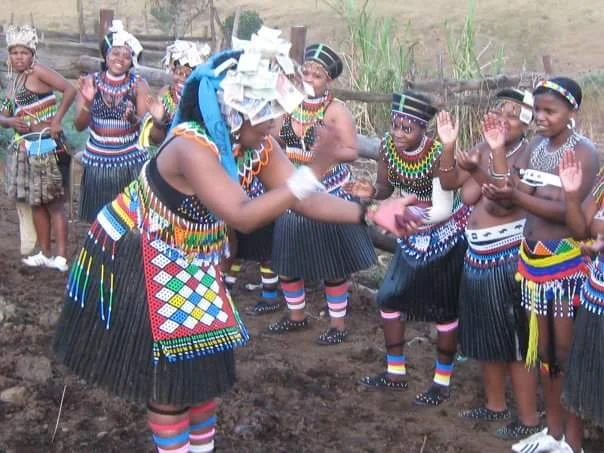
Young women in traditional Zulu beadwork singing and dancing together. Photo: MduKhanyile, CC BY-SA 4.0, via Wikimedia Commons
The Big Day: The Spear and the Dance
The main day is a burst of colour and sound. The young woman wears traditional dress and beadwork, and she is presented with a spear, an umkhonto. She carries it as she dances, and it becomes the symbol of her day.
She also wears umhlwehlwe, a lacy net of fat from a cow's stomach lining, draped over her shoulders. It is one of the most recognisable sights at an umemulo, and it ties her to the offering made for the ceremony.
Then comes the dance, ukusina. The young woman moves out into the arena, the isigcawu, with her spear, while her friends sing the songs they rehearsed all week. Older women ululate, relatives call out praise, and the crowd responds to every step.
For many young women, this is the moment they remember most: dancing in front of everyone who matters to them, while the whole community celebrates them.
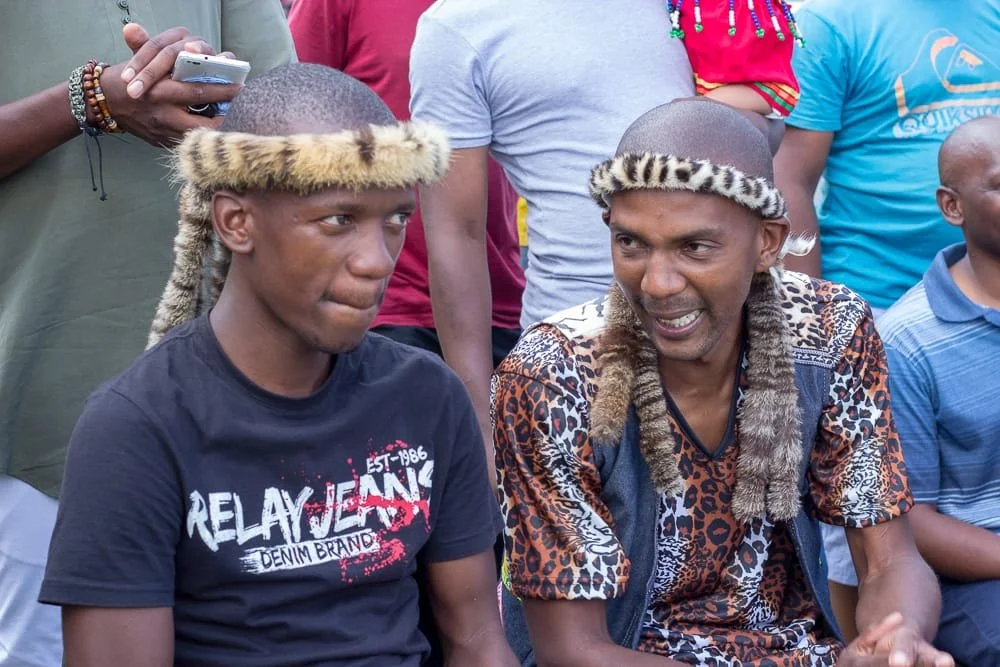
Guests in traditional headbands at an umemulo celebration. Photo: VtrapG, CC BY-SA 4.0, via Wikimedia Commons
Gifts, Money, and Thanking the Ancestors
Gift-giving is one of the most joyful parts of umemulo. As the young woman dances, guests come forward with presents and money. Money is often pinned to her clothing or placed in the hat she wears, so everyone can see how loved and supported she is.
Gifts often include blankets, household items, and things she will need for her future home. Each one is a sign that the community stands behind her as she steps into adulthood.
A cow is slaughtered as part of the ceremony. This is a way of giving thanks to the amadlozi for watching over the young woman as she grew up, and of asking for their continued protection. The meat is then cooked and shared with the guests, so the offering also becomes a feast.
Food and drink flow all day. Families prepare large pots of meat, pap, and other dishes, and traditional sorghum beer, utshwala, is often served to the adults.
Umemulo Today
Umemulo is very much alive. Families across KwaZulu-Natal and beyond still hold it at the family homestead, just as earlier generations did.
Many families who live in cities now celebrate it at hired venues, sometimes adding modern touches such as photographers, matching outfits for the young woman's friends, and a printed programme. The heart of the ceremony stays the same: the songs, the spear, the dance, and the gifts.
Umemulo is sometimes confused with the Reed Dance, Umkhosi woMhlanga. The Reed Dance is a large annual event where thousands of young women gather and present reeds to the Zulu king. Umemulo is different. It is a family ceremony held for one young woman at a time, and the focus is entirely on her.
Zulu Words You Will Hear at an Umemulo
An umemulo is a wonderful place to hear isiZulu in action. Songs, speeches, praise, and teasing all happen in the language, and a few key words will help you follow what is going on.
Umemulo – the coming-of-age ceremony itself.
Intombi – a girl or young woman. The young woman being celebrated is at the centre of every part of the day.
Umkhonto – spear. The spear she carries during the ceremony is one of its best-known symbols.
Ukusina – to dance in the traditional Zulu style. You will hear people call on the young woman and her friends to dance.
Inkomo – cow. A cow is often slaughtered for the celebration when the family can afford it.
Imbuzi – goat. Goats are also slaughtered as part of the ceremony.
Umembeso – a different ceremony, held as part of marriage arrangements, when the groom's family brings gifts to the bride's family. It is easy to confuse the two names, so it helps to know both.
You do not need to speak isiZulu fluently to enjoy an umemulo. But learning these words, and greeting the family with a warm Sawubona, shows respect for the occasion and for the people who invited you. Families notice and appreciate guests who make that effort.
Frequently Asked Questions
What is umemulo?
Umemulo is a Zulu coming-of-age ceremony that celebrates a young woman's transition into adulthood. Her family hosts it, and the wider community comes to sing, dance, and give gifts.
At what age is umemulo held?
It is usually held when a young woman is around 21, but the age is flexible and depends on the family.
Why does the young woman carry a spear?
She is presented with a spear, an umkhonto, during the ceremony and dances with it in the arena. It is one of the central symbols of her day.
Why do guests give money at umemulo?
Money and gifts show the community's love and support for the young woman as she begins her adult life. Money is often pinned to her clothing or placed in her hat.
Is umemulo the same as the Reed Dance?
No. The Reed Dance (Umkhosi woMhlanga) is a large annual national event. Umemulo is a family ceremony held for one young woman.
How do you say "thank you" in Zulu?
Ngiyabonga means "I thank you." Siyabonga means "we thank you."
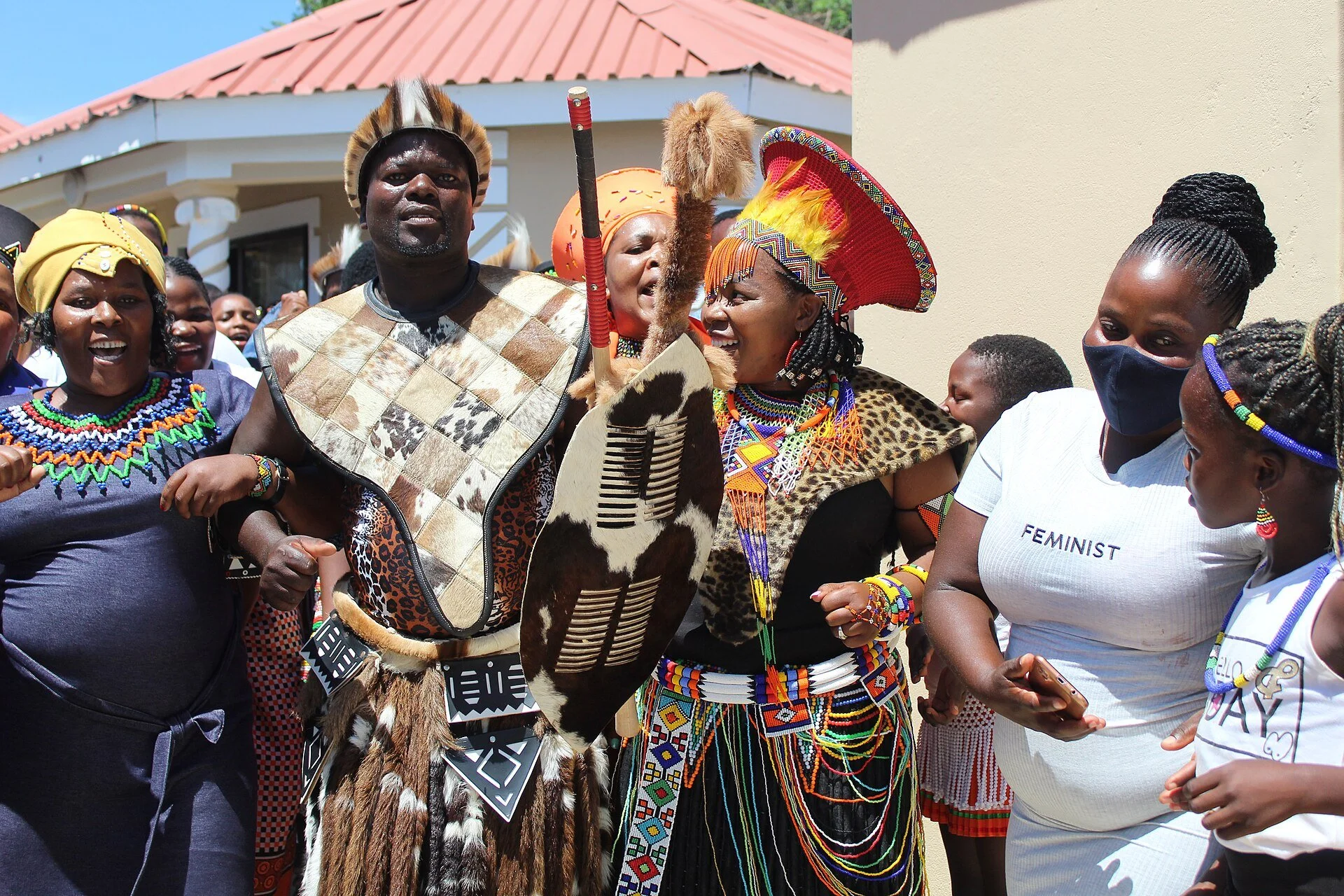


Family and guests in Zulu traditional dress at a celebration, where beadwork, song, and dance bring the community together. Photo: Dexs1991, CC BY-SA 4.0, via Wikimedia Commons

Umemulo is more than a party. It is a family saying to a daughter, in front of everyone they know, "We see you, we are proud of you, and we stand with you." The songs, the spear, the dance, and the gifts all carry that message.
The next time you see photos of a young woman dancing with a spear in a Zulu homestead, you will know exactly what you are looking at, and why everyone around her is cheering.
If this story made you want to understand Zulu more deeply, keep learning with NKENNE. Our lessons take you from everyday greetings to the words you will hear at celebrations like umemulo.
Ngiyabonga for reading with us! 🎉