
By: Chimdindu Ken-Anaukwu
Two hundred years ago, in what is now northern Nigeria, a woman wrote poems in four languages, advised a ruler, and built a network of women teachers that reached into homes across the countryside.
Her name was Nana Asma'u. She was the daughter of Usman dan Fodio, the founder of the Sokoto Caliphate, and she became one of the most respected scholars of her time, man or woman.
Today, schools and halls across northern Nigeria carry her name, and her story is told whenever people talk about women and learning in Hausa-speaking communities.
In this guide, you will learn who Nana Asma'u was, how she grew up, what she wrote, how her women teachers worked, and why she still matters today. Along the way, you will also pick up a few Hausa words connected to her life.
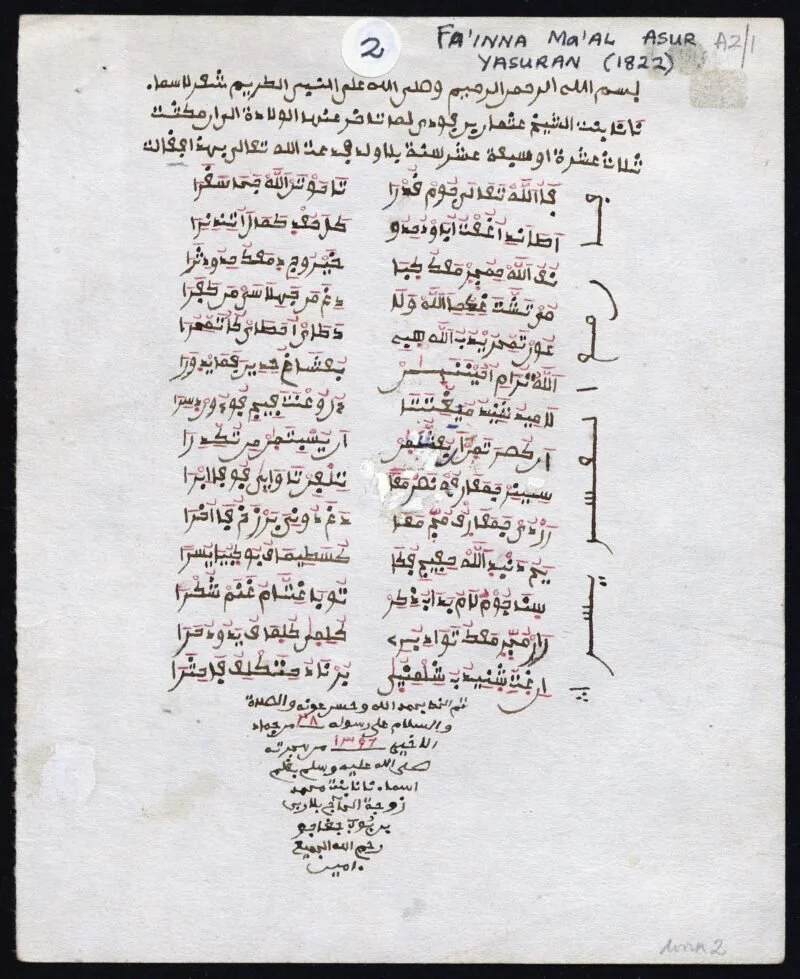
A manuscript of So Verily, the poem Nana Asma'u wrote in reply to her brother Muhammad Bello. Manuscript: Nana Asma'u, public domain, via Wikimedia Commons
Who Was Nana Asma'u?
Nana Asma'u was a scholar, poet, teacher, and counsellor who lived from 1793 to 1864. She was born in Degel, in the Hausa kingdom of Gobir, and spent most of her adult life in Sokoto, the capital of the caliphate her father founded.
She came from a Fulani family of Islamic scholars, but she lived in a Hausa-speaking world. That mix shaped everything she did. She could speak to scholars in Arabic, to her own family in Fulfulde, and to ordinary people in Hausa.
More than 60 of her works survive, written over about 40 years. They include poems on faith, history, grief, medicine, and good conduct, as well as works written to teach women.
Nana Asma'u at a glance
Born: 1793, Degel
Died: 1864, Sokoto
Father: Usman dan Fodio, founder of the Sokoto Caliphate
Languages she wrote in: Arabic, Fulfulde (Fula), Hausa, and Tamacheq
Best known for: her poetry, her work in women's education, and the 'Yan Taru movement
Growing Up in a Family of Scholars
Nana Asma'u grew up in a household where learning was part of daily life. Her father, Usman dan Fodio, was a preacher and scholar who taught that women, too, had a duty to seek knowledge. In his own writing, he criticised scholars who left the women of their households uneducated.
So Asma'u studied. As a girl she memorised the Qur'an and went on to study Arabic, Islamic law, theology, and the history of the early Muslim community. Her brothers and sisters were scholars as well, and the family's teachers, students, and visitors kept the compound full of books and debate.
Her childhood was not peaceful. In 1804, when she was about eleven, her father's community left Degel after growing conflict with the rulers of Gobir. Years of war followed, and out of that struggle came a new state: the Sokoto Caliphate, which grew into one of the largest states in nineteenth-century Africa.
After her father died in 1817, her half-brother Muhammad Bello became the caliphate's second ruler. Asma'u married Gidado dan Laima, who served as Bello's grand vizier, or waziri in Hausa. She was now at the very centre of the state, and she used that position to teach.
A Poet in Four Languages
Nana Asma'u wrote in Arabic, Fulfulde, Hausa, and Tamacheq, the language of the Tuareg. She wrote all of them in Arabic script. When Arabic script is used to write an African language such as Hausa or Fulfulde, it is called Ajami, and Asma'u was one of its great early writers.
Writing in several languages was not just a display of skill. It was a choice about who could learn. Arabic reached scholars, while Hausa and Fulfulde reached people who had never studied Arabic at all. Some of her works were rendered in more than one language so that more people could use them.
Poetry was her main tool. In a culture where most people learned by listening, a poem could be memorised, chanted, and carried from one village to the next far more easily than a book. Her poems taught the basics of faith, told the history of the jihad, mourned the dead, praised good women from Islamic history, and gave practical advice on how to live well.
Among her best-known works are Wakar Gewaye ("The Song of Wandering"), an elegy written in 1829 for her uncle Abdullahi dan Fodio, and So Verily, a poem she wrote in reply to her brother Muhammad Bello.
Hausa words from her world
Waƙa: song or poem
Ilimi: knowledge
Karatu: reading or study
Malama: a female teacher
Ajami: African languages written in Arabic script
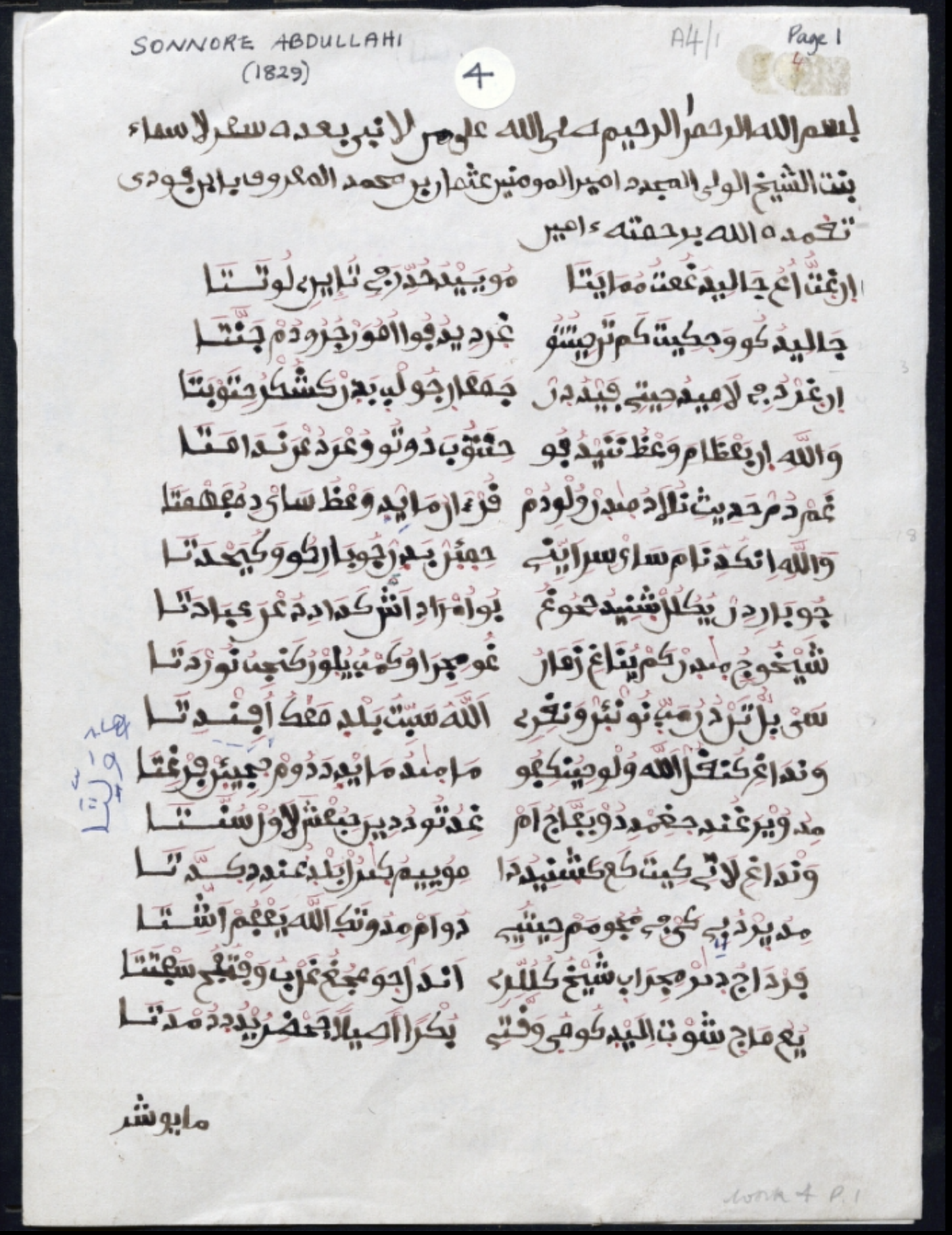
The elegy Nana Asma'u wrote in 1829 for her uncle, Abdullahi dan Fodio. Manuscript: Nana Asma'u, CC0, via Wikimedia Commons
The Jajis and the 'Yan Taru
Nana Asma'u's most lasting achievement may be the network of women teachers she built.
From around 1830, she began training women known as jajis. Each jaji was a teacher and leader who travelled out to women in towns and rural areas, many of whom could not leave their homes or their daily work to study.
The women who gathered to learn from a jaji were called the 'yan taru, which means "those who congregate together." The jajis taught them using Asma'u's poems, which were easy to remember and could be recited at home, while cooking, or while caring for children.
As a sign of her authority, each jaji received a malfa, a hat wrapped with a red turban. It made her role visible to everyone in the community.
The system worked like a chain. Asma'u taught the jajis, the jajis taught the 'yan taru, and the women who learned took that knowledge back into their own homes and passed it on to their daughters. In this way, a single scholar in Sokoto was able to reach women she would never meet.
Counsellor to the Caliphate
Nana Asma'u was not only a teacher of women. She was also trusted by the men who led the caliphate.
She worked closely with her brother Muhammad Bello throughout his rule, which lasted until his death in 1837. The two were fellow scholars as much as siblings. When Sokoto was threatened by Gobir and Tuareg forces, Bello wrote her an acrostic poem built on a verse from the Qur'an, "So verily, with every difficulty there is relief," before he marched out to meet the army. Asma'u wrote her reply, So Verily, while the danger was still close. It is the earliest known example of the two working on literature together.
She also recorded the history of the jihad in verse, wrote elegies for the leaders and scholars who died, and corresponded with scholars across the region. Her knowledge of the caliphate's founding generation made her a living link between the past and the present.
Through her husband, the waziri Gidado dan Laima, and her own reputation, she stayed close to the centre of government for decades. Long after Bello's death, people still turned to her for her learning and her judgement.
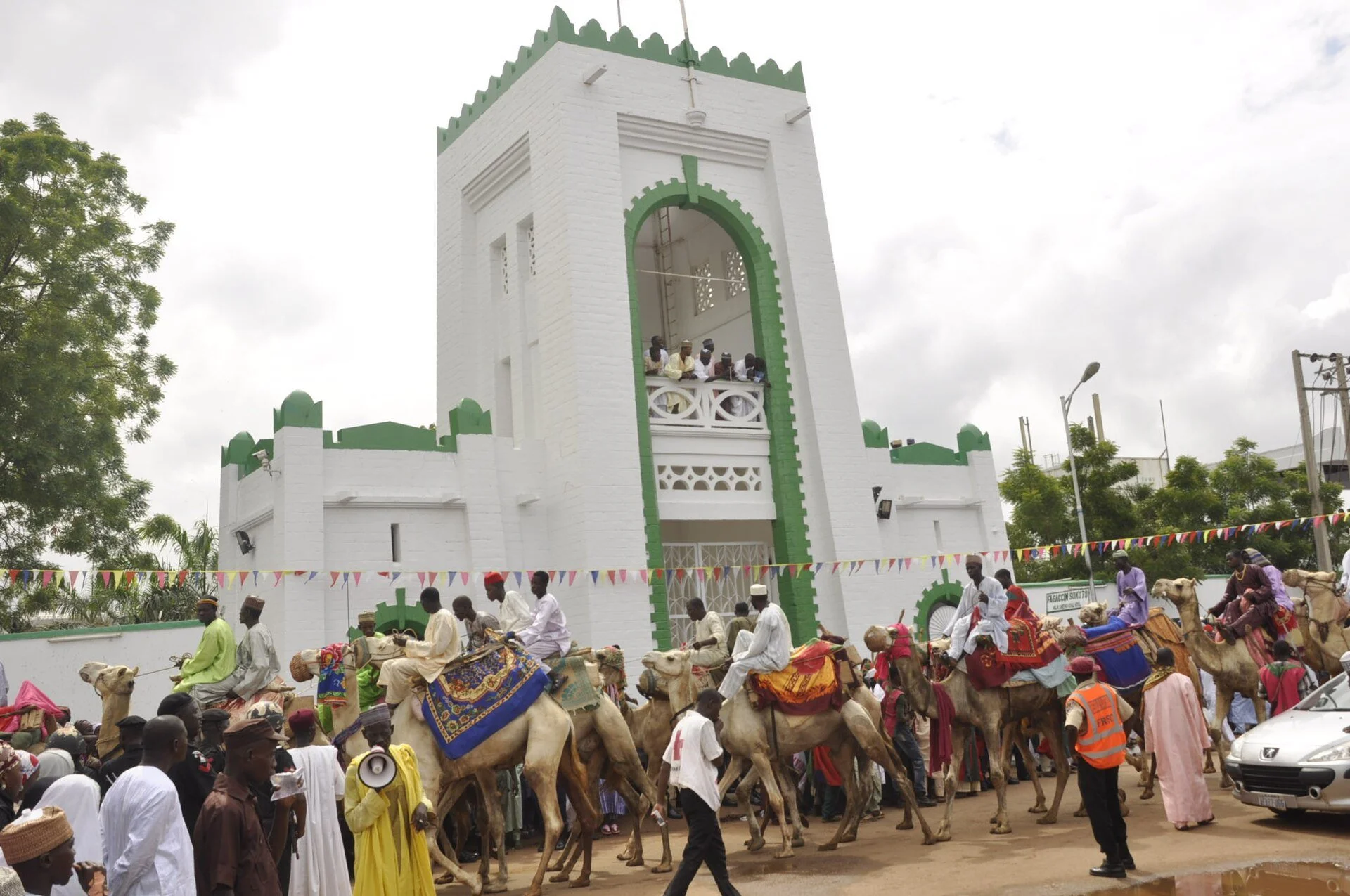
The Sultan Abubakar Palace in Sokoto, the city where Nana Asma'u lived and taught. Photo: Sani Maikatanga, CC BY-SA 4.0, via Wikimedia Commons
Her Legacy in Northern Nigeria Today
Nana Asma'u died in 1864, but her name is still everywhere in northern Nigeria. Schools, university halls, and women's organisations are named after her, and her example is regularly cited whenever people discuss women's education in Muslim communities.
In 2019, the governor of Sokoto State directed that land be provided for a proposed Nana Asma'u University of Medical Sciences, a sign of how much her name still means in the place where she lived and taught.
Her writing has also reached readers around the world. The scholar Jean Boyd spent years studying her work and wrote The Caliph's Sister (1989). Boyd and Beverly Mack later published The Collected Works of Nana Asma'u (1997) and One Woman's Jihad (2000), which brought her poems to English readers.
Perhaps her greatest legacy is the idea she lived by: that knowledge belongs to everyone, and that a well-chosen poem, in a language people understand, can travel further than any book.
Reading Nana Asma'u Today
For a long time, most of Nana Asma'u's writing lived in handwritten manuscripts kept by families, scholars, and religious teachers in northern Nigeria. Her poems were copied by hand, recited from memory, and passed on through the women's study networks she had built.
That changed in the late twentieth century, when researchers began collecting, translating, and publishing her work for a wider audience. Two books are especially important for anyone who wants to read her in English:
The Collected Works of Nana Asma'u, Daughter of Usman 'dan Fodiyo (1793–1864), edited and translated by Jean Boyd and Beverly B. Mack, brings together her poems in Arabic, Fulfulde, and Hausa with English translations.
One Woman's Jihad: Nana Asma'u, Scholar and Scribe, by Beverly B. Mack and Jean Boyd, tells the story of her life and explains the world in which she wrote.
Reading her work in translation gives you a sense of her range. There are elegies for friends and family, poems that teach the basics of faith, verses about history and the Sokoto jihad, and works on medicine and healing drawn from religious tradition.
If you are learning Hausa, her poems are also a window into the language's past. Many of them were written in ajami, Hausa written with Arabic script, which shows how Hausa was recorded long before the Latin alphabet became standard. Comparing the old forms with modern Hausa is a fascinating way to see how a language grows while keeping its roots.
Frequently Asked Questions
Who was Nana Asma'u?
Nana Asma'u (1793–1864) was a scholar, poet, and teacher in the Sokoto Caliphate in what is now northern Nigeria. She was the daughter of Usman dan Fodio, the caliphate's founder.
What languages did Nana Asma'u write in?
She wrote in Arabic, Fulfulde (Fula), Hausa, and Tamacheq, all in Arabic script. Writing African languages in Arabic script is known as Ajami.
What were the 'Yan Taru?
The 'Yan Taru, meaning "those who congregate together," were the groups of women who learned from Nana Asma'u's trained women teachers, the jajis.
Who was Nana Asma'u's brother?
Her half-brother Muhammad Bello was the second ruler of the Sokoto Caliphate. She worked closely with him as a fellow scholar and counsellor until his death in 1837.
How many works did Nana Asma'u write?
More than 60 of her works survive, written over about 40 years.
Where can I read Nana Asma'u's poems in English?
The Collected Works of Nana Asma'u (1997), edited by Jean Boyd and Beverly Mack, is the best-known English collection.
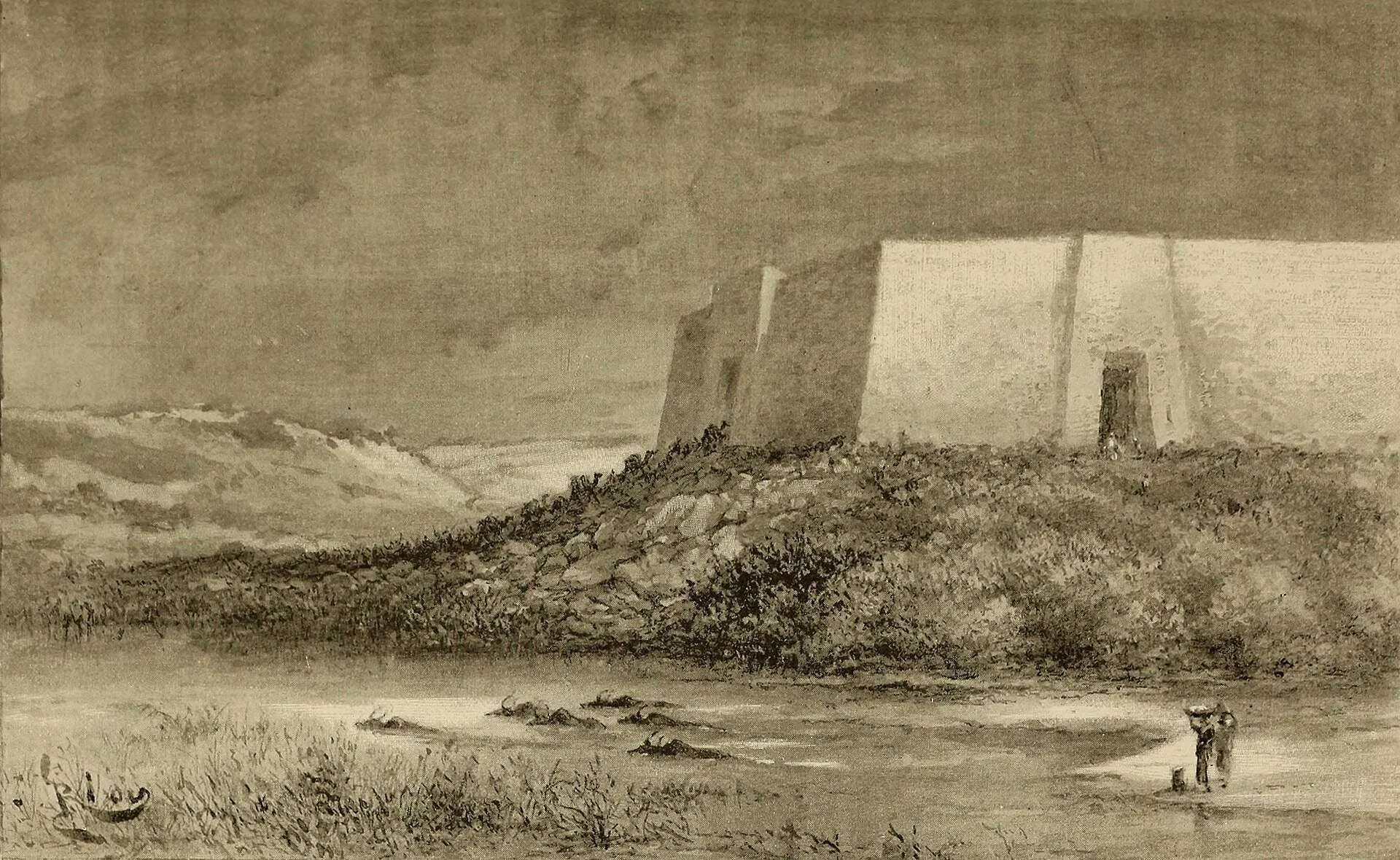


A view of Sokoto from its outskirts, from Parfait-Louis Monteil's account of his journey across the Sahel in the early 1890s. Image: P.-L. Monteil, public domain, via Wikimedia Commons

Nana Asma'u lived in a time of war, change, and uncertainty, and she answered it with learning. She wrote poems people could carry in their memories, trained women to teach other women, and helped shape a state from its very centre.
The next time you hear someone talk about ilimi in Hausa, think of the woman who made sure it reached every home.
If her story made you curious about the language she wrote in, keep learning Hausa with NKENNE. Our lessons take you from everyday greetings to the words and stories that carry the culture.
Na gode for reading with us! 📜