
By: Yvonne Mag-usara
A country’s soundtrack is rarely one song. It is the voice people return to when private feeling meets public history.
For many Ethiopians, that voice belonged to Tilahun Gessesse. He sang about love, separation, memory, home, and national life with such emotional clarity that his recordings followed listeners through several political eras and into the diaspora.
This article explores who Tilahun Gessesse was, how Ethiopia’s changing music industry shaped his career, what made his voice distinctive, and how his songs can help learners hear Amharic as a living language.
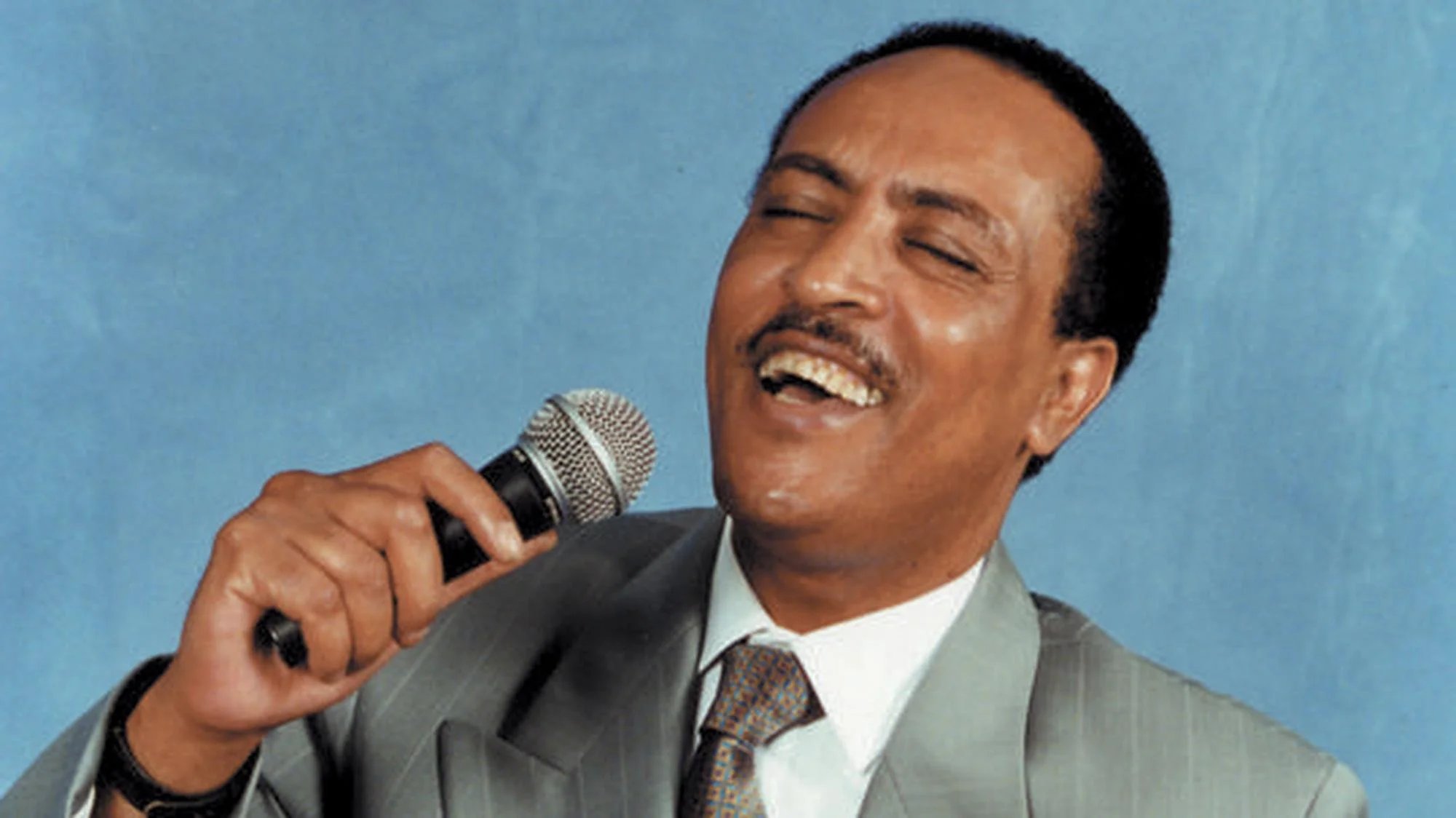
Credit: Collection Éthiopiques / Buda Musique, Paris, via DIE ZEIT
Tilahun Gessesse brought unusual emotional range to the Amharic songs that defined a formative period in modern Ethiopian music.
Who Was Tilahun Gessesse?
Tilahun Gessesse, written ጥላሁን ገሠሠ in Amharic, was one of the defining singers of modern Ethiopian music. He was born on September 27, 1940, in Woliso, now commonly spelled Weliso, in present-day Oromia.
His first name is the appropriate way to refer to him informally. Ethiopian names generally follow a personal-name and patronymic structure, so Gessesse is not a family surname in the Western sense.
Tilahun became widely known as “The Voice” and “the Golden Throat.” These names reflected more than vocal power. His tenor could sound controlled and intimate in one phrase, then urgent and commanding in the next.
Although most of his recordings were in Amharic, he also sang in Afaan Oromo. That multilingual work matters because Ethiopia’s musical history cannot be understood through only one language or community.
From Woliso to Addis Ababa
Tilahun’s musical ambitions appeared early. Accounts of his childhood describe a young singer determined to reach Addis Ababa, where Ethiopia’s most important theatres, orchestras, and broadcasting institutions were based.
He began his professional career at Hager Fikir Theatre. Established in the 1930s, the theatre became an important home for Ethiopian drama, music, dance, and public performance.
This was more than a first job. Hager Fikir placed Tilahun inside a working cultural institution where musicians learned how to perform for large audiences and collaborate with actors, dancers, composers, and instrumentalists.
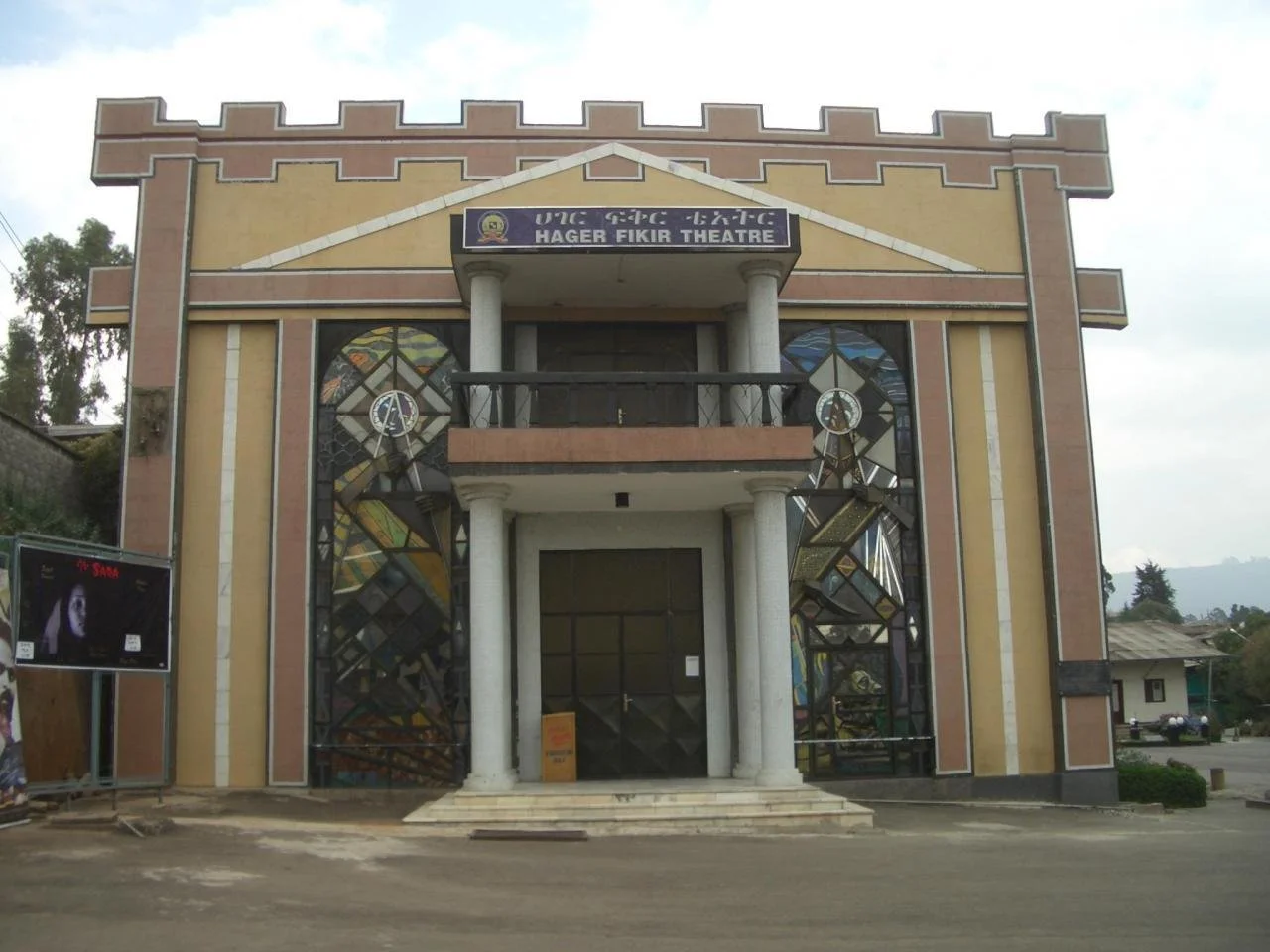
Credit: Steffen Wurzel / Wikimedia Commons, CC BY-SA 3.0
Hager Fikir Theatre in Addis Ababa was one of the first major institutions in Tilahun Gessesse’s professional career.
How Ethiopia’s Official Bands Shaped His Career
Tilahun later joined the Imperial Bodyguard Band, one of the ensembles that helped train and employ Ethiopia’s leading musicians.
At the time, singers could not simply assemble an independent band and begin recording. Much of the professional music scene operated through government institutions such as the Imperial Bodyguard Band, Police Band, Army Band, Hager Fikir Theatre, and National Theatre.
These ensembles introduced Ethiopian melodies and vocal traditions to brass sections, pianos, electric guitars, and formal arrangements. They gave performers steady musical training, but they also placed artistic careers close to political power.
Members of the Imperial Bodyguard were involved in the failed 1960 coup against Emperor Haile Selassie. Tilahun was briefly detained during its aftermath before continuing his career at the National Theatre.
His movement between these institutions reflects the conditions under which modern Ethiopian music developed. Artistic opportunity and state authority were often tied together.
The Sound of Ethiopia’s Musical Golden Age
Tilahun rose to national prominence during what is often called the Golden Age of Ethiopian music, particularly the 1960s and early 1970s.
The period is sometimes described as “Swinging Addis.” Ethiopian melodic modes and melismatic singing met jazz, soul, rhythm and blues, funk, and modern orchestral arrangements. The result was neither imported American music nor unchanged tradition.
Ethiopian music commonly draws from a modal system known as qenet or kiñit. Its best-known modes include Tizita, Bati, Ambassel, and Anchihoy. Musicians carried these Ethiopian foundations into arrangements built around saxophones, trumpets, keyboards, bass, and electric guitar.
Tilahun was particularly effective within this setting. He did not disappear behind the brass or rhythm section. His phrasing gave the instruments something to answer.
Recordings such as “Yehagere Shita,” “Kulun Manqualesh,” “Aykedashim Libe,” and “Ene Alanchie Alnorem” preserve different sides of his singing. English spellings of the titles vary because Amharic does not have one universally followed Latin transliteration system
Love, Memory, and Meaning in Tilahun’s Songs
Tilahun sang many love songs, but romance did not limit what those songs could communicate. His repertoire also addressed separation, loyalty, social responsibility, national belonging, and the pain of political change.
This layered quality fits a wider Ethiopian literary tradition called sem ena werq, or “wax and gold.” The wax is the meaning heard on the surface. The gold is the criticism, joke, political message, or deeper idea carried underneath it.
Not every Tilahun song should automatically be interpreted this way. Still, some listeners found public meaning inside apparently personal lyrics.
One reported example is “Alchalkum,” which presents the distress of a troubled relationship. It was also understood as a criticism of imperial rule and was banned around the period of the 1960 coup attempt.
Tilahun’s delivery strengthened this ambiguity. A line about one person’s disappointment could sound like the frustration of a much larger public.
Hearing Amharic Through Tilahun Gessesse’s Music
Songs allow heritage learners to hear how Amharic sounds when emotion changes the pace of speech. Tilahun stretches vowels, emphasizes particular syllables, and pauses where the feeling of a sentence demands it.
One useful example is the title የሀገሬ ሽታ, commonly written as Yehagere Shita.
The phrase can be understood in parts:
የ (ye): Of or belonging to
ሀገሬ (hagere): My country or my homeland
ሽታ (shita): Scent or smell
Together, the title means “the scent of my homeland.” The phrase turns homesickness into something physical. Home is remembered not only as a place, but as something the body can almost smell again.
Other useful words for listening include:
ድምፅ (dimts): Voice
ሙዚቃ (muzika): Music
ዘፈን (zefen): Song
ፍቅር (fikir): Love
ትዝታ (tizita): Memory or remembrance
አገር (ager): Country or homeland
Tizita also names an Ethiopian musical mode closely associated with remembrance and longing. This is one reason the word carries more emotional weight than a simple dictionary translation may suggest.
A Simple Listening Practice
Choose one Tilahun song and listen to it three times.
Listen first without reading anything. Notice the mood and repeated sounds.
Read the title in Fidel and Latin transliteration.
Listen again while identifying one or two repeated Amharic words.
The goal is not to reproduce Tilahun’s ornamented singing voice. It is to connect written Amharic with sound, rhythm, and emotional context.
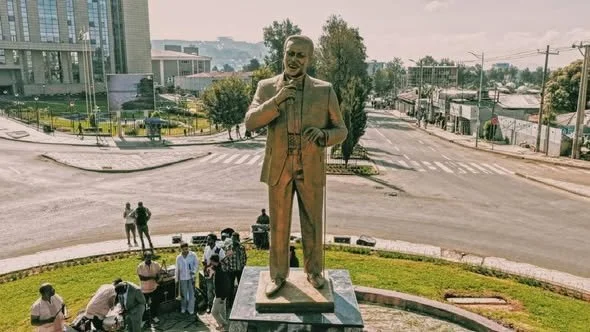
Credit: Ethiopian News Agency
Tilahun Gessesse’s memorial in Addis Ababa reflects how his contribution has moved beyond musical popularity into national cultural memory.
FAQs
Who was Tilahun Gessesse?
Tilahun Gessesse was an Ethiopian singer whose tenor voice helped define modern Ethiopian popular music. He became especially prominent during the country’s musical Golden Age in the 1960s and early 1970s.
Why was Tilahun Gessesse called “The Voice”?
The name recognized his vocal power, emotional control, and ability to perform love songs, patriotic pieces, and socially meaningful music with equal conviction.
What language did Tilahun Gessesse sing in?
Most of his recordings were in Amharic. He also performed in Afaan Oromo, reflecting both his background and Ethiopia’s multilingual musical culture.
What kind of music did Tilahun Gessesse perform?
His music combined Ethiopian melodic modes and vocal traditions with orchestral arrangements influenced by jazz, soul, rhythm and blues, swing, and funk.
What are some famous Tilahun Gessesse songs?
Well-known recordings include “Yehagere Shita,” “Kulun Manqualesh,” “Aykedashim Libe,” and “Ene Alanchie Alnorem.” Spellings may differ between albums and digital platforms.
Can Tilahun Gessesse’s songs help someone learn Amharic?
Yes. His songs can help learners recognize Amharic sounds, repeated vocabulary, phrasing, and emotional tone. They work best alongside structured lessons that explain the script, grammar, and everyday use of the language.
Conclusion
Tilahun Gessesse’s importance rests in what his voice carried.
It carried Amharic poetry into popular music. It carried private emotions into public life. It moved through political changes without losing its place in the memories of ordinary listeners.
For someone reconnecting with Ethiopian heritage, his music offers a useful beginning. You may first recognize a melody your family played. Then you notice a word. Eventually, the song stops being only inherited sound and becomes language you understand for yourself.
Learn Amharic Through Language and Culture
With NKENNE, you can learn Amharic while exploring the music, history, stories, and everyday expressions that give the language its meaning.
Start with the Fidel script, build practical vocabulary, and return to the songs you already know with a better understanding of what they have been saying all along.
