
By: Chimdindu Ken-Anaukwu
Most people think Nigerian Pidgin started with the British. The truth is older and more surprising. Long before English became dominant, Portuguese traders arrived on the West African coast and left lasting marks on the language. Words like “sabi” and “pikin” still used today are living proof. This post unpacks the hidden early history of Pidgin from Portuguese contact in the 15th century to the shift toward British trade influence and shows how coastal exchange created the foundation of the language millions speak today.
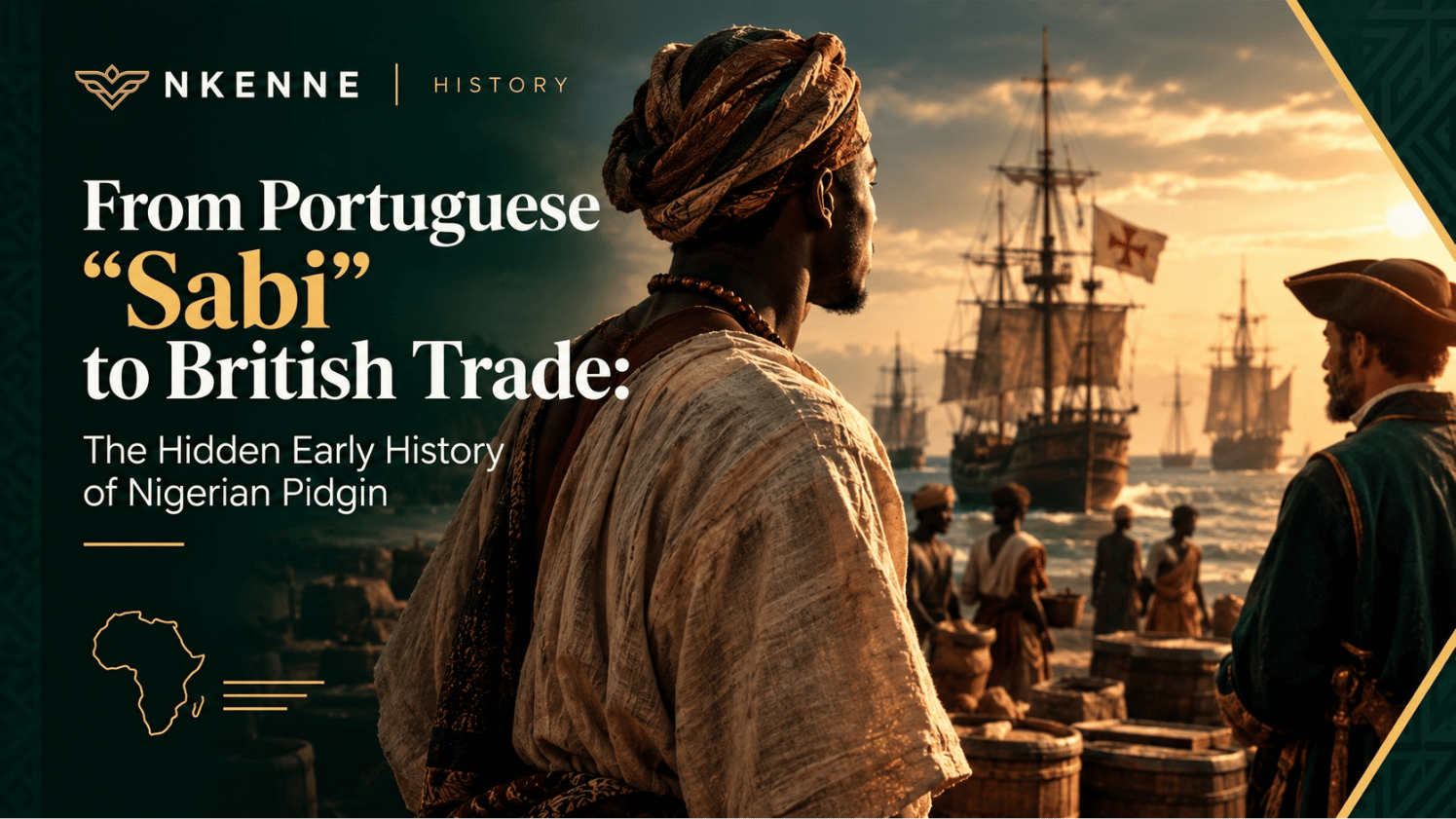
Portuguese Arrival on the Nigerian Coast
Portuguese explorers and traders reached the West African coast in the mid-15th century. By the late 1400s they were active in the region that includes present-day Nigeria, especially around the Bight of Benin and the Niger Delta.
They came primarily for trade. Local communities of fishermen, traders, and coastal peoples needed a practical way to communicate with the newcomers. No single local language dominated the diverse Delta, so a simplified contact language began to form. This early form is the deepest root of what later became Nigerian Pidgin.
How “Sabi” and “Pikin” Entered the Language
Two of the clearest surviving Portuguese contributions are still everyday words in Pidgin:
Sabi comes from the Portuguese verb saber, meaning “to know.” In Pidgin it means “to know” or “to know how to.” Example: “You sabi do am?” means “Do you know how to do it?”
Pikin comes from Portuguese pequeno or pequenino, meaning “small” or “small child.” In Pidgin it simply means “child.”
These words entered the language during early trade interactions and stayed even after Portuguese influence declined. Their survival shows how deeply the first contact period shaped the vocabulary.
Other Portuguese traces exist in related West African pidgins, but “sabi” and “pikin” remain the most visible and widely used in Nigerian Pidgin.
Trade, Contact, and the Birth of a New Speech Form
The early language was a practical tool. Portuguese traders and local people used simplified speech to buy and sell goods, negotiate, and manage daily contact. Because the Niger Delta was home to many different ethnic groups (Ijaw, Itsekiri, Urhobo, Edo and others), no single indigenous language could serve as a common medium. The new contact language filled that gap.
It mixed Portuguese vocabulary with local grammatical patterns and words. Over time this speech form became useful not only between Europeans and Africans but also among Africans from different language backgrounds who met at trading posts and markets.
The Shift from Portuguese to British Influence
By the 17th and 18th centuries, British traders became more dominant along the coast. English gradually replaced Portuguese as the main European source of vocabulary. The language relexified, meaning many Portuguese words were replaced by English ones, while the structure and some core vocabulary remained.
This is why modern Nigerian Pidgin is described as English-based, yet still carries clear Portuguese remnants. The British trade period expanded the language’s reach and vocabulary, but the foundation had already been laid during the earlier Portuguese era.
Why These Early Roots Still Matter
Understanding the Portuguese layer helps us see Pidgin as a long, continuous creation rather than a recent “broken English.” It was born from real human contact, trade needs, and linguistic creativity on the Nigerian coast. Words like “sabi” and “pikin” are not random slang. They are historical survivors that connect modern speakers to 15th- and 16th-century interactions.
This history also explains why Pidgin feels natural and flexible. It was designed from the beginning to bridge different groups.
FAQs
Where did the word “sabi” come from?
It comes from the Portuguese word saber, meaning “to know.” It entered early coastal speech during Portuguese trade contact.
What does “pikin” mean and where is it from?
“Pikin” means child. It derives from Portuguese pequeno or pequenino, meaning small or small child.
Did Pidgin start with the British?
No. The earliest forms began with Portuguese contact in the 15th century. British influence became stronger later and supplied most of the modern vocabulary.
Why did Portuguese words survive?
They entered the language early and became established in everyday use among coastal communities before English dominance.
Is Nigerian Pidgin the same as other West African pidgins?
They are related and share some early Portuguese features, but each has developed its own vocabulary and local influences.
Why is this history important today?
It shows that Pidgin is a creative, centuries-old language with deep roots in Nigerian coastal life, not a recent or inferior form of English.
Conclusion
The story of Nigerian Pidgin begins earlier than many people realise. Portuguese traders left permanent marks through words like “sabi” and “pikin.” British trade later expanded and reshaped the language, but the foundation was already present. What started as a practical tool for coastal exchange grew into one of Nigeria’s most widely used languages.
Knowing this history adds depth and pride to every conversation in Pidgin. It is a language shaped by centuries of contact, trade, and human ingenuity along the Nigerian coast.
Want to explore more of Pidgin’s history, regional varieties, and practical everyday use? Visit NKENNE; your home for authentic Nigerian Pidgin lessons and cultural stories. Start connecting with the language and its roots today.