
Shopping for Clothes and Everyday Items in Yoruba: Speak Like a Local
By: Chimdindu Ken-Anaukwu
Walking into a busy market or clothing stall in Lagos or Port Harcourt can feel overwhelming if you only point and nod. Sellers move fast, prices start high, and the right words make everything smoother. Knowing how to say “Mo fẹ́ ṣòkòtò” (I want trousers), “Wò ó” (look at it), ask for sizes, and push back with “Ó wón” or “Ó wón gan-an” (it’s too expensive) changes the experience. In this guide, you will learn practical Yoruba phrases for buying clothes and everyday items so you can shop with confidence and walk away with better deals.
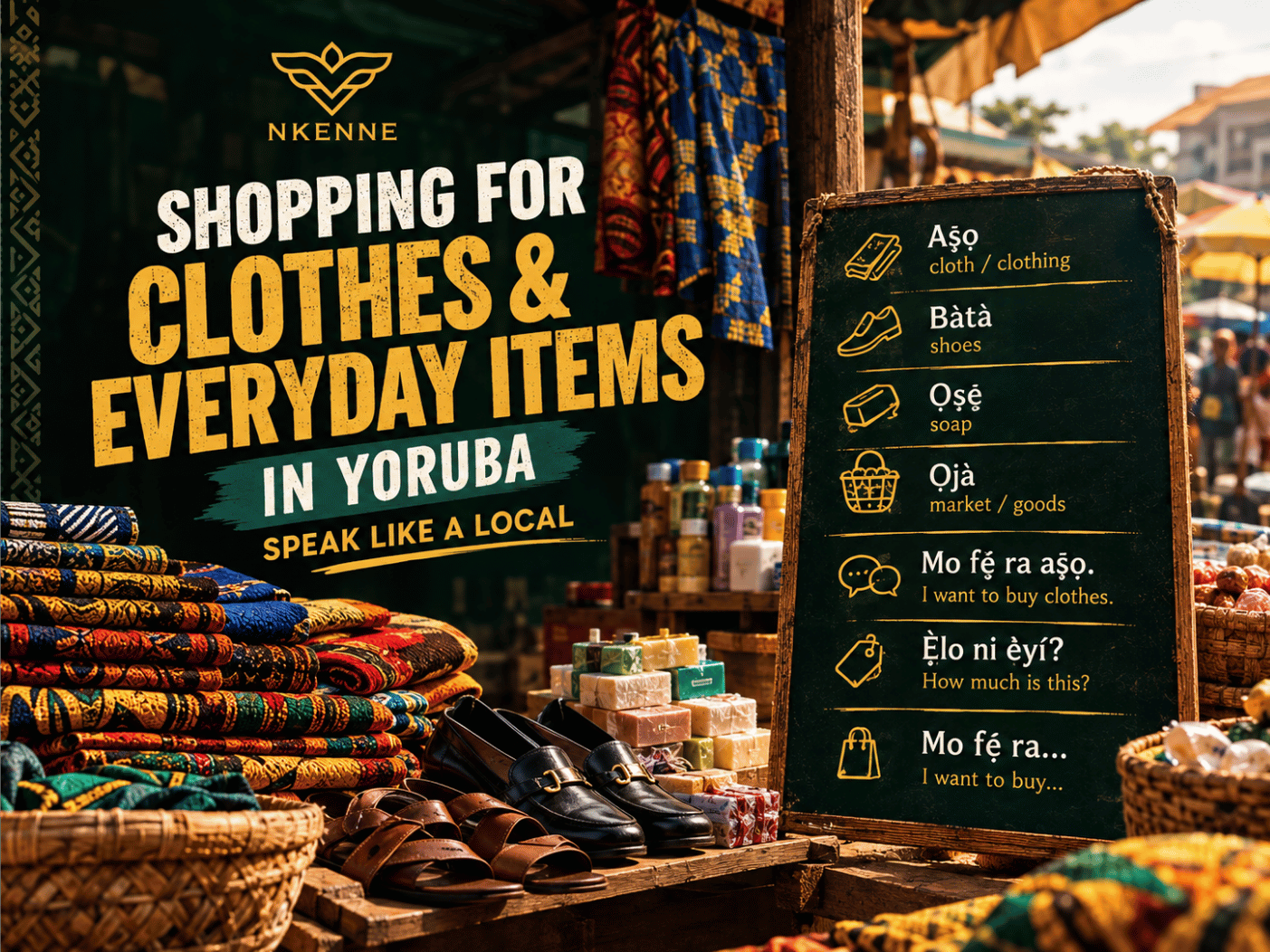
Why Speaking Yoruba Helps When Shopping
In open markets and roadside stalls, using Yoruba shows respect and often leads to friendlier service. Sellers respond better when they hear effort. Prices can drop faster, and you get clearer answers about size, quality, and available options.
Even basic phrases turn a transactional moment into a short conversation. That small connection is part of everyday Nigerian market culture.
Key Phrases for Saying What You Want
Start with the simple structure “Mo fẹ́…” (I want…).
Mo fẹ́ ṣòkòtò. (I want trousers.)
Mo fẹ́ ẹ̀wù. (I want a shirt / top.)
Mo fẹ́ bàtà. (I want shoes.)
Mo fẹ́ agbádá. (I want an agbada.)
Mo fẹ́ ìbora. (I want a wrapper / cloth.)
Mo fẹ́ ìwé. (I want a book — useful for everyday items.)
Mo fẹ́ ìgò omi. (I want a bottle of water.)
Add politeness with “Ẹ jọ̀ọ́” (please) at the beginning or end.
Asking About Size, Color, and Quality
Size questions are essential:
Ṣé ó wà ní size mi? (Do you have my size?)
Size wo ni èyí? (What size is this?)
Mo fẹ́ size [number]. (I want size…)
Ó tóbi jù. (It’s too big.)
Ó kéré jù. (It’s too small.)
Ṣé ó wà ní color mìíràn? (Do you have another color?)
Colors you will hear often:
Pupa (red)
Dúdú (black)
Funfun (white)
Àwọ̀ ewe (green)
Àwọ̀ sánmà (blue)
How to Say “Look at It” and Handle the Item
Use these when you want the seller to show or give you something:
Wò ó. (Look at it.)
Ẹ fi mí wò ó. (Let me look at it / Show it to me.)
Ẹ mú un wá. (Bring it.)
Ṣé mo lè wò ó? (Can I look at it?)
Ẹ jẹ́ kí n wò ó. (Let me see it.)
These phrases keep the interaction polite and clear.
Telling the Seller the Price Is Too High
Bargaining is normal. Use these lines:
Ó wón. (It’s expensive.)
Ó wón gan-an. (It’s too expensive.)
Ẹ mú kúrú. (Reduce it.)
Ẹló ni jálẹ̀? (What is your last price?)
Ẹ gbà [amount]. (Accept [amount].)
Kò tó. (It’s not enough / I can’t take that price.)
Stay calm and smile. The tone matters as much as the words.
Full Shopping Dialogues You Can Use
Buying Trousers
Buyer: Ẹ káàsán o. Mo fẹ́ ṣòkòtò.
Seller: Wò ó. Size wo ni?
Buyer: Size 32. Ṣé ó wà?
Seller: Bẹ́ẹ̀ ni. Ẹló ni?
Buyer: Ó wón gan-an. Ẹ mú kúrú, jọ̀ọ́.
Seller: Ẹgbẹ̀rún márùn-ún.
Buyer: Ẹ gbà ẹgbẹ̀rún mẹ́rin.
Seller: Ó dára.
Buying Shoes
Buyer: Mo fẹ́ bàtà.
Seller: Wò ó.
Buyer: Ó kéré jù. Ṣé ó wà ní size mìíràn?
Seller: Ẹ dúró.
Buyer: Ẹló ni?
Seller: Ẹgbẹ̀rún mẹ́wàá.
Buyer: Ó wón. Ẹ mú kúrú.
Useful Extra Phrases for Everyday Items
Mo fẹ́ ẹ̀fọ́. (I want vegetables.)
Mo fẹ́ ìyọ̀. (I want salt.)
Mo fẹ́ òróró. (I want oil.)
Ṣé ó ti tó? (Is that all / Is it enough?)
Ẹ fi sí inú bag. (Put it in the bag.)
Ẹ ṣé o. (Thank you.)
Common Mistakes to Avoid
Jumping straight to price without greeting. Always start with a greeting.
Speaking too fast. Clear and steady is better.
Accepting the first price immediately. Most sellers expect some negotiation.
Forgetting to check size properly. Always try or measure when possible.
FAQs
How do you say “I want trousers” in Yoruba?
Say “Mo fẹ́ ṣòkòtò.” You can also say “Mo fẹ́ ṣòkòtò ọkùnrin” for men’s trousers if needed.
What does “Wò ó” mean?
It means “Look at it.” Use it when you want the seller to show you an item.
How do I ask for my size?
Ask “Ṣé ó wà ní size mi?” or “Size wo ni èyí?” Then state your size clearly.
How do you say “It’s too expensive”?
The most common ways are “Ó wón” or “Ó wón gan-an.” Follow it with “Ẹ mú kúrú” to ask for a reduction.
Can I use these phrases in both markets and shops?
Yes. They work well in open markets, roadside stalls, and many small clothing shops. In big supermarkets, prices are usually fixed.
What if the seller does not understand me?
Speak slowly, point to the item, and repeat the key phrase. Most sellers appreciate the effort and will help.
Final Thoughts: Shop Smarter with Simple Words
Knowing a few solid Yoruba phrases turns shopping from a guessing game into a confident exchange. “Mo fẹ́ ṣòkòtò,” “Wò ó,” size questions, and clear ways to say the price is too high give you control and often better results. Use them consistently and you will feel more at home in any market or stall.
Ready to Practice More Real-Life Yoruba?
NKENNE helps you learn practical Yoruba for everyday situations. Explore our guides on market bargaining, food ordering, family conversations, and more. Join for clear lessons, useful phrases, and cultural tips that make speaking feel natural. Your next shopping trip can start with confidence.