
By: Chimdindu Ken-Anaukwu
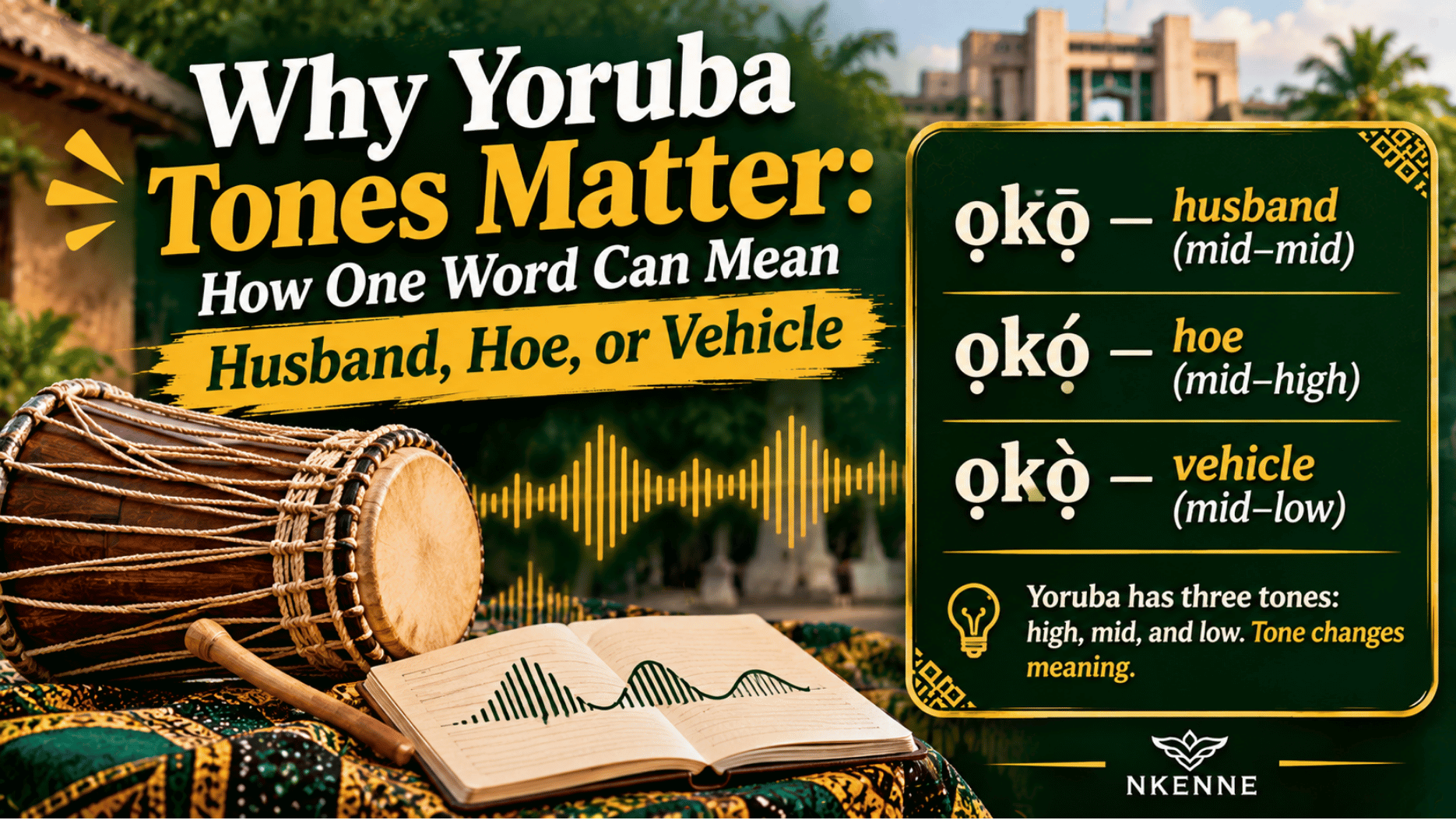
In Yoruba, the same spelling can mean completely different things depending on how you say it. One classic example is the word written as “ọkọ.” Say it one way and it means husband. Change the tone and it becomes a farming hoe. Change it again and it means a vehicle. This is not a small detail. Tones are the backbone of the language. In this guide, you will learn why tones matter so much, how the three main tones work, what the tone marks and diacritics mean, and how to avoid the common mix-ups that change your meaning entirely.
Why Tones Are Essential in Yoruba
Yoruba is a tonal language. This means the pitch of your voice is part of the word itself. Changing the tone can change the meaning completely, even when the consonants and vowels stay the same.
English speakers are not used to this system. In English, raising or lowering your voice usually shows emotion or emphasis. In Yoruba, it often creates an entirely different word. That is why mastering tones is one of the most important steps for clear communication.
The Three Main Tones Explained
Yoruba has three basic tones:
High tone: marked with an acute accent (´)
Mid tone: usually left unmarked
Low tone: marked with a grave accent (`)
These tones apply to every syllable. Getting them right is more important than perfect vowel or consonant pronunciation in many cases.
Understanding Tone Marks and Diacritics
Written Yoruba uses two main types of marks:
Tone marks (´ and `) to show high and low tones
Underdots (ẹ and ọ) to show open vowel sounds
The underdot is not a tone mark. It tells you the quality of the vowel. For example, “e” and “ẹ” are different sounds, just as “o” and “ọ” are different.
When you see a word like “ọkọ,” the underdots show the open “o” sound, while the tone marks (or lack of them) tell you the pitch pattern.
The Famous Ọkọ Minimal Pair
This is the example almost every Yoruba teacher uses:
ọkọ (mid-mid) = husband
ọkọ̀ (mid-low) = hoe (the farming tool)
ọkọ́ (mid-high) = vehicle or car
Same letters. Completely different meanings. The only difference is the tone on the second syllable.
If you say the wrong tone, people may understand you from context, but the difference is real and native speakers hear it immediately.
Other Useful Minimal Pairs
Here are a few more clear examples that show how powerful tones are:
òwò (low-low) = business or trade
ówó (high-high) = moneyìgbà (low-mid) = time or period
ìgbá (low-high) = garden egg or calabashẹsẹ̀ (mid-low) = foot or leg
ẹsẹ́ (mid-high) = sin or row
These pairs help train your ear. Once you can hear the difference, speaking becomes much clearer.
Practical Tips for Hearing and Producing Tones
Listen more than you speak at the beginning. Focus on the melody of the word.
Practice minimal pairs out loud, exaggerating the pitch difference at first.
Record yourself and compare with native speakers.
Learn new words with their tones from day one. Do not add tones later.
Use simple hand gestures (high, mid, low) while practicing to reinforce the pitch.
Tones become natural with consistent exposure and practice.
Common Mistakes Learners Make
Treating Yoruba like a non-tonal language and ignoring pitch.
Learning vocabulary without tone marks.
Over-focusing on individual sounds while neglecting the overall melody.
Assuming context will always save them. Sometimes it does, but clear tones prevent confusion.
FAQs
How many tones does Yoruba have?
Yoruba has three main level tones: high, mid, and low. There are also tone combinations and some contour patterns in natural speech, but the three level tones are the foundation.
Do I need to write the tone marks every time?
In formal writing and learning materials, yes. In casual texting, many people omit them, but learners should practice with the marks until the tones become automatic.
What do the underdots mean?
The underdots on ẹ and ọ show that the vowel is open (more like the “e” in “bed” or the “o” in “hot” for many speakers). They are not tone marks.
Is the “ọkọ” example real?
Yes. It is one of the most commonly taught minimal pairs and accurately reflects how tones change meaning.
Can I be understood if my tones are wrong?
Often yes, especially with context and gestures. But correct tones make you clearer, more confident, and easier to understand.
How long does it take to get tones right?
It varies. Some learners start hearing the differences within weeks of focused listening. Consistent practice with minimal pairs speeds up progress.
Final Thoughts: Master the Music of the Language
Yoruba is a musical language, and tones are its melody. The same sequence of letters can mean husband, hoe, or vehicle depending on pitch. Once you understand how tone marks and diacritics work, and once you train your ear with clear minimal pairs, the language becomes far less mysterious. Tones are not an extra detail. They are central to meaning. Learn them early and everything else becomes easier.
Ready to Speak Yoruba with Confidence?
NKENNE helps you learn practical Yoruba the right way, with clear explanations, real-life phrases, and cultural context. Explore our lessons on everyday conversation, food, market talk, and more. Join our community and start speaking with the accuracy and confidence that tones provide. Your next step in Yoruba starts here.