
By: Yvonne Mag-usara
In many Igbo communities, success did not become status simply because other people could see someone’s wealth. Achievement had to be recognized publicly, shared through social obligations, and placed under the expectations of the community.
Ozo title-taking was one way of making that transition. Depending on the town, a candidate might have to demonstrate financial stability, complete earlier titles, satisfy inquiries into his character, provide food and gifts, and participate in public and ritual ceremonies. The title brought prestige, but it also placed the holder under greater scrutiny.
There was never one Ozo system governing all of Igboland. Its ranks, ceremonies, symbols, restrictions, and political influence differed from one community to another. Understanding Ozo therefore requires looking beyond the red cap and asking what status demanded from the person wearing it.
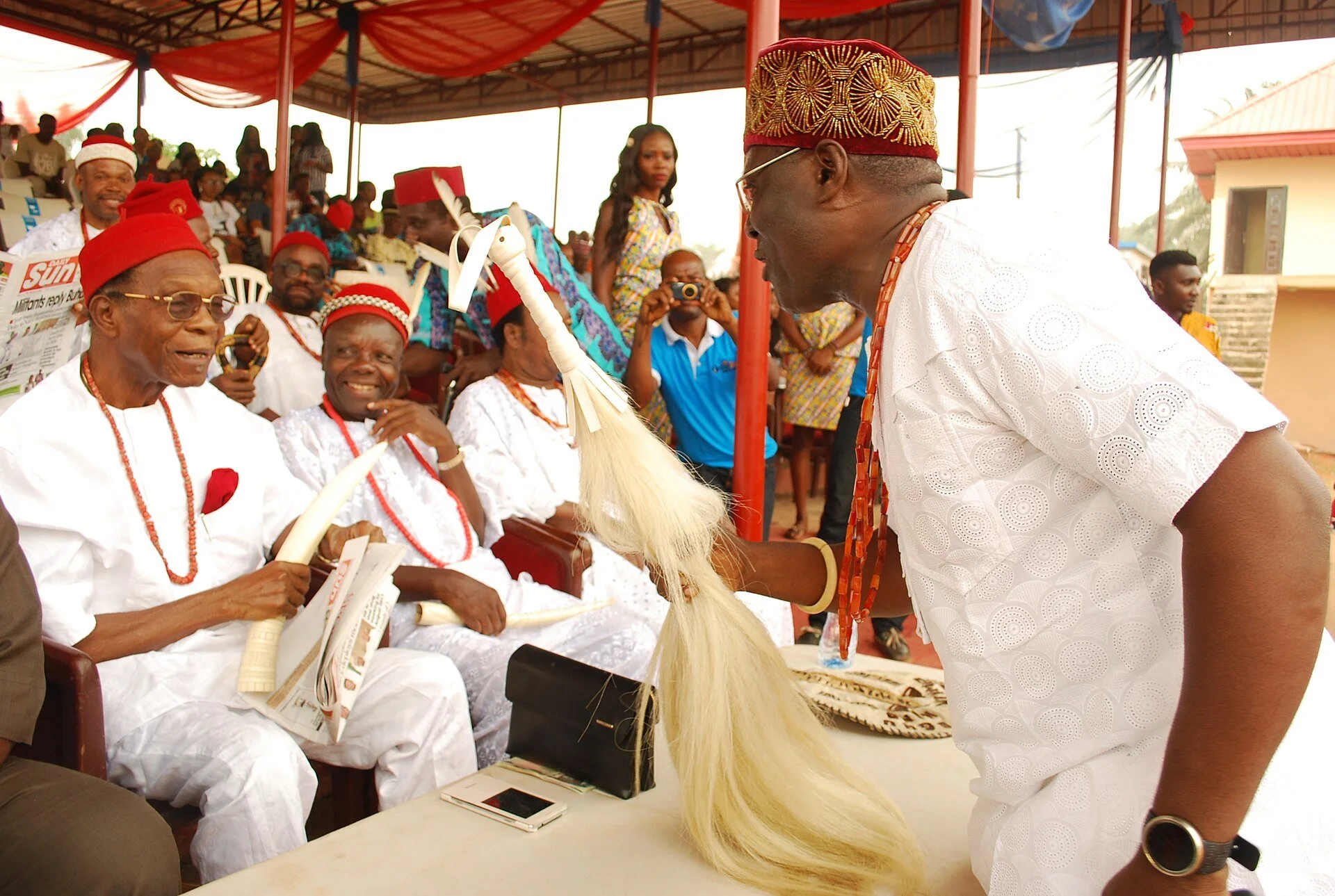
Nze and Ozo title holders gather in Nimo, wearing ceremonial attire that makes rank and collective identity visible.
What Is Ozo Title-Taking?
Ozo is a prestigious title and social institution found in many Igbo communities, particularly in parts of present-day Anambra, Enugu, Imo, Delta, and surrounding areas. It is often discussed alongside Nze in the expression Nze na Ozo, although the relationship between the two ranks or associations depends on local custom.
Taking the title changed how a person could participate in community life. An Ozo holder might receive greater ceremonial recognition, sit in designated places, speak during important deliberations, witness agreements, or participate in dispute resolution and ritual affairs. In some towns, the collective body of title holders exercised considerable authority. Catholics & Cultures describes Ozo as a public institution associated with status, leadership, and responsibility.
Ozo was still only one part of a larger political system. Many Igbo communities distributed authority among village assemblies, councils of elders, age grades, priests, lineage leaders, women’s organizations, and title societies. Ozo holders could be influential without governing the community alone.
Why Status Had to Be Earned
Ozo title-taking required substantial resources. A candidate might make payments, present gifts, provide food and drink, and host public gatherings. Agricultural success, particularly access to large quantities of yams, historically helped make these obligations possible.
Wealth mattered, but payment alone did not create legitimate status. Title-taking turned private resources into a public act involving the candidate’s family, witnesses, existing title holders, and wider community.
A candidate’s reputation could also be examined for dishonesty, serious disputes, or unpaid obligations. Access remained unequal, however, because many Ozo institutions historically favored senior men with the necessary wealth, lineage, or inherited standing.
How Ozo Title-Taking Worked
There was no universal Ozo ceremony, but several stages appeared across local traditions. A candidate declared his intention, consulted relatives and title holders, completed any required earlier titles, and underwent an examination of his eligibility and reputation.
The ceremony could involve money, yams, animals, kola nuts, palm wine, prayers, oaths, or other locally specified obligations. A public feast confirmed the change in status, while clothing, insignia, a title name, or a new place at gatherings made it visible.
The candidate depended on wives, children, relatives, cooks, farmers, and traders for labor and resources. Although one person received the title, the achievement usually rested on a wider household network.
In parts of the Nri-Awka area, historic ichi facial markings could form part of the progression toward senior titles. The practice was not universal and declined during the twentieth century as missionary influence and attitudes toward the body changed.
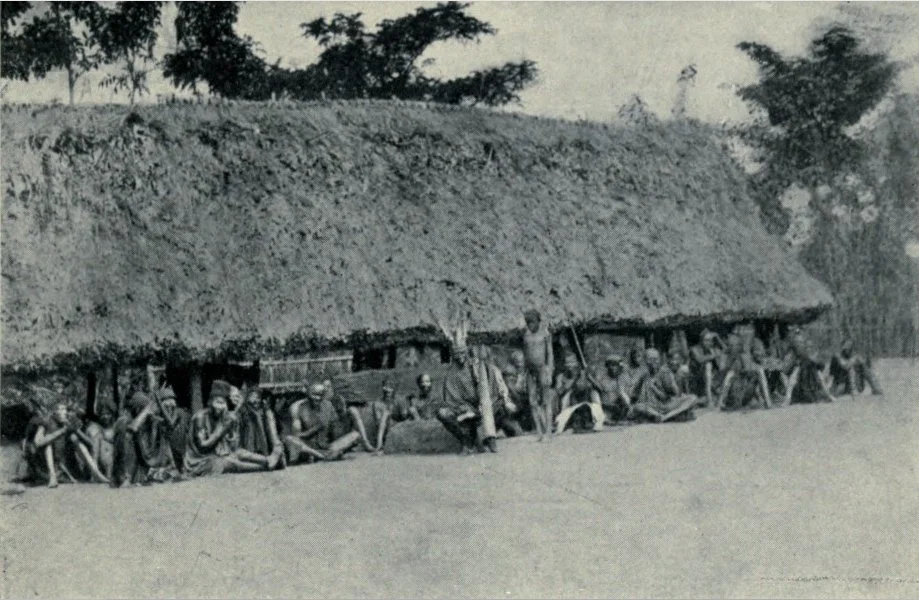
Credit: Wikimedia Commons / published in Northcote W. Thomas, Anthropological Report on the Ibo-speaking Peoples of Nigeria (1913)
Eze Nri Obalike rings a bell in a 1913 photograph preserving the visible language of rank and ritual authority in the Nri tradition.
What an Ozo Holder Owed the Community
The title brought recognition and responsibility. Ozo holders were expected to respect community rules, speak truthfully, maintain dignity, and avoid conduct that weakened trust in their judgment. In some communities, they settled disputes, witnessed agreements, organized ceremonies, or represented the town.
Reality did not always match this ideal. Wealth, family influence, and politics could affect access and accountability. Still, the title established a public standard against which its holder could be judged.
Symbols and Language of Ozo
An Ozo holder’s appearance depended on community and rank. Red caps, white clothing, beads, feathers, bells, fans, carved stools, and staffs could communicate status, but none formed a universal Ozo uniform.
One important symbol is ofo or ọfọ, a staff associated with truth, justice, ancestry, and legitimate authority. Invoking it placed a statement or decision under moral and spiritual accountability. White chalk, called nzu, may represent blessing, welcome, purity, or ritual recognition.
Useful terms include:
Ozo or Ọzọ: A prestigious title or title institution whose precise meaning varies locally
Nze na Ozo: A common name for linked title ranks, associations, or title holders
Ichi Ozo: To take or receive the Ozo title
Ofo or Ọfọ: A staff symbolizing truth, justice, ancestry, and authority
Nzu: White chalk used in greetings, blessings, and ceremonial settings
Igbo is tonal, and spelling or pronunciation may differ among dialects. Learners should listen to speakers from the relevant community rather than assuming that one pronunciation represents every town. NKENNE’s guide to why tone changes meaning in Igbo provides a useful introduction.
One Tradition, Many Local Rules
Ozo did not follow one constitution across Igboland. Titles, grades, fees, symbols, restrictions, and political functions varied between towns. A title considered senior in one community might not exist in another.
Although many Ozo institutions were historically male, women also held authority through titles and offices such as Omu, Ekwe, and Lolo. Their functions differed locally, with the Omu sometimes overseeing markets, trade, women’s affairs, and ritual life.
These institutions did not remove the restrictions women faced. They show that Igbo authority extended beyond Ozo alone.
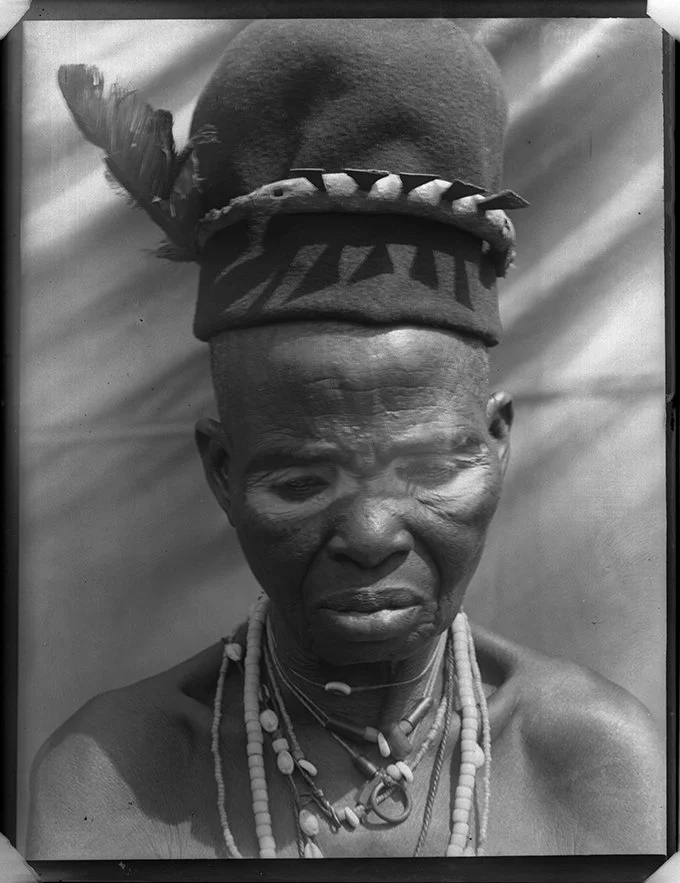
Credit: N. W. Thomas / Royal Anthropological Institute, RAI 400.38268, via Re:Entanglements
The Omu of Okpanam, photographed in 1912, represents a women’s office connected to market authority, public order, and ritual life.
Colonial rule and Christian missions also changed title-taking. Some communities abandoned ceremonies involving sacrifice or ancestral authority, while others separated the title’s civic functions from disputed religious practices.
Igbo-Ukwu later reconstructed its Ozo initiation so people from different religions could participate. Supporters viewed this as cultural preservation, while critics questioned whether the revised ceremony retained its earlier meaning.
FAQs
What does Ozo mean in Igbo culture?
Ozo refers to a prestigious title or title institution found in many Igbo communities. It can convey social, ceremonial, political, and moral standing, but its exact meaning depends on the town.
Was the Ozo title simply purchased?
No. Considerable wealth was usually necessary because candidates had to meet financial and ceremonial obligations. However, payment alone did not automatically create legitimate status. Public recognition, eligibility, character, witnesses, and continued conduct also mattered.
Is Ozo the same as a chieftaincy title?
Not automatically. Ozo belongs to specific community traditions with locally defined rules. Modern honorary or chieftaincy titles may follow different processes, even when their holders wear similar clothing or insignia.
Could women take Ozo titles?
In many historically documented communities, Ozo ranks were reserved for men. Rules differed locally, and women also exercised authority through institutions and titles such as Omu, Ekwe, and Lolo. Their roles should be studied on their own terms rather than treated as female versions of Ozo.
Was Ozo title-taking the same throughout Igboland?
No. Titles, grades, ceremonies, costs, symbols, and responsibilities varied considerably. A practice documented in Nri, Onitsha, Nimo, Igbo-Ukwu, or another community should not automatically be presented as universal Igbo custom.
Does Ozo title-taking still exist?
Yes. Ozo institutions remain active in several communities, although ceremonies and expectations have changed. Christianity, migration, modern employment, local politics, and cultural revival have all influenced how the title is understood today.
Conclusion
Ozo title-taking asked an important question: what should personal achievement contribute to the community?
A person could accumulate wealth privately, but the title converted that success into a public claim. The candidate displayed what he had achieved, accepted the judgment of others, fulfilled communal obligations, and entered a position whose honor had to be maintained through conduct.
The institution was never equally accessible, and it did not function identically across Igboland. Still, its central lesson remains clear. Recognition created responsibility, and status had to be supported by more than appearance.
To take Ozo was to accept that honor should become responsibility.
Learn Igbo Through History and Community Life
With NKENNE, learning Igbo can include the language of respect, ceremony, leadership, family, and community responsibility. These words become easier to understand when they are connected to the institutions and histories that shaped their use.
Explore Igbo language and culture in the NKENNE app, one useful expression and one meaningful story at a time.
