
By: Yvonne Mag-usara
A handful of groundnuts can be eaten as a snack. Grind them, simmer them with peppers, stock, and greens, and they become the body of an entire meal.
That transformation is at the heart of miyan gyada, a groundnut soup associated with Hausa cooking and northern Nigeria. Peanuts provide its creamy texture and deep flavor, while meat, dried fish, fermented seasoning, and leafy vegetables can make the pot even more substantial.
Recipes change between households. Some cooks roast the groundnuts before grinding them, while others use them raw. One version may be thick enough to cling to tuwo, while another remains loose enough to serve with rice. The dish has a recognizable foundation, but no single recipe represents every Hausa kitchen.
Credit: Yummy Medley / Lois
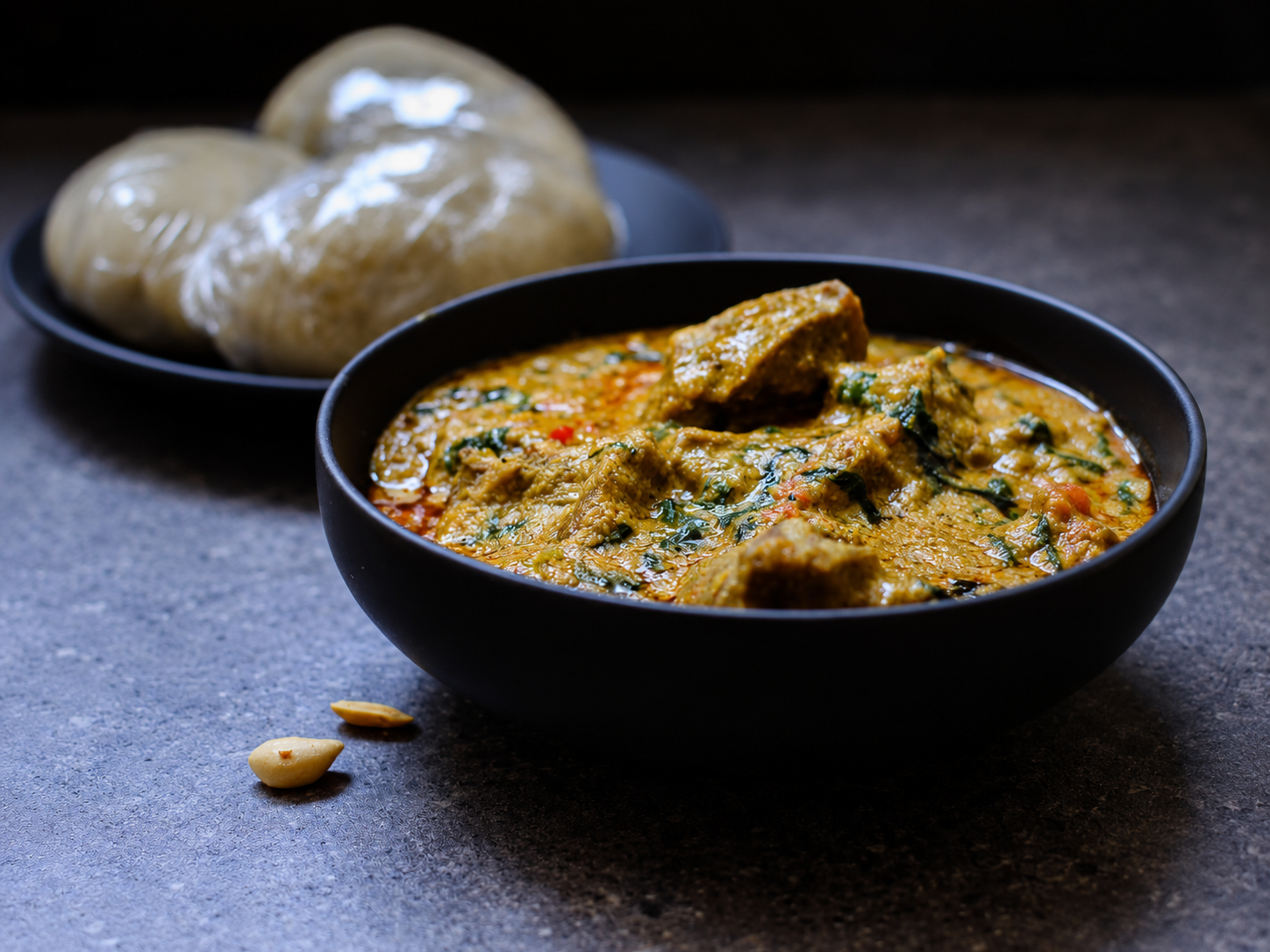
Groundnuts give miyan gyada its rich body, while meat, peppers, and greens turn the soup into a complete meal served with a soft starch.
What Is Miyan Gyada?
Miyan gyada is a Hausa soup made by simmering ground peanuts in seasoned liquid until it thickens. Depending on the household, it may contain beef, goat, chicken, dried fish, vegetables, tomatoes, peppers, oil, or daddawa, a fermented locust bean seasoning.
The name is direct: miya means soup or sauce, while gyaɗa means groundnut or peanut. The fuller Hausa form is miyar gyaɗa because the feminine noun miya takes the connecting -r. However, miyan gyada, miyan geda, and miyar gyada are all common in English writing.
Miyan gyada belongs to a wider West African family of peanut soups, but its seasoning, consistency, and traditional pairings reflect Hausa and northern Nigerian cooking.
Why Groundnuts Matter in Northern Nigerian Cooking
Credit: Wikimedia Commons / Dorcas Atule, licensed under CC BY-SA 4.0
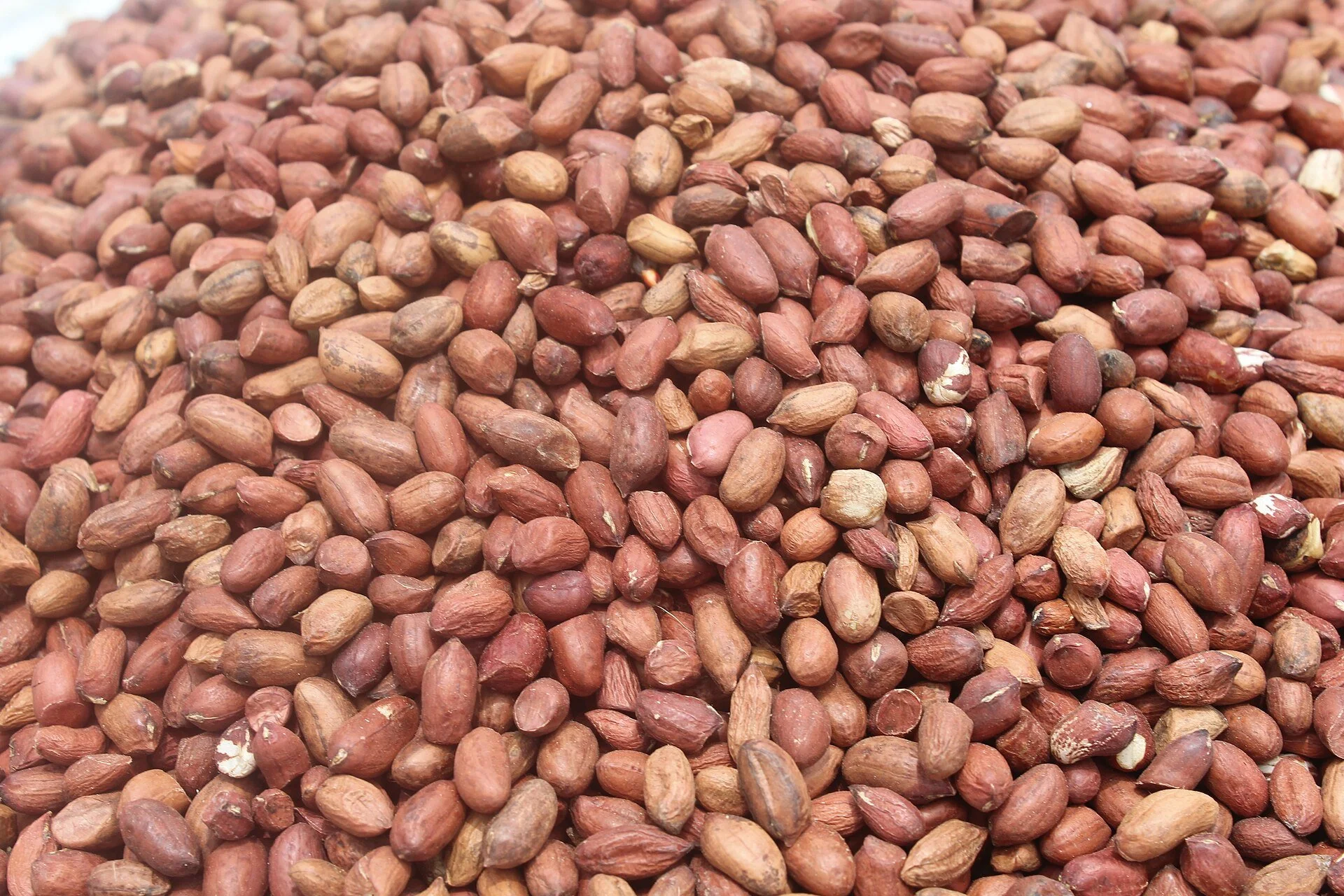
Groundnuts displayed at a Kaduna market show the ingredient before it is roasted, ground, and turned into the foundation of miyan gyada.
Groundnuts can be roasted, pressed for oil, made into ƙuli-ƙuli, blended into kunun gyaɗa, or used to thicken soup. Their farming and trade also shaped northern Nigeria’s twentieth-century economy, symbolized by Kano’s stacked groundnut pyramids.
In miyan gyada, peanuts thicken the liquid, carry the seasoning, and add protein and fat. The finished meal’s nutritional value also depends on its meat, fish, vegetables, oil, and accompanying starch.
What Goes Into Miyan Gyada?/h3>
The groundnuts determine the soup’s character. Raw peanuts create a milder base, while gently toasted nuts add deeper flavor. Unsweetened natural peanut butter can work when whole groundnuts are unavailable.
Common ingredients include:
Groundnuts: Ground into a powder or paste
Beef, goat, or chicken: Cooked until tender, with the stock reserved
Dried or smoked fish: Added for savory depth
Onions, peppers, and tomatoes: Used to build the seasoning base
Daddawa: Fermented locust beans with a concentrated earthy flavor
Palm oil or groundnut oil: Chosen according to preference
Leafy vegetables: Often spinach, sorrel, or another available green
Ginger, garlic, crayfish, bouillon, and salt: Added according to the cook
The recipe remains flexible, but the liquid needs attention. Ground peanuts continue thickening as they cook and cool, so the soup may need extra stock or water.
How to Make Miyan Gyada
This recipe follows the broad structure found across several northern Nigerian and Hausa-style versions. Treat it as an adaptable starting point rather than the only correct method.
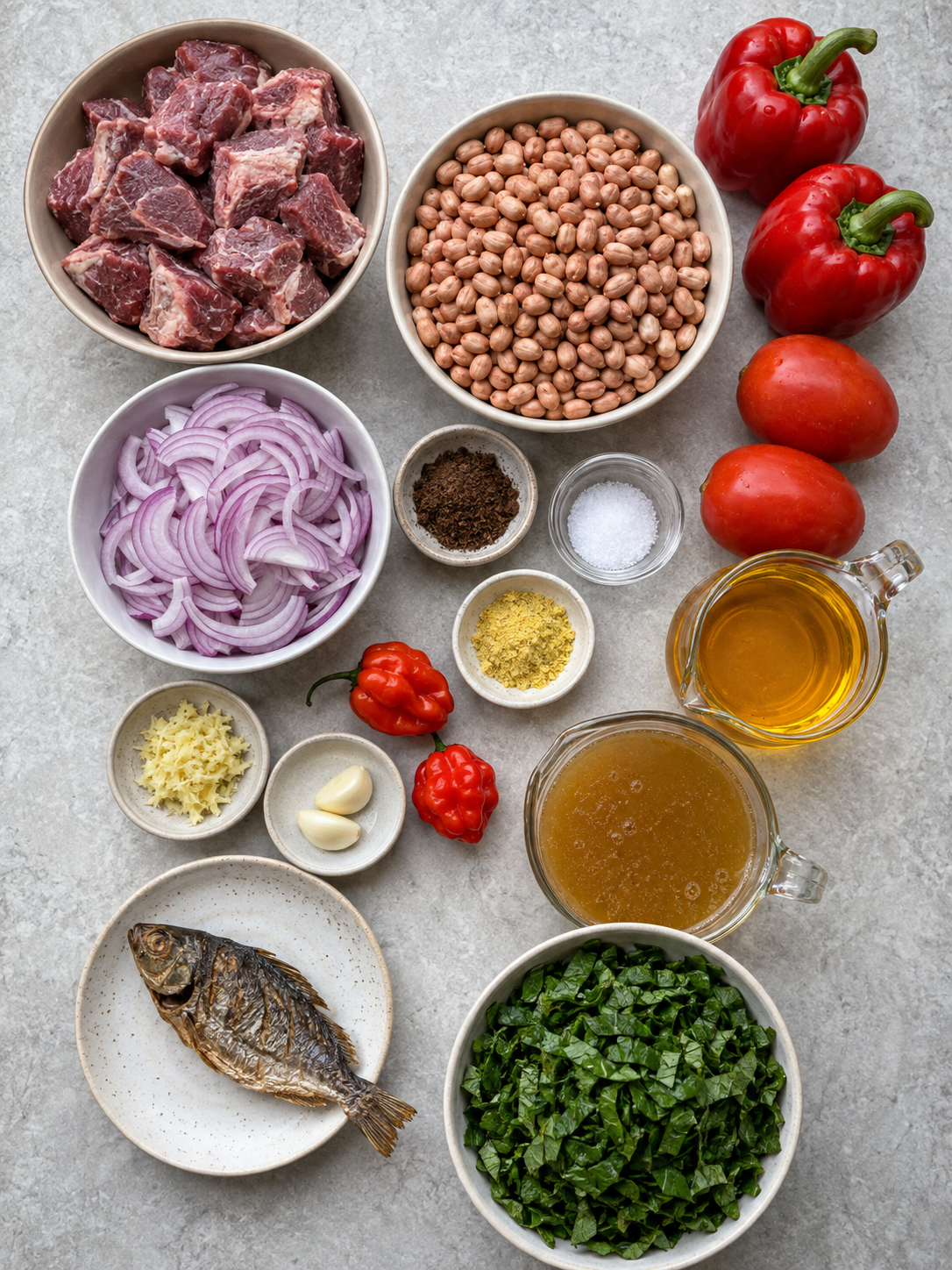
Ingredients
2 cups raw, skinned groundnuts
700 grams beef, goat, or chicken, optional
1 small dried or smoked fish, cleaned and deboned, optional
1 large onion
2 red bell peppers
1 or 2 Scotch bonnet peppers
2 medium tomatoes or 1 tablespoon tomato paste, optional
2 tablespoons palm oil or groundnut oil
1 to 2 teaspoons ground daddawa, optional
1 teaspoon grated ginger
2 garlic cloves
4 cups meat stock, vegetable stock, or water
3 cups chopped spinach or other tender greens
Salt and seasoning to taste
Method
Cook the meat with some onion, ginger, garlic, salt, and enough water to cover it. Reserve the stock. Keep dried fish aside until later so it does not break apart.
For a roasted flavor, toast the groundnuts over low heat, stirring constantly. Cool completely, then grind into a fine powder or paste.
Blend the remaining onion with the peppers and tomatoes. Cook the mixture in oil until its raw aroma fades and the liquid reduces.
Add the stock, meat, dried fish, and daddawa. Bring to a gentle simmer.
Mix the groundnuts with a little warm stock until smooth, then add gradually to prevent lumps.
Simmer for 15 to 20 minutes, stirring often so the soup does not burn. Add stock or water if it becomes too thick.
Add the greens near the end. Cook until tender, then adjust the seasoning.
If you use peanut butter instead of whole groundnuts, choose an unsweetened variety and begin with about 1¼ cups. Stir it with warm stock before adding it to the pot, then adjust the quantity according to the desired thickness.
Allergy note: Miyan gyada contains peanuts and is unsafe for anyone with a peanut allergy. Avoid serving it when an allergy is known or suspected, and prevent cross-contact with cooking utensils or serving dishes.
Credit: The Second Pot NG, via Connect Nigeria
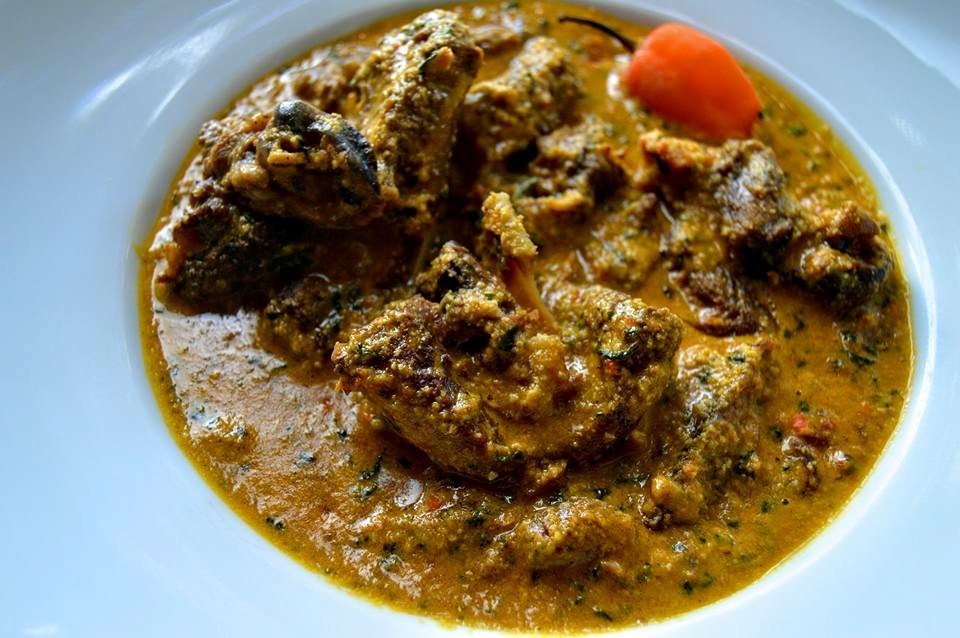
Miyan gyada develops a thick, nutty sauce as the groundnuts simmer with assorted meat, peppers, and seasonings.
What to Serve With Miyan Gyada
Miyan gyada is often served with tuwo, a soft grain staple shaped by hand and used to gather the soup. One familiar pairing is tuwon shinkafa, made by cooking rice until very soft and working it into a smooth mass.
Other options include:
Tuwon masara: Maize tuwo
Tuwon dawa: Sorghum tuwo
Tuwon alkama: Wheat tuwo
Eba or pounded yam
White rice
Masa or waina: Fermented rice cakes
Masavita or another semolina swallow
A thick miyan gyada clings naturally to tuwo or another swallow. A looser version works well over rice, which absorbs the nutty sauce.
Learning Hausa Through the Dish
Food names preserve useful grammar. Miyar gyaɗa introduces two everyday nouns while showing how Hausa words connect within a phrase.
Useful vocabulary includes:
Miya: Soup or sauce
Gyaɗa: Groundnut or peanut
Miyar gyaɗa: Groundnut soup
Tuwo: A thick grain-based staple
Shinkafa: Rice
Nama: Meat
Alayyahu: Spinach
Albasa: Onion
Barkono: Pepper
Ruwa: Water
The letter ɗ in gyaɗa represents a sound different from the ordinary d. It is often omitted in informal digital writing, which is why gyada appears more frequently online.
Try the words inside complete phrases:
Ina son miyar gyaɗa.I like groundnut soup.
Miyar tana da daɗi.The soup is delicious.
A rage barkono, don Allah.Please reduce the pepper.
Learning these phrases with the recipe connects each word to an ingredient, a cooking process, and a finished meal. For more Hausa food vocabulary, explore NKENNE’s guide to miyan kuka, the northern Nigerian soup made from powdered baobab leaves.
FAQs
What does miyan gyada mean?
It means groundnut or peanut soup. The more grammatically complete Hausa form is miyar gyaɗa, combining miya, meaning soup, with gyaɗa, meaning groundnut.
Is miyan gyada the same as miyan taushe?
No. Miyan taushe is built around pumpkin or squash, although groundnut paste is often added to it. In miyan gyada, the groundnuts themselves form the defining base of the soup.
Do I need to roast the groundnuts?
Not necessarily. Some cooks use raw groundnuts, while others toast them for a stronger roasted flavor. If roasting, use low heat and stir constantly because burnt peanuts can make the entire soup bitter.
Can I use peanut butter?
Yes. Use unsweetened natural peanut butter containing peanuts and, at most, a small amount of salt. Avoid sweetened spreads or products containing strong added flavors.
Is miyan gyada always cooked with meat?
No. Beef, goat, chicken, dried fish, or crayfish may be added, but a meatless version can be prepared with vegetable stock, daddawa, peppers, and leafy vegetables. Check the seasoning ingredients if you want the dish to be fully vegetarian.
What vegetables are used in miyan gyada?
Spinach is widely accessible, but recipes may also use sorrel or hibiscus leaves, spring onions, moringa leaves, or other local greens. The choice depends on the region, season, and household.
Is miyan gyada very spicy?
It can be, but it does not have to be. The cook controls the heat by adjusting the amount of Scotch bonnet or other hot pepper. The groundnuts soften the sharpness slightly but do not remove it.
How should leftover miyan gyada be reheated?
The soup becomes thicker as it cools. Add a small amount of water or stock and reheat it slowly while stirring, especially along the bottom of the pot.
Conclusion
Miyan gyada shows how one familiar ingredient can carry an entire meal. Once the groundnuts are crushed and simmered, they stop behaving like a snack and become the sauce, texture, and central flavor of the pot.
Meat or fish can make the soup more elaborate, while greens and fermented seasoning add their own character. Tuwo completes the plate by giving the thick soup something soft and steady to hold onto. The exact combination changes, but the groundnuts remain responsible for bringing everything together.
Grind the peanuts, give them time in the pot, and let one ingredient become the foundation of the meal.
Learn Hausa Through Food and Everyday Life
With NKENNE, learning Hausa can begin with words already present in daily routines: the ingredients bought at the market, the meals prepared at home, and the phrases spoken around the table.
Explore Hausa language and culture in the NKENNE app through practical expressions, familiar foods, and the stories that give each word a place in everyday life.
