
From Street Talk to the Airwaves: How Nigerian Pidgin Expanded the Public Conversation
By: Yvonne Mag-usara
A language can be spoken everywhere and still be treated as if it does not belong in a newsroom.
Nigerian Pidgin lived in markets, homes, buses, football viewing centres, music, and everyday conversation long before radio stations built entire schedules around it. When Pidgin entered the studio, listeners did not simply hear familiar words. They heard public life speaking directly to them.
This is how Nigerian Pidgin radio changed who could follow the news, join public conversations, and feel that their own voice belonged on air.
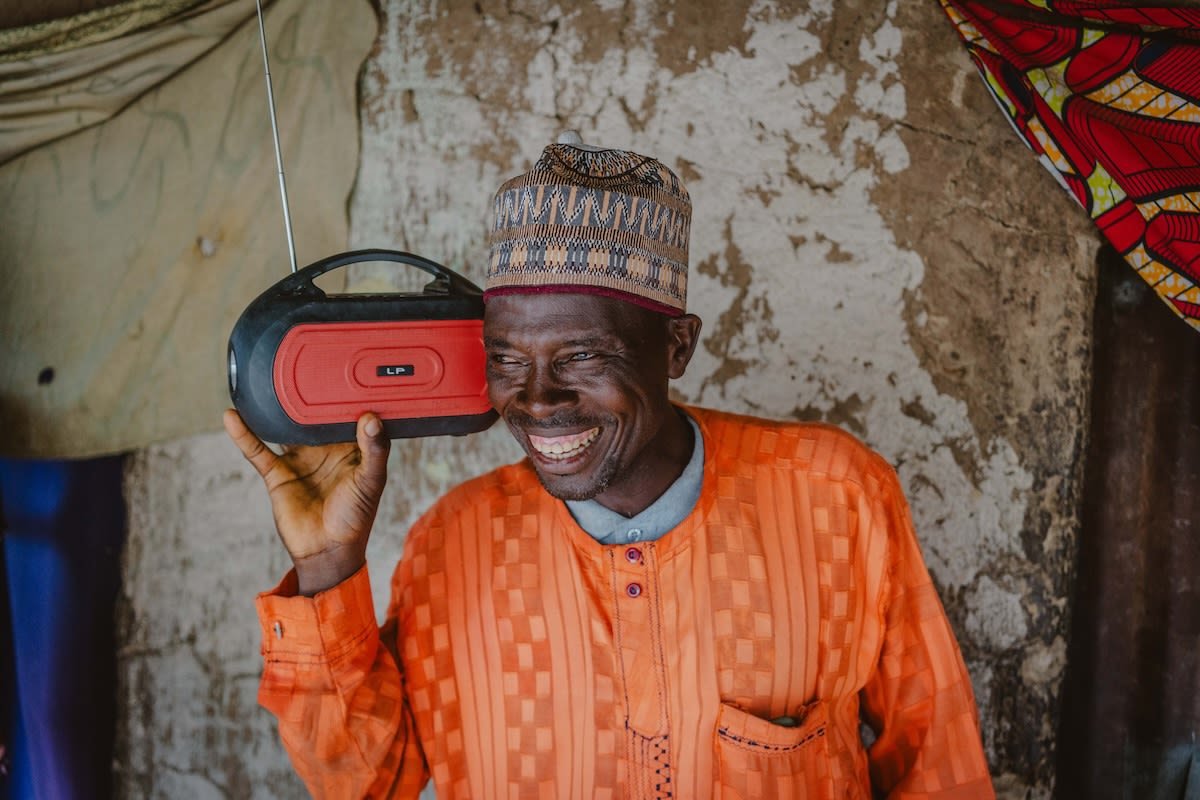
Credit: Solidaridad Network
Across West Africa, radio brings timely information into farming communities in an accessible, familiar form.
When Pidgin Was Kept Outside Formal Media
Pidgin was never completely absent from Nigerian broadcasting. It appeared in comedy, drama, advertising, public announcements, and occasional radio programs.
But formal English still carried more prestige. News, politics, and serious public affairs were often presented in a language that sounded official but could also feel distant.
That reflected an old hierarchy. Standard English was associated with education and authority, while Pidgin was dismissed as casual or even incorrect. Yet Nigerian Pidgin has its own grammar, rhythm, vocabulary, and social rules. It is not simply careless English.
The problem was not that people lacked the intelligence to understand public issues. Sometimes, the language used to explain those issues created unnecessary distance.
Research on Pidgin broadcasting has argued that the language can support communication in multilingual communities where formal English may reduce participation or understanding. A study from the University of Cross River State also found that Pidgin programming could help broadcasters reach audiences across different educational and linguistic backgrounds.
Pidgin did not make public information less serious. It made the entrance wider.
How Wazobia FM Changed Nigerian Radio
Wazobia FM began broadcasting in Lagos in 2007 with Nigerian Pidgin at the heart of its identity. Its programs brought Pidgin into news, current affairs, football, music, comedy, and listener conversations.
The name itself was an invitation: wa in Yoruba, zo in Hausa, and bia in Igbo all mean “come.”
In a country with hundreds of languages, Pidgin created shared ground without replacing anyone’s first language.
Wazobia FM also proved that Pidgin could move naturally between humour and serious discussion. Presenters could joke about traffic, debate education or public policy, and speak with listeners without switching to formal English.
The station’s current programming continues to mix football, entertainment, public conversation, and interactive shows. A 2018 Deutschlandfunk profile described Pidgin as central to Wazobia FM’s ability to discuss everyday problems and political questions with Lagos listeners.
The language of ordinary conversation had become the language of the broadcast day.
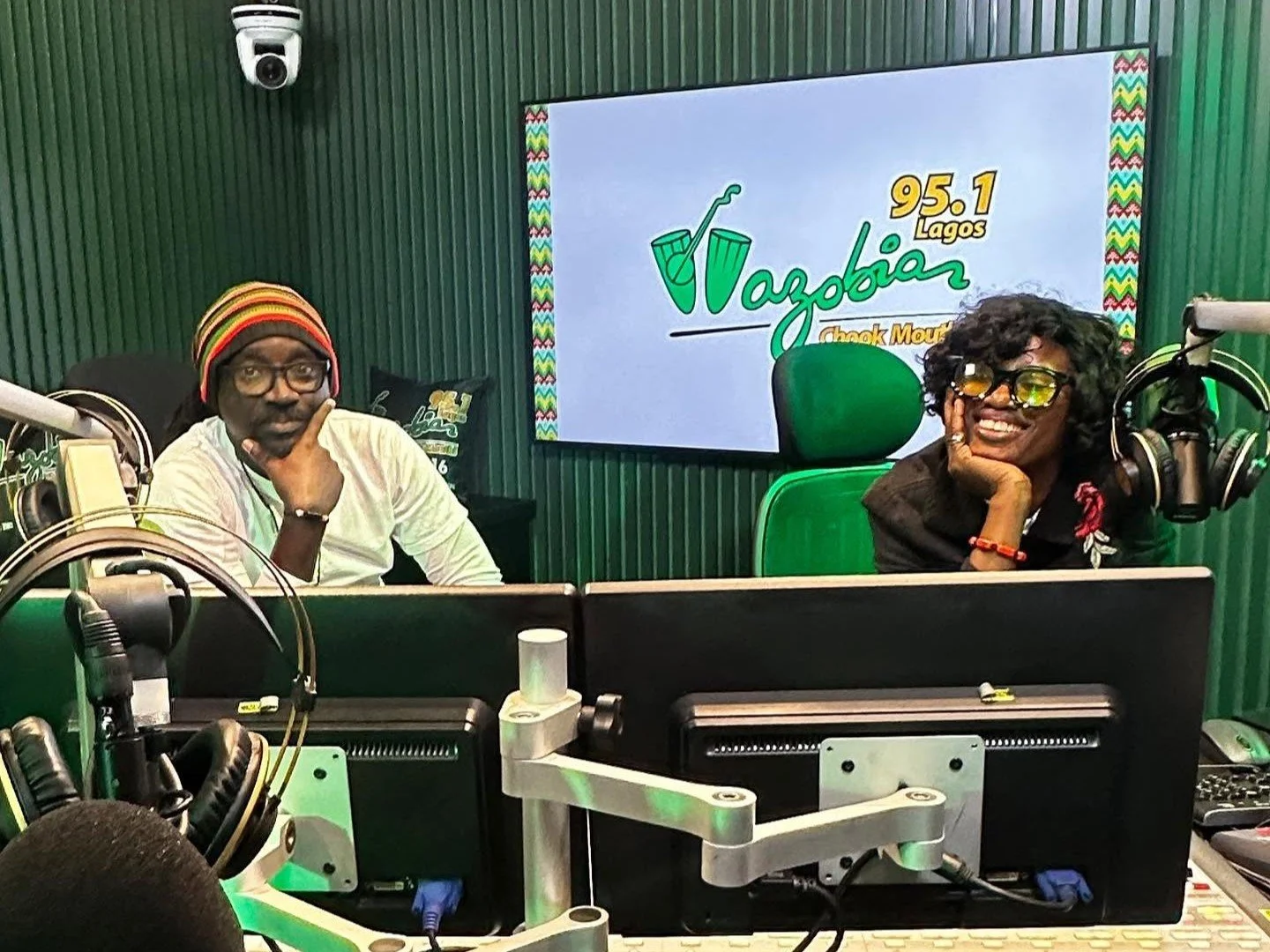
Credit: Wazobia FM via Facebook
Wazobia FM presenters Ratata and Suo in the station’s studio, where Nigerian Pidgin carries everything from everyday conversation to public affairs.
Why Pidgin Made the News More Accessible
Accessibility is not the same as simplification. A serious issue can be explained clearly without reducing its meaning.
Consider the difference:
“Residents are advised to remain indoors.”
“Dem advise people make dem stay inside.”
Or:
“The new policy will take effect tomorrow.”
“Di new rule go start tomorrow.”
The Pidgin versions are not less intelligent. They simply use a register that many listeners process more naturally.
A survey of 500 respondents across five Lagos local government areas found that 78.7 percent believed Pidgin broadcasting could help residents with less access to formal education understand development issues. More than 91 percent believed Pidgin radio could help grassroots audiences understand those issues. The study examined Wazobia FM and Naija FM.
Pidgin also should not be treated only as a language for people with limited schooling. Students, professionals, traders, artists, drivers, journalists, and politicians all use it. Many speakers move between Pidgin, English, and an Indigenous language depending on the setting.
That flexibility is part of its strength. It meets people where they are.
Call-In Shows and the Power of the Public Voice
Broadcasting becomes public conversation when listeners can respond.
Call-in programs let people report local issues, question decisions, share experiences, and challenge opinions. The language used on air often determines whether they feel comfortable joining in.
A Deutschlandfunk profile of Wazobia FM noted that listeners were more willing to call when they did not have to worry about formal English. They could focus on the issue itself.
A caller might say:
“I wan talk about wetin happen for my area.”
“Make government look into this problem.”
“I no agree with wetin di last caller talk.”
These simple statements carry public weight. Listeners are no longer just receiving information. They are shaping the discussion.
Calls also bring regional voices into the broadcast. Pidgin varies across Lagos, Warri, Port Harcourt, Benin, and Onitsha, but radio allows those differences to be heard through a shared language.
From Radio to BBC News Pidgin
In 2017, Pidgin’s media journey moved further from the FM dial to the phone screen.
BBC World Service launched BBC News Pidgin as a digital news service based in Lagos. It covered local, regional, and international stories for audiences across West and Central Africa.
Writing the language created a new challenge. Nigerian Pidgin had long been shaped by speech, and spelling could vary between speakers and regions. The BBC team consulted young people, university communities, scholars, and other speakers while developing an editorial style.
The team also treated standardisation as an evolving process guided by audience feedback, according to WIRED’s report on the launch.
That matters because written Pidgin is not simply spoken Pidgin placed on a page. A newsroom must decide how to spell words, represent regional differences, explain unfamiliar ideas, and remain understandable across borders.
A linguistic study from the University of Calabar later examined BBC News Pidgin and found that careful language choices supported the clear dissemination of information. The study is available through SSRN.
BBC News Pidgin did not give the language its legitimacy. Speakers had already done that through centuries of daily use. But seeing international news written and reported in Pidgin made that legitimacy harder to ignore.
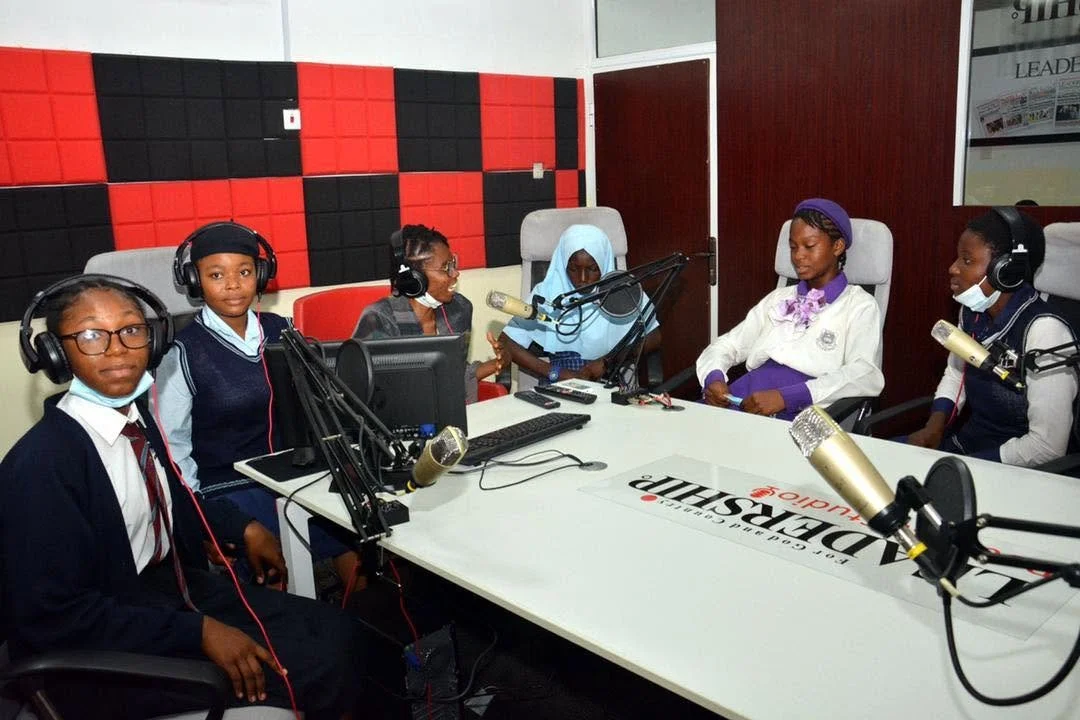
Credit: BBC News Pidgin via Facebook
BBC News Pidgin carried the language beyond the FM dial and into digital journalism for audiences across West and Central Africa.
How Radio Can Help You Learn Pidgin
Pidgin radio teaches more than vocabulary. It lets you hear pace, emphasis, humor, interruption, and the small expressions that hold a conversation together.
Try this simple practice:
Listen once without translating every word.
Replay the segment and write down three phrases.
Use the surrounding story to work out their meaning.
Repeat the phrases aloud with the presenter’s rhythm.
Compare the Pidgin report with an English report on the same subject.
You begin to understand not only what the words mean, but how Nigerian Pidgin carries confidence, disagreement, warmth, and humor.
FAQs
Is Nigerian Pidgin Just Broken English?
No. Nigerian Pidgin developed through contact between English and several African languages. It has consistent grammatical patterns, vocabulary, pronunciation, and regional varieties.
Its history reaches far beyond modern radio. Explore how Pidgin developed in the Niger Delta.
Did Wazobia FM Invent Nigerian Pidgin Radio?
Wazobia FM did not invent Pidgin or its use in broadcasting. Pidgin had appeared in Nigerian media before the station launched.
What Wazobia FM did was build a major commercial radio identity around the language and demonstrate that a full schedule of news, entertainment, and public discussion could work in Pidgin.
Is BBC News Pidgin a Radio Station?
BBC News Pidgin launched as a digital service rather than a conventional FM station. It publishes written reports, videos, audio, graphics, and social-media content.
Is Nigerian Pidgin the Same Across the Country?
No. The language changes by region. Lagos Pidgin carries Yoruba influence, while varieties in Warri, Port Harcourt, Benin, and eastern Nigeria reflect different local languages and histories.
Speakers can usually understand one another, but particular words and delivery styles may differ.
Can I Learn Nigerian Pidgin by Listening to Radio?
Radio is an excellent listening tool, but it works best alongside structured lessons. Presenters may speak quickly, use regional slang, or assume cultural knowledge that a beginner does not yet have.
Use broadcasts to strengthen what you are already learning and to hear the language in real situations.
Conclusion
When a language enters the studio, something changes. People who once heard public life only through formal English begin to hear themselves inside it.
Nigerian Pidgin radio made everyday speech suitable for news, debate, education, football, and national conversation. It did not lower the standard of public communication. It challenged the idea that authority must sound distant.
For people in the diaspora, listening to Pidgin radio can feel like recovering more than words. It brings back timing, humor, argument, and the familiar rhythm of how people speak when they are fully themselves.
With NKENNE, you can learn Nigerian Pidgin while exploring the history, media, humor, and everyday culture that give the language its meaning. The goal is not only to understand the broadcast. It is to feel that the conversation includes you.