
Mastering the Somali Alphabet: Your Essential Pronunciation Guide
By: Chimdindu Ken-Anaukwu
Did you know that before 1972, Somalis relied mostly on oral traditions for their rich poetry and stories because there wasn't a unified written script? That all changed with the adoption of the Somali Latin alphabet, turning a nation of storytellers into confident writers overnight. In this guide, I'll walk you through the Somali alphabet and pronunciation step by step so you can start sounding like a native or at least avoid mixing up "boy" and "girl" in conversation. By the end, you'll have the tools to pronounce Somali words accurately and appreciate why this script is a cornerstone of Somali identity.
History of the Somali Alphabet
In 1972, Somalia adopted the Latin-based Somali alphabet, crafted by scholars like Shire Jama Ahmed. This unified script boosted literacy and preserved oral culture in print, from Mogadishu newspapers to diaspora messages today.
It excludes p, v, z and adds digraphs like dh, kh, sh. A simple, phonetic system that fits Somali perfectly.
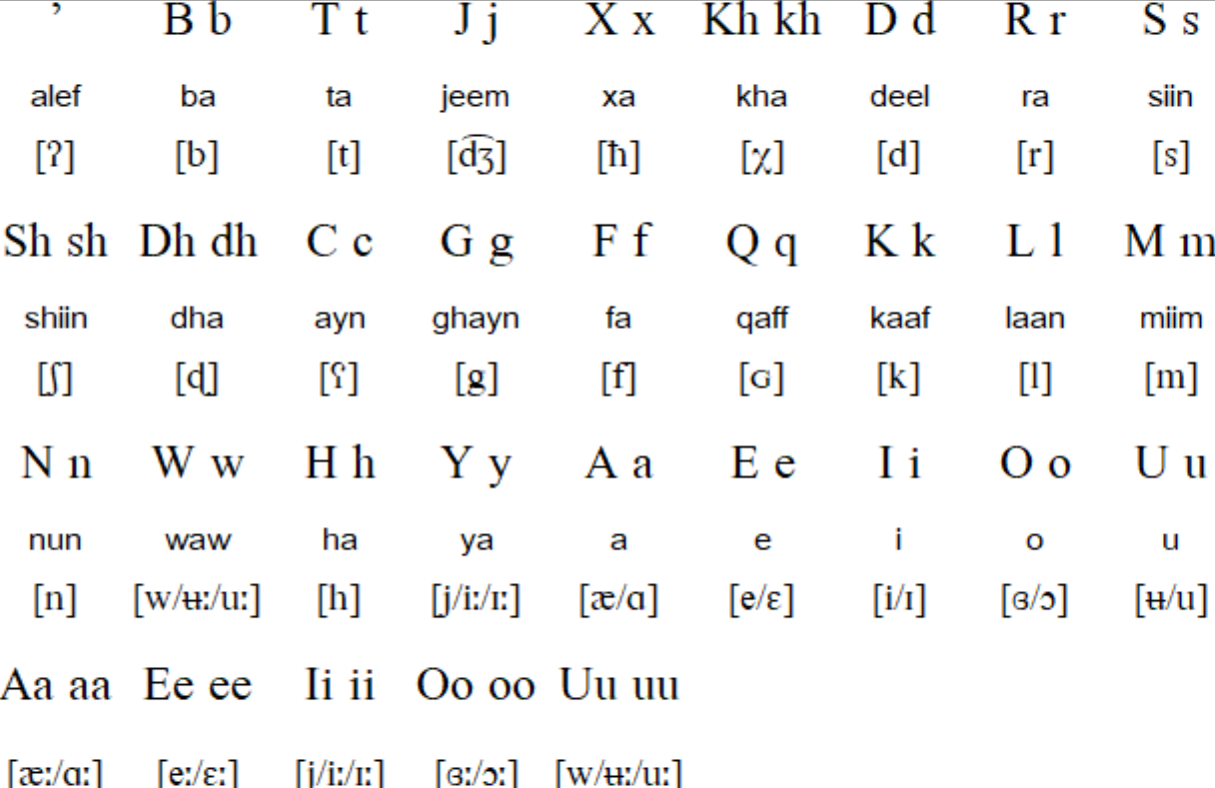
Here are clear Somali alphabet charts to reference:
Somali Consonants and Their Unique Sounds
The Somali alphabet uses 26 Latin letters, but don't expect them all to behave like English. It's phonetic, meaning you pronounce what you see, with 21 consonants and some digraphs like 'dh' and 'kh' that pack a punch.
Here are the consonants with Somali pronunciation tips:
B b: Straightforward, like "bat." Easy start.
T t: Crisp as "top."
J j: "Jar" sound (dʒ).
X x: This one's a throat-clearer – a guttural 'h' like Arabic 'ح.' Don't worry if it feels like gargling at first; practice makes it smooth.
KH kh: Think Scottish "loch" – a raspy back-of-throat 'ch.'
D d: Regular "dog."
R r: Rolled like a purr; Somalis love a good trill.
S s: "Sun."
SH sh: "Ship."
DH dh: Retroflex 'd' – curl your tongue back for emphasis, common in Indian languages too.
C c: Deep throat 'a' like Arabic 'ع' – voiced pharyngeal.
G g: "Go."
F f: "Fun."
Q q: Back-throat 'k' like Arabic 'ق.'
K k: "Kite."
L l: "Love."
M m: "Man."
N n: "No."
W w: "Wow."
H h: "Hat."
Y y: "Yes."
' (apostrophe): Glottal stop, like the pause in "uh-oh."
No 'p', 'v', or 'z' here – that's why borrowed words get creative.
Vowels in Somali: Short, Long, and Why Length Matters
Somali has five vowels, but the real magic is in length – short vs. long can flip meanings entirely. Long ones are doubled in writing (aa, ee, ii, oo, uu).
A a: Short like "cat" (/æ/); long aa like "father" (/ɑː/).
E e: Short "bed" (/ɛ/); long ee like "say" minus the 'y.'
I i: Short "bit" (/ɪ/); long ii like "see."
O o: Short "pot" (/ɔ/); long oo like "go" without 'w.'
U u: Short "book" (/ʊ/); long uu like "food."
In practice, stretching a vowel wrong might turn "beer" (liver) into "beér" (farm). It's a small tweak with big impact in conversations.
Tone and Pitch: The Secret to Somali Pronunciation
Somali isn't tonal like Mandarin, but it has pitch accent: one high tone per word, usually on the second-to-last or last syllable. It's not marked in writing, so context and practice are your friends.
Take the classic: ínan (high on first) means "boy," while inán (high on second) means "girl." Mix them up, and you might accidentally gender-swap someone in a story. Culturally, this ties back to oral poetry, where rhythm and pitch make verses memorable.
Modern apps and YouTube channels help train your ear; listen to BBC Somali for real-world flow.
Practical Tips for Mastering Somali Sounds in Everyday Life
Start simple: Repeat words like "xalwo" (sweet treat: pronounce 'xal-wo'). Use them in sentences: "Waxaan rabaa xalwo" (I want halwa).
Record yourself against native speakers on Forvo or YouTube. In the diaspora, join Somali community events; nothing beats hearing "qorax" (sun) said naturally over tea.
For learning Somali alphabet drills, flashcards with audio are gold. With NKENNE’s flashcards feature, consider your Somali learning experience fun and helpful.
Common Pitfalls and How to Avoid Them
Beginners often soften 'q' into 'k' – keep it deep. Vowel length? Time yourself saying shorts quick, longs drawn. Tone? Practice pairs daily.
Humor alert: If 'c' sounds like you're about to cough, you're doing it right – Somalis might chuckle, but they'll appreciate the effort.
FAQ
What is the Somali alphabet based on?
It's a modified Latin script, adopted in 1972 to unify writing across dialects. No fancy extras – just efficient for Somali sounds.
How do you pronounce tricky Somali letters like 'x' and 'q'?
'X' is a harsh throat 'h,' 'q' a deep 'k.' Practice with words like "xamar" (Mogadishu) and "qalin" (pen) – mirror helps for throat position.
Why does tone matter in Somali pronunciation?
It distinguishes words like "ínan" (boy) vs. "inán" (girl). It's pitch accent, not full tones, making it learnable with listening practice.
Is the Somali language script used everywhere Somalis live?
Yes, from Somalia to global diaspora. It's in education, media, and daily chats, preserving culture amid migration.
How can beginners learn Somali alphabet sounds quickly?
Use charts, audio apps, and repeat daily. Start with greetings to build confidence in real interactions.
Are there dialects that affect the Af Soomaali alphabet?
Core alphabet is standard, but northern (Maxaa) vs. southern (Maay) dialects tweak pronunciation slightly – focus on standard first.
Closing Thoughts
Mastering the Somali alphabet isn't just about letters; it's unlocking a world of stories, proverbs, and connections that have shaped Somali resilience for generations. Imagine confidently reading a family letter or reciting a line of poetry – that's the real win. It builds a bridge to your roots or a new culture, sparking curiosity that lasts.
Ready to go further? Dive into our next guide on basic Somali greetings, or check out free audio resources online to practice these sounds. Your journey into Af Soomaali starts here – keep at it, and you'll be chatting like family in no time.