
By: Yvonne Mag-usara
A maquis may look like a restaurant, but describing it only by its menu misses its place in Ivorian life.
The food matters. So do the music, the greetings, the debates, the football commentary, and the people who arrive intending to eat quickly but stay long after the plates have been cleared.
Inside an Ivorian maquis, you can hear how Côte d’Ivoire has made French its own. You can also see how an ordinary eating place became a social institution carrying memory, popular music, urban language, and a sense of belonging.
What Is an Ivorian Maquis?
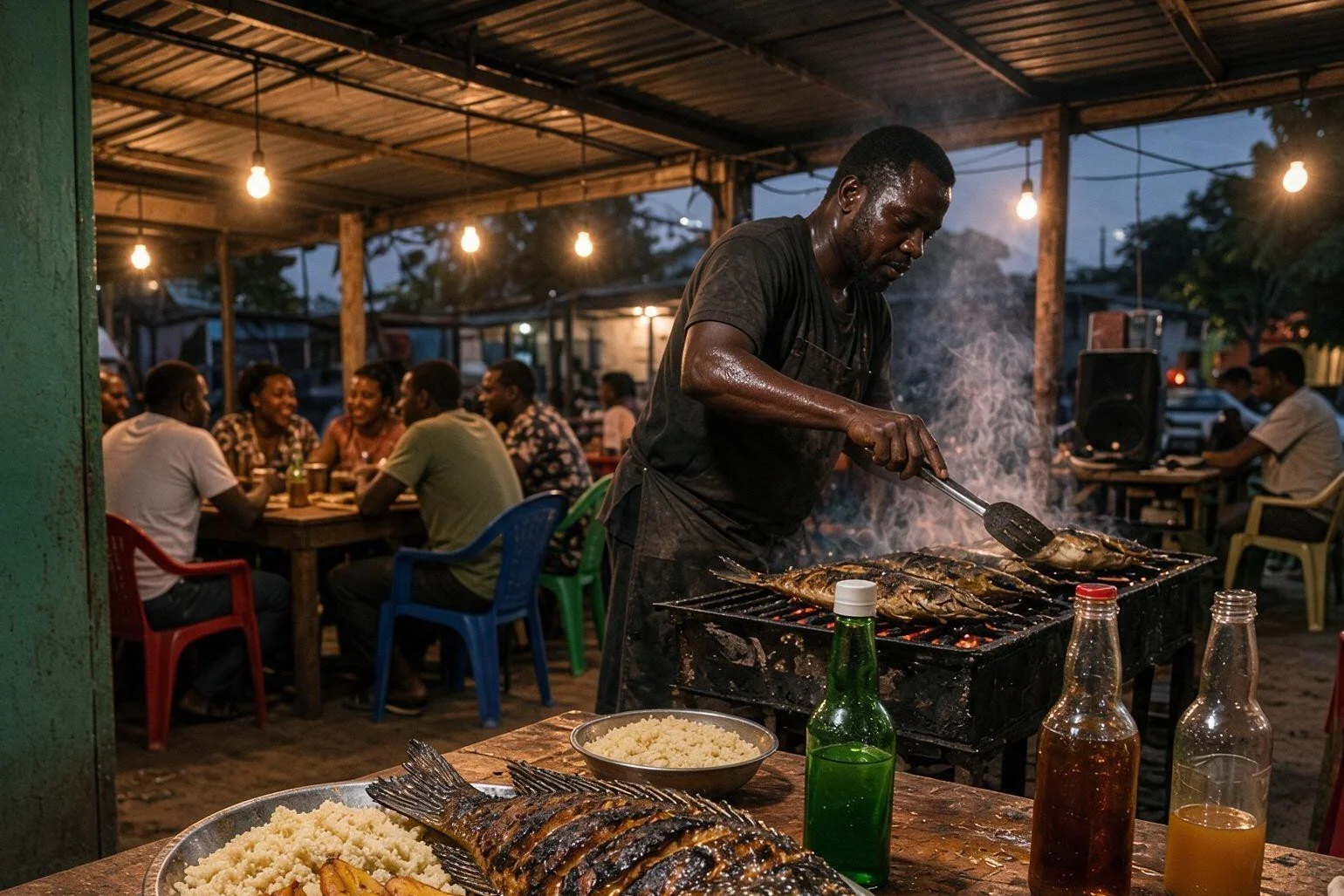
An Ivorian maquis is a popular bar-restaurant where people gather for local food, drinks, music, and conversation. Some are modest neighborhood spots with plastic chairs, open grills, and short daily menus, while others are polished maquis modernes with stages and regular performances.
What connects them is accessible food, informality, and social interaction. A maquis may serve lunch, show football in the evening, and become a dance space at night.
Although found beyond Abidjan, the city remains central to its history and popular image.
How the Maquis Became an Abidjan Institution
The exact origin of the Ivorian use of maquis remains unsettled.
In his 1983 study of Abidjan’s maquis, sociologist François Kouakou N’Guessan noted that the term had already been popular for ten to fifteen years, placing its established urban use in the late 1960s and 1970s.
Early maquis were often improvised from recovered wood, metal sheets, and other light materials. Some followed construction crews, serving affordable meals wherever workers gathered. Their discreet, unofficial character may explain the name, since maquis can mean a concealed refuge in French.
These establishments met three practical needs:
Familiar Ivorian food
Affordable prices
A place to gather after work
As Abidjan grew, the maquis connected people from different regions and language communities. It offered food associated with home while helping residents build relationships in the city.
Today, the word may describe either a neighborhood spot or a large restaurant, bar, and performance venue.
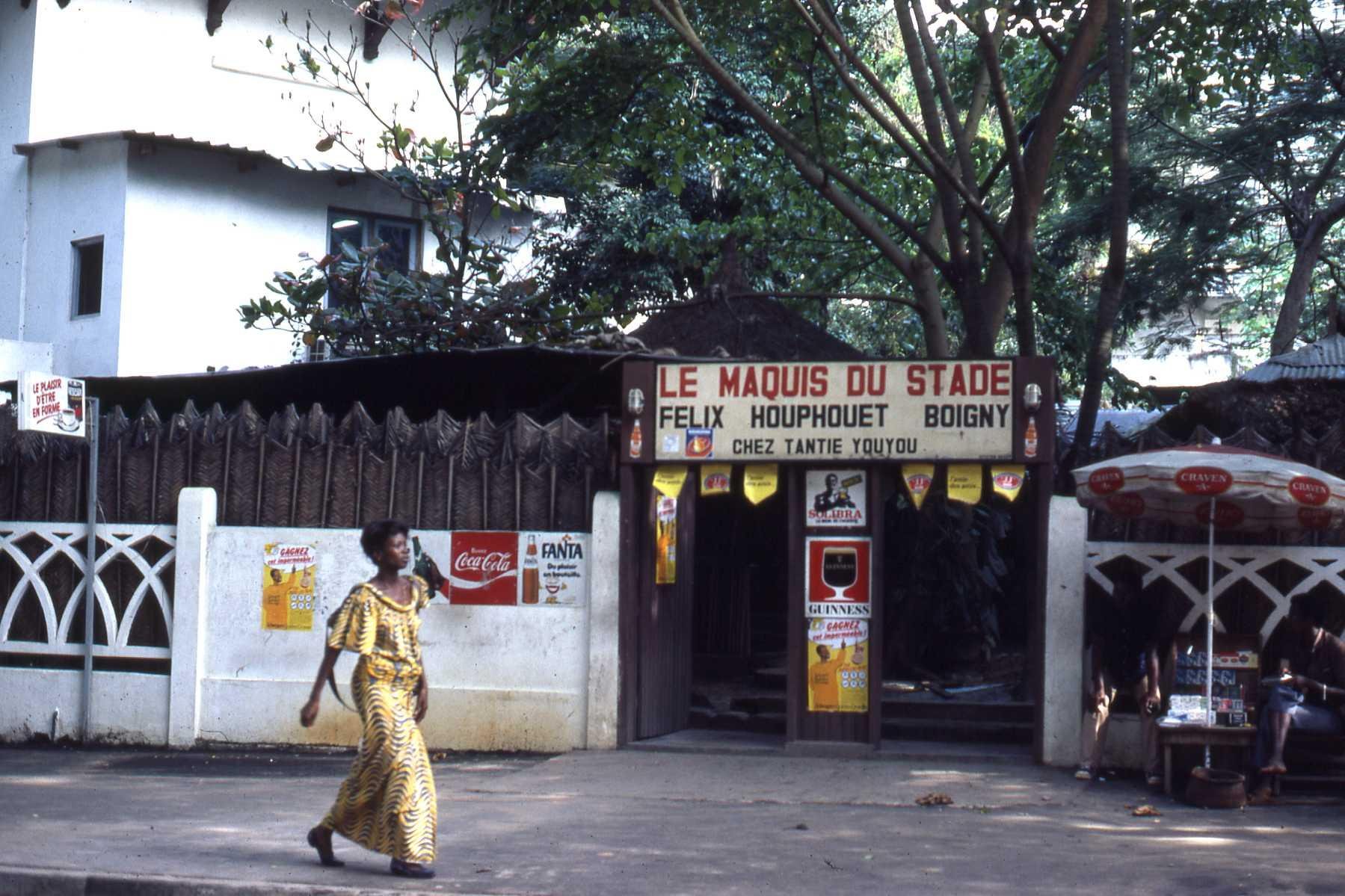
Credit: Noria Research
A neighborhood maquis shows how these informal gathering places became part of everyday urban life in Côte d’Ivoire.
What You Eat at a Maquis
There is no fixed maquis menu. The food depends on the cook, region, establishment, and daily availability. Common choices include:
Grilled fish or poisson braisé
Grilled chicken or poulet braisé
Attiéké
Alloco
Plantain or yam foutou
Kedjenou
Rice or riz gras
Sauce graine, sauce claire, and peanut-based sauces
N’Guessan’s 1983 study documented many of these foods, including foutou, attiéké with fish, grilled poultry, sauces, and kedjenou. In an Ivorian food setting, poisson braisé means seasoned fish cooked over a grill or hot coals, not the slow, liquid-based method English speakers call braising.
The fish may arrive with attiéké, onions, tomatoes, and pepper sauce. Attiéké is fermented cassava processed into small steamed granules. Learn more in NKENNE’s guide to attiéké with poulet braisé.
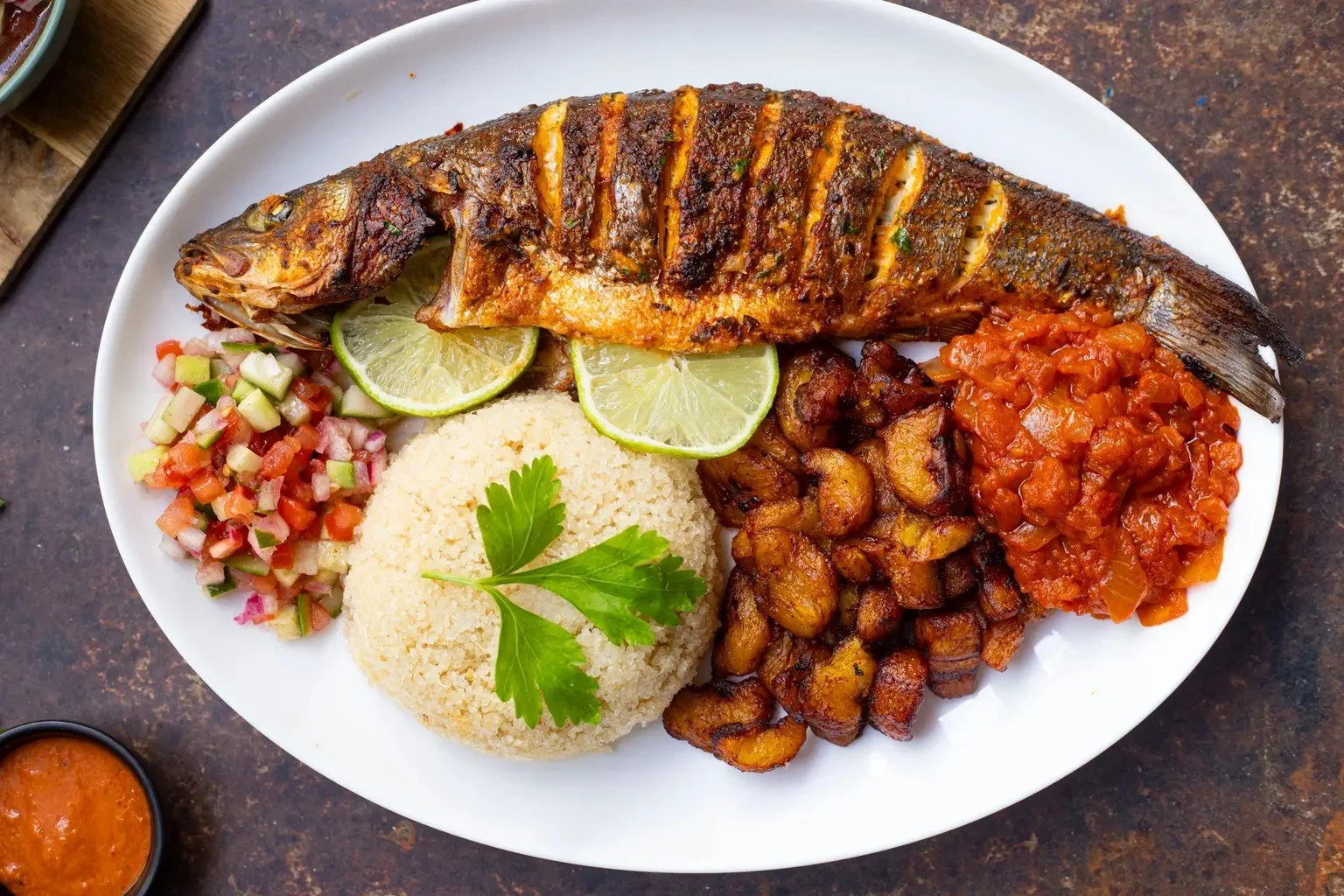
Credit: Aïssatou Mbaye / Aistou Cuisine
Grilled fish, attiéké, alloco, and fresh vegetables bring several familiar Ivorian flavors onto one generous plate.
Alloco adds sweetness through ripe plantain fried until caramelized outside and soft inside. Explore its place in Abidjan through NKENNE’s guide to alloco. These foods also carry regional memory, allowing a familiar sauce or starch to return someone briefly to a family table or hometown.
Why a Maquis Is More Than a Restaurant
The food explains why someone enters, but not always why they stay. N’Guessan found that regulars exchanged information about housing, work, family events, village news, football, and the cost of living. Some relationships continued outside the maquis through visits, small loans, and help finding work or housing.
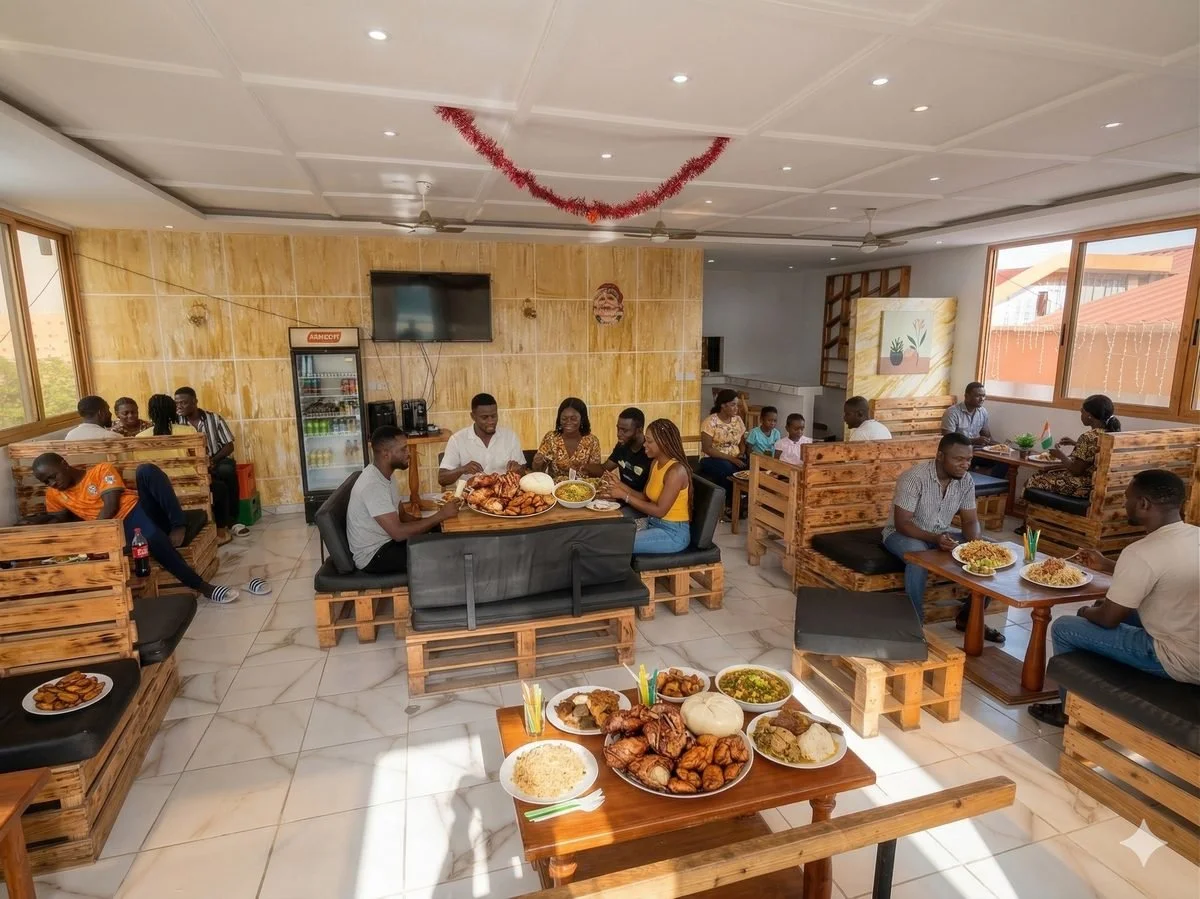
Credit: SLM House
At a maquis in Yopougon, sharing Ivorian food creates room for conversation, familiarity, and friendship.
N’Guessan called maquis “crucibles of urban solidarity.” Not every establishment is equally welcoming, but an informal gathering place can still perform social work. A familiar table becomes an information network, while regular customers become part of someone’s support system.
Women have long been central to this economy. N’Guessan observed women and girls cooking, serving, and managing early maquis, while a later FAO-supported study found food sales were the largest field of work among surveyed women on Abidjan’s streets. The relaxed atmosphere customers experience depends on purchasing, cooking, cleaning, serving, and adapting to a changing crowd.
How Music Found a Home in the Maquis
Music has long been part of the maquis. N’Guessan’s 1983 account mentions dance music, radio, and improvised performances accompanying conversations.
The relationship is natural. A maquis gives music a room, an audience, and a reason for people to remain together.
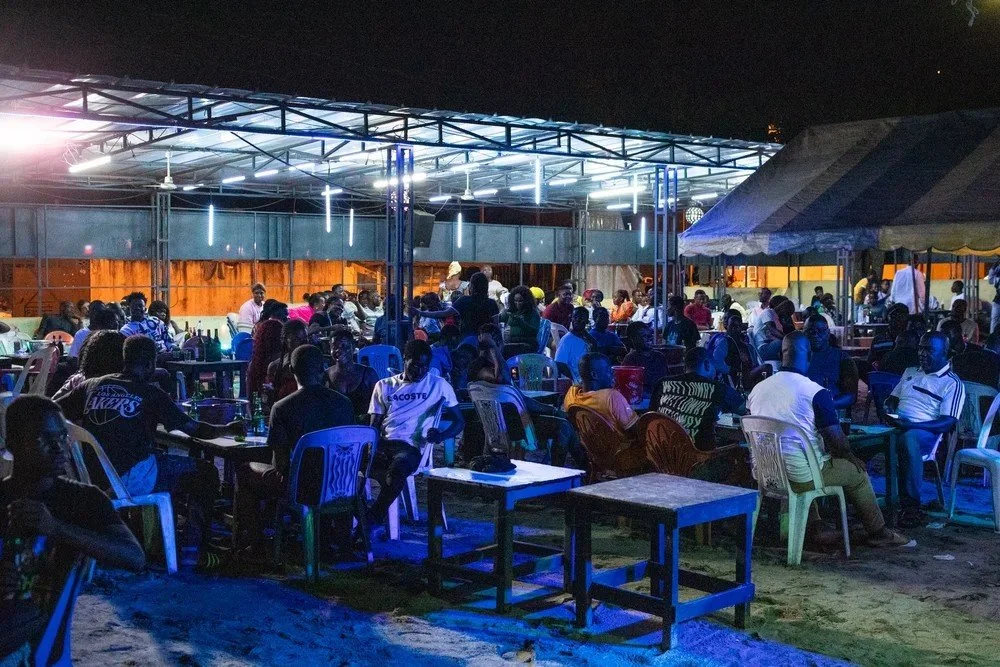
Credit: © Camille Millerand
At the Académie du Zouglou, music is not separate from the evening. It moves through the same space as drinks, conversation, and friendship.
Zouglou and Everyday Reality
Zouglou emerged in the early 1990s from student residences at the University of Abidjan in Yopougon. Its songs addressed student life, unemployment, inequality, relationships, and economic hardship.
When formal opportunities were limited, maquis provided stages and paying audiences that helped the genre spread. Zouglou spoke about ordinary life, and the maquis was where ordinary life was already being discussed.
Coupé-Décalé and Rue Princesse
Coupé-décalé developed within the Ivorian diaspora in Paris during the early 2000s before returning powerfully to Côte d’Ivoire. In Abidjan, DJs, dancers, and maquis turned songs into shared public experiences, allowing new dances, gestures, and expressions to spread quickly across the city.
Rue Princesse in Yopougon became one of the most famous nightlife centers before its demolition in 2011. Its cultural memory remains strong. In 2026, Côte d’Ivoire’s Market for African Performing Arts presented a production recreating Rue Princesse and its coupé-décalé atmosphere.
Music in a maquis is more than background sound. It carries neighborhood histories, dance memories, and the sound of particular generations.
The French You Hear Inside a Maquis
French is Côte d’Ivoire’s official language, but everyday Ivorian speech is not limited to the form taught in a French textbook.
A conversation inside a maquis may include:
Standard French
Ivorian French
Nouchi
Dioula, Baoulé, Bété, or another local language
Speakers move between them depending on age, familiarity, and subject.
Research on Côte d’Ivoire’s linguistic landscape distinguishes formal French from the Ivorian French used widely in family life and trade. Nouchi also draws vocabulary from French, Dioula, Bété, Baoulé, English, and other languages.
Is Nouchi Just Slang?
Nouchi emerged among urban youth in Abidjan during the late 1970s and early 1980s. Once dismissed as street slang, it spread through music, comedy, advertising, politics, and everyday conversation.
Scholars do not classify it in exactly the same way. Some describe it as an urban contact variety or youth language. Linguist Hannah Sande argues that its grammar supports treating Nouchi as a distinct language.
For learners, the important point is that Nouchi carries identity. A dictionary translation will not always explain what a phrase communicates between speakers.
Expressions You May Hear
Not every informal expression used in Côte d’Ivoire is Nouchi. Some belong more broadly to Ivorian or West African French.
On dit quoi ? What’s up? What is going on?
C’est doux. The food, music, or atmosphere is good.
On s’enjaille. We are enjoying ourselves.
Y a pas match. There is no competition.
On est ensemble. I support you. We are good.
Tone matters. C’est doux said after tasting the fish does not sound exactly like c’est doux shouted when the DJ plays the right song.
Useful French for Ordering
Bonsoir. Vous avez quoi aujourd’hui ? Good evening. What do you have today?
Je prends le poisson braisé avec attiéké, s’il vous plaît. I’ll have the grilled fish with attiéké, please.
Le piment à part, s’il vous plaît. The pepper on the side, please.
C’est combien ? How much is it?
L’addition, s’il vous plaît. The bill, please.
Start with clear French and listen before trying local expressions. The goal is not to perform Nouchi. It is to understand how language creates familiarity.
Explore more examples in NKENNE’s guide to African French expressions.
FAQs
What Is a Maquis in Côte d’Ivoire?
A maquis is a popular bar-restaurant serving local food and drinks in an informal social setting. Many also play music, show football, or host performances.
Why Is an Ivorian Restaurant Called a Maquis?
The origin is not fully settled. Early maquis were often small, unofficial, and discreetly located. The name may draw on the French idea of a concealed refuge.
What Food Is Served at a Maquis?
Common foods include grilled fish, grilled chicken, attiéké, alloco, foutou, kedjenou, rice, and local sauces. Menus vary by establishment and availability.
What Is the Difference Between a Maquis and an Allocodrome?
A maquis usually combines a broader menu with drinks and entertainment. An allocodrome specializes more closely in alloco and foods served with it.
Is Nouchi the Same as Ivorian French?
Not exactly. Ivorian French refers broadly to locally developed varieties of French. Nouchi is a more specific urban language or variety drawing from French, Ivorian languages, and other sources.
Are Maquis Only Found in Abidjan?
No. Maquis are found across Côte d’Ivoire and elsewhere in Francophone Africa. Abidjan is especially important to their documented history and musical influence.
Conclusion
The maquis shows how culture settles into an ordinary place.
Grilled fish, attiéké, and alloco bring people to the table. Music, conversation, and familiar company make them stay.
Inside that space, regional food becomes part of city life. Zouglou and coupé-décalé find an audience. Ivorian French and Nouchi move naturally between greetings, jokes, arguments, and stories.
The maquis does not separate language from culture because everyday life does not separate them either.
Come for the plate, listen to the room, and Côte d’Ivoire begins to sound different.
Learn French Through Ivorian Culture
With NKENNE, learning French includes the expressions, music, food, and everyday settings that shape how the language is actually used.
Explore African French and Ivorian culture in the NKENNE app, one useful phrase and one living story at a time.
