
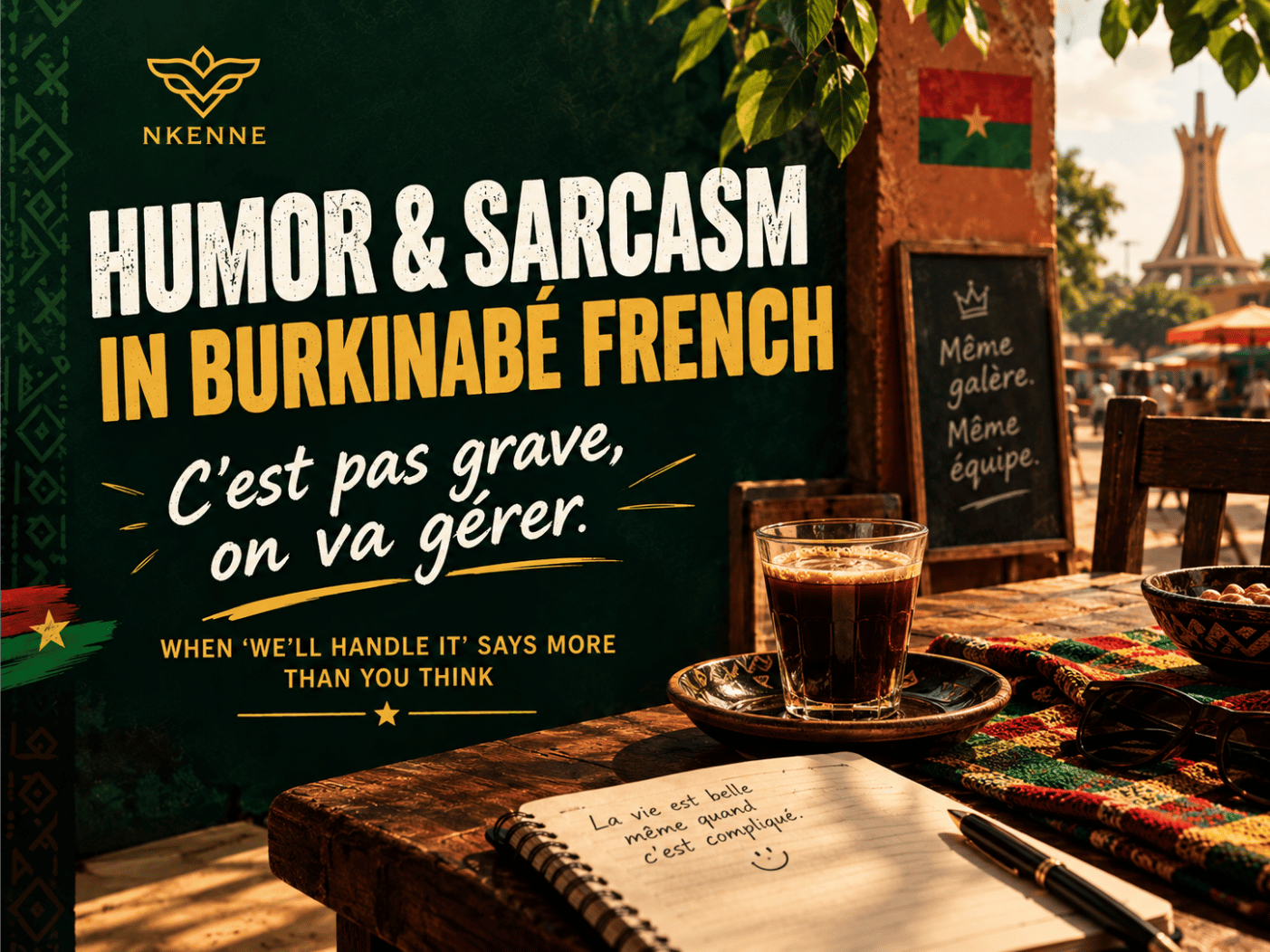
Humor and Sarcasm in Burkinabé French: The Art of Saying “C’est pas grave, on va gérer”
By: Chimdindu Ken-Anaukwu
In Ouagadougou, when something goes wrong, you often hear a calm voice say: “C’est pas grave, on va gérer.” On the surface it means “It’s no big deal, we’ll handle it.” In reality, it can carry layers of irony, resignation, and quiet confidence. Burkinabé French is full of this kind of humor and sarcasm. It softens hard situations, builds connection, and shows a particular way of facing life. This post explores how humor works in everyday Burkinabé French, with real expressions from the streets of Ouagadougou.
Why Humor Matters in Burkinabé French
Life in Burkina Faso often comes with challenges: heat, traffic, bureaucracy, economic pressure, and more. Humor becomes a practical tool. People use irony and light sarcasm to stay calm, avoid unnecessary conflict, and keep social bonds strong.
In Ouagadougou street talk, this humor is rarely mean-spirited. It is often shared, quick, and grounded in shared experience. Saying something lightly can actually show strength and realism at the same time.
The Meaning Behind “C’est pas grave, on va gérer”
This phrase is classic. Someone’s motorcycle breaks down. The power goes out. Plans fall apart. The response comes quickly: “C’est pas grave, on va gérer.”
It can be genuine reassurance. It can also be gently ironic. The situation may clearly be serious, yet the speaker chooses understatement. The message becomes: we have seen worse, and we will find a way.
The phrase reflects a wider attitude of resourcefulness mixed with humor. It is one of the most common ways Burkinabés acknowledge difficulty without letting it dominate the conversation.
Everyday Ironic and Humorous Expressions
Burkinabé French is rich with colorful and slightly twisted expressions. Here are some common ones heard in Ouagadougou:
“Ça va un peu” – Literally “It’s going a bit.” It often means things are not great, especially when money is tight.
“C’est caillou” – “It’s rocky” or “It’s hard.” Used for difficult situations.
“Ça donne” / “Ça donne pas” – “It works” or “It doesn’t work.”
“C’est gâté” – Something is broken or no longer functioning.
“On dit quoi ?” – A casual way of asking “What’s new?” or “What’s up?”
“Prendre les gens pour des nez percés” – To treat people as if they are naive or foolish.
These expressions often carry a dry or knowing tone that makes them land as humor rather than pure complaint.
Joking Relationships and Playful Insults
One unique feature of Burkinabé social life is the tradition of “alliances à plaisanterie” (joking relationships) between certain ethnic groups. People from linked communities can insult each other freely and even harshly, knowing it is all in good fun.
You might hear someone call another “mangeur de riz” or make jokes about stereotypes, only for both sides to burst out laughing. This practice turns potential tension into connection. It is a form of social humor that keeps relationships flexible and warm.
How Local Languages Shape the Humor
Burkinabé French mixes easily with Mooré, Dioula, and other local languages. A sentence may start in French and finish with a Mooré expression for extra punch or comedy. The code-switching itself often creates humor because the shift changes the tone instantly.
Interjections like “dèh,” “yèè,” or drawn-out “waï” add emotional coloring that pure standard French cannot match. These small sounds help the sarcasm or irony land with the right feeling.
Practical Examples from Daily Life
At a market when the price is high:
“C’est caillou hein… mais on va gérer.”
When a plan collapses:
“Bon, c’est pas grave. On va gérer autrement.”
When someone is clearly struggling but pretends everything is fine:
“Ça va un peu, n’est-ce pas?” said with a knowing smile.
These exchanges keep conversations light even when the underlying situation is not.
FAQs
Is “C’est pas grave, on va gérer” always ironic?
No. Sometimes it is sincere. The tone and context decide whether it is pure encouragement or gentle irony.
Do people in Ouagadougou use a lot of sarcasm?
They use a dry, understated humor more than heavy sarcasm. The goal is usually to connect rather than to wound.
Are joking relationships still common?
Yes. They remain an important part of social life and are widely understood across different communities.
Can outsiders use these expressions?
Yes, if the tone is respectful. Locals generally appreciate the effort when the humor is shared in good spirit.
How is Burkinabé French different from other African French varieties?
It has its own set of expressions, a particular rhythm, and strong influence from Mooré and Dioula. The humor style tends to be understated and resilient.
Conclusion
Humor and sarcasm in Burkinabé French reveal a practical and social intelligence. Phrases like “C’est pas grave, on va gérer” do more than fill silence. They acknowledge difficulty while refusing to be defeated by it. In Ouagadougou street talk, this kind of language builds connection, softens hard moments, and keeps conversations human.
Learning these expressions helps you understand not just the words, but the attitude behind them. NKENNE teaches African French the way it is really spoken, with the cultural context that makes the language come alive. Start exploring Burkinabé French and hear the humor for yourself.