
Gurage Culture: The People Behind Kitfo, Kocho, and Ethiopia’s Best Business Minds
By: Chimdindu Ken-Anaukwu
When you eat kitfo in an Ethiopian restaurant or enjoy kocho at a gathering, you are tasting Gurage heritage. This relatively small ethnic group from southern Ethiopia has shaped national cuisine and economy far beyond its size. Known for hard work, tight-knit communities, and sharp business minds, the Gurage people have become synonymous with success across the country. In this guide, you will explore their unique culture, signature foods, and the values that help them thrive in Amharic-speaking Ethiopia and beyond.

Who Are the Gurage People?
The Gurage are a Semitic-speaking ethnic group primarily living in the Gurage Zone of southern Ethiopia. They number around 2–3 million but punch well above their weight in national life.
They speak different dialects of the Gurage language (a Semitic tongue related to Amharic) while many are fluent in Amharic, making them active participants in broader Ethiopian society. Their region is fertile and hilly, supporting a sophisticated farming system centered on the enset plant.
The Heart of Gurage Life: Enset and Kocho
Enset, often called the false banana, is the foundation of Gurage identity. Unlike the banana, people harvest its starchy trunk rather than the fruit.
They ferment the pulp to make kocho, a dense, sour flatbread that serves as the staple food. Preparing kocho is labor-intensive and often a communal activity, especially among women.
A typical Gurage meal features kocho with cabbage, spiced butter, cheese, and sometimes meat. This resilient crop rarely fails, giving Gurage communities remarkable food security even in challenging times.
Kitfo: Gurage Origins and National Favorite
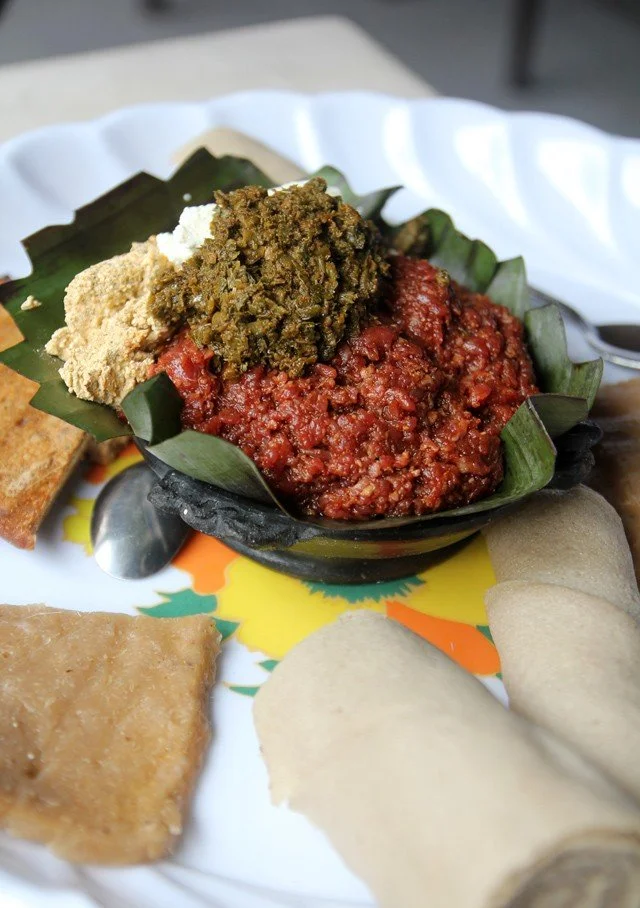
Kitfo, Ethiopia’s luxurious spiced raw (or lightly cooked) beef, originated among the Gurage. They perfected the combination of finely minced lean beef, niter kibbeh, mitmita, and korarima.
Gurage kitfo is often considered the gold standard: tender, perfectly seasoned, and served with ayib cheese and gomen. What started as a special-occasion dish in Gurage homes is now a beloved national food found in restaurants everywhere.
The Gurage Entrepreneurial Spirit
Gurage people are famous across Ethiopia for their business success. From porters and small traders in the early 20th century, they rose to dominate parts of the urban economy by the 1950s–1970s, outcompeting foreign merchants in many sectors.
Today you will find Gurage-owned hotels, restaurants, shops, and import businesses in every major city. Their reputation for hard work, saving money, reliability, and mutual support within the community drives this success. Many young Gurage migrate to cities, work diligently, and eventually open their own ventures.
Strong Family and Community Values
Gurage culture emphasizes discipline, respect for elders, and collective responsibility. Extended families and community networks provide strong support systems, especially for those starting businesses.
Traditional mediation practices help resolve conflicts peacefully. This social cohesion, combined with a strong work ethic, contributes greatly to their economic achievements.
Traditional Homes and Daily Life
Gurage homes are often round, beautifully constructed with thatch or corrugated roofs, and built without nails in some traditional styles.
Agriculture remains central, with complex crop rotation systems. Many families still maintain strong ties to their rural roots even as members succeed in urban business.

Gurage Influence on Modern Ethiopia
Beyond food and business, Gurage culture has enriched Amharic-speaking life through music, dance, and proverbs. Their success story inspires many Ethiopians and highlights the value of determination and community.
In Addis Ababa and other cities, Gurage contributions to markets, hospitality, and the overall economy are visible and widely respected.
How to Experience Gurage Culture
Visit the Gurage Zone for authentic kocho and kitfo. Look for Gurage restaurants in Addis Ababa. Attend cultural events or festivals where traditional dances and foods are celebrated.
When eating kitfo or shopping in busy markets, remember the hardworking communities behind these experiences.

FAQs
What is the main food of the Gurage people?
Kocho, made from fermented enset, is the staple. They are also famous for their version of kitfo.
Why are Gurage people known for business?
Their strong work ethic, community support, saving habits, and willingness to migrate for opportunities have led to remarkable entrepreneurial success.
Is the Gurage language the same as Amharic?
No. They speak Gurage dialects (Semitic languages), but most are also fluent in Amharic, facilitating their influence across Ethiopia.
Where do most Gurage people live?
Primarily in the Gurage Zone of southern Ethiopia, though many live and work in cities like Addis Ababa.
What makes Gurage kitfo special?
It uses a precise balance of spices, especially korarima, and is prepared with great care according to tradition.
Can visitors easily experience Gurage culture?
Yes. Many restaurants in major cities serve Gurage dishes, and the people are generally welcoming to respectful visitors.
Conclusion
The Gurage people show how a small group with strong values can have an outsized impact on a nation. From perfecting kitfo and sustaining communities with kocho to building successful businesses across Ethiopia, they embody dedication, resilience, and community spirit.
Their story adds rich layers to Amharic-speaking culture and reminds us that heritage and hard work together create lasting influence.
At NKENNE, we celebrate stories like this that bring Ethiopian cultures to life. Explore our Amharic lessons and cultural guides to connect more deeply with the people, food, and values behind the language. Start your journey today.