
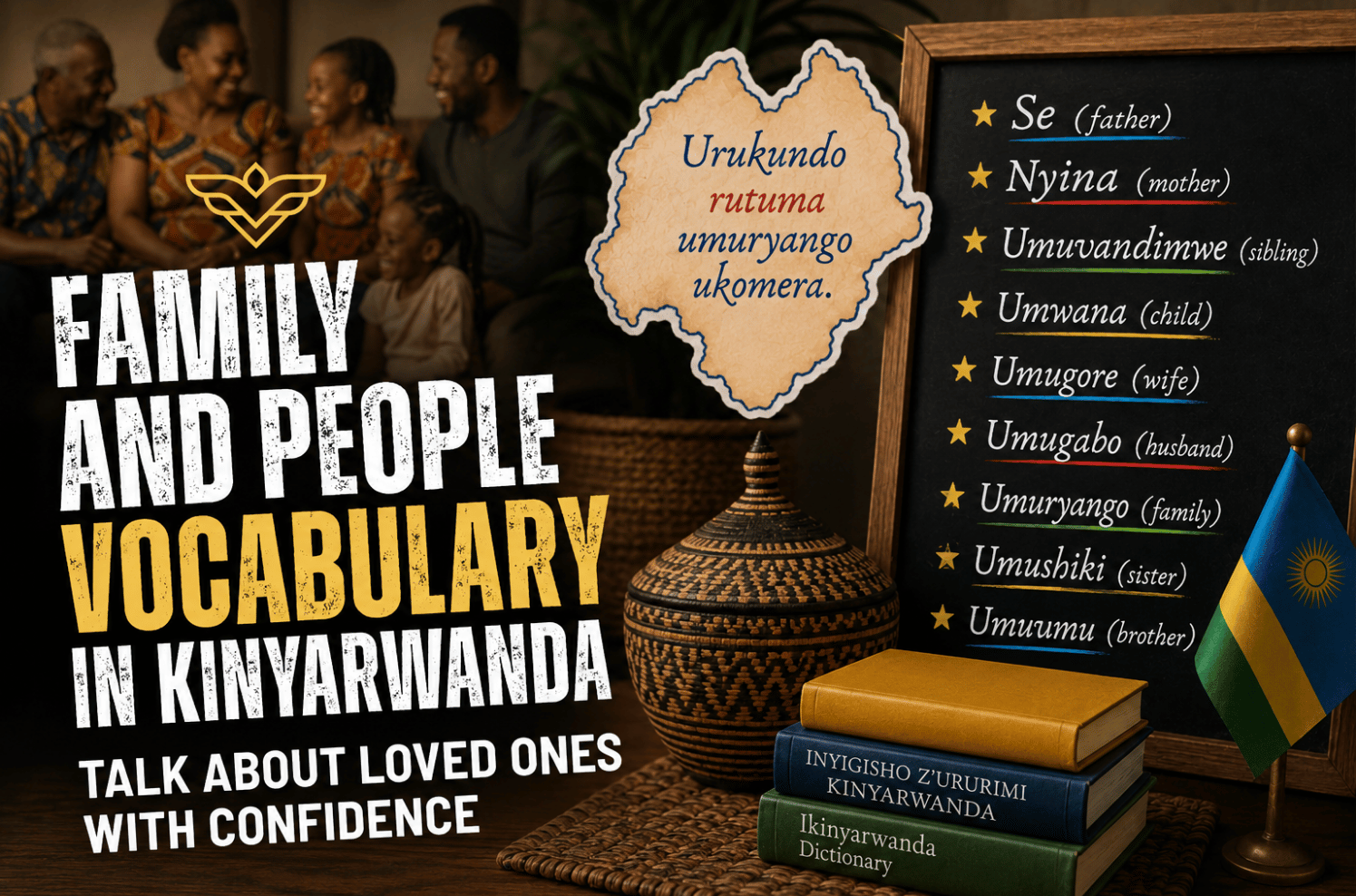
Family and People Vocabulary in Kinyarwanda: Talk About Loved Ones with Confidence
By: Chimdindu Ken-Anaukwu
Talking about family is one of the quickest ways to connect with Rwandan people. Whether you are meeting someone new or visiting a home, knowing the right words for parents, children, siblings, and relatives opens hearts and conversations.
In this guide, you will learn the core Kinyarwanda vocabulary for family and people, how to use possessives correctly, and practical phrases you can use right away. These words form the foundation for meaningful everyday interactions.
Why Family Words Matter in Kinyarwanda
Rwandan culture places great value on family and community relationships. Asking about someone’s umuryango (family) shows genuine interest and respect. Mastering these words helps you build rapport faster and understand conversations more deeply.
Basic Family Members
Here are the most essential terms:
Umuryango – Family
Umubyeyi – Parent (mother or father)
Umubyeyi wanjye – My parent
Umwana – Child (son or daughter)
Umwana wanjye – My child
Umukobwa – Daughter / Girl
Umuhungu – Son / Boy
Murumuna / Mukuru – Younger / Older sibling (context matters)
These words are used daily in homes, markets, and social gatherings.
Extended Family and Relatives
Rwandans often refer to a wide circle as family:
Nyogokuru / Sogokuru – Grandmother / Grandfather
Nyoko / So – Mother / Father (more familiar terms)
Mwene – Nephew / Niece or cousin (depending on context)
Umuvyeyi mukuru – Elder relative or respected parent figure
Using these shows you understand the broader sense of family in Rwandan culture.
People Vocabulary for Daily Life
Beyond family, these common words help in conversations:
Umuntu – Person
Umukiranutsi – Friend
Umubanyi – Neighbor
Umushyitsi – Guest / Visitor
Umunyarwanda – Rwandan person
Umwarimu – Teacher
Umukuru – Elder / Leader
Combine these with family terms for richer descriptions.
Possessives: Saying “My,” “Your,” and “Our”
Possessives change based on the noun class, but here are the most useful everyday forms:
Wanjye / Wange – My (for people and close relations)
Wawe – Your (singular)
Wacu – Our
Wanyu – Your (plural)
We – His / Her
Examples:
Umwana wanjye – My child
Umuryango wawe – Your family
Abana bacu – Our children
Practice these until they feel natural. They make your sentences warmer and more personal.
Useful Example Sentences
Nitwa Marie. Umuryango wanjye uri i Kigali. (My name is Marie. My family is in Kigali.)
Umubyeyi wawe ni nde? (Who is your parent?)
Ndashaka kubona umwana wanjye. (I want to see my child.)
Murakoze cyane, mwene wacu. (Thank you very much, our relative.)
These short sentences work well in real conversations.
Cultural Notes on Family in Rwanda
In Rwanda, family extends beyond the nuclear unit. Cousins, neighbors, and close friends are often treated like brothers and sisters. Respect for elders (abakuru) is very important. When you use these words thoughtfully, you show cultural awareness and earn goodwill.
Frequently Asked Questions
What is the Kinyarwanda word for family?
Umuryango is the common word for family.
How do you say “my child” in Kinyarwanda?
Umwana wanjye or simply umwana wange.
What does “umubyeyi” mean?
It means parent. You can say umubyeyi wanjye for “my parent.”
Are there different words for mother and father?
Yes. Mama or nyina for mother, and papa or se for father in familiar speech. Umubyeyi works for either parent.
How important are possessives in Kinyarwanda?
Very important. Using wanjye (my) makes your speech warmer and more natural when talking about family.
Can beginners start using these words immediately?
Yes. Rwandans appreciate the effort even if your pronunciation is not perfect. Start simple and build from there.
Learning family and people vocabulary in Kinyarwanda helps you move from basic greetings to real connection. These words open doors to stories, laughter, and deeper friendships.
Practice them often. The next time you meet a Rwandan friend, ask about their umuryango and watch the conversation flow naturally.
Ready to strengthen your Kinyarwanda skills? NKENNE offers practical lessons, cultural insights, and resources designed for real conversations. Join us and keep building meaningful connections with Rwanda and its people. Your next step starts here.