Eriata Oribhabor: The Poet Who Put Nigerian Pidgin on the Page
By: Yvonne Mag-usara
Nigerian Pidgin has never needed a book to prove its power. Nigerians have long used it to joke, argue, bargain, sing, report news, and say difficult things plainly.
The printed page offers permanence. Once a language enters books, it can be edited, taught, translated, reviewed, and passed to readers who never heard the original speaker.
Eriata Oribhabor was not the first Nigerian writer to use Pidgin, but he became one of its most persistent advocates as a language of poetry, publishing, and public thought.
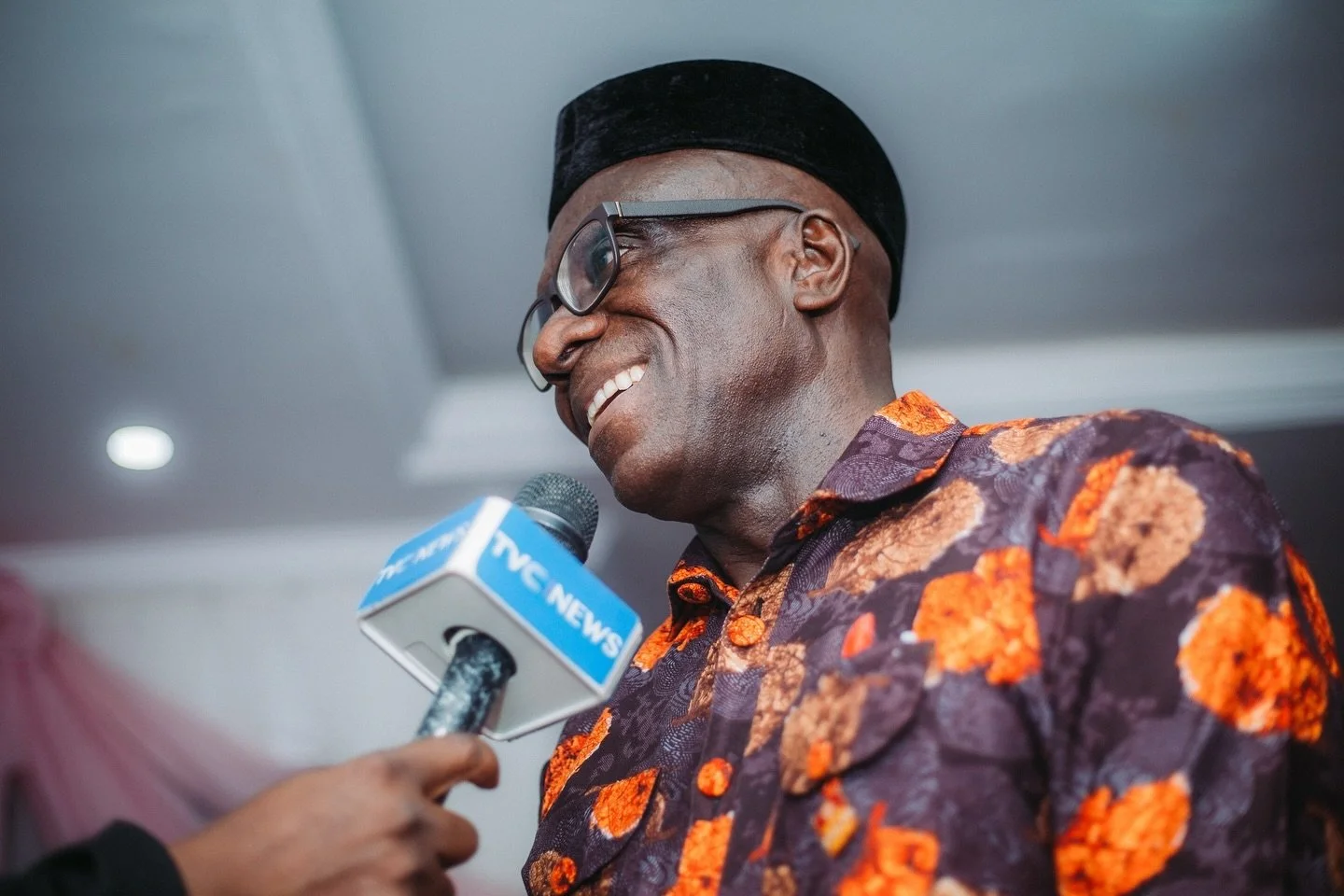
Credit: @mo_creative_writing_club via Instagram
Eriata Oribhabor has helped make Nigerian Pidgin visible in poetry, publishing, and literary community.
Who Is Eriata Oribhabor?
Eriata Oribhabor, often called “Di Poet,” is a Nigerian poet, editor, publisher, essayist, and literary organizer. He grew up in Warri, Delta State, where Nigerian Pidgin formed part of everyday communication across ethnic backgrounds.
He later worked as a civil servant while continuing to write and promote literature. He also served as chairman of the Abuja branch of the Association of Nigerian Authors.
His work moves between English and Nigerian Pidgin, addressing leadership, inequality, public conduct, memory, the environment, and everyday Nigerian life.
Oribhabor describes writing as a form of intervention. For him, a poem should entertain, question, remember, and encourage people to examine their society.
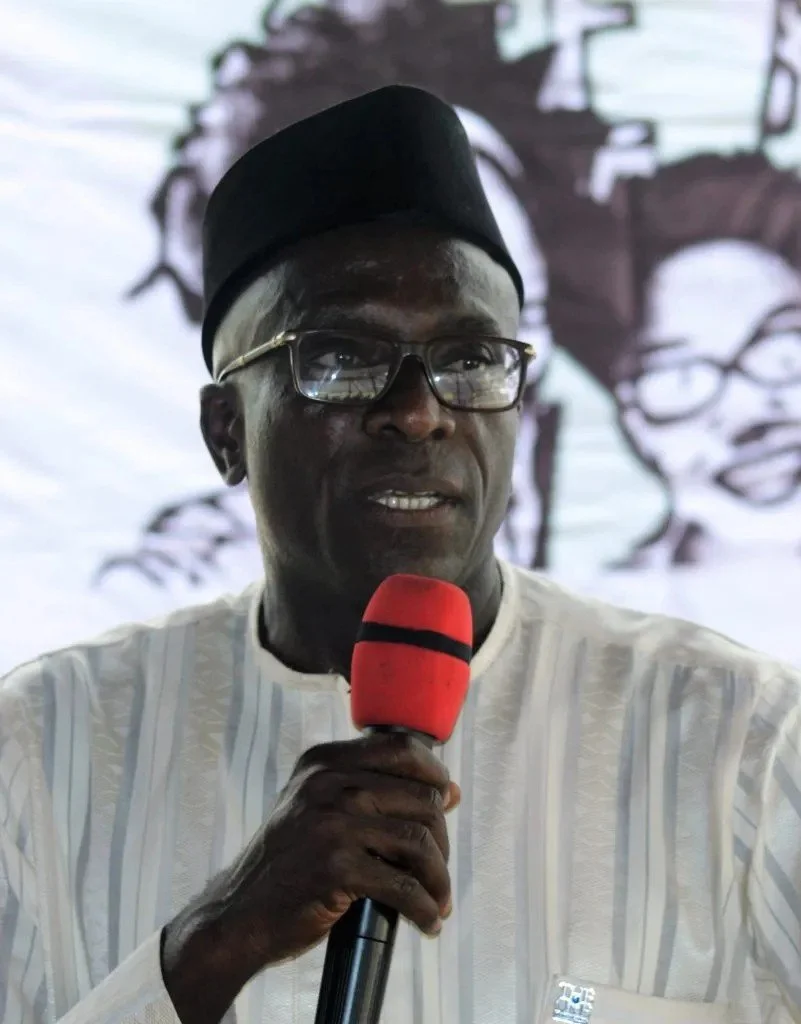
Credit: Authorpedia / Words Rhymes & Rhythm
Eriata Oribhabor writes and publishes poetry in Nigerian Pidgin while creating opportunities for other Nigerian writers.
From Warri Speech to Written Poetry
Warri gave Oribhabor a language that felt socially immediate.
Pidgin was not simply an alternative to English. It allowed people from different communities to meet, trade, joke, disagree, and understand one another.
After leaving Warri, Oribhabor began thinking more seriously about preserving the expressions he had grown up hearing. He worried that words and phrases could disappear if the language remained almost entirely oral. Writing offered a way to keep them in circulation.
Spoken language is always moving. A poem records more than vocabulary. It preserves rhythm, humor, local references, social attitudes, and the sound of a particular time.
Readers can explore this history further through NKENNE’s guide to the Niger Delta roots of Nigerian Pidgin.
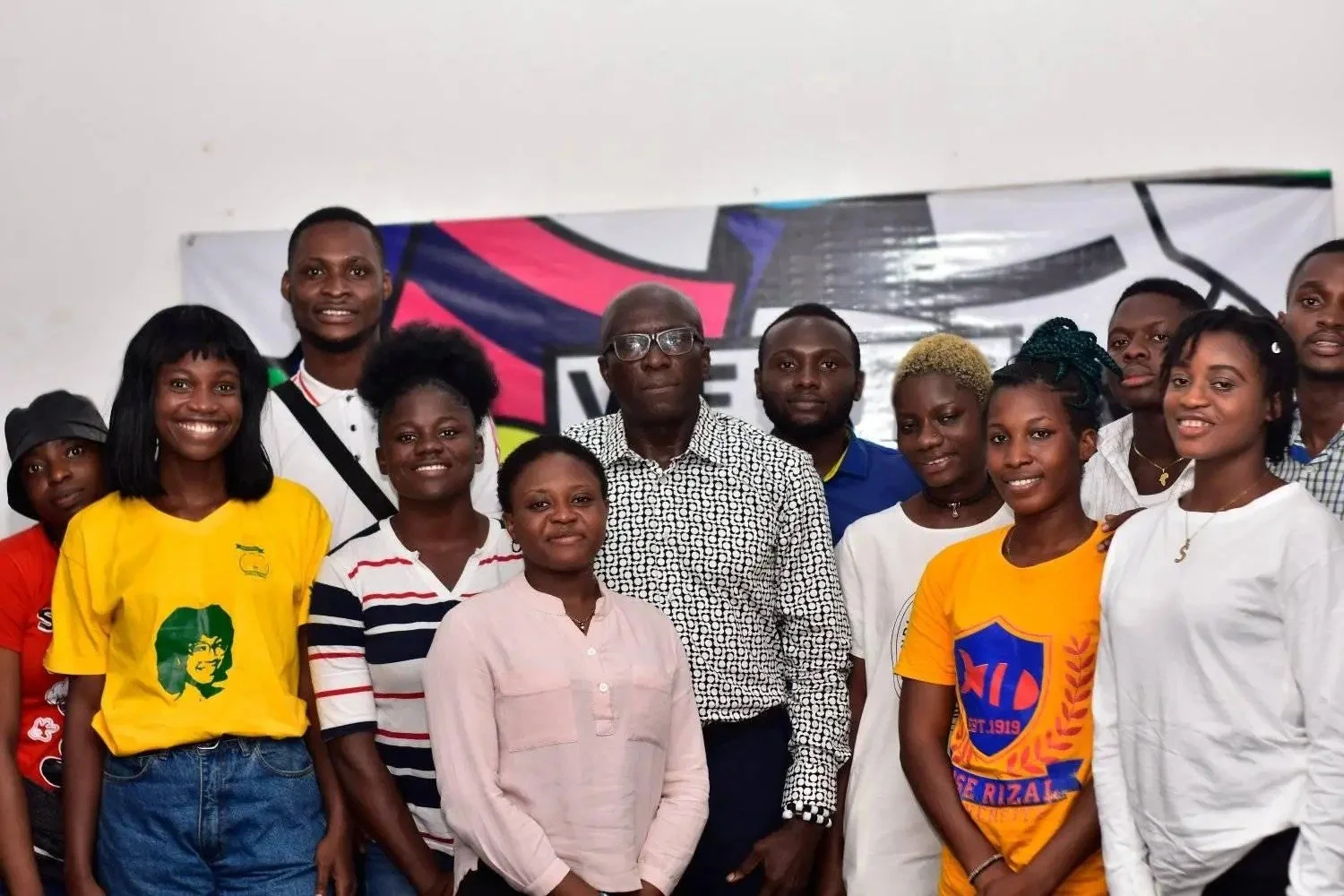
Credit: Words Rhymes & Rhythm / CỌ́N-SCÌÒ Magazine
Eriata Oribhabor speaks at The RootHub poetry event in Uyo, bringing his work into the shared space of a live literary gathering.
What Abuja Na Kpangba Changed
Oribhabor’s first published Nigerian Pidgin collection was Abuja Na Kpangba an Oda Puem-Dem, released in 2011 with the involvement of the French Institute for Research in Africa.
The collection turns familiar Nigerian subjects into poetry without treating Pidgin as comic decoration. It examines Abuja, Lagos, family life, work, roads, electricity, money, and childhood.
Its title refuses a polished picture of the capital. Oribhabor presents Abuja as a place where carefully planned development exists beside struggling suburbs.
That contrast suits Nigerian Pidgin. The language can move quickly between praise and criticism, humor and seriousness, or disappointment and endurance.
Critics have identified repetition, wordplay, metaphor, rhyme, sound patterns, and idiophones throughout the collection. Its poetry does not come from imitating formal English. Pidgin’s own sounds and structures create the art.
Oribhabor later edited If Yu Hie Se A De Prizin, a 2012 anthology containing 93 poems by 32 writers. He also edited Amebo Yad, a collection of plays in Naija languej.
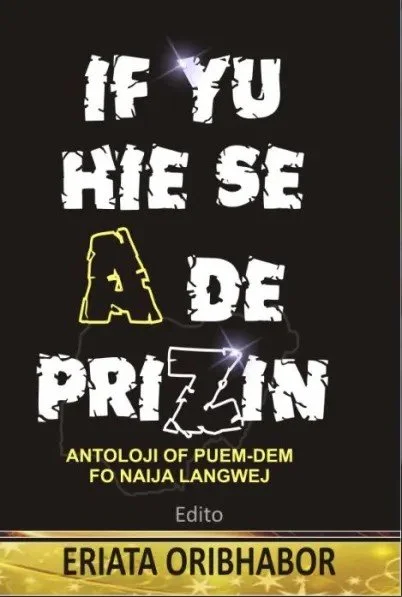
Credit: Something for Everybody Ventures / New Books Nigeria
“If Yu Hie Se A De Prizin” brought dozens of poets together in an anthology written in Nigerian Pidgin.
Why Writing and Spelling Pidgin Matter
Many Nigerians speak Pidgin confidently but hesitate when asked to write it. One person may write dey, another de, while someone else chooses a spelling closer to English.
This does not mean Pidgin lacks structure. It reflects regional variation and the fact that no single writing system has become universal.
Oribhabor became involved in efforts to promote a more consistent form called Naija languej. Following a 2009 conference on Nigerian Pidgin at the University of Ibadan, he joined the Naija Languej Akedemi and used its proposed spelling conventions.
Standardization can support publishing, dictionaries, education, translation, and digital tools by giving readers a shared reference point.
However, it should not erase how people speak in Warri, Lagos, Port Harcourt, Benin City, and other communities. Nigerian Pidgin carries regional vocabulary and pronunciation.
Oribhabor’s books make this debate visible. They ask what Nigerian Pidgin might become when people treat it as a language they can study, edit, and preserve.
Building Space for Other Writers
Oribhabor’s influence extends beyond his own poems.
By editing anthologies, he helped other writers enter print through Nigerian Pidgin. His translation work also demonstrated that the language could carry ideas across national and literary borders.
In 2016, Jalada Africa published his Naija languej translation of Ngũgĩ wa Thiong’o’s The Upright Revolution: Or Why Humans Walk Upright. It appeared as Di Korekt Fait: Oo Wai Wi De Stand Waka.
The project placed Naija beside numerous African and global languages. It functioned as a complete language of literary translation, not a humorous interruption.
Oribhabor also founded Poets in Nigeria in 2015. The initiative supports poetry writing, performance, publishing, workshops, prizes, and opportunities for younger writers.
The Eriata Oribhabor Poetry Prize, established in 2012 with Words Rhymes & Rhythm, similarly encouraged young poets to address unity, justice, social change, and national life.
This institution-building may be his most lasting contribution. A language needs writers, but it also needs editors, readers, publishers, critics, and places where new work can be heard.
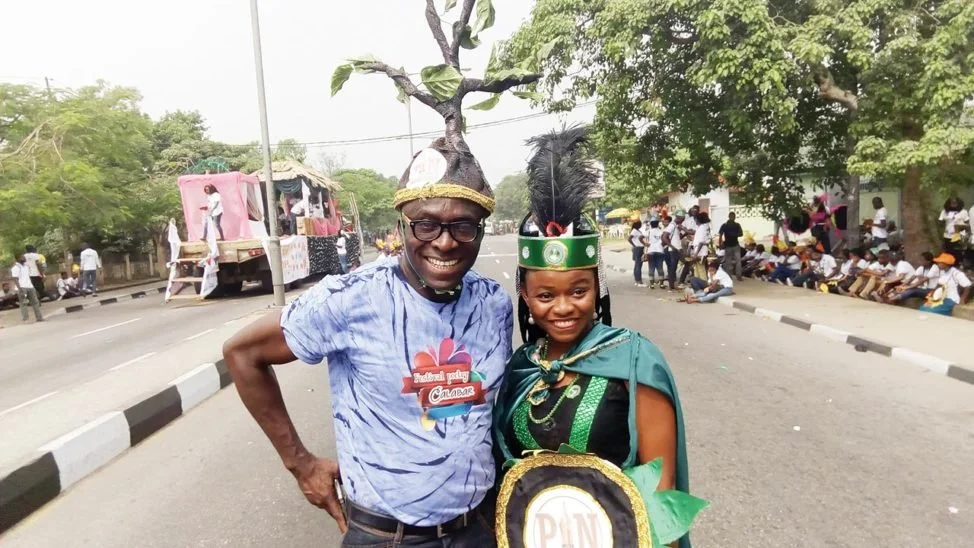
Credit: The Guardian Nigeria
Eriata Oribhabor helped bring poetry into festivals and public spaces through Poets in Nigeria and related literary initiatives.
How to Read His Work as a Pidgin Learner
Reading Pidgin poetry can feel unfamiliar even when you understand the spoken language. The page removes the speaker’s tone, pace, gestures, and facial expressions.
A few habits make it easier:
Read aloud. Pidgin often becomes clearer once you hear its rhythm.
Read the full phrase first. Translating one word at a time can hide the meaning.
Notice repetition. It may create emphasis, humor, frustration, or musical movement.
Expect spelling differences. A word written as de may appear as dey elsewhere.
Identify the setting. References to transport, electricity, food, or money often carry familiar social meaning.
Listen for attitude. Pidgin can soften criticism, sharpen sarcasm, or make a difficult truth easier to receive.
These common structures provide a starting point:
Na → “is,” “it is,” or “this is” · identifies or emphasizes
No bi → “is not” · rejects or corrects
Dey → “be,” “exist,” or an ongoing action · describes a state or action
Wetin → “what” · introduces a question
Una → “you” (plural) · addresses more than one person
Dem → “them” or a plural marker · refers to a group
Make → “let,” “should,” or “may” · introduces a suggestion or instruction
Meaning still depends on context. That flexibility gives Pidgin poetry much of its voice.
For more examples, read NKENNE’s guide to Pidgin idioms and their deeper meanings.
FAQs
Who is Eriata Oribhabor?
Eriata Oribhabor is a Nigerian poet, editor, publisher, translator, and literary organizer known for promoting Nigerian Pidgin as a literary language.
What is Eriata Oribhabor’s best-known Pidgin book?
His best-known early collection is Abuja Na Kpangba an Oda Puem-Dem, published in 2011. It examines Abuja, memory, public life, and everyday Nigerian experiences.
Was Eriata Oribhabor the first poet to write in Nigerian Pidgin?
No. Nigerian writers used Pidgin before him. His importance comes from his sustained writing, editing, translation, publishing, and support for other poets.
What does Naija languej mean?
Naija languej is a name for a proposed standardized written form of Nigerian Pidgin intended to support literature, education, translation, and formal use.
What is If Yu Hie Se A De Prizin?
It is a Nigerian Pidgin poetry anthology edited by Oribhabor and published in 2012. It contains 93 poems by 32 writers.
Is Nigerian Pidgin only a spoken language?
No. Nigerian Pidgin is also used in books, broadcasting, journalism, theatre, music, translation, social media, and digital communication.
Conclusion
Putting Pidgin on the page does not make it valuable. Nigerians had already made it valuable through generations of use.
Writing leaves evidence. It allows future readers to encounter the rhythms, humor, frustrations, and arguments of people who lived before them.
Eriata Oribhabor understood that preservation requires more than talent. It requires books, editors, publishers, literary communities, and younger writers prepared to continue the work.
His career reminds us that a language spoken in markets, buses, homes, and workplaces already carries literature within it. Someone simply has to respect it enough to write it down.
Learn Nigerian Pidgin Through Culture With NKENNE
With NKENNE, you can learn Nigerian Pidgin while exploring the humor, history, public life, and everyday expressions that give it meaning.
Understanding how Pidgin works in real situations helps you hear what writers like Eriata Oribhabor are preserving on the page.
