
Mepa Wo Kyɛw: How Twi Builds Respect Into Everyday Requests
By: Yvonne Mag-usara
You can learn that mepa wo kyɛw means “please” and still use it incorrectly.
The phrase can soften a request, gain someone’s attention, or prepare a listener for something uncomfortable. Its effect depends on who is speaking, how the words are delivered, and what follows them.
Learning mepa wo kyɛw therefore teaches more than one useful Twi expression. It reveals how respect is built across an entire interaction.

What Does Mepa Wo Kyɛw Mean?
Mepa wo kyɛw is commonly translated as “please” or “I beg you.” It is widely used by Twi speakers when making requests, attracting attention, or reducing the force of what they are about to say.
The phrase is best learned as one complete expression rather than translated word by word. In ordinary speech, the words may run together quickly, making them sound shorter than their written form.
The correct spelling contains ɛ in kyɛw. Informal messages may use kyew when the Twi keyboard is unavailable, but learners should recognize the standard spelling.
Start by saying the words separately:
Me-pa wo kyɛw
The ɛ has an open “eh” sound. Because Twi is tonal, hearing the phrase from a fluent speaker is more reliable than depending entirely on an English pronunciation guide.
Why the Phrase Is More Than “Please”
English learners are often taught that adding “please” automatically makes a sentence polite. Mepa wo kyɛw does not work quite so simply.
The phrase acknowledges that the speaker is asking for another person’s attention, effort, time, or cooperation. It can make a request feel less abrupt, but it cannot rescue words delivered with a harsh voice or dismissive behavior.
It may also appear before:
A greeting used to attract someone’s attention
A request for help or information
A correction or disagreement
An appeal after someone has refused
Uncomfortable news that the speaker wants to soften
A study of Akan interactions found that the phrase may express courtesy, emotional appeal, irony, or even impatience depending on the surrounding language and behavior. Politeness comes from the complete interaction, not from one phrase alone.
This is why mepa wo kyɛw carries social meaning. It recognizes that speaking to another person creates a relationship, even if the exchange lasts only a few seconds.
How to Build Polite Requests in Twi
A useful beginner pattern is:
Mepa wo kyɛw + request
Mepa wo kyɛw, boa me. = Please help me.
Mepa wo kyɛw, ma me nsuo. = Please give me water.
Mepa wo kyɛw, twɛn kakra. = Please wait a little.
Mepa wo kyɛw, kasa brɛoo. = Please speak slowly.
Mepa wo kyɛw, san ka bio. = Please say it again.
Mepa wo kyɛw, te bo no so. = Please reduce the price.
The phrase normally comes before the request. A short pause after mepa wo kyɛw gives the listener time to recognize that a request is coming.
Learners should practice the complete sentence rather than memorizing mepa wo kyɛw alone. The goal is to know what to say next when asking for help, clarification, time, or a better price.
Why Tone and Gesture Still Matter
Two speakers can use the same words and communicate very different attitudes.
A calm voice and attentive posture can make mepa wo kyɛw sound sincere. A sharp tone, impatient expression, or dismissive movement may turn the same phrase into a demand.
Age, familiarity, and social role also influence how a request is received. A learner speaking with a close friend may sound more relaxed than someone addressing an elder, customer, teacher, or unfamiliar person.
In many Ghanaian settings, using the left hand to point at someone or offer an object can be considered disrespectful. Looking away while asking for help may also suggest disinterest, regardless of the polite words being used.
The practical lesson is simple: let your behavior agree with your words.
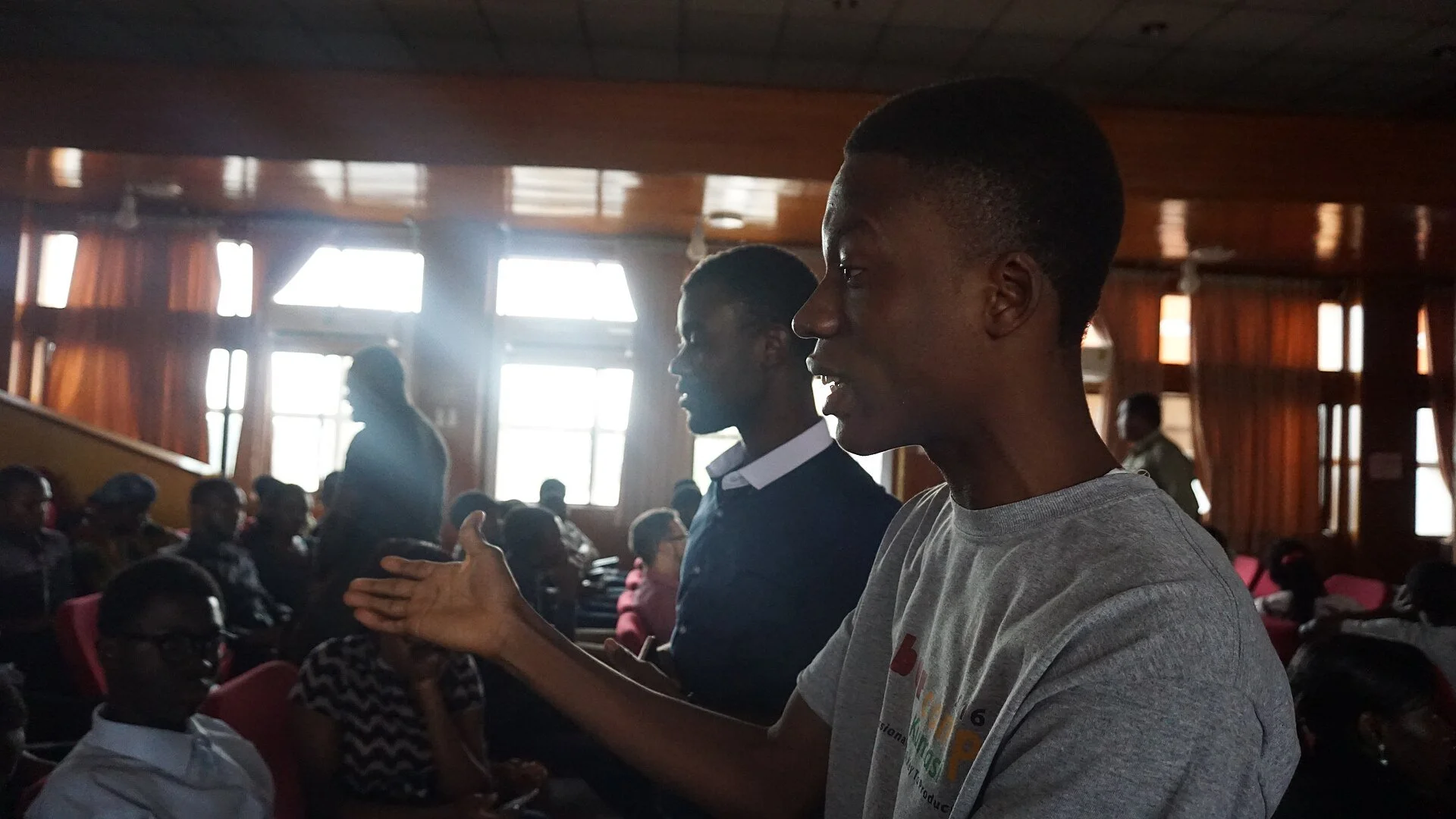
Credit: Noahalorwu / Wikimedia Commons, CC BY-SA 4.0
A participant gestures while speaking during a discussion in Kumasi. Facial expression, posture, and hand movement help listeners interpret the intention behind spoken words.
Using Mepa Wo Kyɛw in Real Conversations
At a Market
Buyer: Maakye. Mepa wo kyɛw, ne bo yɛ sɛn?
Good morning. Please, how much is it?
Trader: Ɛyɛ cedi aduonum.
It is fifty cedis.
Buyer: Ne bo yɛ den. Mepa wo kyɛw, te so kakra.
It is expensive. Please reduce it a little.
Trader: Yoo, mɛte so kakra.
Okay, I will reduce it a little.
When Learning Twi
Learner: Mepa wo kyɛw, kasa brɛoo.
Please speak slowly.
Speaker: Yoo.
Okay.
Learner: Mepa wo kyɛw, san ka bio.
Please say it again.
When Asking for Help
Speaker A: Mepa wo kyɛw, boa me.
Please help me.
Speaker B: Yoo, mɛboa wo.
Okay, I will help you.
These examples are short enough to practice as complete units. Replace the final request as your vocabulary grows.
Common Mistakes Twi Learners Make
Treating It Like a Magic Word
Mepa wo kyɛw cannot make an impatient order respectful by itself. Tone and behavior remain part of the message.
Saying the Phrase Without a Request
Practice complete expressions such as mepa wo kyɛw, boa me instead of stopping after “please” and searching for the rest of the sentence.
Confusing Please and Thank You
Mepa wo kyɛw introduces or softens a request. Medaase means “thank you” and usually follows the help, answer, or service received.
Ignoring the Letter Ɛ
Writing kyew may be convenient online, but kyɛw reflects the proper vowel. Learning ɛ will also help you recognize many other Twi words.
Copying English Rhythm
Twi has its own tones and conversational rhythm. Listen to the full phrase repeatedly and imitate a fluent speaker rather than forcing each word into English sound patterns.
FAQs
What does mepa wo kyɛw mean in English?
It commonly means “please” or “I beg you.” Its exact force depends on the request, tone, relationship, and situation.
How do you pronounce mepa wo kyɛw?
Begin with the four-part rhythm me-pa wo kyɛw. Keep kyɛw as one smooth syllable and give ɛ an open “eh” sound. Native audio is important because Twi uses tone.
Can mepa wo kyɛw sound rude?
Yes. A harsh tone, dismissive gesture, insult, or impatient delivery can contradict the polite wording. The phrase softens language, but context determines how it is received.
Can I shorten mepa wo kyɛw?
In rapid conversation, the words often sound compressed. Beginners should learn the complete written form before trying to imitate faster speech.
How do you say please and thank you in Twi?
Mepa wo kyɛw means “please,” while medaase means “thank you.”
Is Twi the same as Akan?
Twi belongs to the Akan language group. Asante Twi and Akuapem Twi are major Akan varieties, alongside Fante and other related varieties. Vocabulary and pronunciation may vary between communities.
Conclusion
Mepa wo kyɛw is a small phrase carrying a larger lesson: respectful speech is something people build together.
The words acknowledge that a request affects another person. Tone shows whether the acknowledgment is sincere. Gesture and attention confirm whether the speaker truly respects the listener.
For heritage learners, understanding this relationship makes Twi feel less like a list of translations. The language begins to show how people ask, respond, soften difficult moments, and care for the dignity of others.
Learn Twi Through Everyday Culture With NKENNE
With NKENNE, you can learn Twi through practical expressions, native pronunciation, and the cultural relationships that give everyday words their meaning.
Start with one phrase, use it in a complete sentence, and let respectful conversation become part of how you reconnect.
