
By: Chimdindu Ken-Anaukwu
Family sits at the heart of Akan life. Knowing the right words for mother, father, siblings and elders in Twi is not just vocabulary. It is a way of showing respect and understanding relationships. This guide teaches you the most useful family terms, how to talk about children and extended relatives, and important cultural notes on respect for elders. By the end you will speak about family with confidence and cultural awareness.
Why Family Terms Matter in Twi Culture
Akan society is deeply rooted in family and clan (abusua). People often introduce themselves by mentioning relatives. Using the correct terms shows you understand the culture and respect hierarchy, especially age and seniority.
Core Family Members
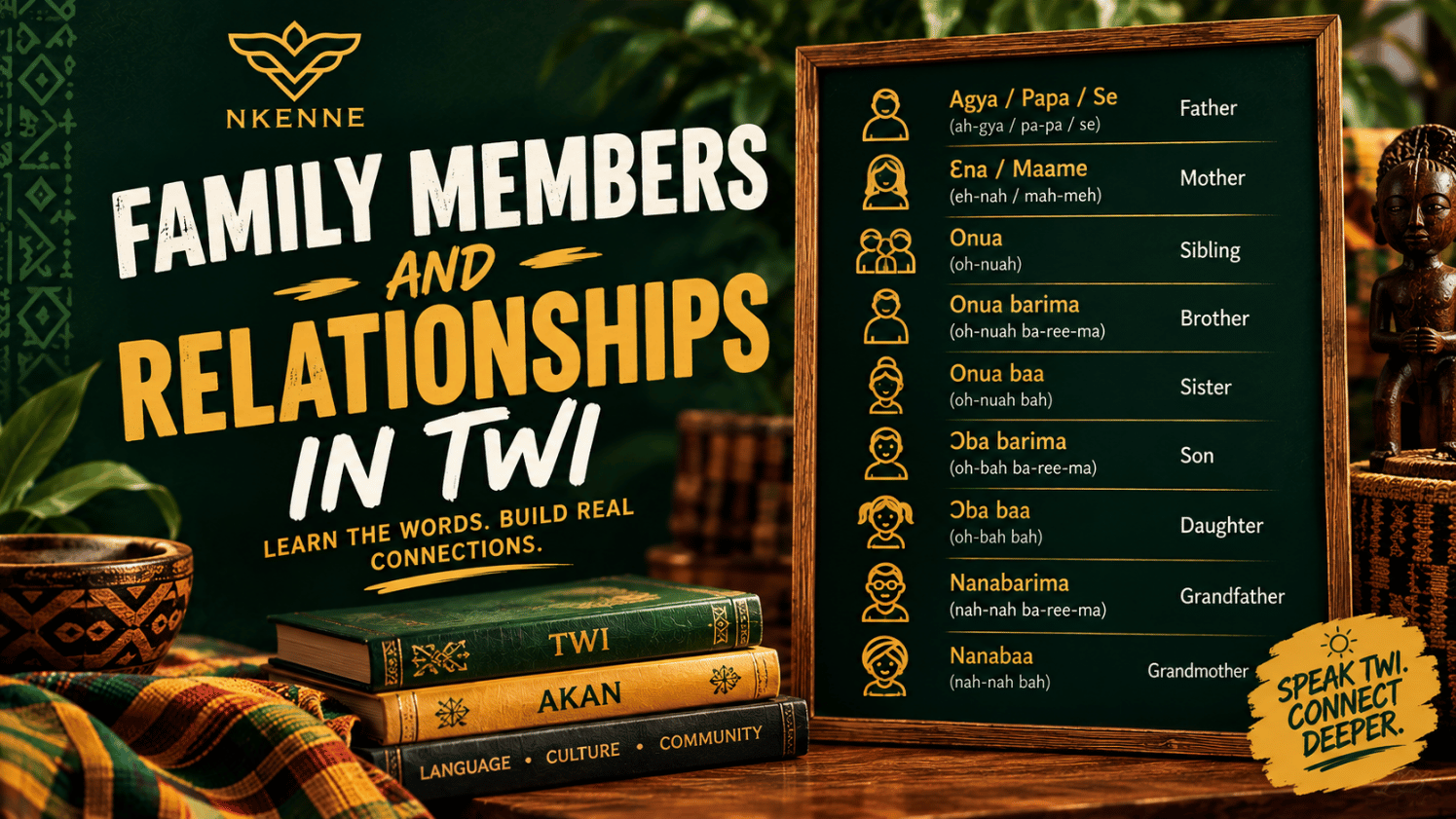
Here are the most common terms:
Mother – ɛna / maame
Father – agya / papa
Parent – ɔwofoɔ
Family – abusua
Family member – abusuani
You can say “me ɛna” (my mother) or “me papa” (my father).
Siblings and Children
Sibling – onua / anua (gender-neutral)
Brother – onuabarima
Sister – onuabaa
Older sibling – onua panyin
Younger sibling – onua kumaa / onua ketewa
Child – ɔba / abɔfra / akwadaa
Son – ɔbabarima
Daughter – ɔbabaa
Baby – abɔfra / akwadaa
First-born – piesie / abakan
Last-born – kaakyire
Grandparents and Extended Family
Grandparent – nana (tone and context distinguish grandparent from grandchild)
Grandfather – nanabarima
Grandmother – nanabaa
Extended family terms:
Maternal uncle – wɔfa
Paternal uncle – agya nuabarima
Paternal aunt – sewaa
Maternal aunt – maame nuabaa
Cousin – onua (often used broadly)
Niece / Nephew – wɔfaase
In-Laws and Other Relations
Husband – okunu
Wife – ɔyere
Father-in-law – asebarima
Mother-in-law – asebaa
Brother-in-law – akonta
Sister-in-law – akumaa
Cultural Notes on Respect for Elders
Respect for age is central in Twi culture. Elders are addressed with care and often given titles.
Call older men Papa, Uncle, or Opanyin.
Call older women Maame, Auntie, or Obaapanyin.
The title Nana shows high respect (used for grandparents, chiefs and elders).
Younger people greet elders first, often using “Mepa wo kyɛw” (please) and asking about their health. Ignoring this can be seen as rude. Proverbs and stories frequently emphasize that respecting elders brings blessings.
Practice Sentences
Me ɛna din de Ama. (My mother’s name is Ama.)
Me agya yɛ ɔkyerɛkyerɛfoɔ. (My father is a teacher.)
Mewɔ anuanom mmienu. (I have two siblings.)
Me nana te Kumasi. (My grandparent lives in Kumasi.)
Onua panyin no boa me. (My older sibling helps me.)
FAQs About Twi Family Vocabulary
What is the difference between ɛna and maame?
Both mean mother. Ɛna is more formal or traditional. Maame is very common in everyday speech.
How do you say “my brother” in Twi?
Me onuabarima or simply me nua (context usually makes gender clear).
Is “nana” only for grandparents?
No. Nana is also a respectful title for elders and chiefs. It can also refer to grandchildren depending on tone and context.
How important is respect for elders in Akan culture?
Very important. Age brings wisdom and authority. Showing respect through language and behavior is expected and highly valued.
Can I use English family words in Ghana?
People understand, but using Twi terms shows respect and helps you connect better.
How do I address someone older than me if I don’t know them well?
Use Papa or Uncle for men, Maame or Auntie for women, and always greet politely.
Conclusion
Learning family vocabulary in Twi opens the door to deeper conversations and cultural understanding. These words help you talk about the people who matter most while showing the respect that Akan culture values so highly.
Ready to practice more Twi or explore other everyday topics? NKENNE offers clear lessons, audio practice and a supportive community to help you grow. Join us today and keep building your language skills with pride. Medaase for reading. Your family conversations just got richer!