
Daily Feelings & States in Wolof: I’m Hungry, Tired, Hot, Happy
By: Chimdindu Ken-Anaukwu
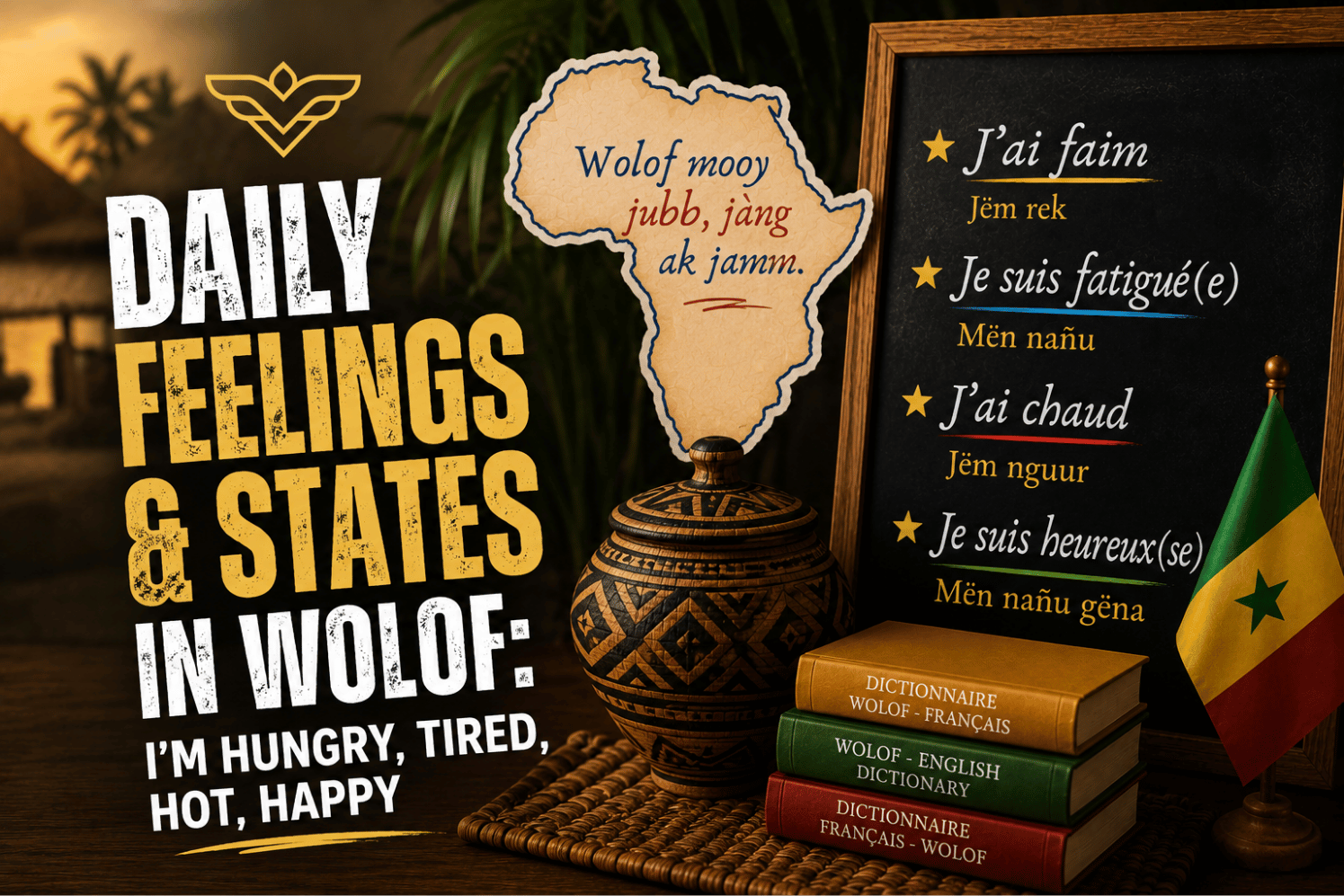
Expressing how you feel is one of the most useful skills in any language. In Wolof, a few simple patterns let you talk about hunger, tiredness, temperature, and mood with confidence. Master phrases like Dama xiif (I’m hungry), Dama sonn (I’m tired), and Dafa tang / Dafa sedd (It’s hot / It’s cold), plus natural responses. This guide gives you clear examples, pronunciation notes, and cultural tips so you can use these expressions in real conversations across Senegal.
Why These Phrases Matter in Everyday Wolof
In Senegal, people often check on one another’s well-being as part of greetings and small talk. Being able to say you are hungry, tired, hot, or happy shows you are engaged and helps build connections. These expressions appear in markets, homes, taxis, and casual chats. Learning them early makes daily interactions smoother and more natural.
Core Pattern: Dama vs. Dafa
Wolof uses dama for “I am” in many feeling statements and dafa for “he/she/it is.”
Dama + verb/adjective = I am …
Dafa + verb/adjective = He/she/it is …
This simple structure covers most basic states.
Hunger and Thirst
Dama xiif. — I’m hungry.
Dama mar. — I’m thirsty.
These are among the most common phrases travelers and learners need. You can follow them with requests for food or water. Example: Dama xiif. Ana ñam? (I’m hungry. Where is the food?)
Tiredness and Sleepiness
Dama sonn. — I’m tired.
Dama gömméentu (or similar forms) — I’m sleepy.
After a long day of travel or work, these phrases feel natural. People often respond with understanding or offers of rest.
Hot and Cold (Body and Weather)
Dama tang (or Dama tàng). — I’m hot / I feel hot.
Dama sedd. — I’m cold.
Dafa tang. — It’s hot (weather or the place).
Dafa sedd. — It’s cold.
Senegal’s climate makes temperature talk frequent. Use Dafa tang for the weather and Dama tang when talking about how you personally feel.
Happiness and Positive States
Positive feelings often connect to the idea of peace and well-being. Common ways include:
Expressions linked to jàmm (peace) such as Jàmm rekk (just peace / all good).
Specific constructions for happiness or satisfaction (for example, heart-related metaphors or direct statements of contentment).
In everyday speech, people frequently reply to “How are you?” with peaceful or positive phrases rather than a long list of emotions.
Useful Responses and Follow-Ups
When someone shares a feeling, simple replies keep the conversation going:
Baax na. — It’s good / Okay.
Jërëjëf. — Thank you.
Jàmm rekk. — All good / Just peace.
Offer help or food if appropriate: Kaay lekk (Come eat) or similar invitations.
Always pair these with a smile and basic greetings for the best effect.
FAQ: Common Questions About Wolof Feelings Phrases
How do you say “I’m hungry” in Wolof?
Dama xiif.
How do you say “I’m tired”?
Dama sonn.
What’s the difference between Dama tang and Dafa tang?
Dama tang means “I am hot.” Dafa tang means “It is hot” (the weather or situation).
How do you say “I’m cold”?
Dama sedd.
How do people usually respond to “How are you?” in Wolof?
A common, positive reply is Maa ngi fi or Jàmm rekk (I’m fine / Just peace).
Can I use these phrases with strangers?
Yes. They are polite and practical. Combine them with greetings like Salaam aleekum or Na nga def? for smoother interactions.
Wrapping Up: Speak Your Feelings with Confidence
Knowing how to say you are hungry, tired, hot, cold, or in a good state opens many everyday conversations in Wolof. These short phrases carry real social weight and help you participate more fully in Senegalese life.
Practice them out loud, listen to native speakers, and start using them in simple exchanges. NKENNE’s Wolof courses build on these foundations with audio, dialogues, and cultural context so you can move from phrases to natural conversation. Start today and express yourself with growing ease.