
Baraza in Swahili Culture: Where Community Gathers
By: Yvonne Mag-usara
Not every important room has four walls.
Along the Swahili coast, a baraza may be a stone bench outside a home, a shaded place for visitors, a group in conversation, or a public meeting where community concerns are discussed.
The same word names both the space and what happens there. Through the baraza, Swahili architecture, hospitality, language, and public life meet at the edge of the street.
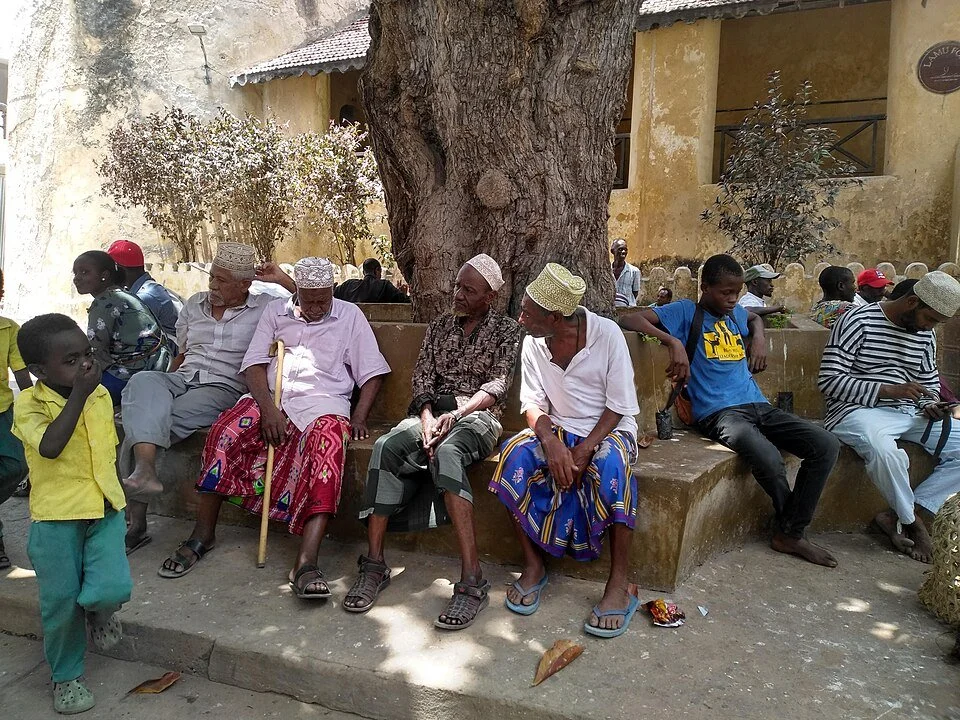
Credit: Wikimedia Commons / Ahmed Shayo, CC BY-SA 4.0.
At Mkunguni Square in Lamu, conversation, traditional games, celebrations, and public meetings share the same civic space.
What Does Baraza Mean?
In Kiswahili, baraza may mean a veranda, reception area, gathering, assembly, or council.
These meanings are closely connected. The physical baraza is where people sit. The social baraza is the group that gathers. A formal baraza begins when that conversation becomes an organized meeting.
The word appears in phrases such as:
Baraza la wazee: council of elders
Baraza la mawaziri: council of ministers or cabinet
Baraza la kijiji: village council or meeting
Kukaa barazani: to sit at the baraza
Baraza therefore names more than a structure. It describes a way of bringing people into conversation.
The Bench Between Home and Street
In Swahili architecture, a baraza is often a raised stone bench or platform built outside a house. It may sit beneath a veranda or awning, protected from the sun but open to the street.
Its position creates a meeting point between domestic privacy and public life.
A visitor can sit without immediately entering the home. A neighbour can stop briefly, exchange greetings, hear the latest news, and continue on their way.
The baraza is neither completely private nor fully public. It is a threshold designed for welcome, conversation, and observation.
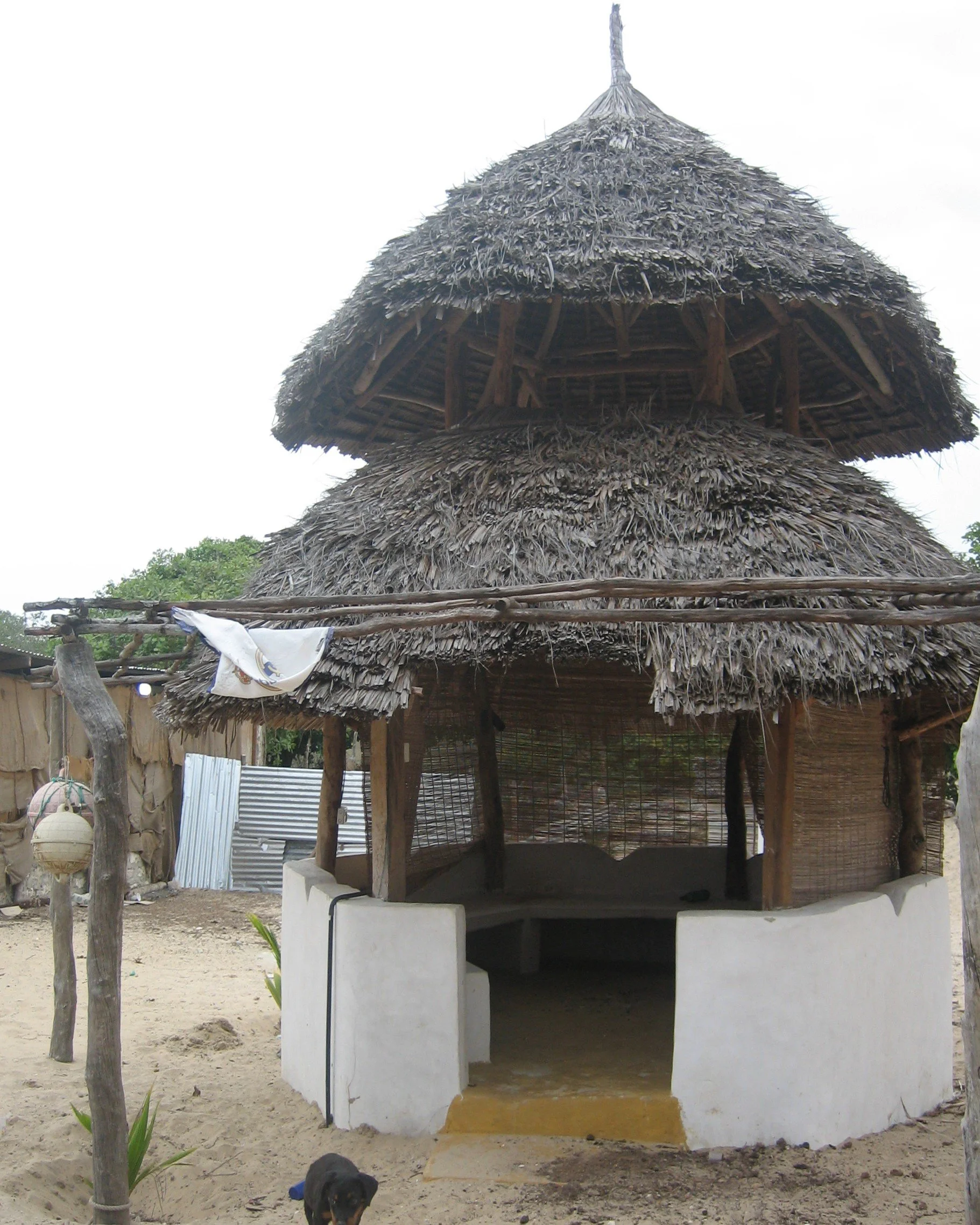
Credit: Wikimedia Commons / Khadija Issa Twahir, CC BY-SA 4.0.
A traditional Lamu baraza creates a shaded place to sit between the household and the street.
How Conversation Becomes Community
A baraza may begin with an ordinary greeting.
Someone asks about a relative. Another shares news from the market. An elder explains how the neighbourhood once handled a similar concern.
Repeated conversations help people understand what is happening around them. They learn who needs support, which celebrations are approaching, and what has changed.
In Zanzibar’s Stone Town, barazas have been used to exchange information, discuss religion and politics, teach younger people, organize neighbourhood concerns, and support families during weddings and funerals.
The gathering may also include gossip, disagreement, or social pressure. Its importance does not come from everyone agreeing. It comes from maintaining a space where community life can be spoken aloud.
From Neighbourhood Talk to Public Council
The word baraza can also refer to a formal public meeting.
Across East Africa, community leaders, administrators, and civic groups may call a baraza to discuss land, public services, safety, development, health, or other shared concerns.
These meetings have not always been equally participatory. Colonial and postcolonial authorities sometimes used them to deliver instructions rather than invite discussion.
A meaningful baraza therefore depends on more than its name. It depends on who sets the agenda, who is invited, whether disagreement is allowed, and whether public concerns lead to action.
Today, community barazas may give residents a place to question unfinished projects, discuss public spending, and raise concerns about roads, water, schools, and healthcare.
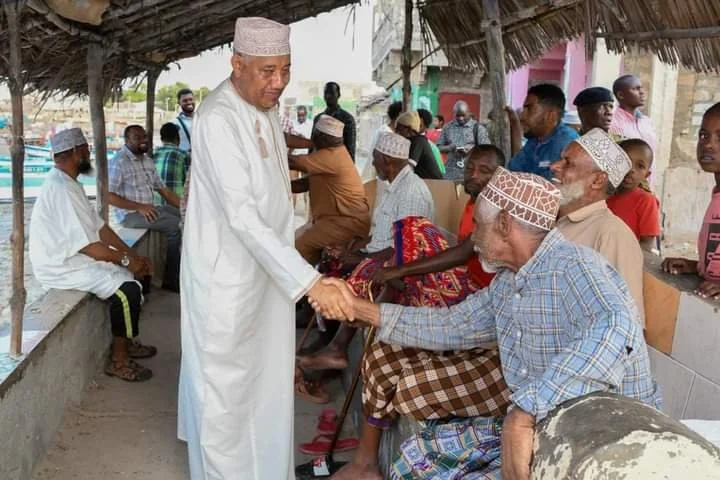
Credit: County Government of Lamu, ICT Department
Residents and county leaders gather at a public baraza in Kizingitini to discuss development plans and local priorities.
Who Gets a Seat at the Baraza?
The baraza is often described as a shared community space, but participation has not always been equal.
Some street-side barazas have historically been associated mainly with men. Women often maintained their own networks through homes, courtyards, markets, ceremonies, and other gathering spaces.
This did not make women absent from public life. Their conversations, decisions, and social networks simply occupied different settings.
Modern civic barazas may include women, young people, elders, officials, and community organizations. However, inclusion still depends on the location, subject, and people organizing the meeting.
A culturally honest account must ask not only what was discussed, but also who could speak comfortably, whose opinions carried authority, and who was expected to listen.
Baraza in Modern Swahili Life
The baraza remains present, but technology has changed how conversation moves.
Someone may arrive with news from WhatsApp. A neighbourhood discussion may continue in a Facebook group. Younger participants may bring online debates into a gathering of elders.
Digital spaces are faster and can connect people across distance. Physical barazas offer something different.
They ask people to share time, observe one another’s reactions, wait through disagreement, and remain present after something difficult has been said.
For people in the diaspora, the baraza raises a useful question: Where does unhurried community conversation happen now?
It might be a porch, salon, kitchen, community centre, group call, or chairs pulled together after an event. The structure may change, but the need to gather and listen remains.
Useful Swahili Phrases for a Baraza
Karibu kwenye baraza.
Welcome to the gathering.
Tuketi tuzungumze.
Let us sit and talk.
Una maoni gani?
What is your opinion?
Tusikilize kila mtu.
Let us listen to everyone.
Tujadiliane.
Let us discuss together.
These phrases reflect the actions that make a gathering meaningful: welcoming, asking, listening, and discussing.
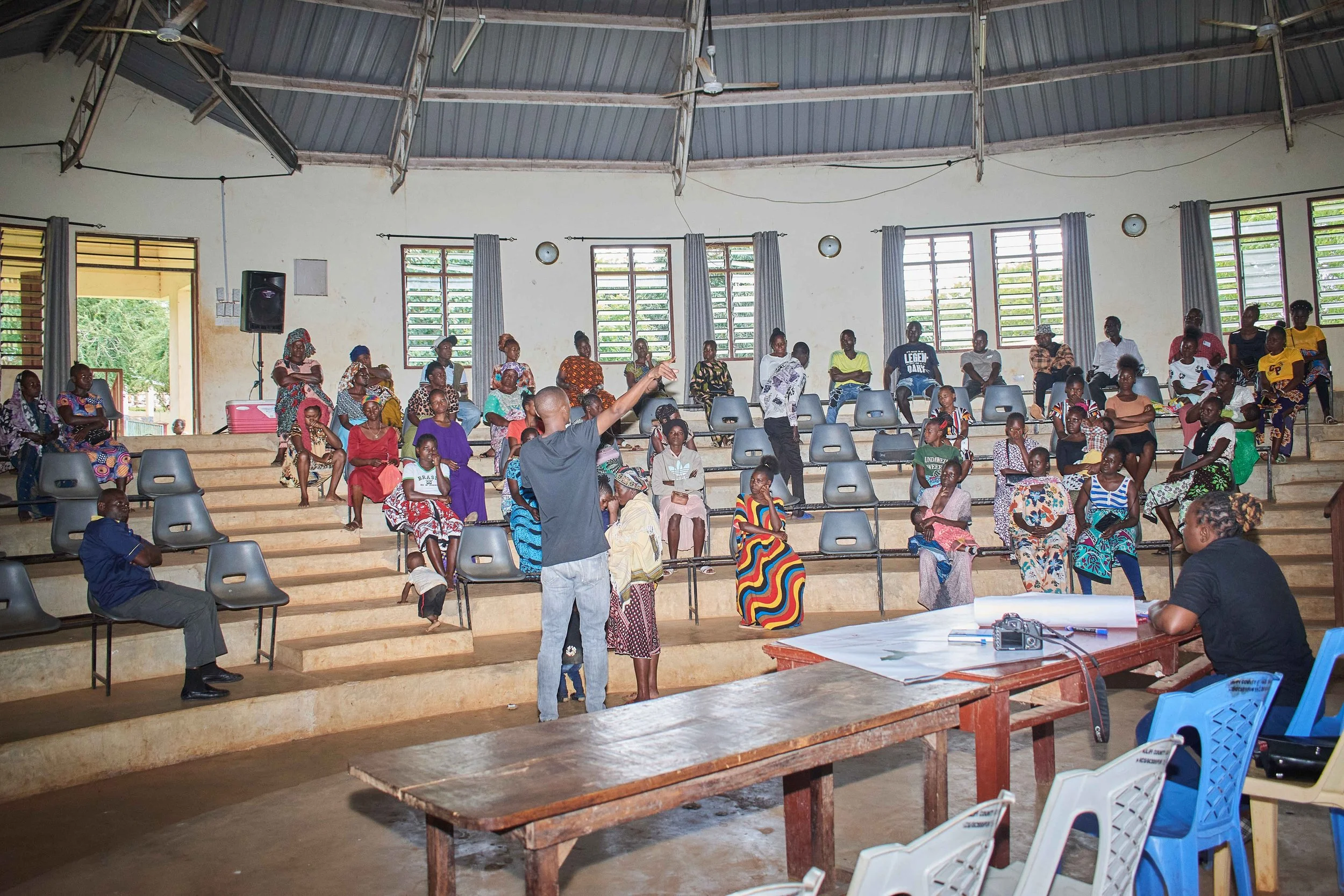
Credit: Kilifi Citizens Projects
Residents of Mwarakaya Ward review county projects and learn how communities can track their progress, raise concerns, and help ensure that public spending reflects local priorities.
FAQs
What does baraza mean in Swahili?
Baraza can mean a veranda, seating area, gathering, assembly, or council. Its English meaning depends on the context.
Is a baraza a bench or a meeting?
It can be both. A physical baraza is a bench or shaded seating area. The word can also describe the people gathered there or the meeting itself.
Where are barazas found?
Barazas are strongly associated with Swahili-speaking and East African communities, including towns such as Lamu, Mombasa, Zanzibar, and Bagamoyo.
Are barazas only for elders?
No. Elders may hold respected roles, but modern barazas can include young people, women, civic leaders, officials, and other community members.
Are barazas still used today?
Yes. Barazas remain part of social and civic life, although digital groups now carry some of the conversations that once happened only face-to-face.
How do you use baraza in a Swahili sentence?
Tutakutana kwenye baraza jioni.
We will meet at the baraza this evening.
Kiongozi alizungumza katika baraza la kijiji.
The leader spoke at the village meeting.
Conclusion
The baraza shows that culture does not survive only through monuments or ceremonies.
It also lives in the places where people pause.
A bench outside a home can hold a greeting, lesson, disagreement, memory, or decision. Over time, those conversations become part of how a community understands itself.
Learning the word baraza gives you more than a translation. It shows how architecture becomes hospitality, how discussion becomes memory, and how language gives community a place to sit.
Learn Swahili and Explore the Culture With NKENNE
With NKENNE, you can learn Swahili while exploring the traditions, histories, and everyday expressions that give the language its meaning.
Begin with the words people use when they gather, then follow those words deeper into the culture.
