
Muzongué: Angola’s Weekend Fish Broth With Sweet Potato and Plantain
By: Yvonne Mag-usara
Some dishes are remembered through the time people made for them. In accounts of life in Luanda, muzongué appears around weekends, family meals, and gatherings that continued beyond the working day.
This Angolan fish broth combines fresh fish, sometimes dried fish, palm oil, and ingredients such as sweet potato, cassava, or plantain. Here, you will learn its place in everyday life, an approachable way to prepare it, and Portuguese expressions you can use around the table.
Credit: Gallo PortugaI
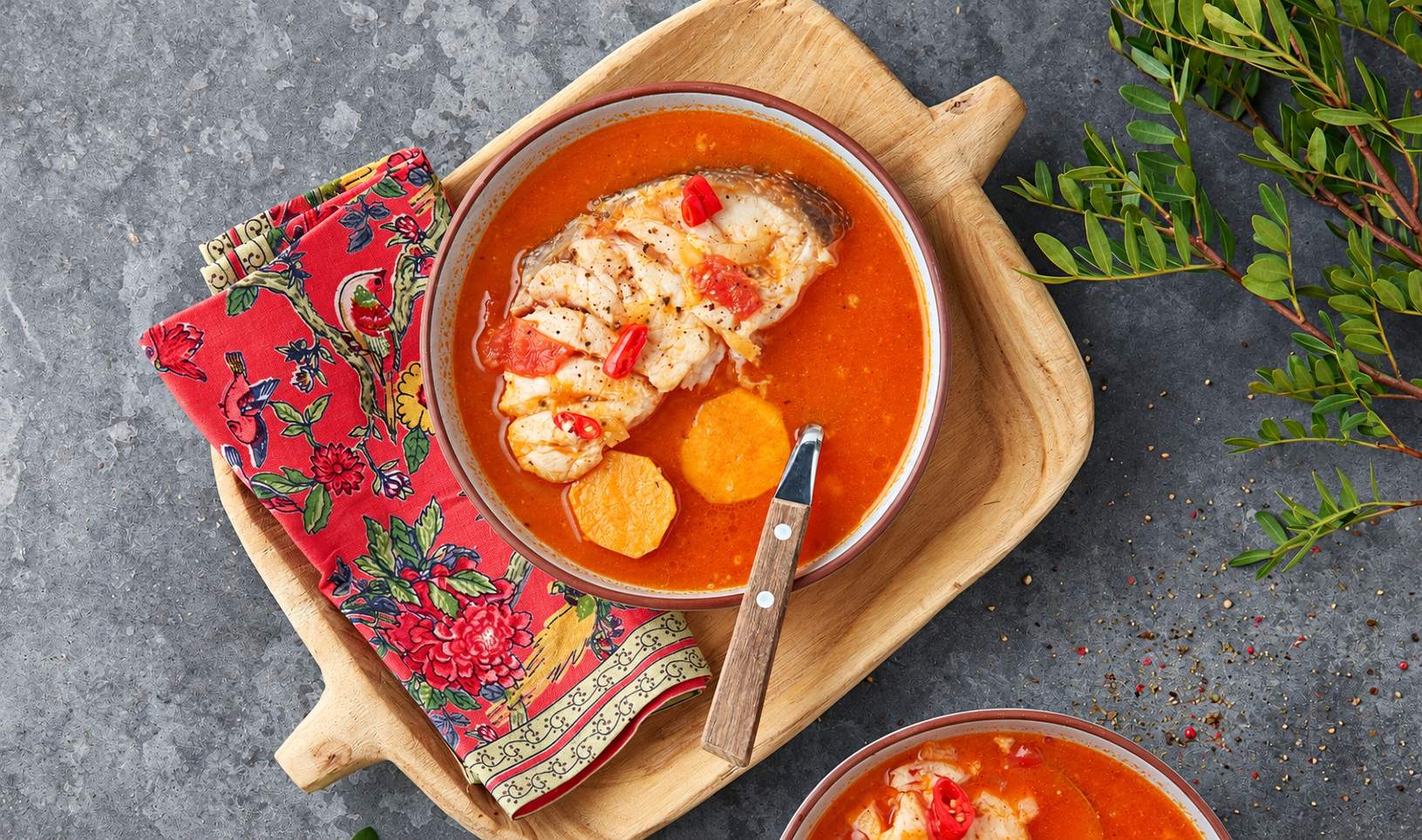
Fish, sweet potato, and gindungo come together in this version of muzongué, an Angolan fish broth.
What Is Muzongué?
Muzongué is an Angolan fish broth, often described in Portuguese as caldo de peixe. Palm oil gives it colour and richness, while fish and starchy vegetables make it substantial.
Recipes differ. Some combine fresh and dried fish; others change the vegetables or accompaniments. The Museu da Língua Portuguesa describes it as an Angolan broth containing fish, sweet potato, and cassava. You may also encounter the spelling muzonguê.
The broth matters as much as the pieces inside it. Give the fish enough room to cook gently, and keep enough liquid for each serving to contain both solids and soup.
Why Muzongué Belongs to Weekend Memory
Historian Karina Ramos’s research on colonial-era Luanda records different memories of muzongué. Interviewees associated it with weekends, parties, and practical meals prepared at home.
Their accounts do not describe one fixed ritual. Some remembered it after celebrations; others emphasized how quickly a family could bring fish, water, and vegetables together into a meal.
That variety is useful to remember. A familiar dish can belong to several occasions without losing its identity. For heritage cooks, asking a relative when they ate muzongué may reveal as much as asking what went into the pot.
What Goes Into Muzongué?
The ingredients work together without requiring a complicated seasoning base.
Fresh fish: Firm pieces provide the main protein.
Dried fish: Used in some versions for a more concentrated savoury flavour.
Red palm oil: Contributes colour and richness.
Onion and tomato: Season the broth.
Sweet potato: Adds sweetness and substance.
Plantain: Often called banana-pão in recipes.
Cassava: Another familiar addition, depending on the version.
Gindungo: Hot pepper, adjusted to the cook’s preference.
Conceição Santos’s recipe uses fresh and dried fish, cassava, sweet potato, and palm oil, with cooked plantain added near the end. Other preparations cook the plantain alongside the vegetables.
How to Make Muzongué
This accessible home version draws on published preparations while keeping the quantities manageable. It is one way to make the dish, rather than a recipe followed by every Angolan household.
Serves: 4
Preparation: About 15 minutes, excluding desalting
Cooking: About 35–45 minutes
Ingredients
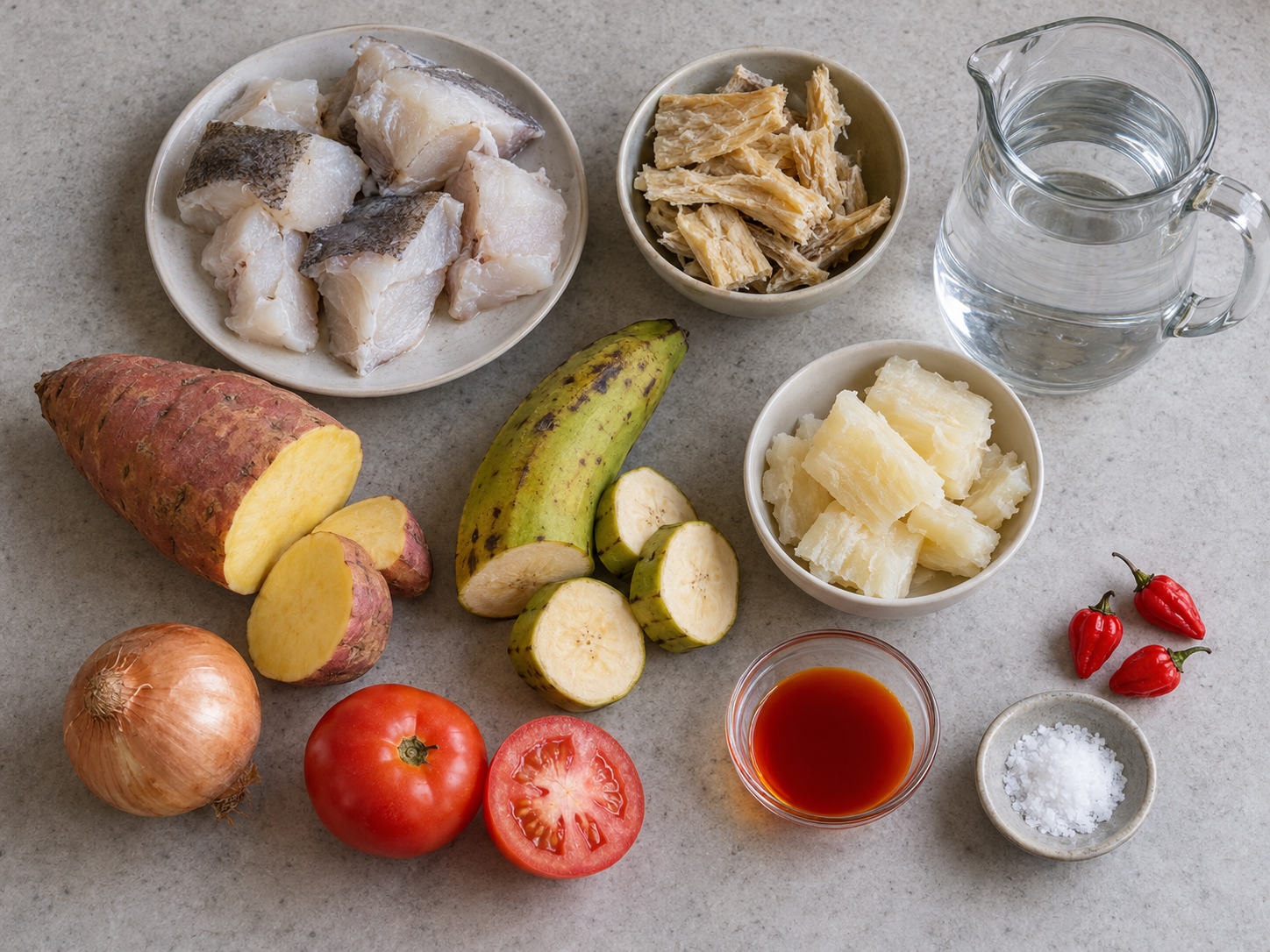
600g firm white fish, such as snapper, cut into large pieces
100g dried or smoked fish, optional
300g sweet potato, peeled and cut into chunks
1 firm plantain, peeled and thickly sliced
200g fully cooked cassava, optional
1 large onion, thinly sliced
2 medium tomatoes, chopped
2 tablespoons red palm oil
1.2 litres water, plus more if needed
Gindungo or another hot pepper, to taste
Salt, to taste
Method
Prepare the fish. Remove any bones you can identify. If using salted dried fish, desalt it according to the supplier’s instructions, then drain.
Start the base. Warm the palm oil in a wide pot. Add the onion and cook gently for about 4 minutes. Add the tomatoes and cook for another 5 minutes.
Build the broth. Pour in the water. Add the dried fish, if using, followed by the sweet potato, plantain, and pepper.
Cook the vegetables. Simmer gently for 15–20 minutes, until the sweet potato is almost tender. Add water if the broth reduces too much.
Add the fresh fish. Lower the pieces into the pot and simmer gently for about 8–12 minutes, depending on their thickness, until cooked through. Avoid vigorous stirring.
Finish and taste. Add the fully cooked cassava, if using, and heat through. Adjust the salt after tasting, especially when dried fish is included.
Serve with generous spoonfuls of broth. The cooking sequence allows the vegetables to soften before the fresh fish enters the pot.
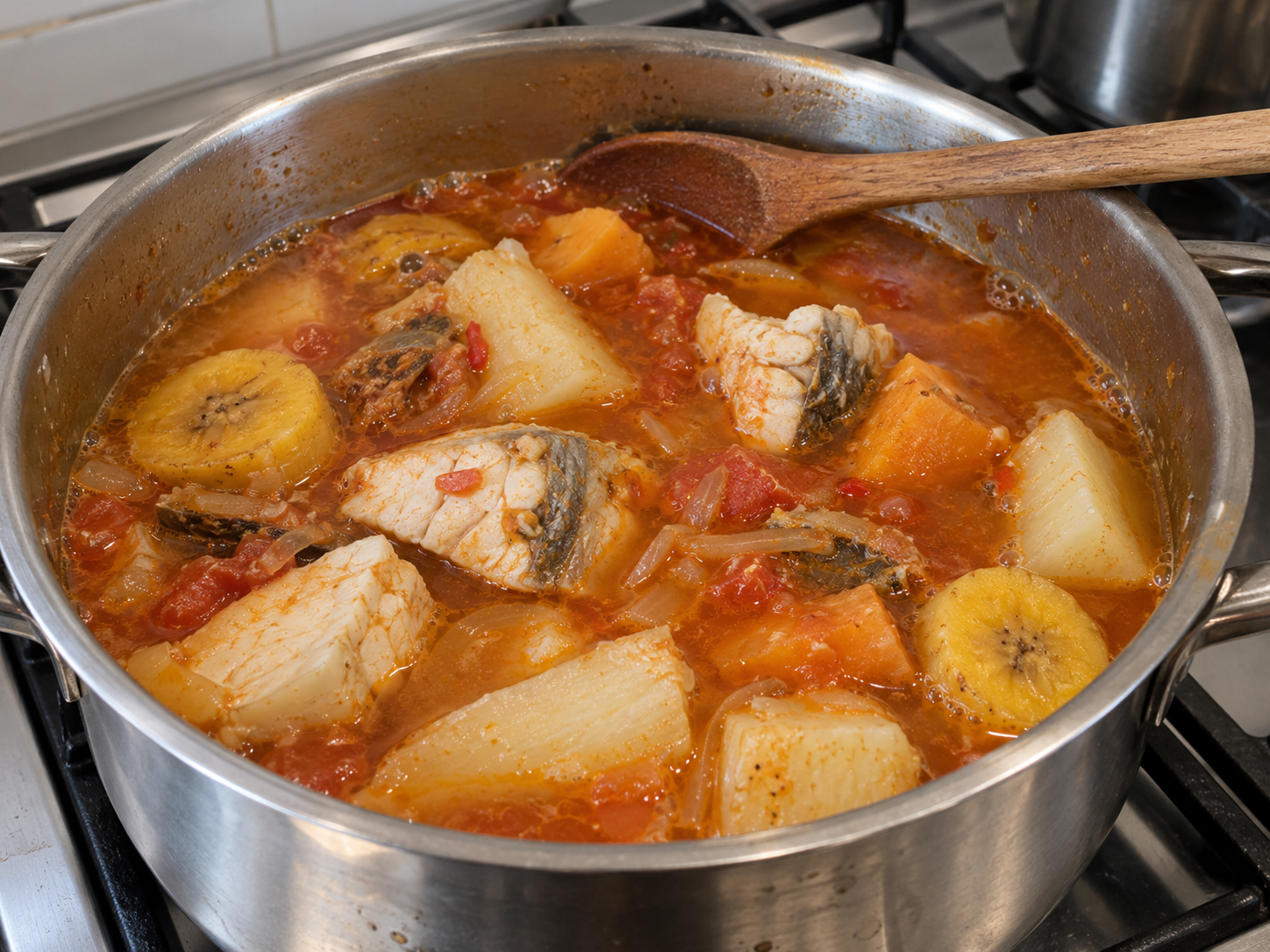
Fish and starchy vegetables simmer gently in muzongué’s seasoned broth.
Serving It and Adapting the Recipe
The sweet potato and plantain already make this a substantial meal. Some preparations also serve cassava flour alongside the broth, moistened with liquid or oil from the pot.
For a diaspora kitchen, start with what is available:
Use frozen firm white fish, thawed and drained.
Leave out dried fish if you cannot find a suitable version.
Choose firm plantain so the slices hold together.
Adjust the pepper separately when cooking for people with different heat preferences.
Red palm oil contributes a distinctive flavour. Substituting another oil is possible, but it will change the result.
For another Angolan dish built around palm oil, explore NKENNE’s guide to muamba de galinha.
Credit: Cookidoo® / Vorwerk
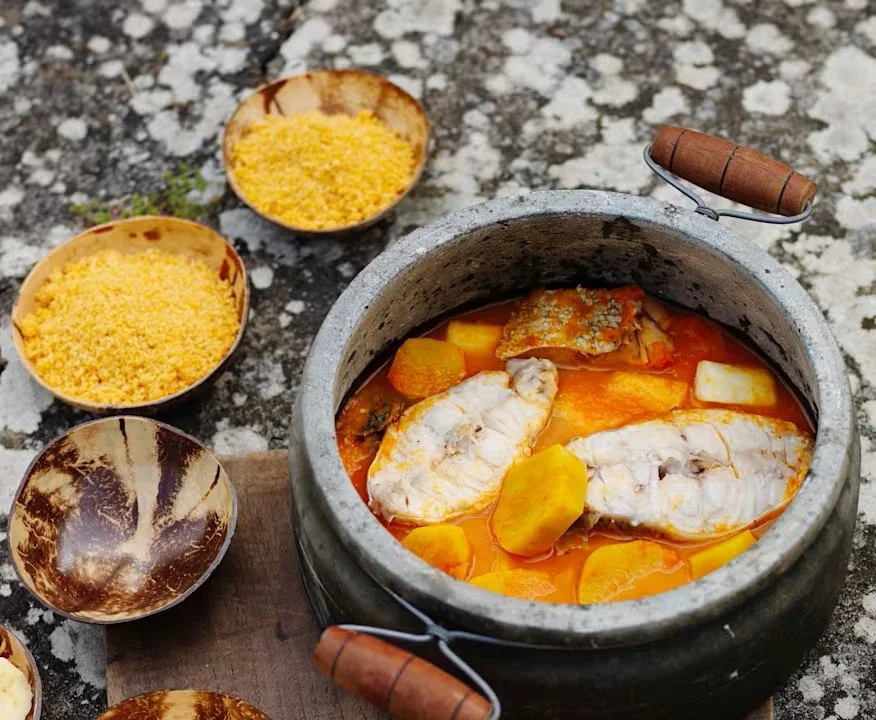
Muzongué served with musseque, a cassava-flour accompaniment that can be moistened with the broth.
Portuguese Words to Learn at the Table
Cooking gives vocabulary a clear purpose. You can point to an ingredient, follow an instruction, or ask how someone prefers their food.
Caldo → Broth
Peixe fresco → Fresh fish
Peixe seco → Dried fish
Batata-doce → Sweet potato
Mandioca → Cassava
Óleo de palma → Palm oil
Panela → Cooking pot
Lume brando → Low heat
Try these phrases:
O peixe está fresco?
Is the fish fresh?
Pode pôr menos gindungo, por favor?
Could you add less hot pepper, please?
Vamos comer juntos?
Shall we eat together?
Como fazes o muzongué?
How do you make muzongué?
That final question can begin a conversation about family methods and personal preferences. For Portuguese you can use beyond the kitchen, read NKENNE’s guide to asking for directions in Angola.
FAQs
What is muzongué?
Muzongué is an Angolan fish broth commonly prepared with palm oil and ingredients such as sweet potato, cassava, or plantain. Recipes vary between cooks.
Is muzongué the same as calulu?
No. They can share ingredients such as fish and palm oil, but muzongué is generally a broth-based preparation. Calulu commonly brings fish together with leafy greens and okra.
Do I need both fresh and dried fish?
No. Several recipes combine them, but this home version can be made with fresh fish alone. Dried fish changes the flavour and may also affect how much salt you need.
Can I make muzongué without cassava?
Yes. The recipe above uses sweet potato and plantain, with fully cooked cassava as an optional addition.
Is muzongué always spicy?
The amount of gindungo depends on the cook. Begin with a small quantity and adjust it to suit the people sharing the meal.
Conclusion
A recipe can preserve quantities, but it cannot record every decision a cook makes. Someone remembers which fish their mother bought, how much pepper their father preferred, or when the family expected the pot to be ready.
Muzongué’s history lives partly in those details. The accounts recorded in Luanda show people giving the same dish different places in their lives, from weekend gatherings to an ordinary meal at home.
Cooking it creates an opportunity to ask about those memories. Write down the answer, keep the dish’s name, and learn the words used to explain it. That is how a meal becomes something another generation can carry forward.
Learn Portuguese Through Food and Culture With NKENNE
With NKENNE, you can learn Portuguese while exploring the foods, histories, and everyday expressions that give it meaning in African communities.
A question such as Como fazes o muzongué? gives you more than language practice. It gives someone a chance to share what they know.
