
Zulu Traditional Clothing: Beads, Skins, and What They Symbolize
By: Chimdindu Ken-Anaukwu
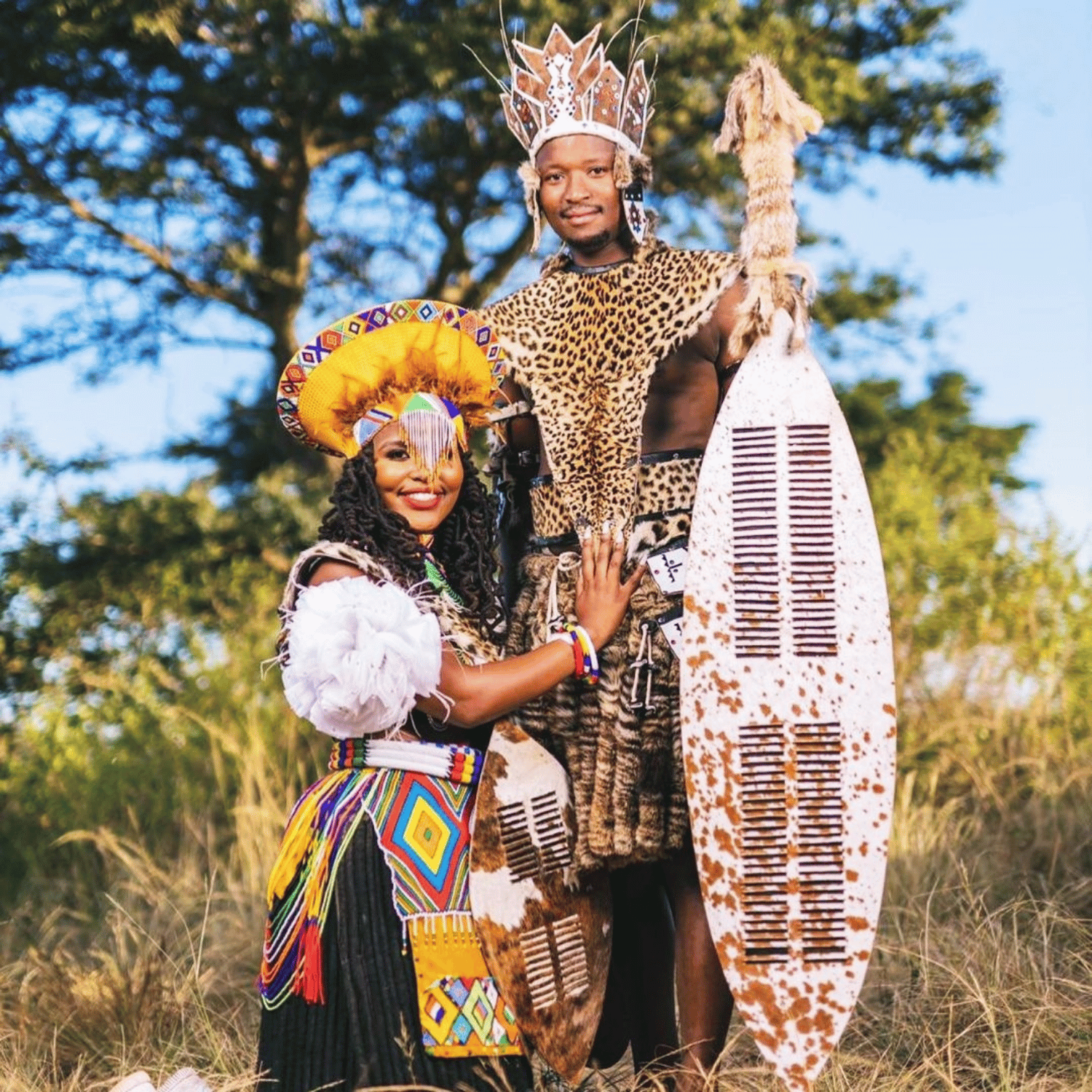
Zulu traditional clothing does more than cover the body. Every item tells a story about who you are, where you stand in life, and what moment you are marking. From the proud isicholo hat worn by married women to the powerful leopard skin reserved for royalty, these garments carry clear messages of identity, respect, and celebration. In this guide, you will learn the main pieces of Zulu attire, the symbolism behind beads, skins, colors, and patterns, and how they are used in daily life and special occasions today.
The Role of Traditional Clothing in Zulu Life
Zulu clothing reflects social position, marital status, age, and occasion.
It is not worn every day in cities, but it appears at weddings, ceremonies, festivals, and important family events.
Materials include animal skins, cowhide, beads, and fabric.
The way someone dresses shows respect for ancestors, elders, and community values.
Even small details, such as the number of beads or the type of skin, speak loudly without words.
Beadwork in Zulu Clothing: More Than Decoration
Beads form a major part of Zulu traditional clothing.
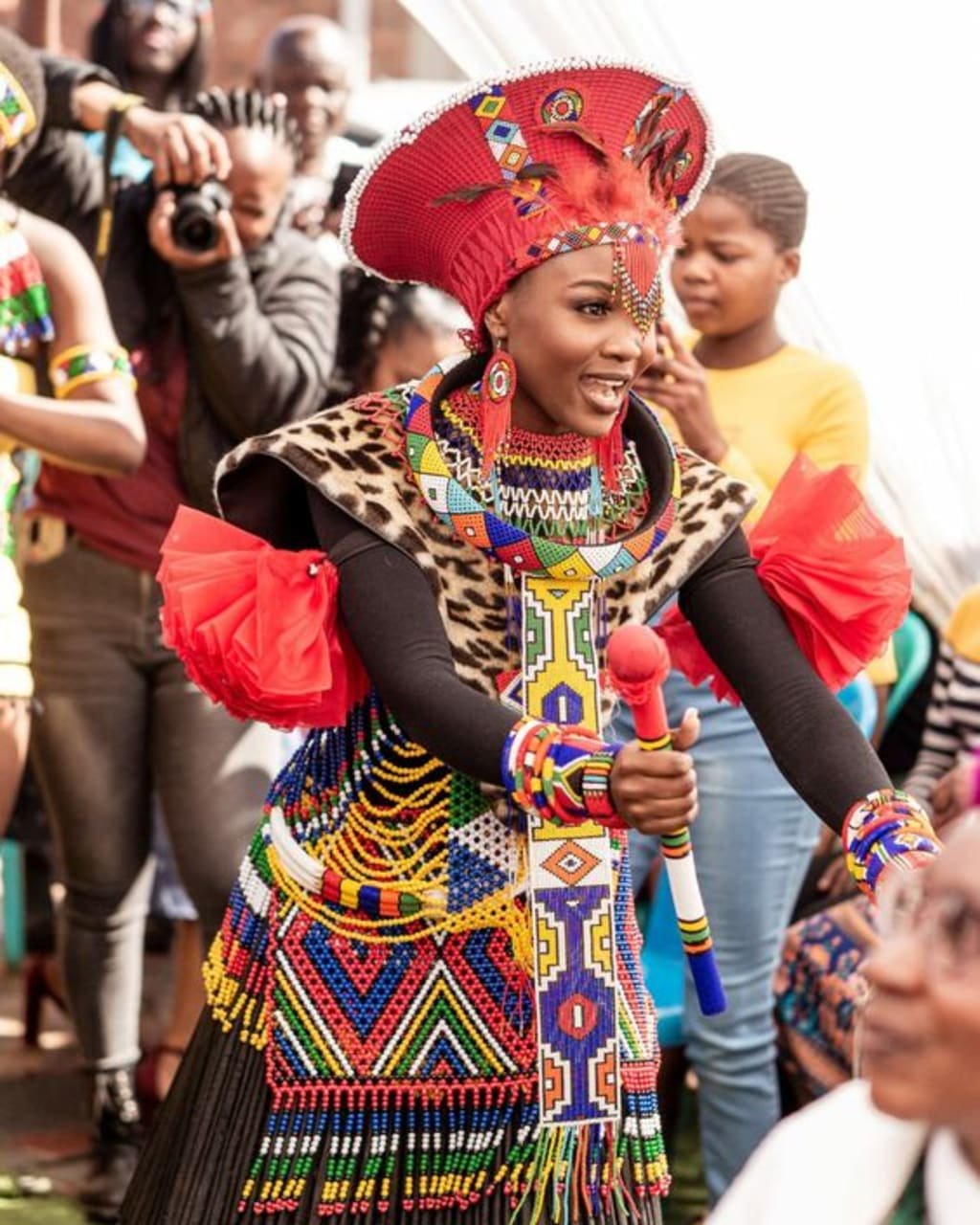
Women and girls wear beaded necklaces, belts, headbands, aprons, and anklets.
Beadwork is called ukubaza. It is both beautiful and meaningful.
Colors and patterns send messages about love, status, and emotions.
For example, a young woman might wear specific bead combinations to show she is available for marriage.
Beaded items are often handmade gifts that carry personal stories.
The Isicholo Hat: Symbol of Marriage and Respect
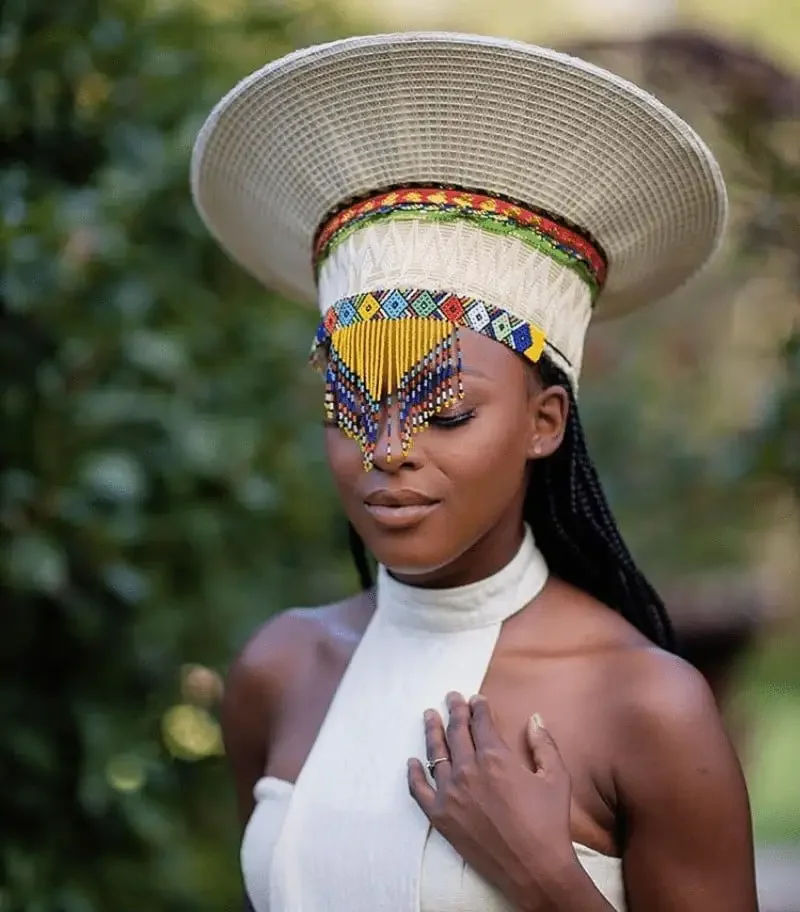
The isicholo is a wide, flat, woven grass hat worn by married Zulu women.
It is usually decorated with beads and sometimes covered with fabric or wool.
Wearing the isicholo signals that a woman is married and commands respect in the community.
It is part of her daily traditional dress once she is wed.
The size and decoration can show the wealth and status of her family.
Unmarried girls do not wear it. Instead, they may wear smaller head coverings or none at all.
Leopard Skins and Animal Hides: Marks of Status and Power
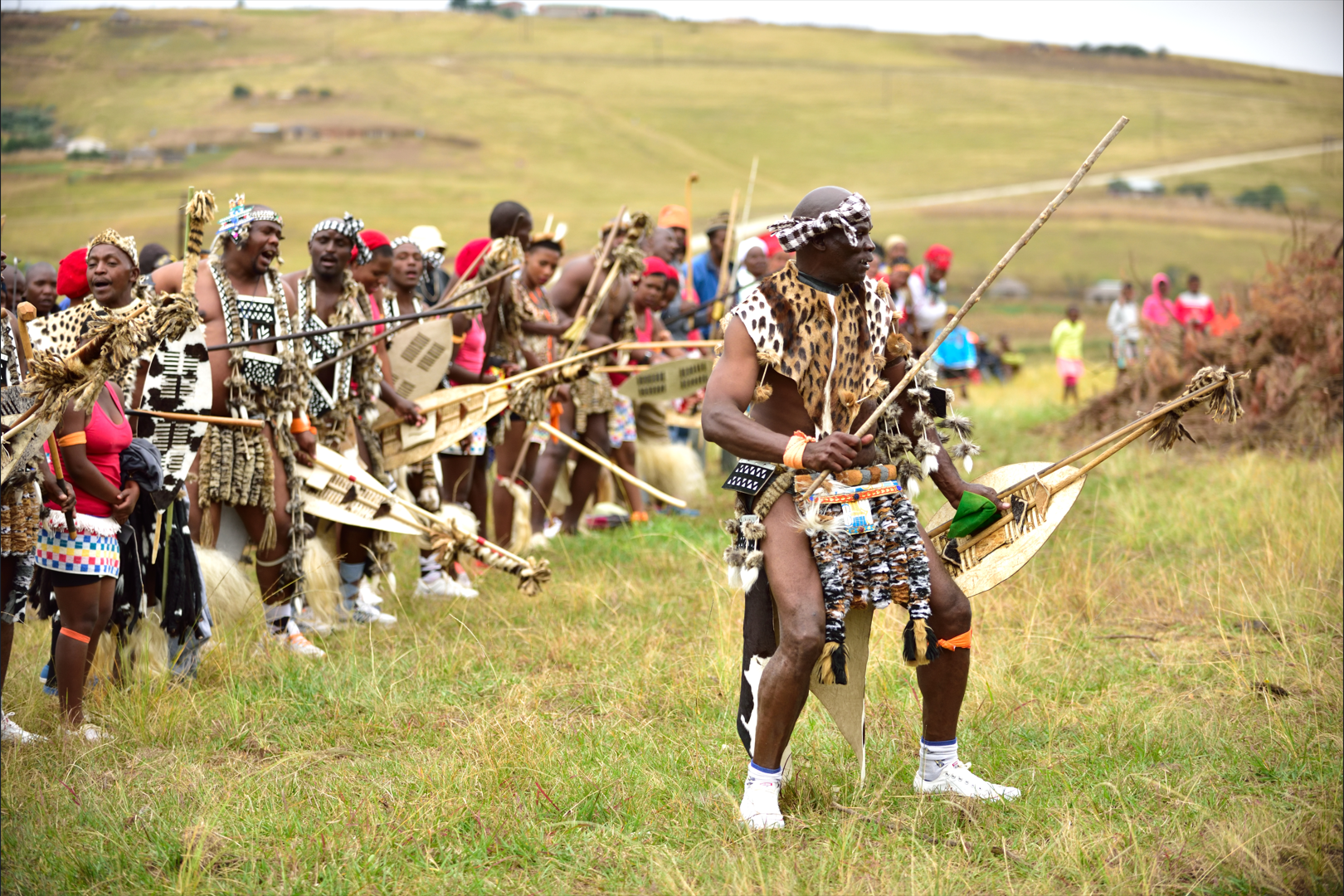
Leopard skin (ingwe) is the most prestigious.
Only royalty, chiefs, and high-ranking men traditionally wear leopard skin cloaks or headbands.
It symbolizes strength, courage, and leadership.
King Shaka and later Zulu kings wore it during ceremonies and battles.
Other animal skins include cowhide for skirts and aprons, and goat or sheep skins for everyday or ritual use.
The way skins are worn (over the shoulder, as a skirt, or as a cloak) also indicates rank and occasion.
Colors and Patterns: What They Reveal
Bead colors and patterns in clothing carry specific meanings:
White: purity, hope, new beginnings
Black: marriage, strength, or sometimes mourning
Red: strong love, passion, or warning
Blue: faithfulness and loyalty
Green: growth, contentment, or jealousy depending on context
Yellow or gold: wealth and prosperity
Geometric patterns matter too. Triangles often represent men or women. Zigzag lines can show protection or movement.
A married woman’s outfit might combine black and white beads to celebrate her union.
Young warriors once wore red and black to show readiness for battle.
These combinations help everyone read a person’s status at a glance during gatherings.
Clothing for Different Life Stages and Occasions
Childhood and youth: Simple beaded items and smaller skins. Girls wear short beaded skirts; boys wear minimal covering.
Coming of age (umemulo): Girls receive elaborate beaded outfits and the right to wear more adult styles.
Marriage: Bride and groom wear full traditional regalia. The bride often receives new isicholo and many bead sets from her new family.
Royal and ceremonial events: Chiefs and kings wear full leopard skin, feathers, and heavy beadwork. Warriors in historic times wore animal tails and shields.
Funerals and mourning: Darker colors and simpler styles show respect.
Modern celebrations often mix traditional pieces with contemporary clothing.
How Traditional Attire Lives On Today
Many Zulu people wear traditional clothing proudly at cultural events, weddings, and tourism festivals.
Designers blend old elements with modern fashion. Think beaded denim jackets or isicholo-inspired hats in bright fabrics.
In rural areas, older women still wear the isicholo daily.
Younger generations learn beadwork in cultural groups and schools to keep the skills alive.
This clothing continues to strengthen Zulu identity in a changing world.
FAQs
What is the isicholo hat and who wears it?
The isicholo is a wide grass hat worn only by married Zulu women. It shows marital status and earns respect in the community.
Why is leopard skin so important?
Leopard skin represents power, courage, and royalty. Only leaders and high-status men traditionally wear it.
Do bead colors have fixed meanings?
Yes, but meanings can shift slightly with context and combination. White usually means purity while red often signals strong emotion.
Can men wear beaded clothing?
Yes. Men wear beaded headbands, belts, and necklaces, especially during ceremonies and dances.
Is traditional Zulu clothing still worn every day?
In cities it is mostly for special occasions, but in some rural areas women wear the isicholo and beaded items more regularly.
How can beginners learn about Zulu beadwork?
Join local workshops, watch cultural demonstrations, or follow Zulu artisans online. Many communities teach the skill to preserve it.
Final Thoughts on Zulu Traditional Clothing
Zulu traditional clothing turns fabric, beads, and skins into a living language of identity and respect. The isicholo hat, leopard skin, and carefully chosen bead patterns all speak clearly about a person’s place in life and community. Understanding these symbols gives deeper appreciation for Zulu culture and the quiet power carried in every outfit. Next time you see traditional dress at a ceremony, you will read the story it tells.
Ready to Explore More Zulu Culture?
At NKENNE, we bring Zulu traditions closer with clear, practical guides. Discover more about beadwork meanings, ceremonies, or everyday Zulu life in our other articles. Keep learning and honoring your heritage with us. Your cultural journey continues here.