
Shopping & Bargaining Mastery: At the Marché in Dakar
By: Chimdindu Ken-Anaukwu
Bargaining is an expected and often enjoyable part of shopping in Dakar’s markets. From the busy stalls of Sandaga or Tilène to smaller neighborhood marchés, knowing a few key Wolof phrases helps you negotiate with confidence and respect. This guide covers essential expressions such as Ñaata lay jar? (How much does it cost?), Waññi ko! (Lower the price!), common market vocabulary, and practical tips so you can shop like someone who understands the culture.
Why Bargaining Matters in Wolof Markets
In traditional markets, prices are rarely fixed. Sellers often start high, and buyers are expected to negotiate. Using Wolof shows respect and frequently leads to better prices and friendlier interactions. Even basic effort is appreciated and can turn a simple transaction into a positive cultural exchange.
Essential Phrases for Asking Prices
Start every negotiation with a clear question:
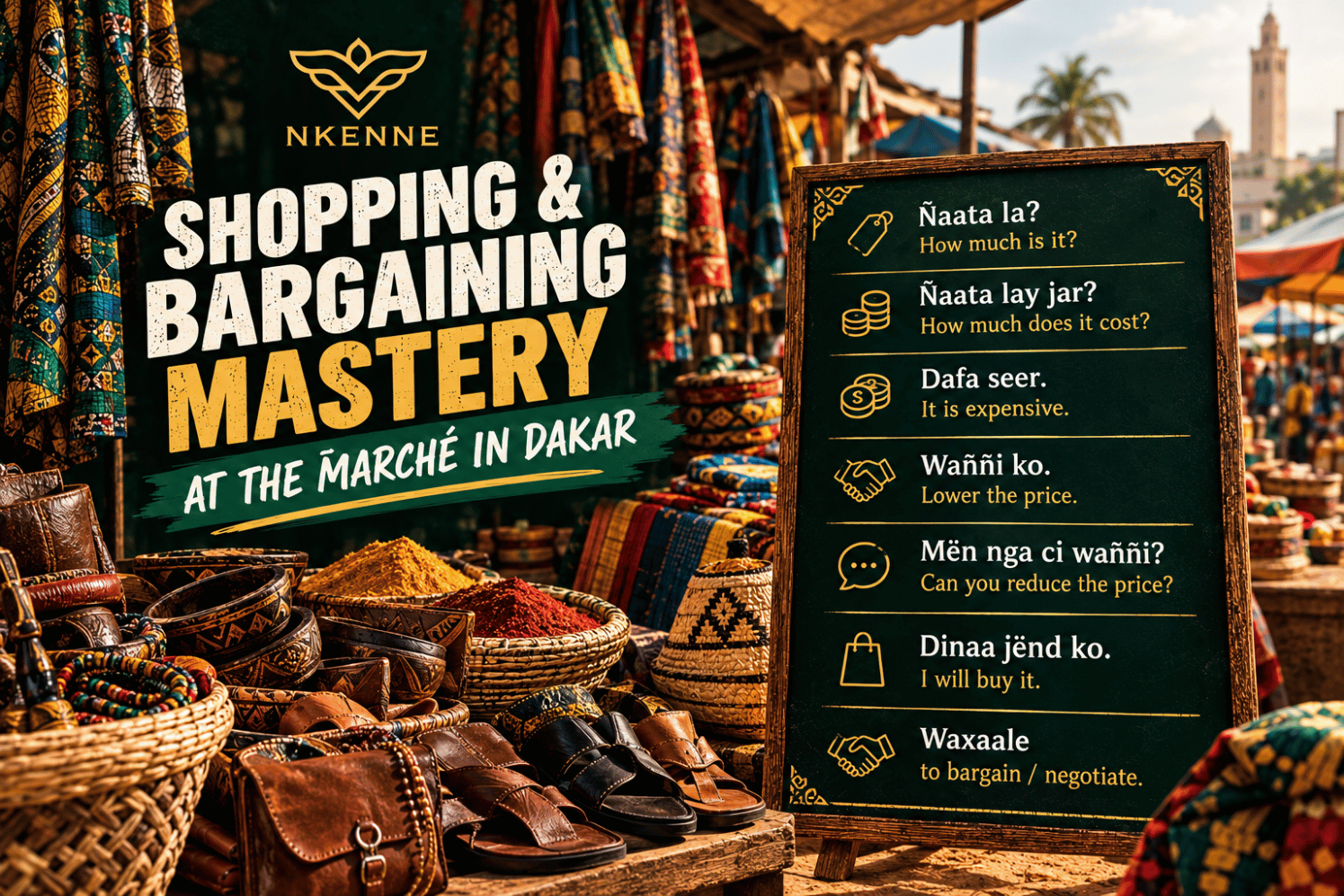
Ñaata la? — How much is it?
Ñaata lay jar? — How much does it cost? (literally “How much is it worth?”)
These are the most useful opening lines. Point to the item while asking for clarity.
Related useful questions:
Ñaata ngay jaaye bii? — How much are you selling this for?
How to Lower the Price
Once you hear the first price, respond with:
Dafa seer. or Seer na lool! — It is expensive / It is very expensive!
Waññi ko! or Waññil! — Lower the price! / Reduce it!
Mën nga ci waññi? — Can you reduce the price?
These phrases are polite yet firm. Bargaining is a conversation, not a confrontation. Smile, stay calm, and be ready to walk away if needed. Often the seller will call you back with a better offer.
Common Market Vocabulary
Build a small toolkit of useful words:
Marse — Market
Jënd — To buy
Jaay — To sell
Xaalis — Money
Monéet — Change (small money)
Am nga…? — Do you have…?
Dinaa jënd ko. — I will buy it.
Maa ngi xool rekk. — I’m just looking.
Jërëjëf. — Thank you.
Combining these with numbers (which you can learn in a related post) lets you handle most simple transactions.
A Simple Bargaining Exchange
Here is a typical short dialogue:
Buyer: Salaam aleekum. Ñaata lay jar?
Seller: Gives a high price.
Buyer: Dafa seer! Waññi ko.
Seller: Offers a lower price.
Buyer: Makes a counter-offer or says Dinaa jënd ko if satisfied.
Both: Jërëjëf.
Keep the tone friendly. Greetings before bargaining help set a positive atmosphere.
Practical Tips for Success
Always start with a greeting (Salaam aleekum or Na nga def?).
Know approximate local prices if possible (ask a trusted local beforehand).
Be prepared to walk away politely. This often brings the price down.
Carry small bills. Change can be limited.
Bargain with a smile. Humor and patience work better than pressure.
Fixed-price shops (supermarkets, some modern stores) usually do not expect negotiation.
FAQ: Shopping and Bargaining in Wolof
How do you say “How much?” in Wolof?
Ñaata la? or Ñaata lay jar?
How do you ask someone to lower the price?
Waññi ko! or Waññil! You can also say Mën nga ci waññi? (Can you reduce it?)
What does “Dafa seer” mean?
It means “It is expensive.” This is a standard way to start negotiating.
Is bargaining rude in Senegal?
No. In traditional markets it is expected and part of the social interaction.
What should I say if I am only looking?
Maa ngi xool rekk. (I’m just looking.)
Do I need perfect Wolof to bargain successfully?
No. Even a few correct phrases show respect and often improve the experience and the final price.
Wrapping Up: Shop with Confidence
Mastering a handful of Wolof market phrases transforms shopping in Dakar from a potentially stressful activity into an engaging cultural exchange. Knowing how to ask the price, say it is expensive, and request a reduction gives you practical power and shows genuine interest in the language.
Practice these expressions, listen carefully to how sellers respond, and enjoy the lively atmosphere of the marché. NKENNE’s Wolof courses include more market dialogues, numbers, and cultural notes so you can bargain and communicate with growing ease. Start using these phrases on your next market visit and experience the difference.