
By: Yvonne Mag-usara
A dish can carry a social history in its name. In Cameroon, poulet DG takes its initials from directeur général, the French expression for a managing director. Its name recalls an association with well-to-do diners, although the dish now belongs to a much wider table.
What arrives on that table is generous: seasoned chicken, golden plantains, vegetables, and a sauce that brings them together. This guide explains the name, offers a practical home recipe, and introduces French words you can use while cooking.
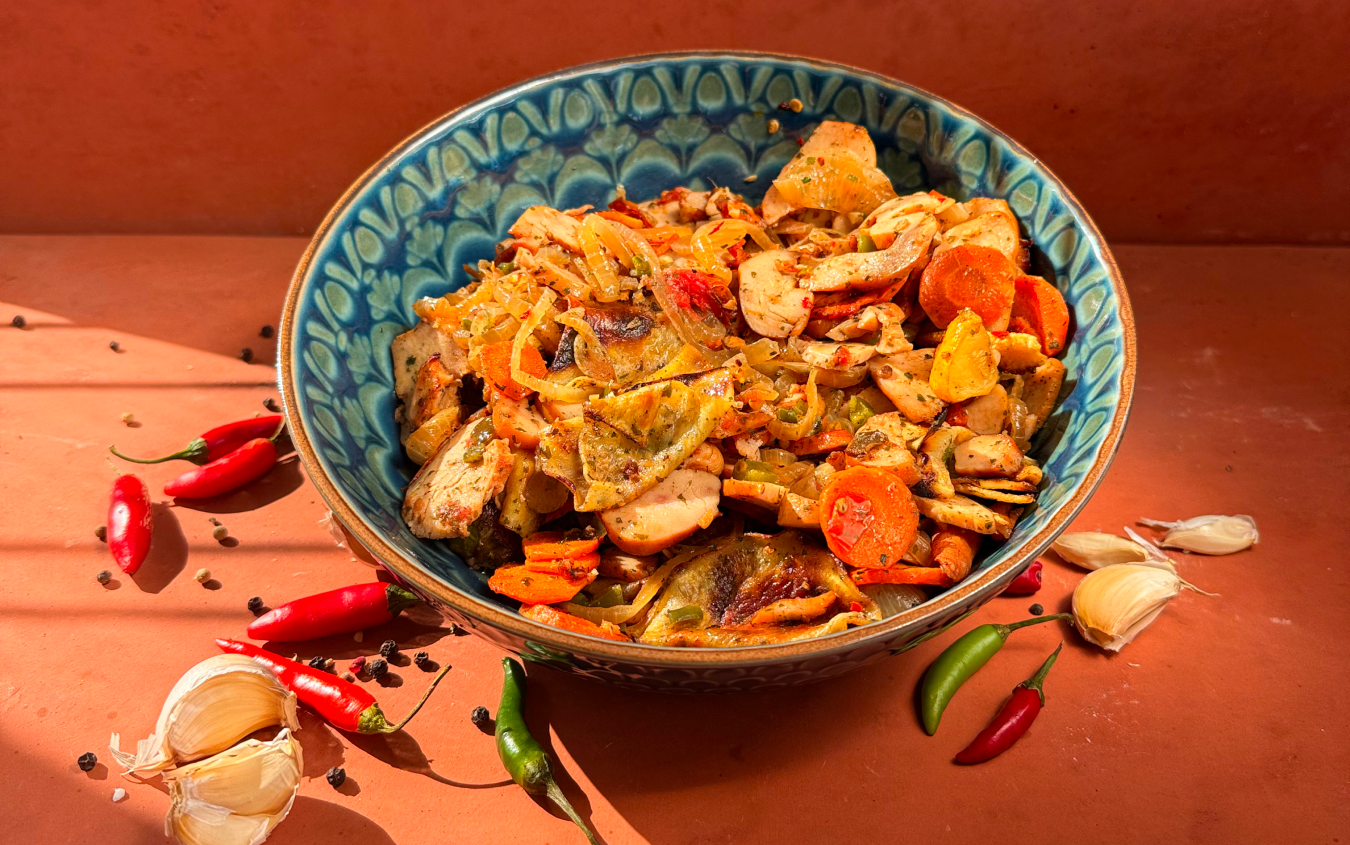
Credit: Hartlief
Hartlief’s adaptation of poulet DG combines smoked chicken, sweet potato in place of plantain, and vegetables in a savory tomato base.
What Is Poulet DG, and What Does DG Mean?
Poulet DG is a Cameroonian dish combining chicken, plantains, and vegetables in a seasoned sauce. Tomatoes, onions, garlic, and other aromatics appear in many versions, while carrots, green beans, and bell peppers add texture and color.
The initials DG stand for directeur général. A 2021 study of Cameroonian culinary traditions published by the World Intellectual Property Organization connects the name with the dish’s earlier association with affluent diners and describes its later place at celebrations.
That background helps explain its reputation as something worth preparing for company. Browning chicken, frying plantains, and bringing several vegetables together take attention.
Recipes vary, including the seasoning blend and the ripeness of the plantains. A family version can be recognizable without matching every ingredient in another household’s pot.
What Goes Into Poulet DG?
Three ingredients give the dish its structure:
Chicken: Bone-in pieces bring flavor to the cooking liquid. Smaller portions are easier to distribute around the table.
Plantains: Ripe but firm plantains give this version sweetness and golden edges while holding their shape.
Vegetables: Carrots, green beans, and bell peppers provide a contrast to the chicken and plantains.
Garlic, ginger, onion, celery, and parsley build the seasoning. Tomato adds body to the sauce, while white pepper contributes warmth without making hot chilli essential.
Choose plantains that yield slightly when pressed but still feel firm. Very soft fruit is harder to fry and fold through the finished dish without breaking.
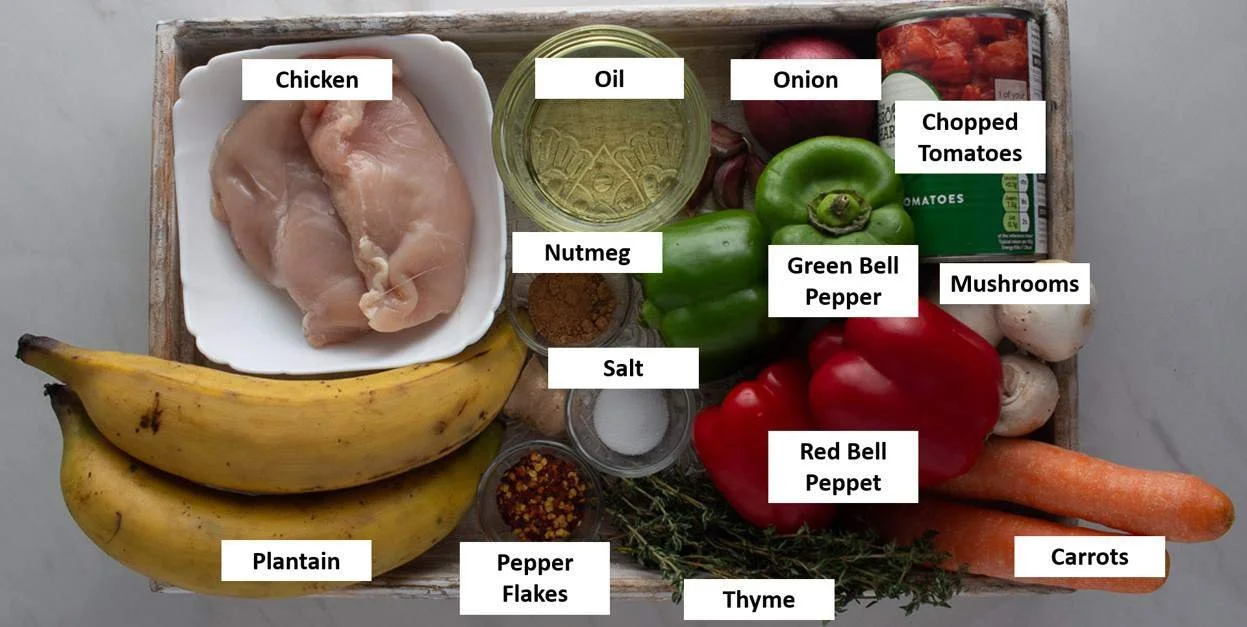
Credit: Abi Olayiwola / Eat Well Abi
Chicken, plantains, vegetables, and seasonings prepared for a home adaptation of poulet DG.
How to Make Poulet DG
This home version uses gently cooked chicken that is browned before assembly, alongside separately fried plantains.
Serves: 4–6
Preparation: About 25 minutes
Cooking: About 60 minutes, with some steps overlapping
Ingredients
1.2 kilograms chicken thighs and drumsticks, or a jointed chicken
4 medium ripe but firm plantains
1 large onion, divided
4 medium tomatoes, finely chopped or roughly blended
2 carrots, thinly sliced
100 grams green beans, trimmed and cut into short pieces
1 large bell pepper, sliced
4 garlic cloves
A 3-centimeter piece of fresh ginger
1 small celery stalk, chopped
2 tablespoons chopped parsley
½ teaspoon ground white pepper
1 small chicken bouillon cube, optional
Salt to taste
250 milliliters water, plus more if needed
3 tablespoons neutral cooking oil, plus enough for shallow-frying the plantains
Method
Blend the aromatics. Blend half the onion with the garlic, ginger, celery, parsley, and a little water.
Cook the chicken. Place the chicken in a pot with the aromatic mixture, white pepper, optional bouillon, and a modest amount of salt. Add the measured water, cover, and simmer gently for about 25–35 minutes. Add a little more water if the pot becomes dry. Cook until tender, and the thickest part reaches 74°C/165°F, away from the bone. Reserve the cooking liquid.
Fry the plantains. Meanwhile, peel the plantains and cut into rounds about 1 centimeter thick. Heat enough oil to shallow-fry them. Cook in batches until golden on both sides, then drain.
Brown the chicken. Lift the cooked chicken from its stock and let excess liquid drain. Heat 1 tablespoon of oil in a wide pan and brown the pieces in batches. Set aside.
Build the sauce. Chop the remaining onion. Add the remaining 2 tablespoons of oil to the pan, soften the onion, then add the tomatoes. Cook for 8–12 minutes, stirring, until the mixture thickens.
Add the vegetables. Stir in the carrots, green beans, and about 150 milliliters of reserved stock. Simmer for 6–8 minutes, or until nearly tender. Return the chicken and add the bell pepper. Cook briefly until everything is hot.
Bring it together. Fold in the fried plantains and cook gently for another 3–5 minutes. Add a splash of stock only if needed. Taste before adding more salt, especially if using bouillon.
The finished sauce should coat the ingredients without leaving a large pool of liquid in the pan.
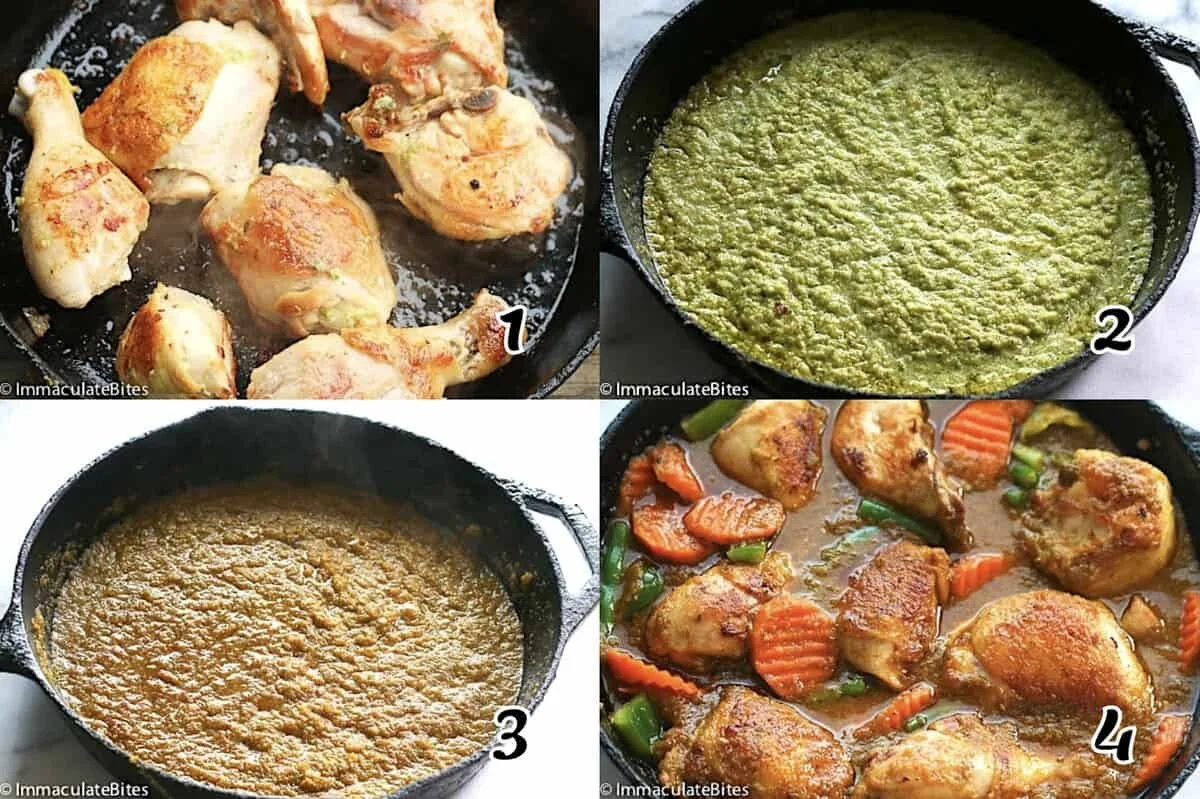
Credit: Imma Adamu / Immaculate Bites
Browning the chicken and cooking down the aromatic base build flavor before the vegetables join the pan.
Getting the Texture Right
Good poulet DG depends on timing as much as seasoning.
Keep the plantains firm. Their centers should be tender, but the pieces need enough structure to survive mixing.
Reduce the tomato base. A watery sauce can soften the plantains too quickly. Cook the tomatoes down before adding stock.
Give vegetables different cooking times. Carrots and green beans need longer than thinly sliced bell peppers.
Fold gently at the end. Once the plantains enter the pan, use broad, careful movements. The aim is to coat them while keeping the pieces intact.
You can prepare the chicken and sauce ahead. Fry the plantains closer to serving and combine everything when you are ready to eat.
How to Serve Poulet DG
Serve poulet DG hot in a broad dish or bring the cooking pot to the table. Distribute the chicken and plantains evenly so each person receives both.
The plantains already provide a substantial starch. A fresh salad or extra vegetables can complete the meal; rice is an optional addition for a larger spread.
For another view of Cameroonian cooking, explore NKENNE’s guide to ndolé, a dish built around bitter leaves and groundnuts.
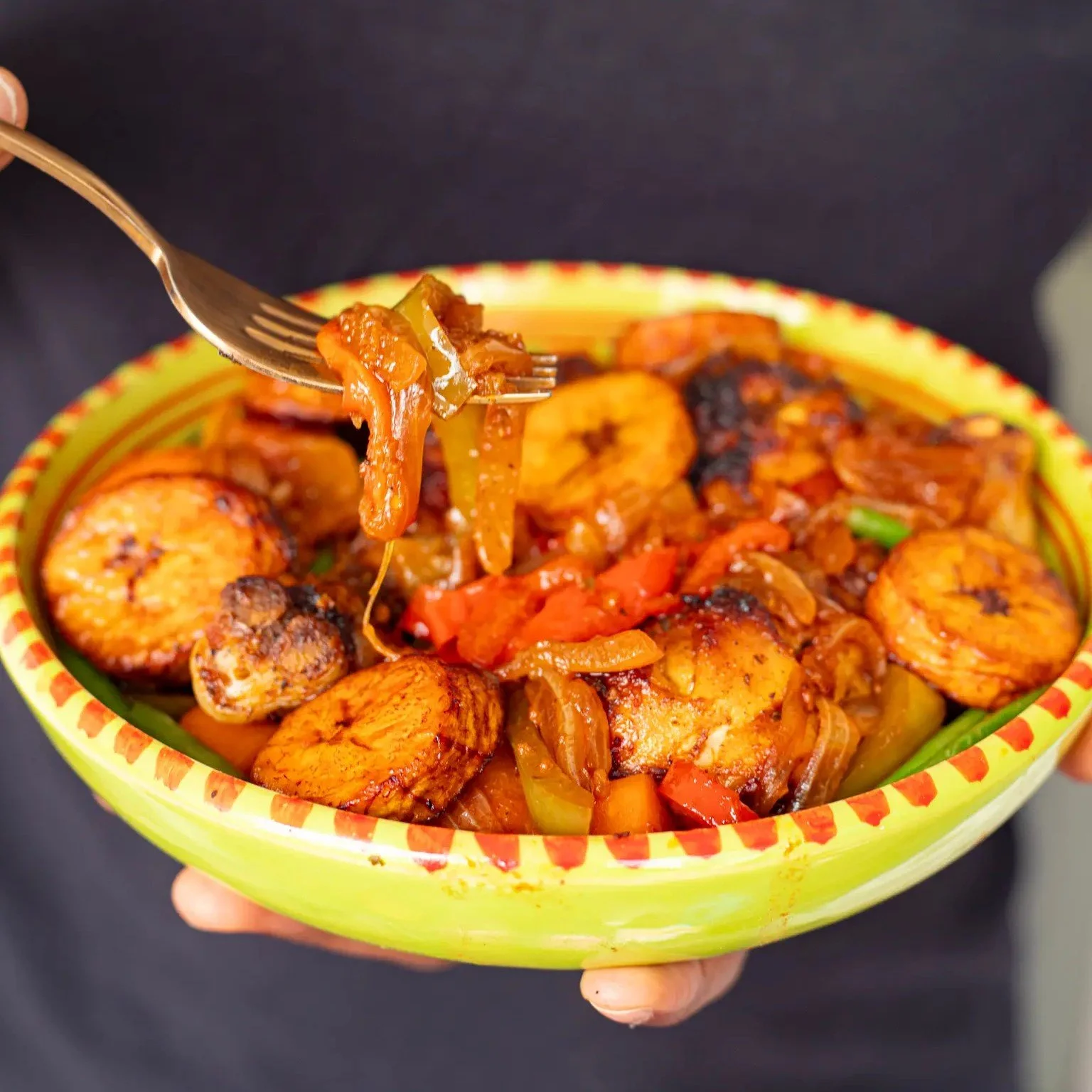
Credit: Aïssatou Mbaye / Aistou Cuisine
Serve poulet DG hot, with chicken, golden plantains, and vegetables in every helping.
Learn French Through the Dish
The name poulet DG offers a useful connection between French and Cameroonian food culture. A recipe also gives learners verbs they can immediately put into practice.
Le poulet → Chicken
La banane plantain → Plantain
Les légumes → Vegetables
Faire dorer → To brown
Laisser mijoter → To simmer
Mélanger délicatement → To mix gently
Try these expressions in context:
Ajoute les plantains à la fin.
Add the plantains at the end.
Tu veux encore du poulet ?
Would you like some more chicken?
Learning the words while preparing a meal gives each expression a visible action or familiar taste. Continue with NKENNE’s guide to food and market vocabulary in Cameroonian French.
FAQs
What does poulet DG mean?
Poulet means chicken, and DG abbreviates directeur général, or managing director. The name is associated with the dish’s reputation as a meal for affluent diners.
Should I use ripe or unripe plantains?
Recipes vary. This version uses ripe but firm plantains for sweetness. Greener plantains produce a less sweet result. Avoid very soft fruit that falls apart easily.
Is poulet DG spicy?
It does not have to be. Garlic, ginger, herbs, and white pepper provide flavor in this recipe. You can add hot chilli to suit your household.
Can I make poulet DG ahead?
Yes. Prepare the chicken and sauce ahead, then refrigerate them promptly. For better texture, fry the plantains and assemble the dish closer to serving.
How long do leftovers keep?
Refrigerated cooked chicken keeps for 3–4 days. Reheat leftovers thoroughly to 74°C/165°F. The plantains will become softer after storage.
Conclusion
Poulet DG carries a title associated with status, but the care behind the dish is something a household can make its own.
That care appears in small decisions: choosing plantains at the right stage, saving the chicken stock, and waiting until the end to bring everything together. These are the details that someone cooking beside you can explain more easily than a menu can.
For a heritage learner, asking how a relative prepares the dish can open a conversation about much more than ingredients. A recipe becomes a way to hear family preferences, remembered occasions, and the language used around the table.
Learn French Through Food and Culture With NKENNE
With NKENNE, you can learn French while exploring the foods, conversations, and everyday expressions that give it meaning in African communities.
Start with the name of a dish. Then learn how to ask for the ingredients, follow the method, and offer someone another helping.
