
By: Yvonne Mag-usara
A field can need more work than one household can finish at the right time. When neighbours arrive to help, they bring something a promise of support cannot provide: enough hands to move the task forward.
In Shona communities, nhimbe gives that shared effort an organised form. Understanding it reveals how farming, hospitality, reciprocal help, and everyday relationships can sustain one another.
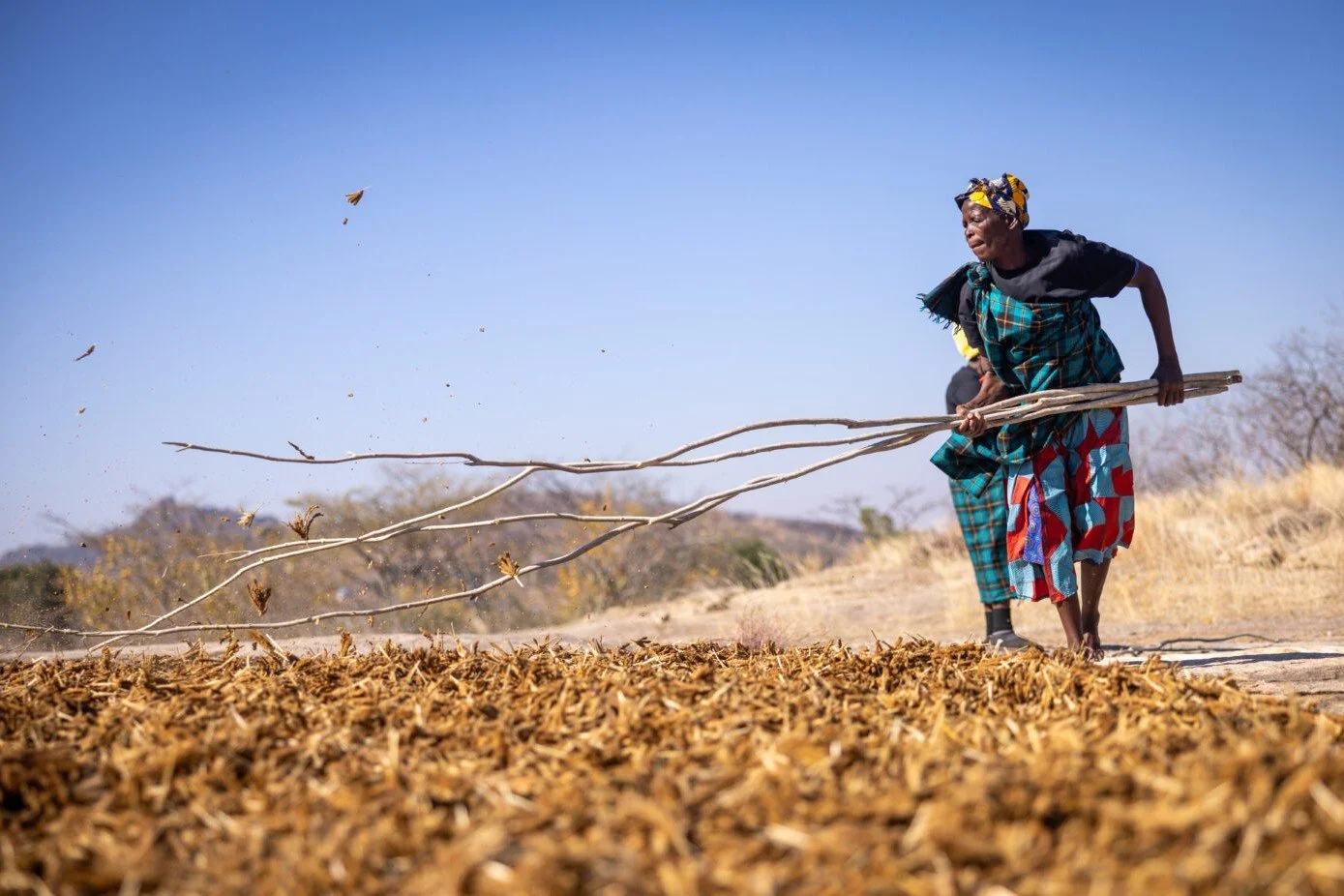
Credit: Simon de Swardt / The Gaia Foundation and EarthLore Foundation, via African Earth Jurisprudence Collective
Millet threshing in Mamutse, Bikita, shows how agricultural work and collective participation meet in a local Jaka tradition.
What Is Nhimbe?
Nhimbe is an organised communal work gathering associated with Shona communities in Zimbabwe. Neighbours and relatives pool their labour to complete a task for a household or the wider community.
Agricultural work is especially important. People may help prepare land, weed fields, harvest crops, or process grain. Other gatherings support building, repairs, or community projects.
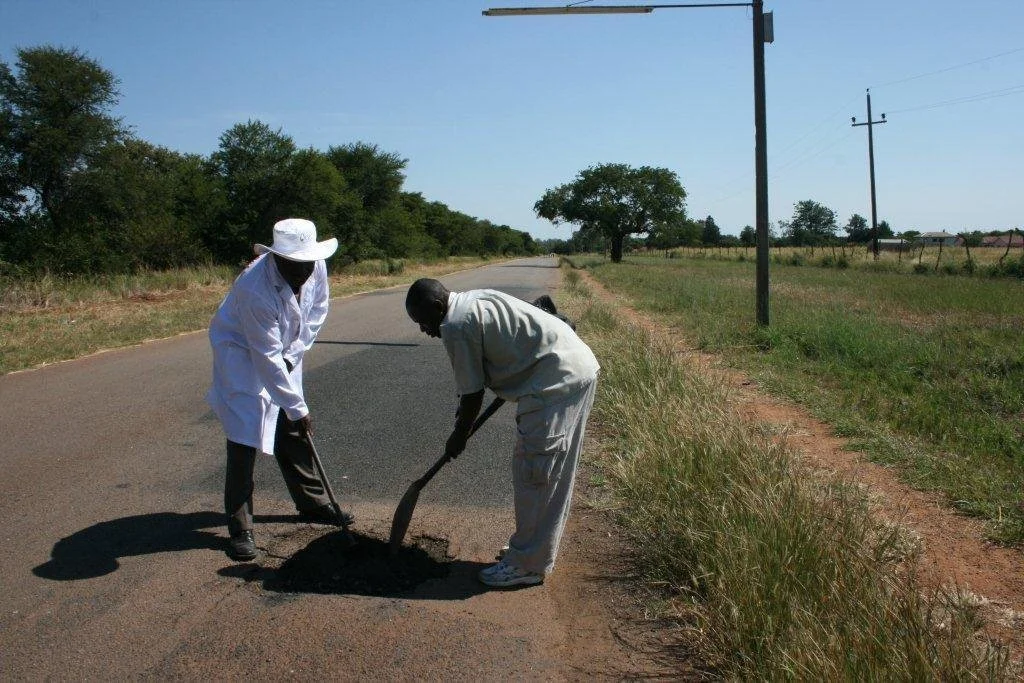
Credit: Zimbabwe Development Democracy Trust
A road-repair initiative in Bulawayo offers a contemporary example of people contributing practical labour to a shared local need.
The household receiving help may change from one occasion to another. Participation sustains relationships through which people can ask for assistance when their own needs arise. Names, expectations, and arrangements vary locally.
Nhimbe therefore describes more than several people working in the same place. It connects a practical task with an ongoing relationship.
How a Nhimbe Workday Comes Together
A host identifies the task and invites help. In communities described by researcher Pindai M. Sithole, organisers consult the village head and coordinate dates so gatherings do not compete for the same participants.
Someone trusted may oversee the work. Clear expectations matter: people should know what they are coming to do and what equipment is needed.
The day commonly brings together:
Preparation: Agreeing on the task, gathering tools, and arranging refreshments.
Shared labour: Working together on the field, building, or other agreed project.
Hospitality: Eating, drinking, talking, and thanking those who helped.
Food and beverages often form part of the gathering. Traditional beer may be served, but non-alcoholic drinks also appear in documented accounts. There is no single menu or arrangement for every community.
The conversation around the meal gives participants time together beyond the task itself.
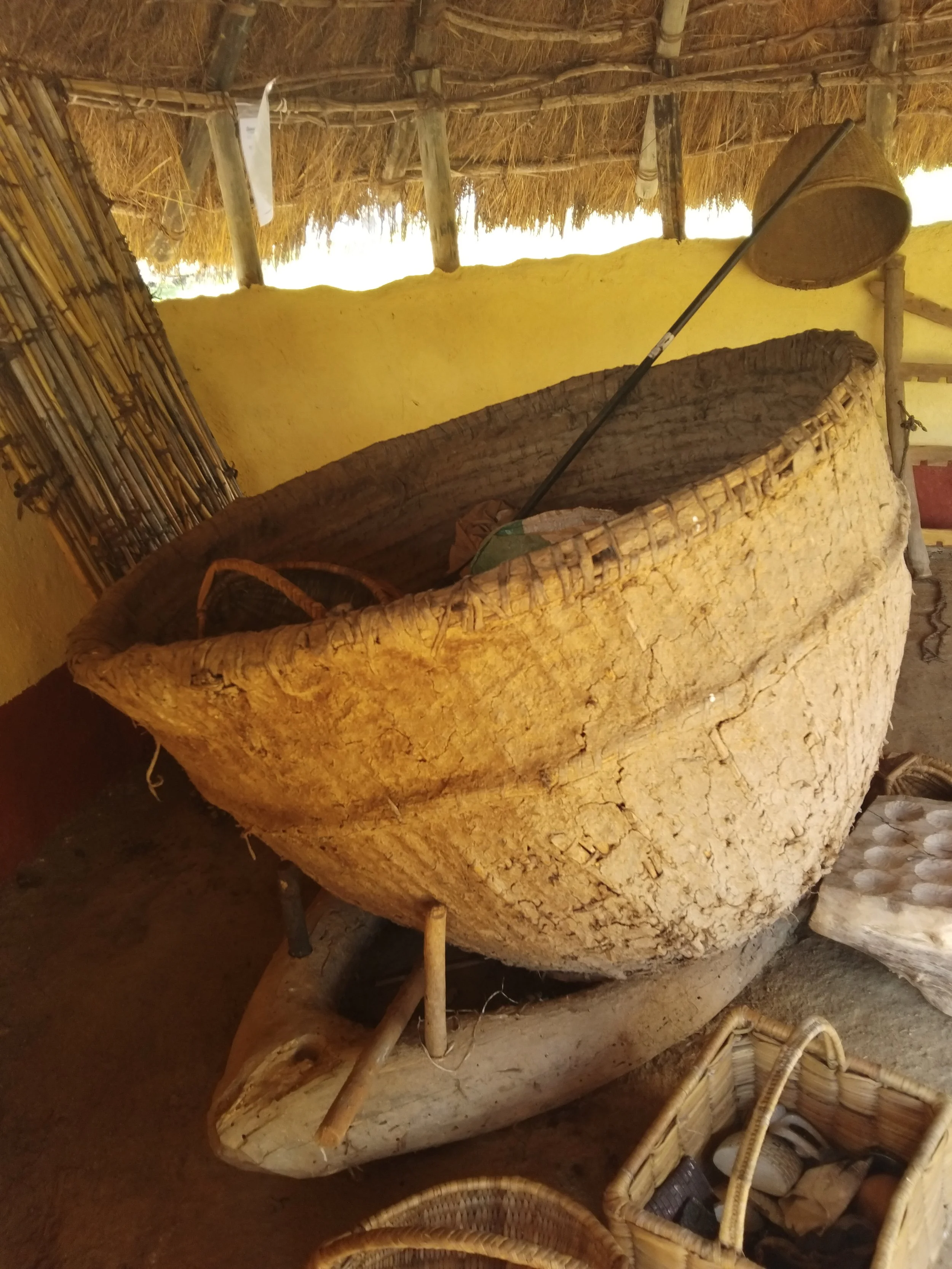
Credit: MaiDenzel / Wikimedia Commons, CC BY-SA 4.0
Harvesting baskets preserve practical knowledge alongside the communal relationships through which agricultural work is organised.
Why Helping Today Matters Tomorrow
Reciprocity is central to nhimbe. Someone contributes labour today with the understanding that others may assist when their household needs help.
Consider a household facing a large weeding task. A group can help finish it sooner, and its members can later draw on the same network. This is an illustrative example of reciprocal assistance, rather than a fixed schedule followed everywhere.
Work may be unpaid, but it still carries expectations about participation, reliability, and returning help. Calling it simply “free labour” leaves those relationships out.
Reciprocity also allows room for care. Sithole describes assistance to older people, people with disabilities, and child-headed households where an equivalent return of labour is not expected.
The principle is strongest when a person’s need matters alongside their capacity to contribute.
A Tradition With a Changing History
Nhimbe has a history extending back well before contemporary development organisations adopted it. That history includes negotiation and inequality as well as cooperation.
Research on colonial-era Madziwa describes changes during the 1930s and 1940s. Some plough owners formed restricted work groups, while other gatherings remained open for weeding and harvesting. Access to equipment, household resources, and gender shaped who worked with whom.
These differences matter. An invitation to help does not automatically mean everyone benefits equally.
A careful account asks practical questions: Who controls the crop? Who prepares the food? Who supplies the tools? Who can afford to take a day away from other responsibilities?
Respecting nhimbe includes recognising the skill required to organise it fairly. The tradition’s value rests partly on how participants manage those questions.
Shona Words Behind Shared Work
Learning the vocabulary helps you hear the relationships within the practice:
Nhimbe → An organised communal work gathering.
Humwe → A term used for communal work in some Shona contexts.
Kubatsirana → To help one another.
Mhuri → Family.
Shamwari → Friend.
Kubatsirana is particularly useful because it expresses mutual assistance. It describes a relationship in which help can move in both directions.
For heritage learners, these words offer a starting point for family conversations. Ask an older relative what communal work was called where they grew up, which jobs brought people together, and how hosts thanked participants.
Their answer may introduce a local term or a household memory that a general definition cannot capture.
Continue with NKENNE’s guide to talking about family and friends in Shona.
Nhimbe in Community Life Today
Contemporary organisations have adapted nhimbe for community projects and peacebuilding. Heal Zimbabwe Trust, for example, has used shared work to bring people together across social and political divisions.
Its 2023 #AsOne campaign launched through a nhimbe gathering in Zaka. Such initiatives build on an existing practice, although working together does not automatically resolve disagreement.
Other forms of collective agricultural work remain important too. A 2026 account from Bikita documents the revival of Jaka millet-threshing gatherings alongside traditional grains. That specific local name deserves recognition rather than treating every gathering as identical.
If invited to participate, ask what help is needed, follow the organisers’ guidance, and seek permission before photographing people.
For diaspora readers, the first step may be a conversation about how relatives organised work and supported one another. Shared work can carry family history as clearly as a remembered recipe.
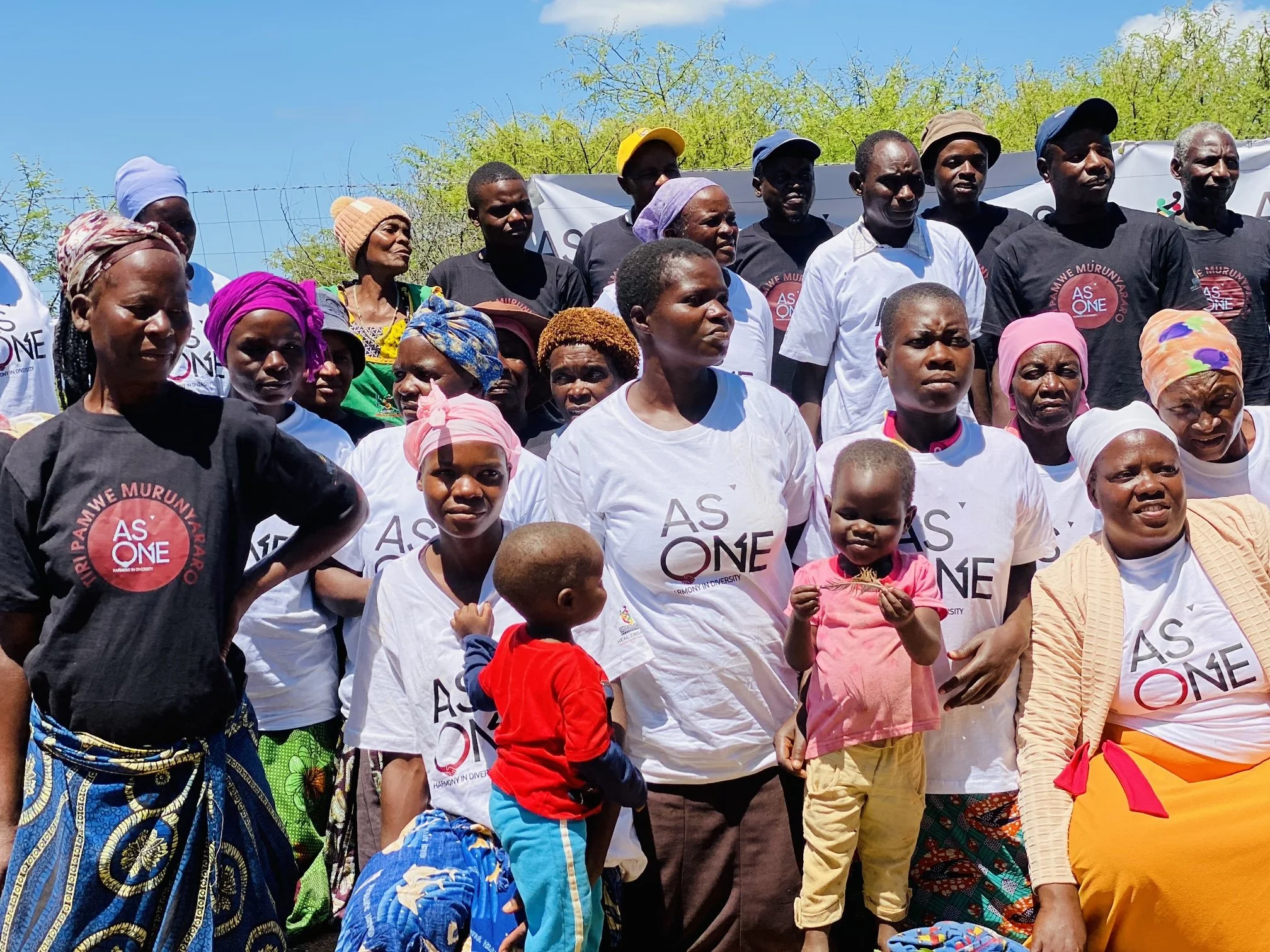
Credit: Heal Zimbabwe Trust / #AsOne campaign
Members of the Kutatarika Peace Club in Zaka at a 2023 campaign launch held through a nhimbe gathering.
FAQs
What does nhimbe mean in Shona culture?
Nhimbe refers to organised communal work through which people help a household or community complete a task, often connected to farming.
Is nhimbe only used for farming?
No. Although agricultural work is prominent, documented activities also include construction, repairs, and work on shared community spaces.
Are people paid to attend a nhimbe?
Participants generally contribute labour without wages. Hospitality and expectations of reciprocal help distinguish the arrangement from ordinary paid employment.
Is nhimbe the same as bira?
No. Nhimbe centres on collective work. A bira ceremony centres on ancestral communication through ceremonial gathering, music, and other practices.
Is nhimbe still practised in Zimbabwe?
Yes. Research and community organisations document its continued use, including adaptations for local development and peacebuilding. Participation and customs differ between communities.
Conclusion
A field left weeded or a roof repaired is evidence of work completed. The willingness to answer the next call for help is evidence of a relationship maintained.
Nhimbe makes both forms of effort visible. It asks people to organise, contribute, host, and recognise when a neighbour needs support without being able to offer the same in return.
For someone reconnecting with Shona heritage, learning the word can open a more personal question: who helped your family when a task was too large to manage alone?
The answer may name people whose contribution deserves to be remembered.
Learn Shona Through Culture With NKENNE
With NKENNE, you can learn Shona while exploring the family relationships, shared responsibilities, and everyday expressions that give it meaning.
Begin with kubatsirana, helping one another, and keep learning until you can hear the stories behind the word.
