
By: Chimdindu Ken-Anaukwu
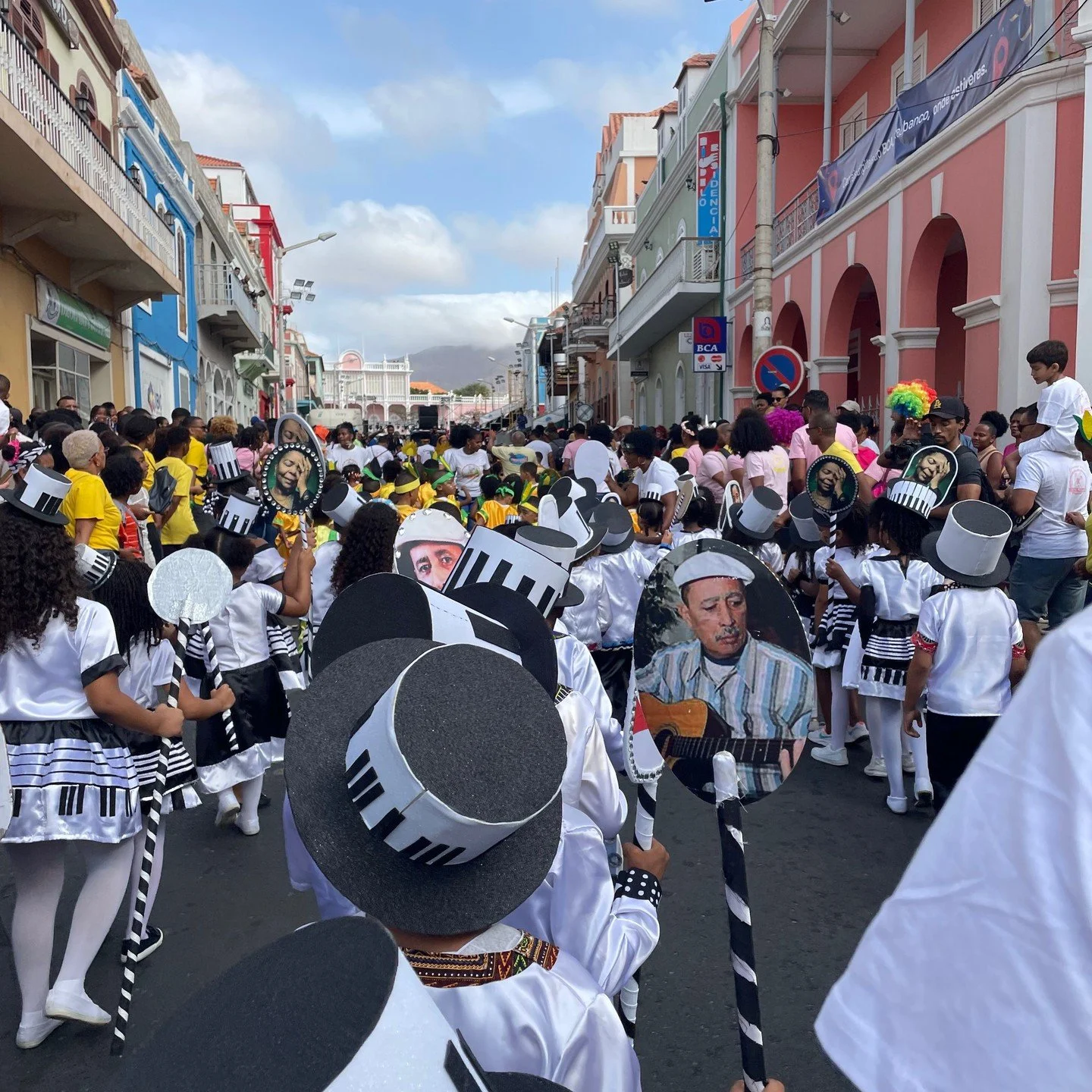
Every year, the streets of Mindelo explode with colour, rhythm, and pure energy. Floats tower over the crowd. Drums shake the ground. Dancers in dazzling costumes move as one. This is Mindelo Carnival on São Vicente island, Cape Verde’s biggest and most spectacular party. In this guide, you will discover the floats, the music, the costumes, and the deep cultural meaning behind the celebration that turns the city into a living stage.
Why Mindelo Hosts Cape Verde’s Greatest Carnival
Mindelo, the cultural capital of São Vicente, has long been Cape Verde’s most cosmopolitan city. Its history as a busy Atlantic port brought influences from Europe, Africa, and Brazil. Carnival grew out of the old Portuguese Entrudo celebrations and slowly became a full street festival.
Today it stands as the largest and most competitive carnival in the country. Neighbourhood groups spend months preparing. Thousands of people take part. Visitors from other islands and the diaspora return just for this moment.
The Spectacular Floats
The floats, known as carros alegóricos, are among the most impressive parts of the parade. Teams of designers, welders, carpenters, and artists work for months in secret workshops called estaleiros.
Some floats reach several metres high. They feature detailed sculptures, lights, moving parts, and bold themes. Each official group presents multiple floats that tell a story connected to their chosen theme for the year. Moving these giant creations through the narrow streets of Mindelo is a challenge in itself.
The floats are not just decoration. They are visual storytelling on a massive scale.
Music That Moves the Streets
Music drives everything. Each carnival group creates original songs for the year. These tracks are released before the parade so the public can learn them and sing along.
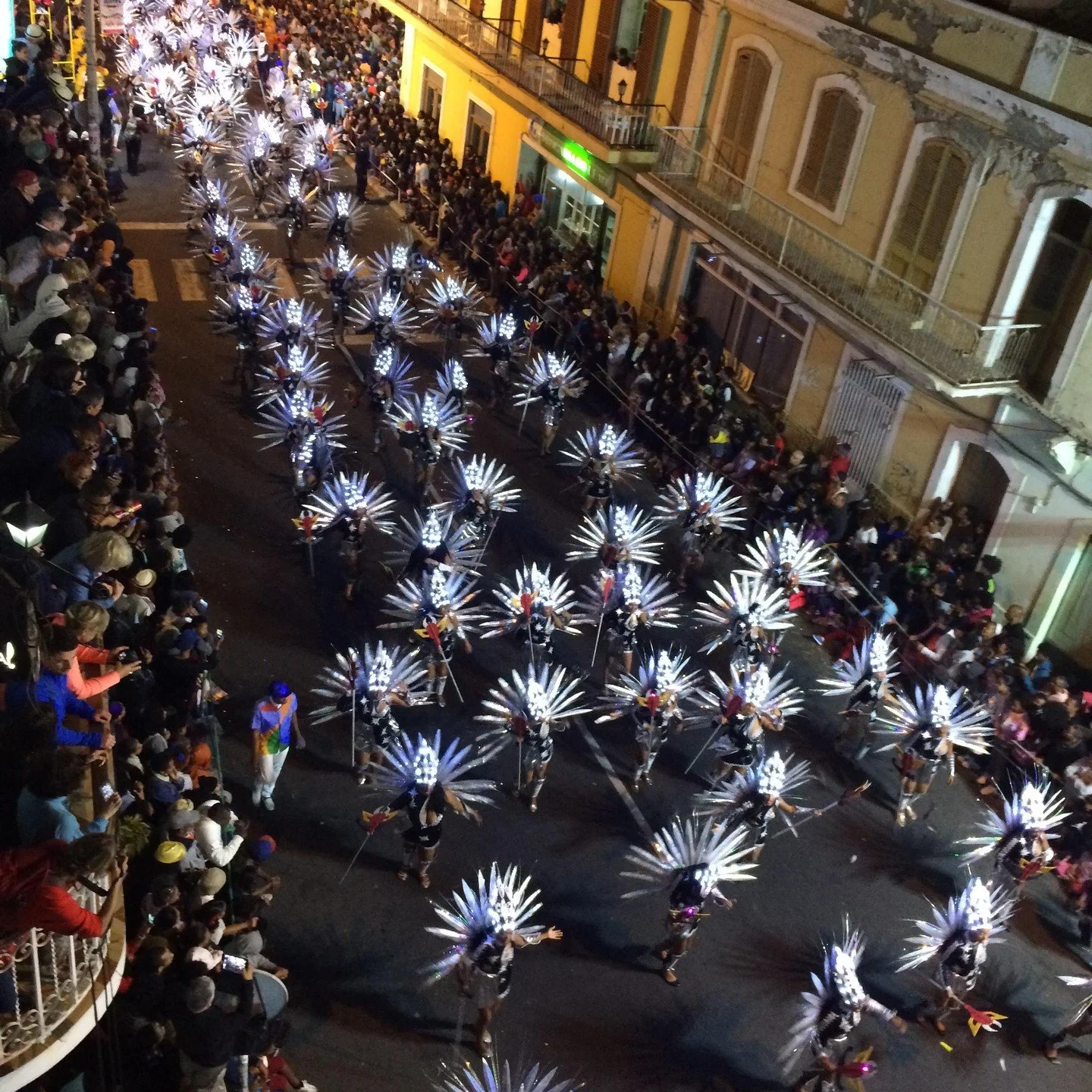
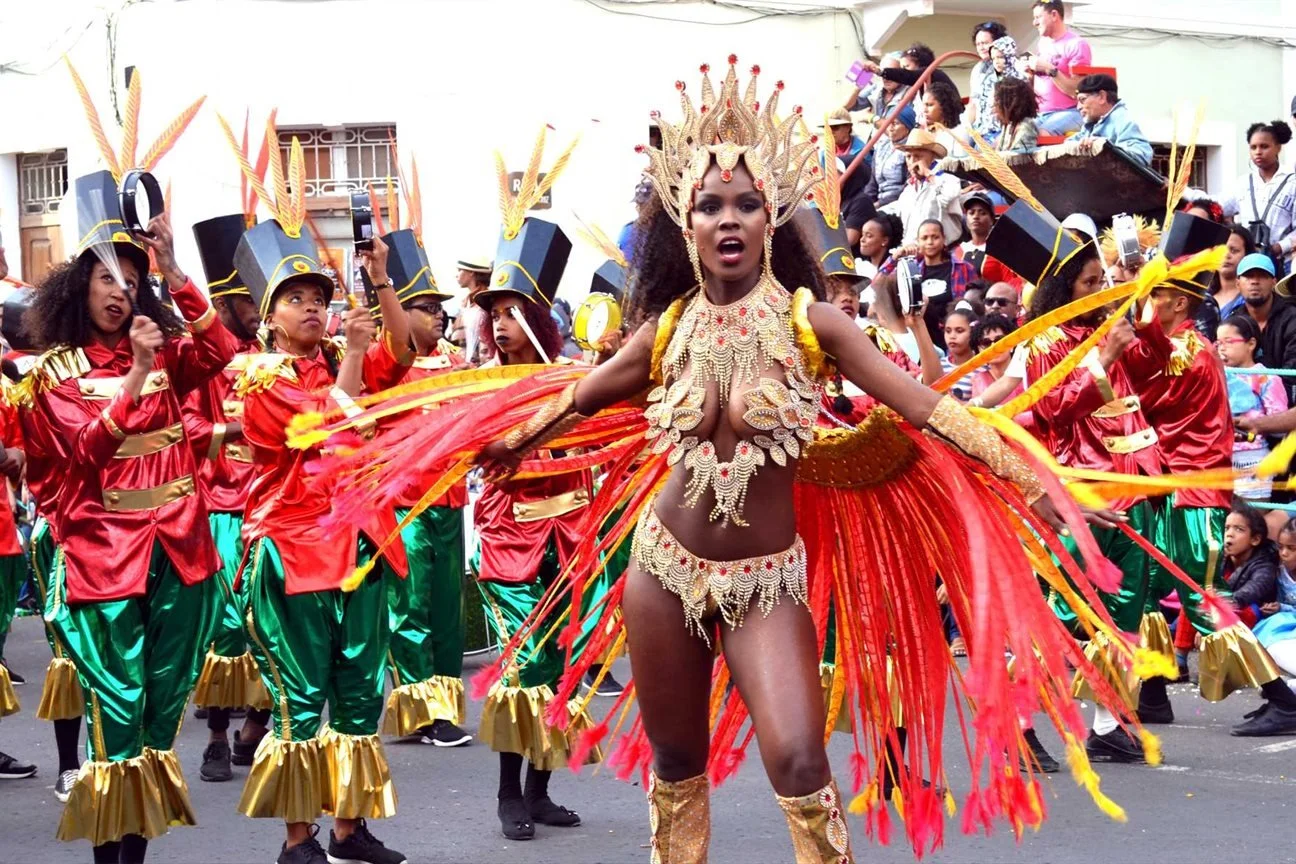
The real power comes from the bateria, the large percussion sections of 30 to 50 drummers. Their intense, driving rhythms push the dancers forward and keep the energy high for hours. The sound mixes Cape Verdean roots with strong Brazilian samba influences, creating a style that feels both familiar and uniquely Mindelo.
Costumes and the Art of Transformation
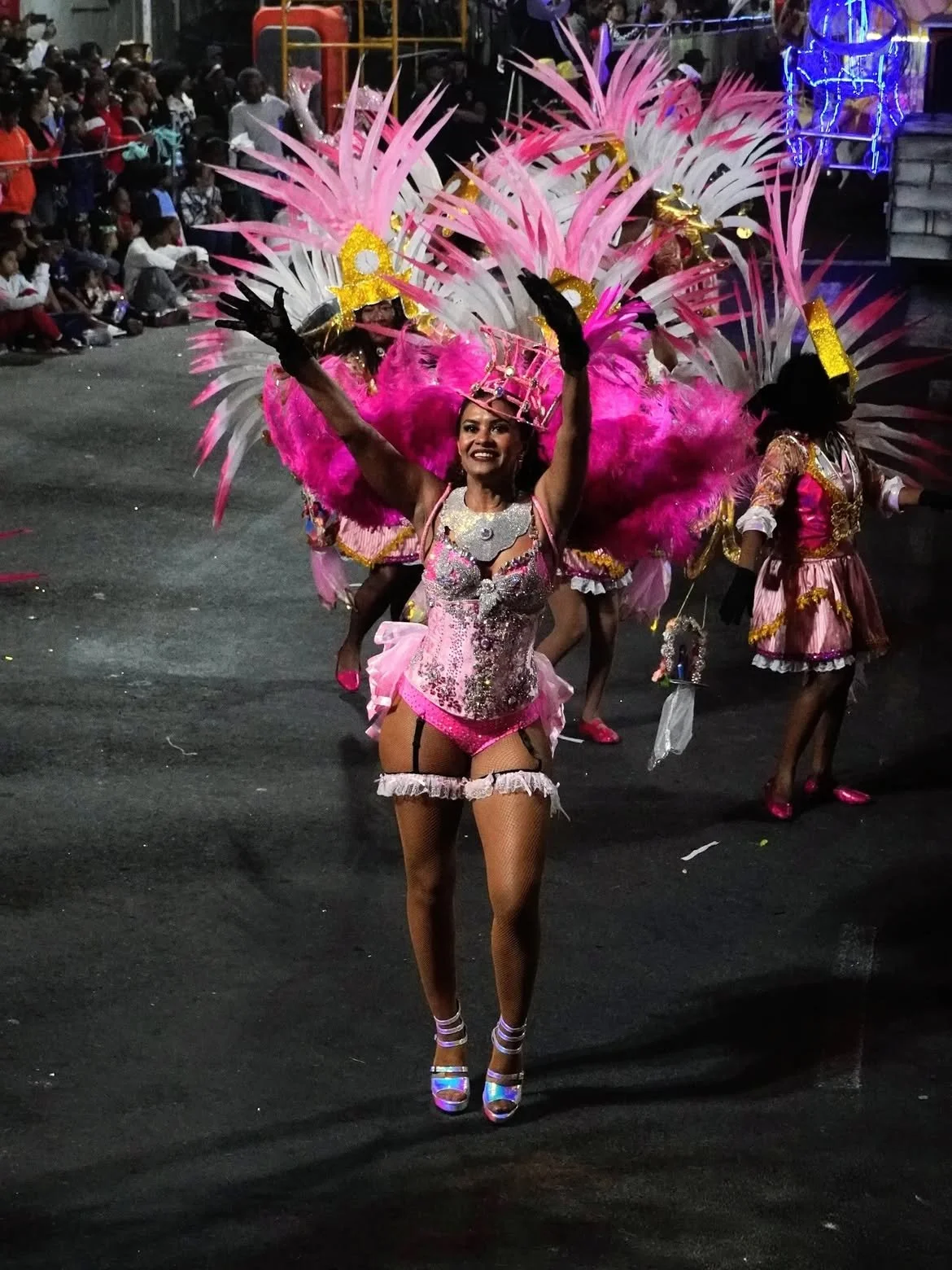
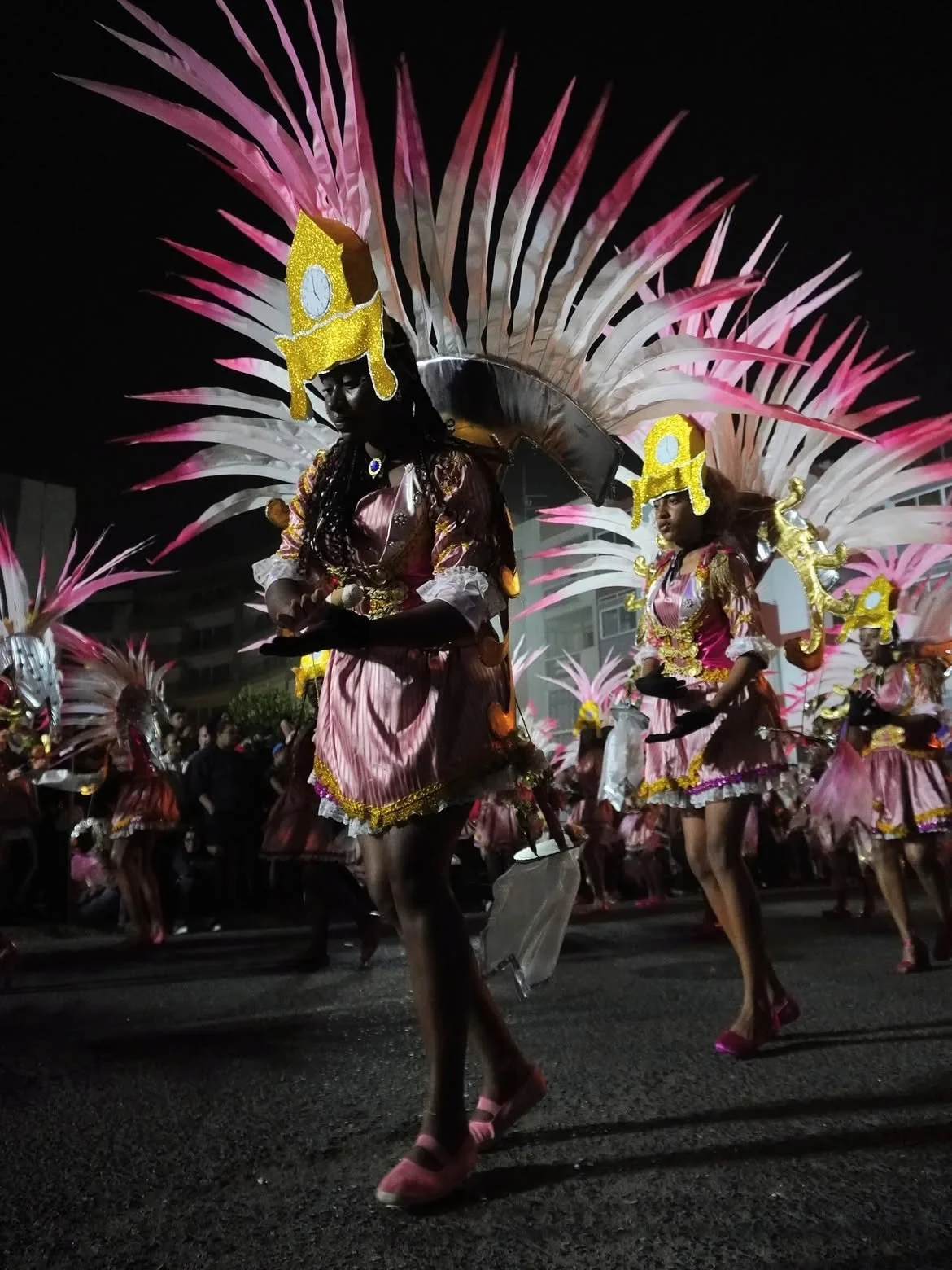
Costumes are created with enormous care. Seamstresses and designers spend months sewing, gluing, and decorating. Feathers, sequins, fabric, and local materials turn ordinary people into kings, queens, mythical figures, or abstract visions.
Each group has hundreds of dancers organised into different sections, or alas. The costumes must be striking from a distance and durable enough for a long night of dancing. The result is a moving river of colour that fills the historic centre of Mindelo.
The Mandingas: A Unique Tradition
One of the most distinctive features of Mindelo Carnival is the Mandingas. These groups cover their bodies in black paint or oil, wear raffia skirts and traditional adornments, and dance through the streets with spears and powerful drumming.
The Mandingas represent a strong connection to African heritage. They appear especially on the Sundays leading up to the main parade and remain one of the most emotionally charged parts of the celebration. Their presence reminds everyone that Carnival in Mindelo is not only spectacle. It is also memory and pride.
How the Carnival Unfolds
Preparations begin months in advance. Neighbourhoods rehearse choreography after work. Workshops buzz with activity.
The main days usually include:
Mandinga performances and smaller parades in the days before
Children’s and school groups
The big competitive parade of the official groups on Carnival Tuesday, often lasting late into the night
A jury evaluates the floats, costumes, music, and overall performance. The winning group earns bragging rights for the entire year.
Cultural Meaning Beyond the Party
Mindelo Carnival is more than entertainment. It is a moment when the city comes together across neighbourhoods and social lines. It gives artists, seamstresses, musicians, and young people a stage. It allows Cape Verdeans to celebrate creativity, resilience, and identity in the most public way possible.
For many in the diaspora, returning for Carnival is a way of reconnecting with home.
FAQs
When does Mindelo Carnival take place?
It follows the Catholic calendar and usually falls in February, ending on Shrove Tuesday.
How is Mindelo Carnival different from Brazilian Carnival?
It shares visual and musical influences with Brazil but remains distinctly Cape Verdean, with local music, the Mandinga tradition, and strong neighbourhood roots.
What are the official carnival groups?
Major groups include Monte Sossego, Cruzeiros do Norte, Estrela do Mar, Flores do Mindelo, and others that compete each year.
Can visitors take part?
Visitors can watch the parades, join street parties, and experience the atmosphere, though the competitive groups are local.
Why are the floats so important?
They represent months of collective work and artistic ambition. Winning the float category is a major source of pride.
How does Carnival connect to Cape Verdean identity?
It blends Portuguese colonial origins, African heritage, Creole creativity, and modern island life into one powerful celebration.
Final Thoughts
Mindelo Carnival turns the city into a living expression of Cape Verdean creativity. The floats amaze. The music drives people to move. The costumes transform ordinary streets into a stage of colour and pride. And traditions like the Mandingas keep the connection to African roots alive.
This is more than a party. It is Cape Verde showing the world who it is through rhythm, colour, and collective joy.
Ready to experience more of Cape Verde’s culture, language, and living traditions? Join NKENNE for lessons that bring these stories closer. Let’s keep discovering together.