
By: Yvonne Mag-usara
Some soups announce themselves through one defining ingredient. Ofe Owerri makes its impression through a combination: meat, stockfish, smoked fish, leafy vegetables, and cocoyam working together in the same pot.
Named after Owerri in southeastern Nigeria, it has a reputation for abundance. Understanding the soup means looking beyond its long shopping list to how each ingredient contributes. Here is the cultural context, a practical recipe, and a few Igbo words to learn along the way.
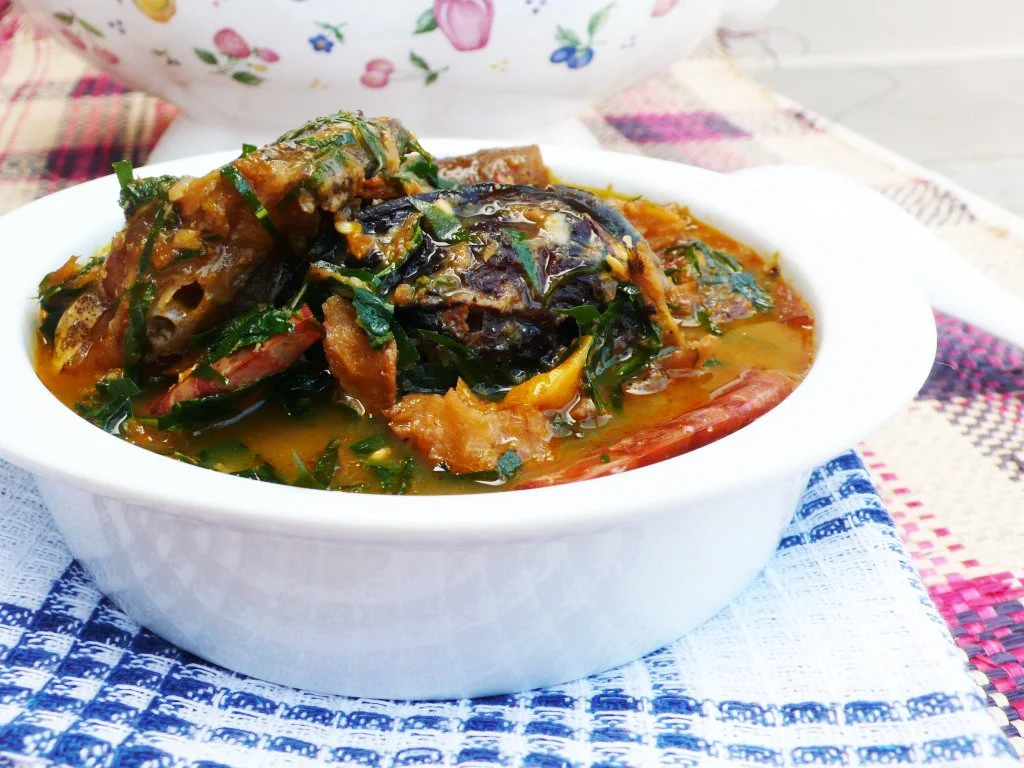
Credit: The Guardian Nigeria
Fish, prawns, and leafy greens fill a bowl of Ofe Owerri, showing the variety that gives the soup its generous character.
What Is Ofe Owerri?
Ofe Owerri is a soup associated with Owerri, the capital of Imo State. Ofe means soup in Igbo, so its name identifies both the food and the place it belongs to.
A typical pot combines assorted meat and fish, palm oil, cocoyam thickener, crayfish, and leafy vegetables. Snails, smoked prawns, and fermented seasoning may add further layers. Its reputation as an expensive soup comes partly from assembling this variety of ingredients.
The leaves are a frequent point of discussion. Published recipes use combinations such as ugu and okazi, ugu and uziza, or oha with other greens. Cooks also differ over additions such as ogiri and periwinkles. These differences deserve acknowledgment, especially when family recipes are presented as the only correct version.
For a first pot, choose one clear combination and learn how it behaves. The recipe below uses ugu and okazi, with cocoyam providing the body.
The Ingredients That Give It Character
Each part of the soup has a different job.
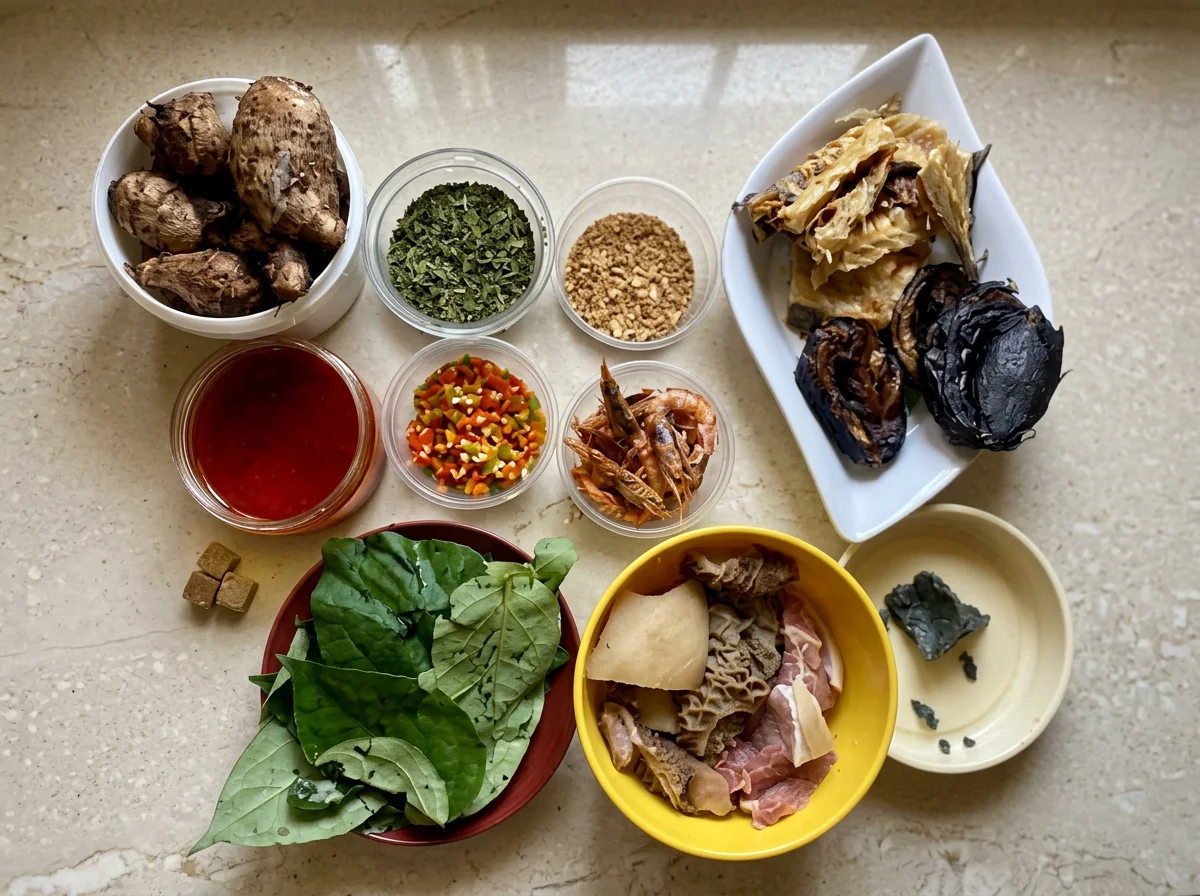
Meat and fish build the stock. Beef, tripe, or other assorted cuts contribute substance. Stockfish adds a concentrated savory flavor, while smoked fish brings a different aroma.
Cocoyam thickens the liquid. Called ede in Igbo, it is boiled and pounded or blended into a smooth paste. Small portions dissolve into the stock, creating a soup that coats the accompanying swallow.
The greens contribute texture and aroma. Ugu, or fluted pumpkin leaves, softens relatively quickly. Okazi, also written ukazi, is firmer and benefits from thin slicing. Uziza appears in other versions and brings a distinctive peppery fragrance.
Palm oil, crayfish, and seasoning bring the pot together. Ogiri may be included in a small amount for a fermented, savory note. Start lightly, since its flavor is concentrated.
For diaspora cooks, African grocery stores may carry fresh, frozen, or dried greens. Ask which cocoyam the seller recommends for Ofe Owerri, since varieties differ in how they thicken a soup.
How to Make Ofe Owerri
This home version serves 4–6 people. Allow approximately 25 minutes for preparation and 60–90 minutes for cooking, depending on the meat. Stockfish soaking may require additional time.
Ingredients
600 grams beef or assorted meat, cut into serving pieces
150 grams stockfish, soaked and cleaned
1 medium smoked fish, cleaned and carefully deboned
4–6 cleaned, fully cooked snails, optional
300–350 grams cocoyam
120 grams ugu leaves, washed and sliced
30 grams fresh okazi leaves, washed and thinly sliced
80 milliliters red palm oil
3 tablespoons ground crayfish
1–2 Scotch bonnet peppers, finely chopped, or dried pepper to taste
1 teaspoon ogiri Igbo, optional
1–2 seasoning cubes, optional
Salt to taste
Water as needed, approximately 1–1.2 liters in the finished pot
Method
Prepare the fish and vegetables. Soak stockfish according to its condition or package directions. Remove accessible bones and rinse away grit. Clean and debone the smoked fish separately. Wash the greens thoroughly and slice the okazi finely.
Cook the meat. Place the meat in a pot with a little salt, optional seasoning, and enough water to cover. Simmer until tender, adding water as needed. Add the stockfish early enough for it to soften. If the cuts cook at different speeds, cook the tougher pieces first.
Make the cocoyam paste. Meanwhile, scrub the cocoyam and boil it in a separate pot until completely tender. Let it cool enough to handle, peel, then pound or blend until smooth. Add only enough water to help the blender work.
Season the stock. Add palm oil, crayfish, pepper, and optional ogiri to the meat and stockfish. Adjust the water so the ingredients sit comfortably in the liquid. Simmer for about 5 minutes.
Thicken gradually. Drop in small spoonfuls of cocoyam paste, starting with roughly half. Simmer gently for 8–12 minutes, stirring along the bottom. Add more paste only if needed. The soup should remain spoonable.
Add the smoked fish. Gently lower it into the pot with the optional cooked snails. Simmer until thoroughly heated, taking care not to break the fish apart.
Finish with the greens. Add the okazi first and simmer until its texture is pleasantly tender. Stir in the ugu and cook for another 2–3 minutes. Taste before adding more salt.
Adding the smoked fish later helps preserve its pieces, while adding the greens toward the end gives you better control over their texture.
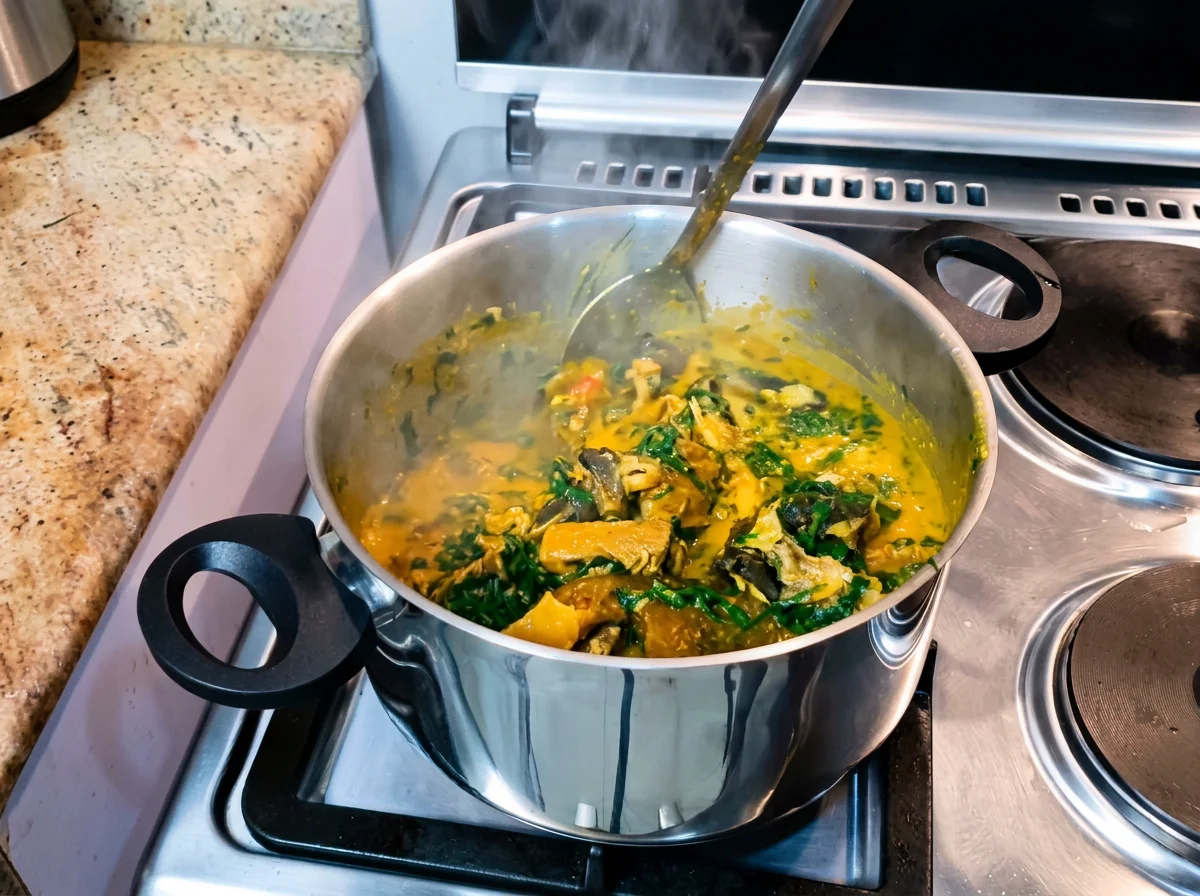
Credit: African Vibes
Sliced greens go into the pot near the end of cooking, bringing texture and freshness to the rich Ofe Owerri broth.
Getting the Consistency Right
If the soup becomes too thick, loosen it with small amounts of hot water or stock. If it is too thin, add another spoonful of cocoyam paste and give it time to dissolve.
Avoid correcting everything at once. Stockfish, crayfish, and seasoning cubes can all contribute saltiness, so taste before each adjustment.
Serving the Soup and Learning Its Igbo Names
Ofe Owerri is commonly served with akpụ, the fermented cassava preparation often called fufu. Pounded yam and eba are also familiar choices. The accompaniment gathers the broth, while meat and fish provide separate bites throughout the meal.
Serve the soup hot and distribute the different ingredients across the bowls. A generous pot works best when everyone receives more than broth.
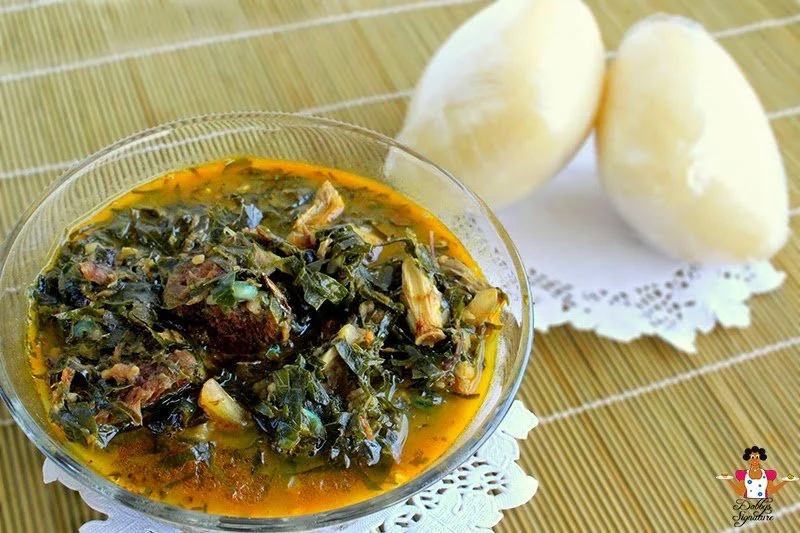
Credit: Dobby’s Signature
Ofe Owerri served with akpụ, a familiar pairing of soup and fermented cassava.
Igbo Words Around the Meal
Ofe → Soup
Ede → Cocoyam
Anụ → Meat
Azụ → Fish
Ose → Pepper
Akpụ → Fermented cassava fufu
A simple compliment is:
Ofe a dị ụtọ.
This soup is delicious.
Learning these words alongside the ingredients makes them easier to remember. Continue with NKENNE’s guide to ordering food in Igbo for expressions you can use beyond the kitchen.
FAQs
Why is Ofe Owerri considered expensive?
Its reputation comes from combining several kinds of meat, fish, and other ingredients in one pot. You can adjust the quantities to your budget without buying every optional addition.
Which leaves should I use?
Ugu and okazi are one established combination. Other published versions use uziza or oha. Follow a clear recipe or the combination taught in your household rather than adding every available leaf.
Can I make it without snails?
Yes. Snails are an addition in some versions. Meat, stockfish, and smoked fish can still create a substantial pot.
Can I use spinach instead of ugu?
Spinach is a practical substitute when ugu is unavailable, although its flavor and texture differ. Keep okazi if you can source it, and treat the result as an adaptation.
How should I store leftovers?
Divide the soup into shallow containers and refrigerate promptly. Use refrigerated leftovers within 3–4 days, or freeze portions. Reheat thoroughly to 74°C/165°F, adding a little water if the cocoyam has thickened the soup.
Conclusion
A generous soup depends on knowing what each ingredient brings. Stockfish needs time. Cocoyam needs a smooth preparation. Greens need attention near the end. Learning those differences is part of learning the dish.
For someone reconnecting with Igbo food, Ofe Owerri offers a good reason to ask questions. Which leaves does your family use? Who taught the recipe? What belongs in a pot prepared for visitors?
Those answers preserve something a measured recipe cannot hold on its own: the preferences and knowledge of the people who cooked before you.
Learn Igbo Through Food and Culture With NKENNE
With NKENNE, you can learn Igbo while exploring the foods, family conversations, and everyday expressions that give the language meaning.
Start with the ingredients you recognize. Then learn how to ask about the ones you remember from home.
