
By: Yvonne Mag-usara
A greeting in Senegal can take an unexpected turn when someone hears your surname. A person named Ndiaye might tease a Diop for eating too much, and the Diop might send the accusation right back. If you only translate the words, it sounds like an insult. The relationship explains why both people might laugh.
That exchange is one example of joking kinship, a practice that gives certain relatives, families, or communities room to tease one another. For Wolof learners, it offers a lesson a vocabulary list can’t teach on its own: who is speaking to whom can change what a sentence does.
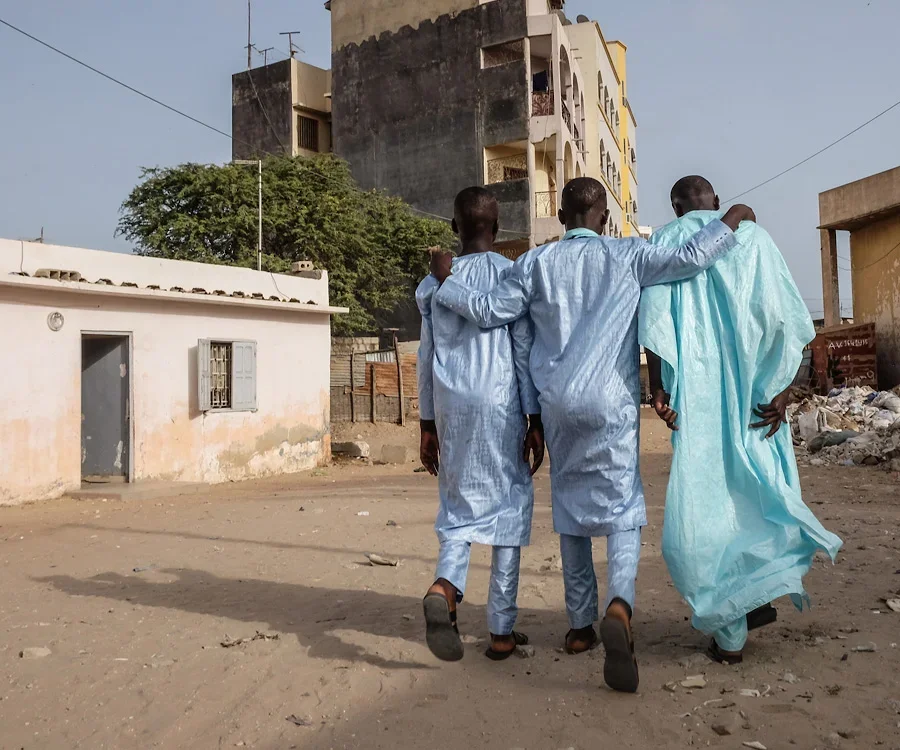
Credit: Ricci Shryock
What Is Joking Kinship in Senegal?
Joking kinship, often called parenté à plaisanterie or cousinage à plaisanterie in French, is a recognized relationship in which teasing is expected or accepted. Some joking partners are relatives. Others share a recognized tie through their family names or communities and may meet for the first time when the joke is made.
In Wolof, kal can refer to the joking relationship or to a joking partner. Within a family, it can apply to cross-cousins, such as the children of your mother’s brother or your father’s sister. You may also hear gàmmu in discussions of joking alliances, particularly between communities. The terms overlap, and their use depends on the relationship being described.
The permission to tease is specific to the relationship. A remark that lands warmly between joking cousins can sound rude when it comes from someone else.
When a Surname Becomes an Invitation
Ndiaye and Diop, written Njaay and Joob in Wolof, are a documented example of joking kinship tied to family names. A cultural study of Thiès describes people from these families teasing one another about being greedy eaters. The same account connects the banter to hospitality: the person you accuse of eating too much is also someone you’re expected to invite in and feed well.
Think about what changes in that greeting. A surname gives two people a way to recognize a connection before they know much about each other. The joke starts the conversation, and the offer of a meal gives the relationship something to live up to.
If the hospitality side interests you, read NKENNE’s guide to teranga in Senegal.
Credit: Grace Ekpu / Associated Press
The Fall family shares a bowl of ceebu jën, a dish of rice, fish, and vegetables, in Diamniadio, Senegal.
From Everyday Banter to Public Life
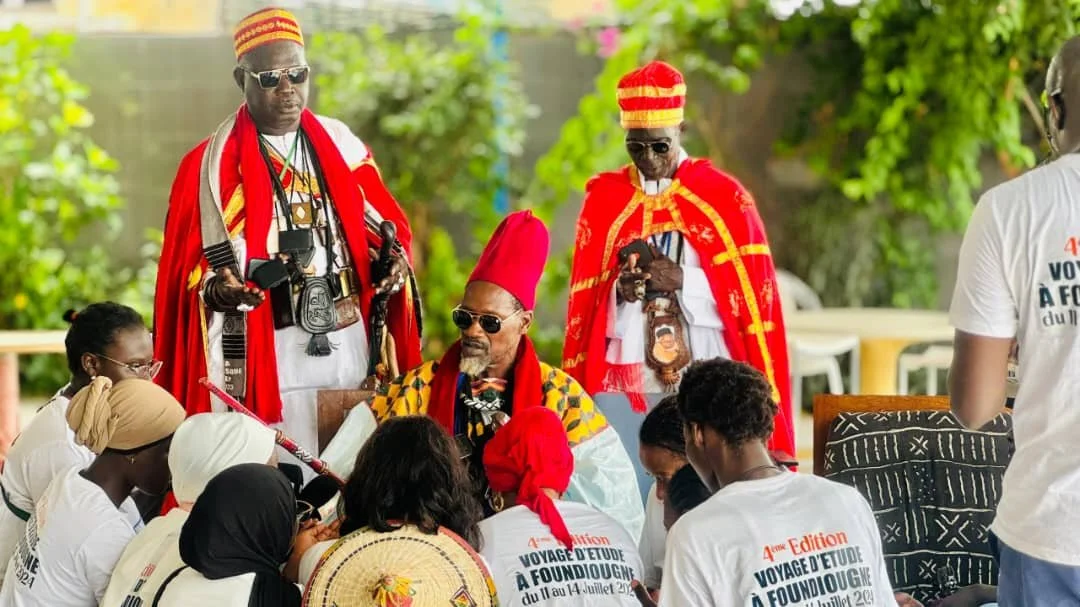
A well-known joking alliance links Joola and Sereer communities, also written Diola and Sérère in French. One oral tradition tells of two sisters, Aguène and Diambogne, separated when their canoe broke apart near Sangomar. The story connects the two communities through a remembered family bond. At a festival in Fatick in 1994, participants reenacted the sisters’ reunion on the water.
The relationship is still discussed in public life. In 2025, organizers of the Ndiafa-A-Ngara festival in Ndiaganiao invited Casamance as the guest of honor and highlighted Joola and Sereer ties. Celebrations like this give communities a place to renew the relationship.
Humor can also make it easier to begin a difficult conversation. But its reach has limits. Research on Senegal cautions against assuming that joking alliances resolve political conflicts on their own. The people involved still have to address the disagreement.
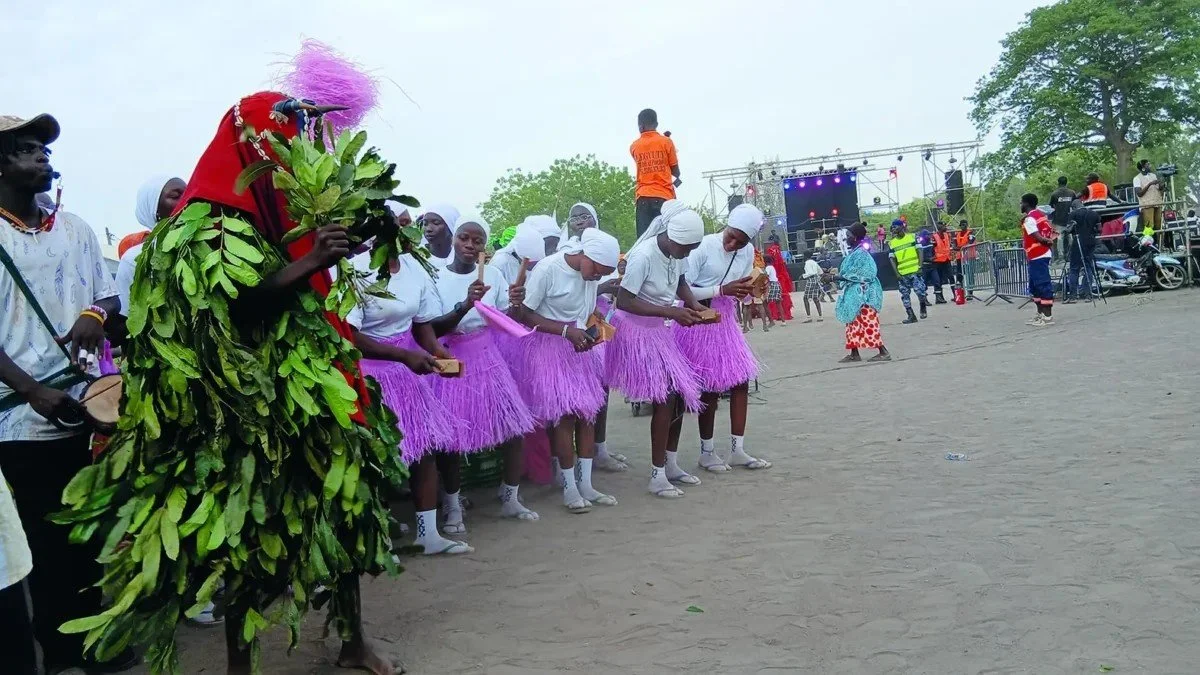
Credit: Le Soleil
Performers gather at the 2025 Niomi Badia festival in Toubacouta, Senegal. The festival brought communities together through the arts and highlighted the role of joking kinship.
What Wolof Learners Can Listen For
Listen to what happens before the teasing. Did someone repeat a surname? Did the other person recognize it and answer in kind? What sounds abrupt in translation may be a familiar turn in a greeting. Ethnographic accounts describe joking exchanges that begin this way and then give way to ordinary conversation.
Here’s a question you can ask a Wolof speaker you know when the topic comes up:
Kan mooy say kal?
Who are your joking cousins?
That question gives someone room to tell you which relationships they recognize and how the teasing works in their own experience. If you’re new to the language, start with how to introduce yourself in Wolof. Learning how a greeting unfolds will help you hear when it turns playful.
FAQs
What is joking kinship called in Wolof?
Kal is one term you’ll hear. It can refer to the relationship or to a joking partner. Gàmmu can also refer to joking alliances, particularly between communities. Usage overlaps.
Do joking cousins have to be related?
No. Some are relatives, such as cross-cousins. Others are connected through a recognized relationship between family names or communities.
Is joking kinship exclusive to Wolof speakers?
No. Wolof provides one way to talk about the practice, but joking relationships exist across several Senegalese communities and elsewhere in West Africa. Their names and customs vary.
Can I joke back if someone teases me?
Let the person and the setting guide you. If you’re unsure what the remark means, a smile or a friendly question is a better starting point than repeating an insult you’ve just heard.
Conclusion
The detail that stays with me in the Ndiaye and Diop example is the invitation to eat. You can tease someone about their appetite and still make sure they have enough on their plate. The teasing is memorable because there’s a relationship behind it.
As you learn Wolof, pay attention to the parts of a conversation that don’t fit neatly into a translation: the surname someone repeats, the pause before a reply, or the moment another person decides to join in. That’s often where you’ll hear how people know each other.
Learn Wolof with NKENNE through Everyday Life and Culture
Start with greetings and introductions, then listen for what people do with those words once the conversation gets going.
