Why Nigeria’s NITDA-NKENNEAi Partnership Is a Game-Changer for African Language AI
By: Chimdindu Ken-Anaukwu
Most people assume today’s AI is smart enough for any language. But ask it a practical question in natural Igbo, tonal Yoruba, or everyday Hausa and you will quickly notice the gaps.
The core issue is straightforward: if a language lacks proper training data, the AI cannot truly understand or serve its speakers. With over 2,000 languages across Africa and more than 500 in Nigeria alone, millions of people still face barriers when trying to use government services, health apps, banking tools, or education platforms in the language they are most comfortable with.
In this short guide, you will learn why this gap exists, how it affects daily life, and what the recent NITDA-NKENNEAi partnership is doing to fix it practically. You will also see clear ways to get involved.
The Real Reason AI Struggles with African Languages
Most people assume today’s AI is smart enough for any language. But ask it a practical question in natural Igbo, tonal Yoruba, or everyday Hausa and you will quickly notice the gaps.
The core issue is straightforward: if a language lacks proper training data, the AI cannot truly understand or serve its speakers. With over 2,000 languages across Africa and more than 500 in Nigeria alone, millions of people still face barriers when trying to use government services, health apps, banking tools, or education platforms in the language they are most comfortable with.
In this short guide, you will learn why this gap exists, how it affects daily life, and what the recent NITDA-NKENNEAi partnership is doing to fix it practically. You will also see clear ways to get involved.
How NKENNE Became the Foundation for African Language AI
It started with a very human goal: helping people reconnect with their languages.
The NKENNE app grew to over 400,000 users learning Igbo, Yoruba, Hausa, Swahili, Nigerian Pidgin and others. Through structured audio lessons and live 1-on-1 sessions with native-speaking tutors, the platform built high-quality linguistic resources.
These interactions, combined with specialized data collection from tutors and native speakers, created the foundation for NKENNEAi. Instead of simply fine-tuning foreign models, the team developed tone-aware tagging, annotated speech datasets, community-driven validation, and practical APIs. The focus has always been infrastructure designed for African realities.
The NITDA Partnership: Turning Policy into Usable Systems
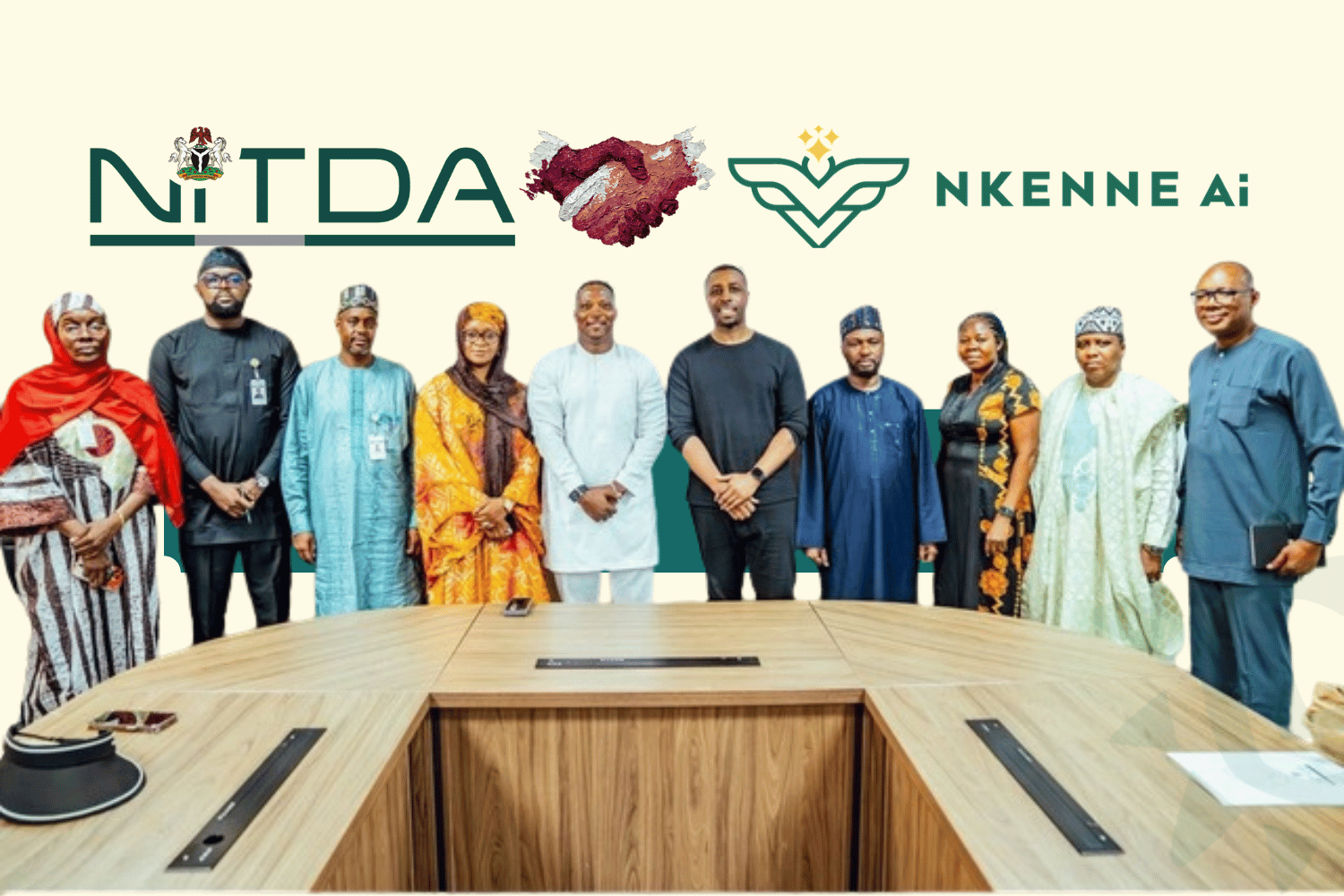
In late February 2026, Nigeria’s National Information Technology Development Agency (NITDA) formalised a partnership with NKENNEAi. This move takes the work from ideas and pilots into real national deployment.
Together they are creating language AI that can support:
Government portals accessible in mother tongues
Healthcare messages patients actually understand
Financial apps that work across regions without forcing English
Education tools that feel familiar to every child
The partnership also includes training local talent, data annotators, NLP engineers, and public-sector teams, so the technology is built and maintained by people who understand the languages and cultures best. It aligns with Nigeria’s broader digital ambitions.
What Tone-Aware African Language AI Actually Looks Like
Picture a health advisory system that hears your spoken Yoruba symptoms and responds accurately, respecting tone and local expressions. Or a government form that accepts Hausa input and gives clear feedback without awkward translations.
This level of performance needs:
High-quality speech data recorded with native speakers and tutors
Linguistic annotation that captures tone, context, and politeness
Ongoing community validation so the model stays accurate
Developer-friendly APIs that any organisation can integrate
When it works well, the technology fades into the background and people simply get better, more natural service.
Why This Matters for Ordinary Nigerians
Language shapes how we understand instructions, ask questions, and feel respected. When digital tools finally speak our languages properly, trust goes up and more people can participate fully in banking, healthcare, education, and civic life.
A trader in the market, a mother seeking antenatal advice, or a student revising at home should not have to fight with English first. Closing the language gap makes technology feel like it belongs to us, not something imposed from outside.
Next Steps: Join the Ongoing Conversation
NKENNEAi Talks is our monthly webinar series focused on the practical side of deploying language AI. We have been running it for the past 2-3 months, bringing together government, tech, and infrastructure voices to tackle real implementation challenges.
The next session, Deploying AI Language Infrastructure in Government, takes place on Tuesday, March 31, 2026, at 3:00 PM WAT. It features Michael Odokara-Okigbo and Patrick Okigbo III, with live audience questions. Every registered participant gets 50 free test tokens to try the tools.
Register here: https://nkenneai.webinarninja.com/live-webinars/10796590/register
Frequently Asked Questions
How is the NITDA partnership different from past AI efforts?
It focuses on building scalable infrastructure for government and public services, not just translation apps, and includes local workforce training.
Why are African languages harder for current AI?
They are often tonal, have many dialects, and lack the massive digitized datasets that English and other global languages enjoy.
Is NKENNE the same as NKENNEAi?
NKENNE is the learning app with native tutors. The data and insights from it helped create NKENNEAi, which develops the underlying AI infrastructure.
When will these tools appear in everyday apps?
The approach is staged: starting with government pilots, then expanding. Progress updates will come through the monthly Talks.
How can I start contributing or learning?
Begin with the NKENNE app to strengthen your language skills with native tutors. Join the Talks to understand the bigger picture. Native speakers are especially valuable for dataset validation.
African languages have carried our stories and knowledge for generations. The digital future does not have to leave them behind. Initiatives like the NITDA-NKENNEAi partnership show we are now building the foundation so technology finally meets us in our own voices.
The best way to support this is simple: keep using and valuing your language every day. Start or continue your journey with NKENNE. The more we speak our languages, the stronger the data and the brighter the future becomes.
See you at the next Talks on March 31.