
By: Chimdindu Ken-Anaukwu
In an Igbo gathering, the person who speaks the longest is not always the person who is heard. The person who is heard is the one who chooses the right proverb at the right moment.
In Igbo, a proverb is called ilu. Elders use ilu to settle arguments, give advice, praise, warn, and teach without sounding harsh. A single well-placed proverb can say what would otherwise take a long speech.
In this guide, you will learn what ilu is, why Chinua Achebe called proverbs "the palm-oil with which words are eaten," and nine everyday Igbo proverbs with their meanings, so you can start recognising them in conversation.

Two Igbo elders in red caps exchanging kola nut. Photo: Ozims Divine, CC BY-SA 4.0, via Wikimedia Commons
What Is Ilu?
Ilu is the Igbo word for proverb. Proverbs are short, memorable sayings that carry a lesson, usually through an image from everyday life: farming, animals, food, the market, or the family compound.
What makes ilu special is how it is used. Igbo speakers rarely explain a proverb after saying it. The listener is expected to understand the point. Using proverbs well is a sign of maturity, good upbringing, and respect for the people you are speaking to.
You will hear ilu at village meetings, marriage negotiations, title-taking ceremonies, family disputes, and even in casual conversation between friends. Young people who use proverbs well are often praised for speaking "like an elder."
A quick note on spelling: Igbo spelling varies from dialect to dialect, and many writers leave out the dots under letters such as ị, ọ, and ụ. The proverbs below use standard Igbo spelling, but you may see them written slightly differently elsewhere.
“The Palm Oil With Which Words Are Eaten”
In his 1958 novel Things Fall Apart, Chinua Achebe wrote: "Among the Ibo the art of conversation is regarded very highly, and proverbs are the palm-oil with which words are eaten."
The image is perfect for an Igbo audience. Palm oil (mmanụ nkwụ) is what makes a meal rich and easy to swallow. In the same way, proverbs make words easier to accept. A hard message wrapped in a proverb lands more gently, and a simple message delivered with a proverb sounds wiser and more memorable.
Achebe filled his novels with Igbo proverbs translated into English, and for many readers around the world, his books were their first introduction to ilu. His characters show what Igbo culture values: people who speak indirectly, choose their words carefully, and use proverbs to show respect and authority.
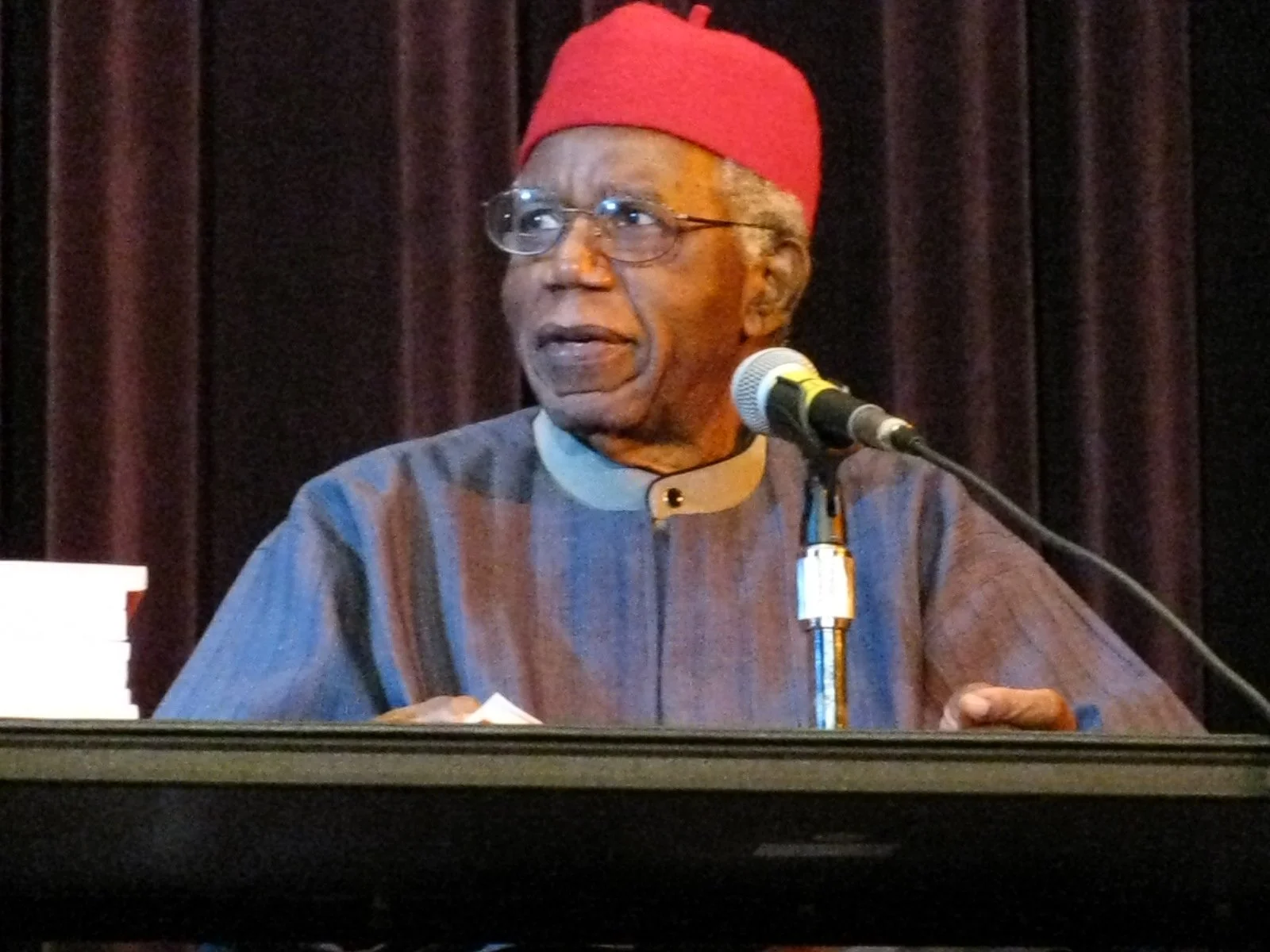
Chinua Achebe speaking in Buffalo, New York, 2008. Photo: Stuart C. Shapiro, CC BY 3.0, via Wikimedia Commons
Proverbs About Unity and Community
Many Igbo proverbs teach that people are stronger together than alone.
1. Otu osisi adịghị eme oke ọhịa.
Literal meaning: One tree does not make a forest.
Lesson: No one succeeds alone. Ask for help when you need it, and support others in return.
2. Igwe bụ ike.
Literal meaning: Multitude is strength.
Lesson: There is power in community. This saying is so popular that you will see it on buses, signboards, and as a name for groups and businesses.
3. Aka nri kwọọ aka ekpe, aka ekpe akwọọ aka nri.
Literal meaning: When the right hand washes the left hand, the left hand washes the right hand.
Lesson: Kindness is returned. When people help one another, everyone benefits.
Proverbs About Respect and Good Manners
Respect for elders and for other people is one of the strongest values in Igbo culture, and many proverbs teach it.
4. Nwata kwọchaa aka ya, ọ soro ọgaranya rie ihe.
Literal meaning: When a child washes his hands well, he can eat with the wealthy and important.
Lesson: Good manners and preparation open doors. Achebe used a version of this proverb in Things Fall Apart: if a child washes his hands, he can eat with kings.
5. Egbe bere, ugo bere; nke sị ibe ya ebela, nku kwaa ya.
Literal meaning: Let the kite perch and let the eagle perch; whichever says the other should not perch, may its wing break.
Lesson: Live and let live. There is room for everyone, and those who try to push others out bring trouble on themselves. This is one of the most widely quoted Igbo proverbs, often used as a prayer for peace and fairness.

Showing respect to elders, a value many Igbo proverbs teach. Photo: Ozims Divine, CC BY-SA 4.0, via Wikimedia Commons
Proverbs About Wisdom, Learning, and Patience
6. Onye ajụjụ anaghị efu ụzọ.
Literal meaning: The person who asks questions does not lose their way.
Lesson: Never be too proud to ask. This proverb is a favourite for learners, including anyone learning Igbo.
7. Ndidi nwe mmeri.
Literal meaning: Patience owns victory.
Lesson: Good things come to those who wait and keep going.
8. Azụ bụ eze na mmiri.
Literal meaning: A fish is king in water.
Lesson: Everyone has a place where they shine. Know your strengths and respect other people's.
Kola Nut and Proverbs
If there is one place where ilu comes alive, it is around the kola nut, ọjị. In Igbo tradition, kola is offered to guests as a sign of welcome, and important gatherings begin with the breaking and sharing of kola. Prayers, blessings, and proverbs are spoken as it is presented.
9. Onye wetara ọjị, wetara ndụ.
Literal meaning: The person who brings kola brings life.
Lesson: Hospitality and goodwill bring blessings. Whoever brings kola brings peace, friendship, and good fortune into the gathering.
Listen carefully at a kola ceremony and you will hear elders trading proverbs, each one building on the last. It is one of the best places to hear Igbo at its most poetic.

Kola nuts (ọjị) presented in a woven tray. Photo: Nwonwu Uchechukwu P, CC BY-SA 4.0, via Wikimedia Commons
How to Use Ilu in Everyday Conversation
Knowing a proverb is one thing. Using it well is another. Igbo speakers pay attention not only to which proverb you choose, but also to when, how, and to whom you say it.
Introduce it the traditional way. Speakers often open a proverb with a short phrase that credits the community rather than themselves, such as Ndị Igbo sị na… (“The Igbo say that…”). This shows that the wisdom belongs to the people, not to the speaker, and it signals to listeners that a proverb is coming.
Let the proverb do the work. Avoid explaining the proverb straight after you say it. If the listener needs a moment, give them that moment. Explaining too quickly can sound as if you think they cannot follow you.
Mind your audience. Some proverbs are best used by elders, especially those that give correction or advice. When a younger person addresses an elder, it is respectful to choose a gentle proverb, or to acknowledge that the elders know the saying better.
Pick the right moment. Proverbs work best when a conversation needs weight: settling a disagreement, giving encouragement, accepting a gift, or closing a discussion. Dropping proverbs into every sentence can sound forced.
Start small. Learn one proverb at a time, practise its pronunciation, and listen for it in Igbo music, films, and family conversations. Once you hear it used naturally, you will understand its meaning on a much deeper level than any translation can give you.
Frequently Asked Questions
What is the Igbo word for proverb?
The Igbo word for proverb is ilu.
Who said "proverbs are the palm-oil with which words are eaten"?
Chinua Achebe, in his 1958 novel Things Fall Apart.
Why do Igbo elders use proverbs so much?
Proverbs allow speakers to make a point politely and memorably. They show wisdom, respect, and cultural knowledge.
Why are Igbo proverbs spelled differently in different places?
Igbo has many dialects, and many writers leave out the dots under some letters. The meaning stays the same.
What is a good first proverb for beginners?
Onye ajụjụ anaghị efu ụzọ: the person who asks questions does not lose their way. It is a perfect motto for anyone learning a language.



Igbo proverbs carry the wisdom of generations in just a few words. Learning them is not only about vocabulary. It is about understanding how Igbo people think, speak, and show respect.
Start with one proverb this week. Say it out loud, learn its meaning, and listen for it the next time you hear Igbo spoken.
If these proverbs made you want to understand Igbo more deeply, keep learning with NKENNE. Our lessons help you speak Igbo with confidence, from everyday greetings to the proverbs elders love.
Daalụ for learning with us! 🗣️