
By: Yvonne Mag-usara
A person is umuntu. People are abantu. The change happens at the beginning of the word, where an English speaker might not think to look.
That small shift introduces one of the most useful patterns in Kinyarwanda grammar. Nouns belong to classes, and those classes help determine their plural forms and how other words agree with them.
This guide starts with familiar words, then shows you how to move from naming something to describing it naturally.

Why Umuntu Becomes Abantu
Kinyarwanda belongs to the Bantu language family. Like many related languages, it groups nouns into grammatical classes that govern agreement.
Many nouns referring to people follow the pattern seen in umuntu and abantu. In the numbering commonly used by Bantu linguists, these belong to classes 1 and 2.
Look at their structure:
u + mu + ntu → umuntu: person
a + ba + ntu → abantu: people
The shared stem, -ntu, remains. The initial vowel and class prefix change.
For a beginner, recognizing the larger opening chunks umu- → aba- is a useful starting point. You will also encounter:
umubyeyi → ababyeyi: parent → parents
umugore → abagore: woman → women
umwana → abana: child → children
Some forms involve sound changes or shortened combinations, so the complete word matters. Learn umwana together with abana, rather than trying to construct every plural mechanically.
“Noun class” simply describes a grammatical grouping. It does not indicate a person’s social position or importance.
Common Kinyarwanda Singular and Plural Patterns
The first important correction is this: not every word beginning with umu- becomes aba-.
Compare umuntu with umusozi, meaning “hill.” Their beginnings look similar, but their plurals follow different class patterns.
Umu- → Aba-
This pattern includes many words for people:
umuntu → abantu
person → people
umubyeyi → ababyeyi
parent → parents
Umu- → Imi-
Another group uses imi- in the plural:
umusozi → imisozi
hill → hills
umugozi → imigozi
rope → ropes
This is why a noun’s first few letters provide a clue, but do not always identify its class on their own.
Iki- or Igi- → Ibi-
These related singular forms appear in many everyday words:
ikiganza → ibiganza
hand → hands
igitabo → ibitabo
book → books
The iki- and igi- forms follow sound patterns within the language. They are not spellings you can freely exchange.
In- → In-
Some nouns keep the same written form in the singular and plural:
inka → inka
cow → cows
Here, surrounding words can tell you whether someone means one animal or several. Noun classes therefore involve more than changing the noun itself.
How Noun Classes Change Other Words
Recognizing plurals is only the beginning. A noun’s class also affects words that describe it, show ownership, or refer back to it.
This relationship is called agreement.
Saying “My”
Compare these phrases:
umubyeyi wanjye → ababyeyi banjye
my parent → my parents
igitabo cyanjye → ibitabo byanjye
my book → my books
The person speaking still means “my.” What changes is the form that agrees with the noun.
That is why learning one word for “my” and attaching it everywhere will not work. The noun helps determine whether you need wanjye, banjye, cyanjye, or another form.
Describing Someone
The same principle applies to descriptive words:
umuntu mwiza → abantu beza
a good person → good people
Both the noun and its description change. Agreement does not always mean copying the noun’s opening letters exactly; related forms can look different because of sound changes.
Following the Person Inside a Verb
Class distinctions can also appear inside verbs:
Turamubona.
We see him or her.
Turababona.
We see them, referring to people.
The object marker changes from -mu- to -ba-. These forms help listeners follow who is being discussed, even when the noun is not repeated.
Explore that connection further in NKENNE’s guide to how Kinyarwanda verbs can hold a whole sentence.
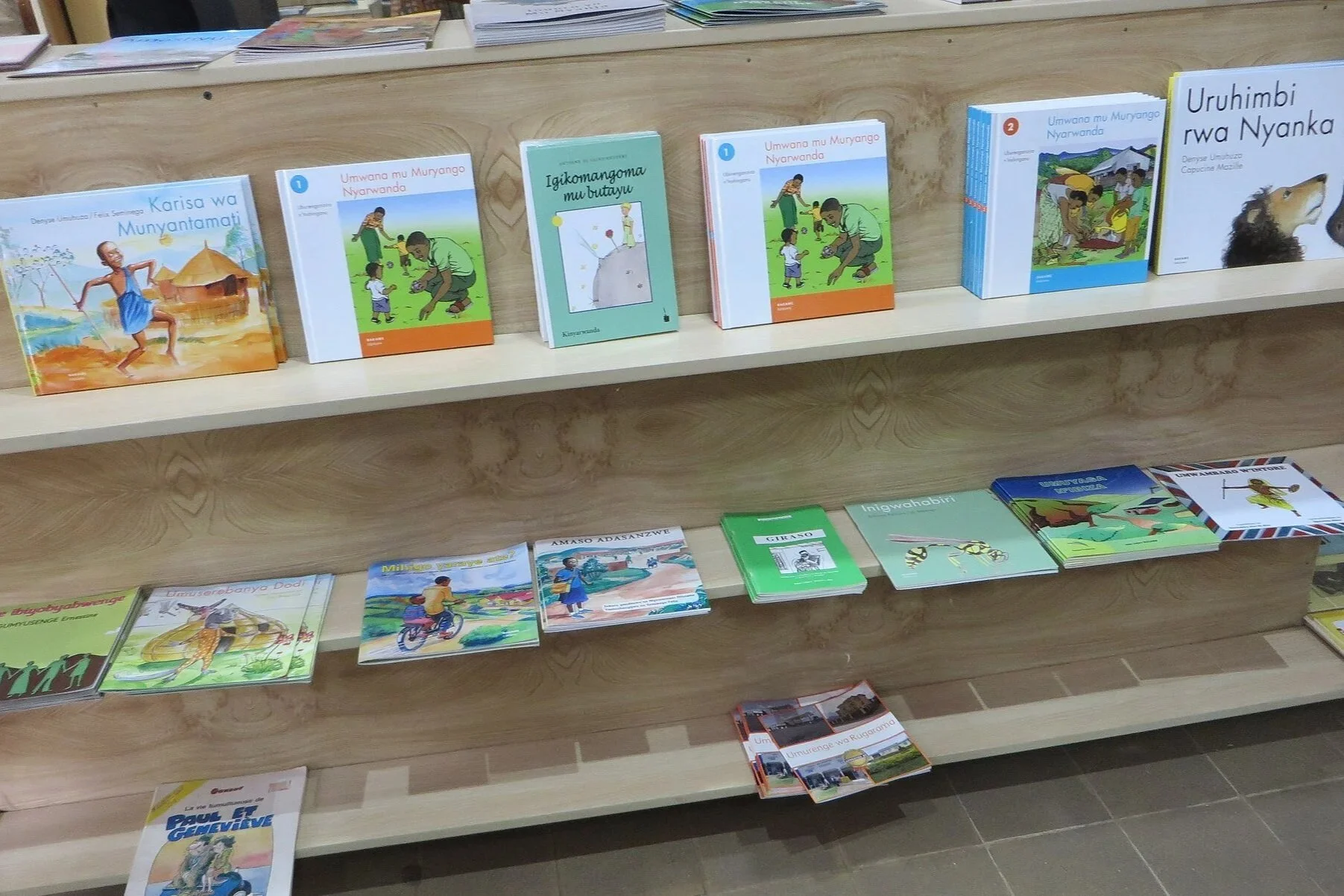
Credit: Gerard van de Bruinhorst / African Studies Centre Leiden / Wikimedia Commons, CC BY-SA 4.0
Igitabo cyanjye means “my book.” With several books, the phrase becomes ibitabo byanjye.
How to Practice Noun Classes in Everyday Life
Learn a noun with its plural and one useful phrase. That gives you something you can say, rather than a prefix you recognize only in a grammar exercise.
For example:
umubyeyi → ababyeyi → ababyeyi banjye
parent → parents → my parentsigitabo → ibitabo → ibitabo byanjye
book → books → my booksumugozi → imigozi → imigozi yanjye
rope → ropes → my ropes
Choose a few words from your surroundings. Say the singular, then the plural, and finally a short phrase. Repeat the same words over several days before adding another group.
Try Changing These Phrases
Make each phrase plural:
umubyeyi wanjye
igitabo cyanjye
umugozi wanjye
Answers: ababyeyi banjye, ibitabo byanjye, imigozi yanjye.
For heritage learners, a relative may already use these patterns without ever explaining them. Ask them to say both forms slowly, then use each in a sentence. Familiar speech becomes easier to understand when you can hear what is changing.

Credit: Roger Irakoze / Wikimedia Commons, CC BY-SA 4.0
Everyday places offer opportunities to practice naming people and objects, then moving between singular and plural forms.
FAQs
What are noun classes in Kinyarwanda?
They are grammatical groups that determine agreement patterns. Many classes also form familiar singular and plural pairs.
What is the difference between umuntu and abantu?
Umuntu means “person.” Abantu means “people.” Their shared stem remains while the initial vowel and class prefix change.
Does every umu- noun become aba-?
No. Compare umuntu → abantu with umusozi → imisozi. Similar-looking singular prefixes can belong to different classes.
Why does igitabo become ibitabo?
Igitabo belongs to a class whose plural uses ibi-. The opening igi- changes to ibi-, while -tabo remains.
Can a noun have the same singular and plural form?
Yes. Inka can mean “cow” or “cows.” Agreement can make the number clear: inka yanjye means “my cow,” while inka zanjye means “my cows.”
Conclusion
A word such as abantu can be familiar long before its structure makes sense. You may have heard it in family conversations, songs, or stories without knowing how it connects to umuntu.
Learning noun classes gives that familiarity a foundation. You begin to hear why a word changes, which other words change with it, and how to build a phrase of your own.
That progress matters beyond a grammar exercise. It helps you join conversations that once moved too quickly to follow, ask clearer questions, and understand more of the language people around you carry.
Learn Kinyarwanda Through Everyday Life With NKENNE
With NKENNE, you can learn Kinyarwanda while exploring the family conversations, stories, and everyday expressions that give its grammar meaning.
Start with one useful pair. Say it aloud, put it in a phrase, and bring it into your next conversation.
