
Essential Family & People Vocabulary in Somali
By: Chimdindu Ken-Anaukwu
Family is at the heart of Somali culture. Learning the words for mother, father, son, daughter, and other relatives helps you speak more naturally and connect with people on a deeper level.
In this NKENNE guide, you will learn the most important family and people vocabulary in Somali, plus simple gender agreement practice so you can use the words correctly in sentences.
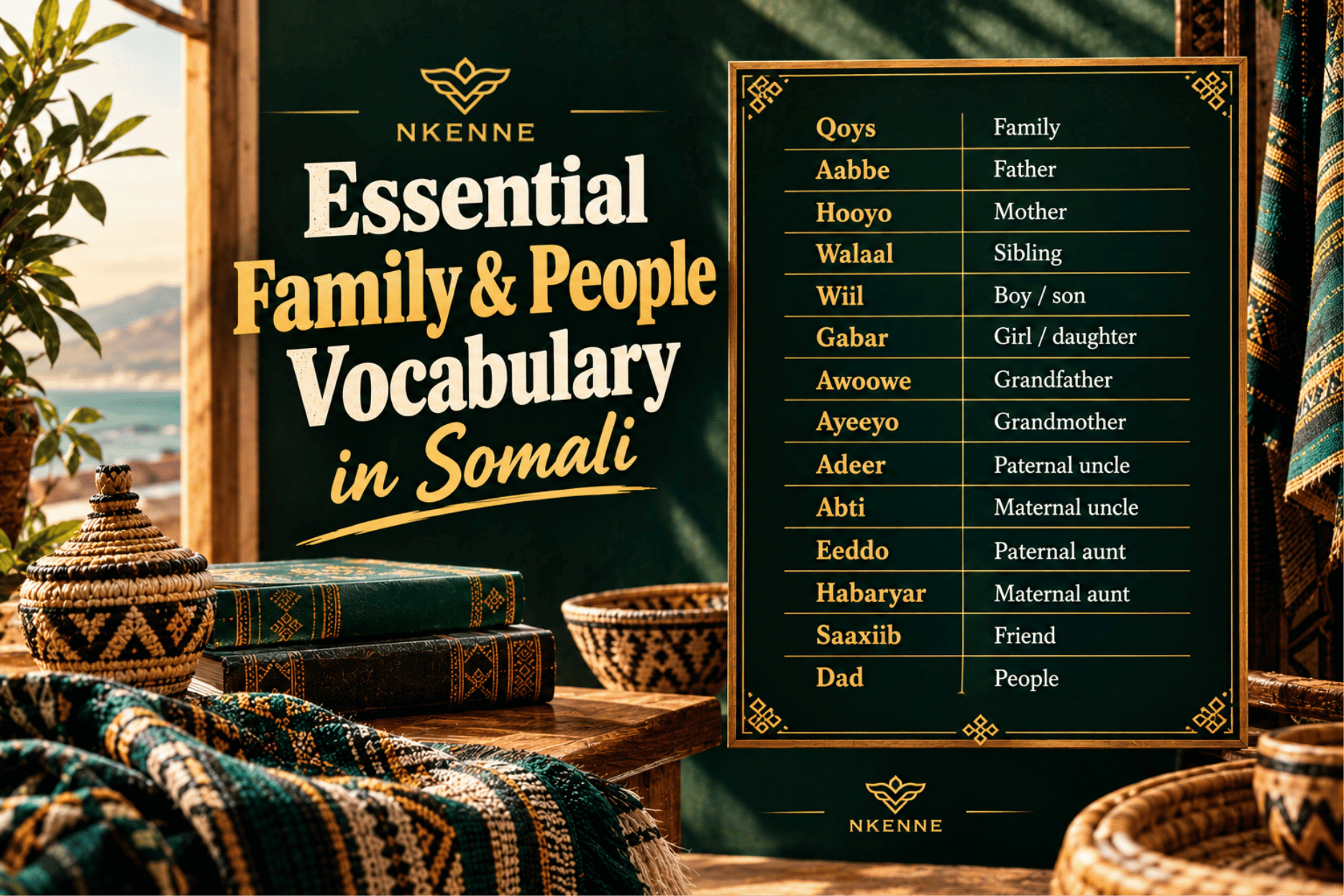
Core Family Words
These are the words you will hear and use most often:
Hooyo — Mother
Aabbe — Father
Wiil — Boy / Son
Gabar (or Gabadh) — Girl / Daughter
Walaal — Sibling (brother or sister)
Qoys — Family
Note the tone difference with some words:
Ínan (high tone on first syllable) often means boy
Inán (high tone on second syllable) often means girl
Listening carefully helps you hear the distinction.
Extended Family Vocabulary
Somali families are often large and closely connected. Here are key extended family terms:
Awoowe — Grandfather
Ayeeyo — Grandmother
Adeer — Paternal uncle (father’s brother)
Eedo — Maternal aunt (mother’s sister)
Habaryar — Paternal aunt (father’s sister)
Abti — Maternal uncle (mother’s brother)
Ina adeer — Cousin (paternal side)
Ina abti — Cousin (maternal side)
These words show the importance of both sides of the family in Somali culture.
People and General Terms
Useful everyday words for people:
Nin — Man
Naag — Woman
Qof — Person
Carruur — Children
Dhallinyaro — Youth / young people
Waayeel — Elder
Saaxiib — Friend
Macallin — Teacher (male)
Macallimad — Teacher (female)
Gender Agreement Practice
Remember that Somali nouns have gender, and this affects articles and some verbs.
Masculine examples:
Wiilka (the boy)
Aabbeha (the father)
Ninka (the man)
Feminine examples:
Gabarta (the girl)
Hooyada (the mother)
Naagta (the woman)
Quick practice:
Wiilka waa yimid. (The boy came.)
Gabartu way timid. (The girl came.)
Notice how the verb ending changes with gender in some forms.
Useful Practice Sentences
Hooyaday waa macallimad. (My mother is a teacher.)
Aabbahay waa dhakhtar. (My father is a doctor.)
Walaalkay waa wiil. (My sibling is a boy.)
Walaashay waa gabar. (My sibling is a girl.)
Qoyskayga waa weyn. (My family is big.)
Carruurtu way ciyaarayaan. (The children are playing.)
Practice saying these out loud. Focus on clear pronunciation and the correct gender forms.
FAQ
What is the difference between wiil and inan?
Both can mean boy. Wiil is the most common everyday word. Inan is also used, and tone can distinguish it from the word for girl.
How do I say “my mother” and “my father”?
Hooyaday (my mother) and Aabbahay (my father). The possessive endings change slightly with gender and number.
Is gabar the same as gabadh?
Yes. Both forms are used for girl or daughter. Gabar is very common in everyday speech.
Why is gender agreement important with family words?
Because definite articles and some verb forms change according to whether the noun is masculine or feminine. Using the correct form makes your Somali sound natural.
How can I remember extended family terms?
Group them by side of the family (paternal vs maternal) and practice with real examples from your own relatives.
Conclusion
Learning family and people vocabulary opens the door to warmer, more personal conversations in Somali. These words are used every day and carry deep cultural meaning.
Keep practicing on the NKENNE app. The next lesson will help you combine these words with simple present tense sentences so you can talk about your family with confidence. You are building a strong foundation.