
By: Yvonne Mag-usara
The man who wants to be president in Ezenwa-Ohaeto’s poem has already thought about who will cook his meals and who will drive his car. He is much less interested in what he might do for the people he wants to govern. The longer he talks, the clearer his reasons become.
Ezenwa-Ohaeto often built satire this way: give a character room to speak, then let the reader hear what he gives away. In I Wan Bi President and If to Say I Bi Soja, the familiar rhythms of Nigerian Pidgin bring us close enough to hear what a public speech would usually leave out.
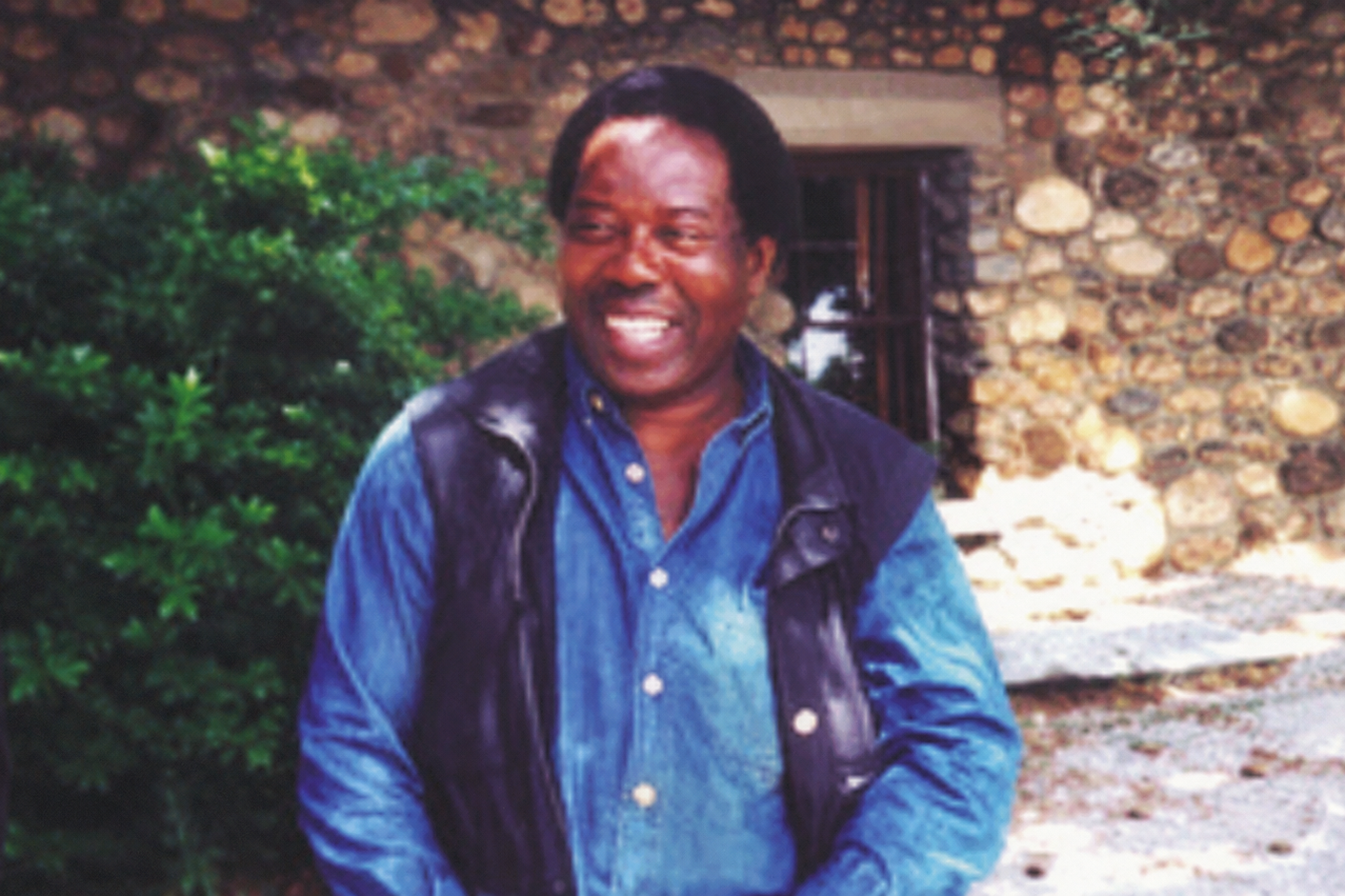
Who Was Ezenwa-Ohaeto?
Ezenwa-Ohaeto (1958–2005) was a Nigerian poet, scholar, and biographer. He studied under Chinua Achebe at the University of Nigeria, Nsukka, and later wrote Chinua Achebe: A Biography, published in 1997. He taught English at Nnamdi Azikiwe University in Awka and was a joint winner of the Nigeria Prize for Literature in 2005.
He was among the early Nigerian poets to publish in Pidgin, building on work by writers such as Frank Aig-Imoukhuede. His own choices differed from book to book: I Wan Bi President (1988) included poems in formal English and Nigerian Pidgin, while If to Say I Bi Soja (1998) was written throughout in Pidgin.
He also read his poems aloud to audiences in Nigeria. In the introduction to I Wan Bi President, he recalled how strongly listeners responded to the Pidgin poems. That detail matters because so much of his satire depends on timing: what a speaker repeats, what he says too casually, and what he reveals before he realizes he has said too much.
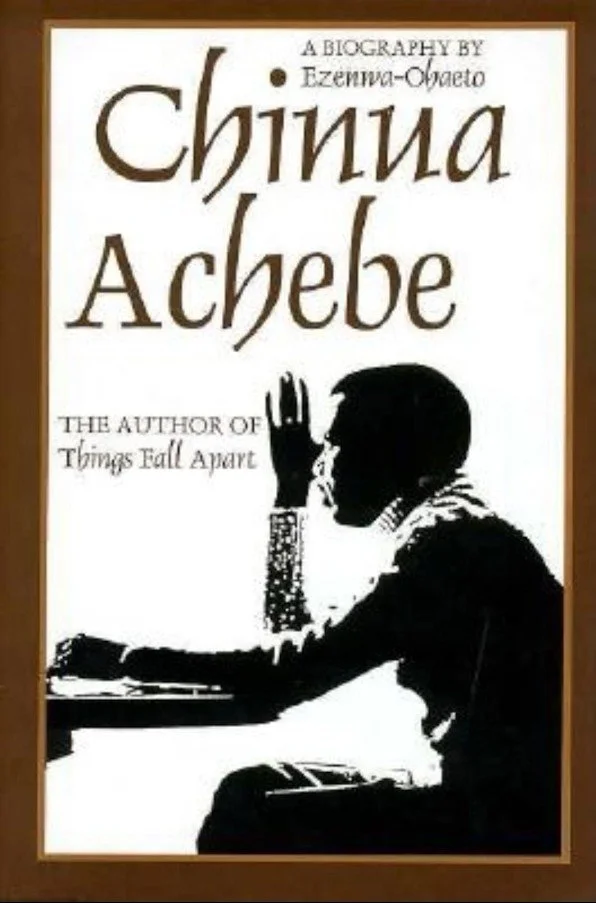
Credit: Indiana University Press, 1997. iupress.org
Ezenwa-Ohaeto drew on interviews and research to write the biography of his former teacher, Chinua Achebe.
How "I Wan Bi President" Turns Ambition Into Satire
I Wan Bi President means “I want to be president.” At first, it sounds like a straightforward declaration of ambition. But the speaker keeps returning to the perks: meals prepared for him, a government driver, and impressive titles. By the time he imagines how others will address him, it is clear that he has thought harder about being admired than about governing.
The repetition does much of the work. Each return to the title phrase gives the speaker another chance to explain himself, and each explanation makes him less convincing. You start to hear the refrain differently even though the words stay the same.
Pidgin also lets the poem move easily between everyday wants and grand official language. A government car and the title “Commander-in-Chief” can belong to the same daydream. Hearing them together makes the office sound like something the speaker wants to possess. The joke is on the man who mistakes public responsibility for a collection of personal privileges.
What "If to Say I Bi Soja" Says About Military Rule
The title means “If I were a soldier.” The poem begins with a man taking wine to a woman he hopes to marry. She tells him she would marry him if he were a soldier. From there, he imagines staging a coup and giving government posts to his brother and a friend. What begins as a conversation about marriage becomes a fantasy about who gets to run the country.
The collection appeared in 1998, as Nigeria approached the end of a long period of military rule. The country returned to civilian government in 1999. That history gives the poem’s escalation its force: the character can imagine a uniform improving his marriage prospects and putting government jobs within reach of his family. Both ideas follow the same assumption that power is something you use for your own people.
Read alongside I Wan Bi President, the poem asks a broader question: how different would these men be from the leaders they want to replace?
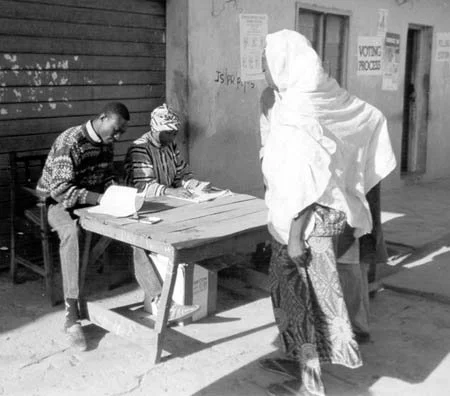
Credit: E. Happell / USAID Photo Library, via Wikimedia Commons.
A polling station during Nigeria’s 1999 elections, part of the country’s transition from military to civilian government.
How to Read Ezenwa-Ohaeto’s Pidgin Poetry Aloud
Start with the titles. They give you two different ways to hear a character’s ambition:
I wan bi president → “I want to be president.” Wan introduces what the speaker wants.
If to say I bi soja → “If I were a soldier.” If to say opens an imagined situation, and soja means “soldier.”
I go call you tomorrow → “I’ll call you tomorrow.” In this practice sentence, go points to a future action. In an imagined situation, it can also carry the sense of “would.”
Try saying I wan bi president once as a quiet wish and once as a boast. Then imagine the same speaker repeating it after listing everything he wants from the job. The words still mean “I want to be president,” but the listener now has a different idea of the person saying them.
If you grew up hearing Pidgin before you saw much of it in print, reading aloud can help you recognize a phrase you already know by ear. If you are learning it for the first time, ask a speaker where they would pause and which word they would stress. Their delivery may tell you as much about the joke as the translation does.
For another approach to Nigerian Pidgin literature, read NKENNE’s profile of Eriata Oribhabor and his work in poetry and publishing.

Credit: The Nation
Ngozi Ezenwa-Ohaeto opened the resource centre in Awka in 2011, drawing on the library her husband left behind.Exterior of the Professor Ezenwa-Ohaeto Resource Centre in Awka, with its sign above the ground-floor entrances.
FAQs
Who was Ezenwa-Ohaeto?
He was a Nigerian poet, literary scholar, and biographer known for his Nigerian Pidgin poetry and his 1997 biography of Chinua Achebe.
What is I Wan Bi President about?
The title poem follows a man who dreams of becoming president for the comforts, status, and favors the office could bring him. It satirizes the idea that public office exists for private gain.
What does If to Say I Bi Soja mean?
It means “If I were a soldier.” The title poem uses one man’s fantasy about what he could do in uniform to criticize the abuse of power under military rule.
Was Ezenwa-Ohaeto the first poet to write in Nigerian Pidgin?
No. Frank Aig-Imoukhuede published Pidgin poems in Pidgin Stew and Sufferhead in 1982. Ezenwa-Ohaeto was part of a wider literary tradition and used Pidgin throughout his 1998 collection.
Did Ezenwa-Ohaeto write only in Nigerian Pidgin?
No. I Wan Bi President brought together poems in formal English and Pidgin. He also wrote literary criticism and the biography of Chinua Achebe.
Conclusion
There is a moment in Ezenwa-Ohaeto’s satire when the joke stops being about one man. The would-be president is funny when he pictures his driver and his titles. Then you realize you know exactly what kind of leader he would become, and why people might recognize him.
That recognition is part of what the poems preserve. Decades later, a reader can hear how one Nigerian writer made sense of his political moment through the voices, jokes, and turns of phrase familiar to his audience. If Pidgin is a language you first heard at home, his poems give you a reason to listen again. A familiar way of telling a story can carry an argument you missed the first time.
Learn Nigerian Pidgin Through Culture With NKENNE
With NKENNE, you can learn Nigerian Pidgin through everyday expressions and the cultural contexts that give them meaning. Start with a phrase you’ve heard someone say. Ask when they use it, how they say it, and what they expect the other person to hear. That kind of listening will serve you in a conversation and on the next page of a poem.
