
Expressing Likes, Dislikes, and Opinions in Amharic: Make Conversations Flow
By: Chimdindu Ken-Anaukwu
Great conversations move beyond greetings and names. Once you can say what you like and what you don’t, the talk becomes natural and personal. In Amharic, expressing preferences is simple once you know a few key phrases. This guide teaches you how to say “I like it a lot,” “I don’t like,” and how to talk about food, music, and other opinions with confidence. These tools help you connect faster with Ethiopians and keep the conversation flowing.
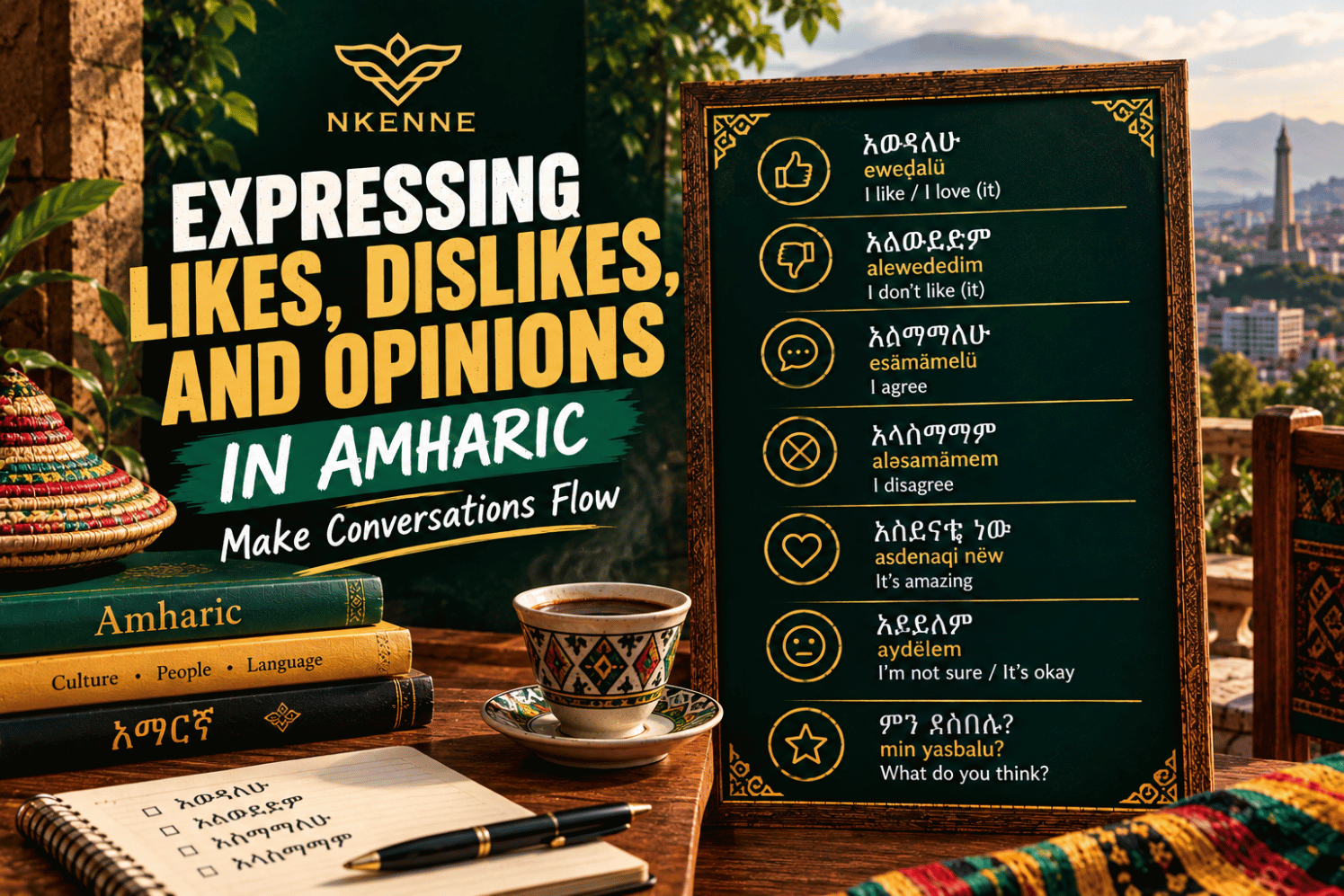
Why Expressing Preferences Matters
Sharing likes and dislikes shows personality and invites others to share theirs. In Ethiopian culture, conversations often revolve around food, music, family, and daily life.
Being able to say what you enjoy creates instant common ground. It also helps you navigate invitations, restaurant choices, and social gatherings with ease.
“I Like It”: Wedihalehu and Stronger Versions
The basic phrase is wedihalehu (I like it).
Pronunciation: weh-dee-hah-leh-hu
To make it stronger and more natural:
Betam wedihalehu — I like it a lot
Betam des yilal — It makes me very happy / I really enjoy it
These work for food, music, places, or activities.
“I Don’t Like”: Alwedim and Soft Alternatives
The direct way is alwedim (I don’t like it).
Pronunciation: ahl-weh-dim
Because Ethiopians often prefer soft communication, many people soften the refusal:
Betam alwedim — I don’t like it much
Tiru aydelem — It’s not good (for me)
Alfelgim — I don’t want it
A gentle tone keeps the atmosphere friendly.
Talking About Food Preferences
Food is one of the easiest topics for practice.
Useful phrases:
Injera betam wedihalehu — I like injera a lot
Doro wat betam des yilal — I really enjoy doro wat
Spicy alwedim — I don’t like spicy food
Shiro wedihalehu — I like shiro
You can also say:
Yih betam tiru new — This is very good
Yih alwedim — I don’t like this
Talking About Music and Entertainment
Music opens fun conversations.
Examples:
Teddy Afro betam wedihalehu — I like Teddy Afro a lot
Traditional music des yilal — Traditional music makes me happy
Modern music alwedim — I don’t like modern music
Azmari music betam tiru new — Azmari music is excellent
These phrases help you bond over shared cultural favorites.
Asking Others What They Like
Keep the conversation two-way.
Useful questions:
Mindin wedihaleh? (to a man) — What do you like?
Mindin wedihalesh? (to a woman) — What do you like?
Yih wedihaleh? — Do you like this?
Food mindin des yilal? — What food do you enjoy?
Listen carefully and respond with your own preference.
Real-Life Dialogue Examples
At a restaurant Friend: Yih doro wat new. Titchal?
You: Aw, betam wedihalehu!
Friend: Spicy new.
You: Betam des yilal.
Talking about music You: Teddy Afro music wedihaleh?
Friend: Aw, betam. Ante?
You: Ene also betam wedihalehu.
Declining politely Host: Kitfo titchal?
You: Ameseginalehu, gin alwedim. Misir wat betam wedihalehu.
Cultural Tips for Polite Opinions
Ethiopians often avoid very strong negative statements. Softening your dislike keeps the mood positive.
Complimenting food or music is highly appreciated. Even a simple “betam tiru new” shows respect for the culture.
When someone offers food, a polite decline with gratitude works better than a blunt no.
Common Mistakes to Avoid
Do not use only the negative form without softening it. Add a smile or a positive alternative.
Do not forget gender forms when asking questions (wedihaleh vs wedihalesh).
Avoid translating word-for-word from English. Amharic preference phrases are short and direct once you know the patterns.
FAQs
How do I say “I like it a lot” in Amharic?
Use betam wedihalehu.
How do I say “I don’t like it”?
The direct phrase is alwedim. Soften it when needed for politeness.
Can these phrases work for any topic?
Yes. They work for food, music, places, activities, and more.
How do I ask someone what they like?
Say mindin wedihaleh? to a man or mindin wedihalesh? to a woman.
Is it okay to say I don’t like spicy food?
Yes. Many people do. Just say it politely: “Spicy alwedim” or “spicy betam alwedim.”
What is a natural way to praise something?
Betam tiru new or betam des yilal both sound warm and natural.
Conclusion
Being able to express likes, dislikes, and opinions turns basic Amharic into real conversation. With phrases like “betam wedihalehu” and “alwedim,” you can talk about food, music, and daily life in a natural way. These simple tools help you connect, share personality, and keep the dialogue flowing.
Practice them in everyday situations and watch how people respond with interest and warmth.
Ready to move from basic phrases to fuller conversations? NKENNE’s Amharic lessons and cultural guides give you the next steps for confident, natural speech. Start building real connections today.