
By: Chimdindu Ken-Anaukwu
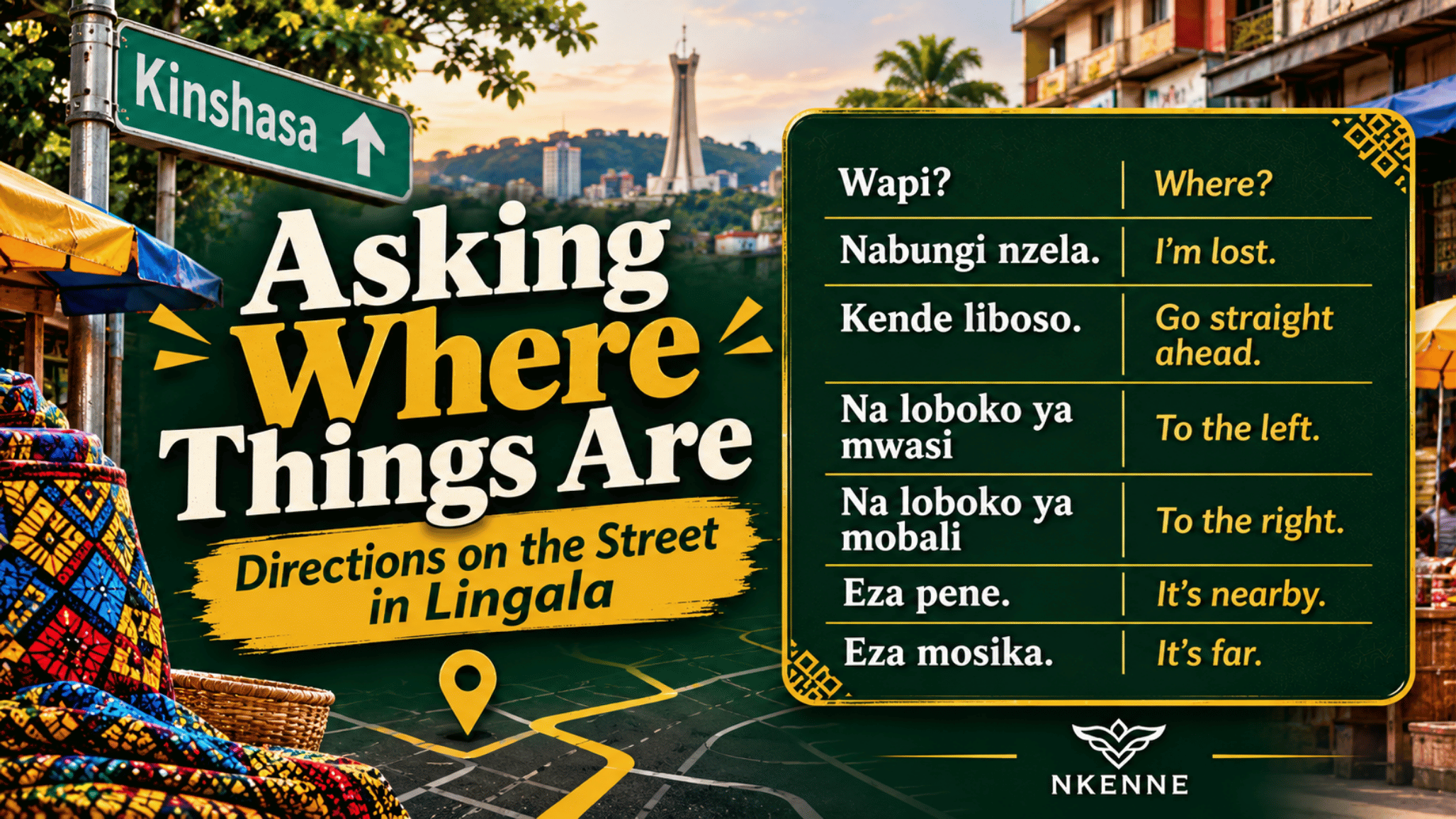
Getting around Kinshasa or any Lingala-speaking area becomes much easier once you can ask for directions. A simple “Wapi?” can save you time, help you find a house, market, or bus stop, and open friendly conversations with people on the street.
This practical guide teaches you the key phrases for asking where things are, how to understand basic answers, and how to use them in real life. You will learn “Wapi?”, “Ndako ezali wapi?”, “Nakei wapi?”, and useful direction words like “mboka” and “nzila”.
Why Asking for Directions Matters in Daily Life
In Congolese cities and towns, streets can be busy and landmarks are often more useful than exact addresses. People are generally willing to help if you ask politely. Knowing a few Lingala phrases shows respect and makes interactions smoother.
Whether you are looking for a friend’s house, a market, a church, or simply trying to find your way, these basics turn confusion into clear guidance.
The Essential Question Word: Wapi?
“Wapi?” is the most important word for directions.
Wapi? means “Where?”
Pronunciation: WAH-pee
You can use it alone or attach it to a place or object. It is short, clear, and works in almost any situation.
Example: Point to something and ask “Wapi?” if you need its location.
Asking Where a Place Is
To ask specifically about a location, combine “ezali” (is) with “wapi”.
Ndako ezali wapi?
Meaning: Where is the house?
Pronunciation: n-DAH-koh eh-ZAH-lee WAH-pee?
You can replace “ndako” (house) with other words:
Market: “Zando ezali wapi?”
Church: “Eklezia ezali wapi?”
School: “Ekele ezali wapi?”
This structure is flexible and widely understood.
Asking Where You Are Going
Sometimes you need to confirm your own direction or tell someone where you are headed.
Nakei wapi?
Meaning: Where am I going? / Where are you going? (context decides)
Pronunciation: nah-KAY-ee WAH-pee?
In conversation it often means “Where are you going?” when speaking to someone else. To talk about yourself more clearly you can say “Nakei na…” followed by the place.
Useful Direction Words: Mboka, Nzila, and More
These simple words help you understand and give directions:
Mboka – town, village, or hometown
Nzila – road, path, or way
Liboso – in front / ahead
Nsima – behind
Mobali or ya mobali – to the right (or “droite” is also common)
Ya mwasi or left side references are often mixed with French “gauche”
People frequently point while speaking, so combine the words with gestures for clarity.
Simple Replies You Will Hear
Common answers include:
“Ezali liboso” – It is ahead
“Kende na nzila oyo” – Go on this road
“Na mboka” – In town / to the town
“Ezali pene” – It is nearby
“Kende mbala moko” – Go straight (or similar simple instructions)
If the person adds more detail, listen for “nzila” and follow their pointing hand.
Real-Life Street Scenarios
Here is how these phrases work in practice:
Looking for a house:
“Mbote. Ndako ya Jean ezali wapi?”
(Hello. Where is Jean’s house?)
Asking a passer-by:
“Ndeko, zando ezali wapi?”
(Friend, where is the market?)
Confirming your route:
“Nakei na mboka. Nzila oyo ezali malamu?”
(I am going to town. Is this the right road?)
People usually answer helpfully and may even walk a short distance with you to show the way.
FAQs
What is the simplest way to ask “where” in Lingala?
Just say “Wapi?” It works for most situations when combined with a gesture or the name of the place.
How do you say “Where is the house?”
“Ndako ezali wapi?”
What does “Nakei wapi?” mean?
It means “Where am I going?” or “Where are you going?” depending on context.
What is the difference between “mboka” and “nzila”?
“Mboka” means town or village. “Nzila” means road or path.
Can I mix Lingala with French when asking for directions?
Yes. Many people do. Starting with Lingala phrases still shows effort and is appreciated.
How do people usually give directions?
They often point, use simple words like “liboso” (ahead), and may walk with you a short way.
Wrapping Up: Navigate with Confidence
Asking where things are in Lingala starts with “Wapi?” and builds from there. With phrases like “Ndako ezali wapi?”, “Nakei wapi?”, and direction words such as “mboka” and “nzila”, you can move around more confidently and connect with people on the street.
Practice these questions out loud. The next time you need directions, you will be ready.
Ready to master more practical Lingala for real life? Visit NKENNE for clear lessons, cultural insights, and tools that help you speak with confidence. Where will you ask “wapi” first?