
Why Cameroonians Switch Languages Mid-Sentence Without Apology
By: Chimdindu Ken-Anaukwu
If you’ve ever listened to Cameroonians talk, you may have thought you missed a memo. One sentence starts in French, bends into English, flirts with Pidgin, and lands in a local language; without warning, without apology. To outsiders, it sounds chaotic. To Cameroonians, it’s simply normal life. This blog unpacks why switching languages mid-sentence isn’t confusion; it’s competence, culture, and control.
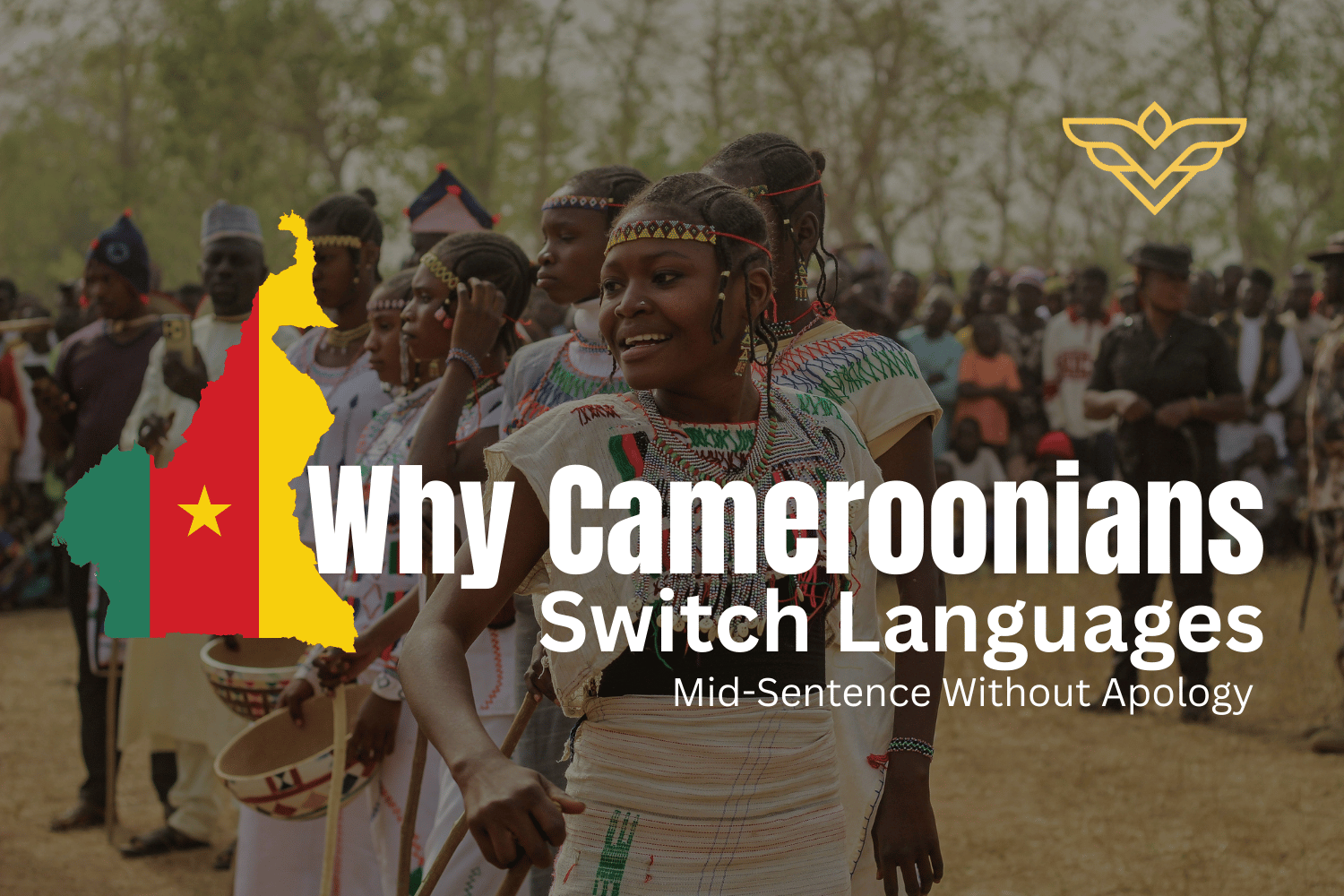
Cameroon: A Country Built on Languages
Cameroon is not bilingual by accident. It is multilingual by necessity.
Over 250 indigenous languages
French and English as official languages
Cameroon Pidgin English as a social bridge
From childhood, Cameroonians learn that language is situational, not sacred. You speak what works, when it works.
Code-Switching Is Not Showing Off, It’s Precision
Cameroonians don’t switch languages to impress. They switch because one language often says something better than another.
French for authority and formality
English for clarity and emphasis
Pidgin for humor, closeness, and speed
Local languages for emotion, respect, or secrecy
One sentence can carry all four because each part serves a purpose.
Example You’ll Hear on Any Street
“Le gars-là, he no serious du tout, na wah oh!”
Translation:
Le gars-là (That guy – French)
he no serious (he’s not serious – Pidgin)
du tout (at all – French)
na wah (this is unbelievable – Pidgin)
Every switch adds flavor and accuracy.
Language as Social Intelligence
In Cameroon, language choice signals:
Who you’re talking to
Your relationship
Your intention
Speaking only one language when others are available can feel… rigid. Switching shows adaptability; a prized social skill.
No Apology Because There’s No Mistake
Cameroonians don’t apologize for switching because:
It’s not considered incorrect
Everyone around understands
Communication succeeded
Silence or misunderstanding would be failure, not switching.
Pidgin: The Glue That Holds It Together
Pidgin is where hierarchy relaxes.
A boss may speak French in the office, but Pidgin outside means:
“We are human first.”
That’s why Pidgin slips into sentences, it softens power.
Colonial History Made It Necessary
French and English were imposed. Local languages survived. Pidgin emerged.
Switching between them became a tool of survival, not rebellion.
Cameroonians learned early: use what you have.
Why This Confuses Outsiders
Western language education teaches:
One language at a time
Clear boundaries
Cameroonian culture teaches:
Meaning over purity
Flow over rules
Different logic. Same intelligence.
What This Means for Learners of African French
If you want to understand African French, especially Cameroonian French, you must:
Stop chasing perfection
Start chasing context
Accept that fluency includes flexibility
This is where NKENNE teaches language the way it’s actually lived.
FAQs
Is code-switching bad French?
No. It’s effective communication.
Do Cameroonians know grammar rules?
Yes. They choose when to bend them.
Can learners do this too?
Yes, once you understand context.
Closing Thought
Cameroonians don’t switch languages because they’re confused.
They switch because they’re at home in all of them.
And when language feels like home, you don’t apologize; you speak.
Learn African French the way Africans actually use it.
That’s the NKENNE way.