
Timkat: Ethiopia’s Wildest Water Festival That Feels Like a Holy Carnival
By: Chimdindu Ken-Anaukwu
Imagine millions in white robes filling the streets at dawn, drums pounding, ululations rising, priests in golden vestments parading replicas of the Ark, and then chaos of joy as people plunge into blessed waters. This isn’t a movie scene; it’s Timkat, Ethiopia’s celebration of Jesus’ baptism. Far from quiet reflection, it explodes with color, sound, and community spirit. In this guide, you’ll see why Timkat stands as one of the world’s most electric religious festivals and how it still thrives in modern Ethiopia.
The Deep Meaning Behind Timkat
Timkat marks Epiphany in the Ethiopian Orthodox Tewahedo Church, commemorating Jesus’ baptism by John in the Jordan River.
It falls on January 19 (or 20 in leap years) per the Ge'ez calendar, about 13 days after the Gregorian January 6 Epiphany.
The festival reenacts that biblical moment on a massive scale. It’s not just remembrance; it renews faith through water, symbolizing purification and spiritual rebirth.
For Ethiopians, Timkat blends ancient Christian roots with national pride, drawing pilgrims nationwide.
How Timkat Unfolds: From Ketera Eve to the Big Day
Timkat spans three days, starting with Ketera on the eve.
Ketera: Tabots (holy replicas of the Ark of the Covenant) leave churches in procession to nearby rivers, pools, or baths. Choirs sing hymns; priests dance with prayer sticks and sistra; drums, bells, and trumpets fill the air. Tents shelter the Tabots overnight.
Timkat Day: Early morning blessings at the water site. Priests sprinkle holy water; many immerse for renewal.
Return Procession: Tabots head back to churches amid continued singing and dancing.
The energy builds through the night, with little sleep for participants.
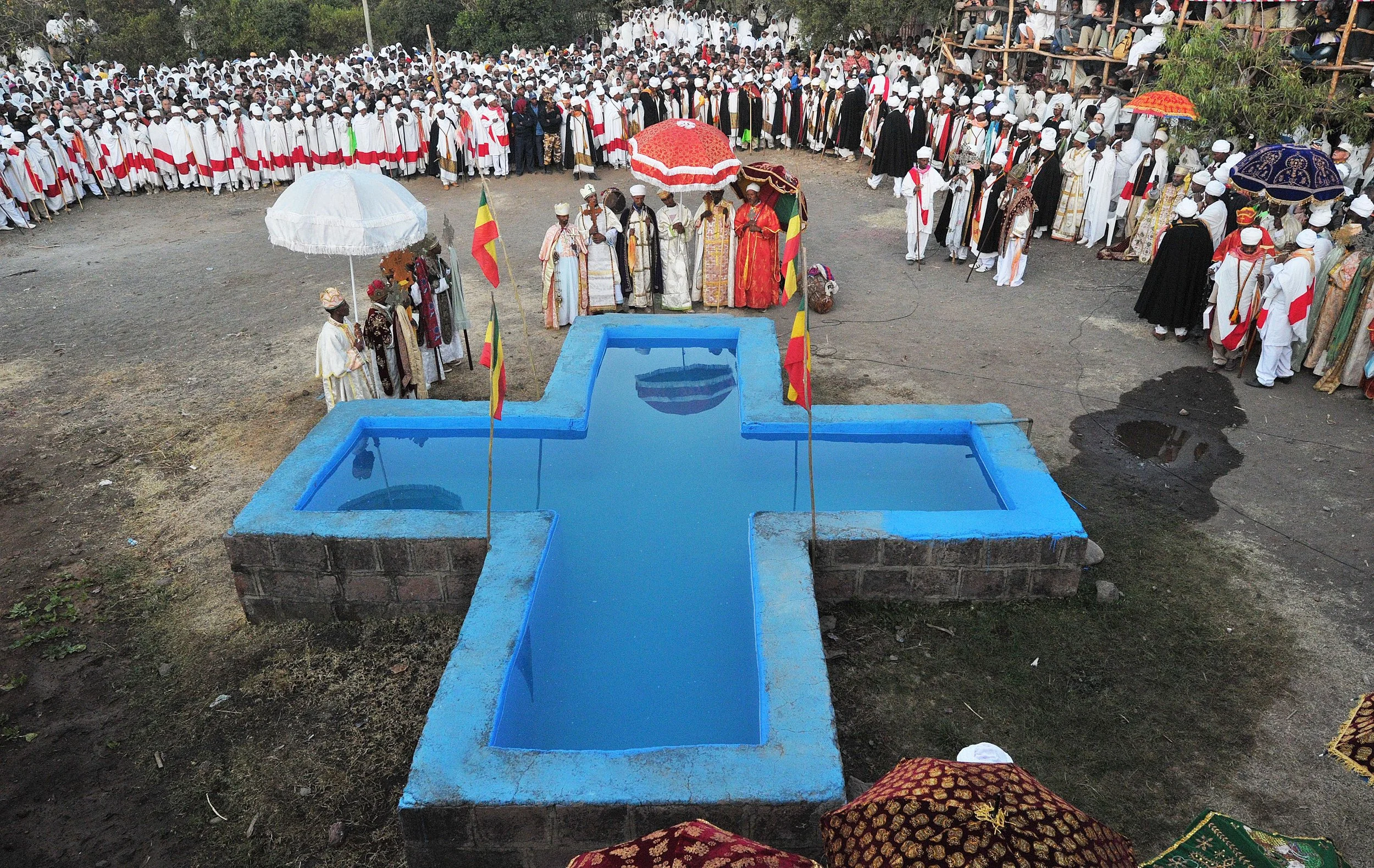
Crowds gather around sacred pools during the blessing.
Priests and the Tabot: Carrying Sacred Replicas
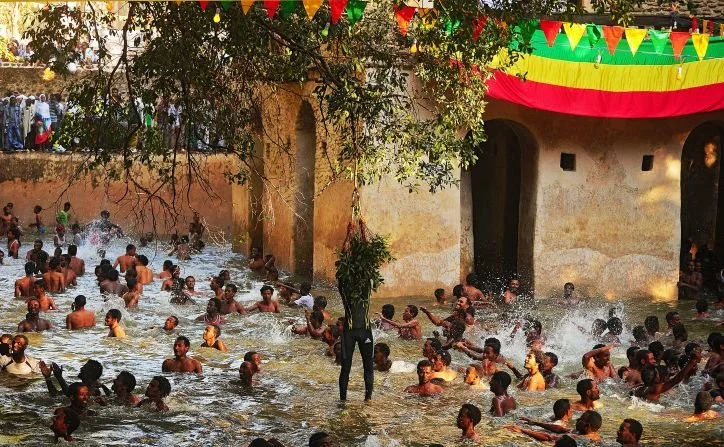
The Tabot, a consecrated replica of the Ark, remains central. Covered in rich cloths, it’s carried on priests’ heads under ornate umbrellas.
High priests in elaborate robes lead, flanked by clergy with crosses, incense, and staffs. The procession feels regal yet joyous.
In places like Gondar, the Fasilides Bath becomes the focal point, echoing historic royal grandeur.
Priests parade the Tabot amid colorful crowds.
The Holy Water Blessing and Mass Immersions
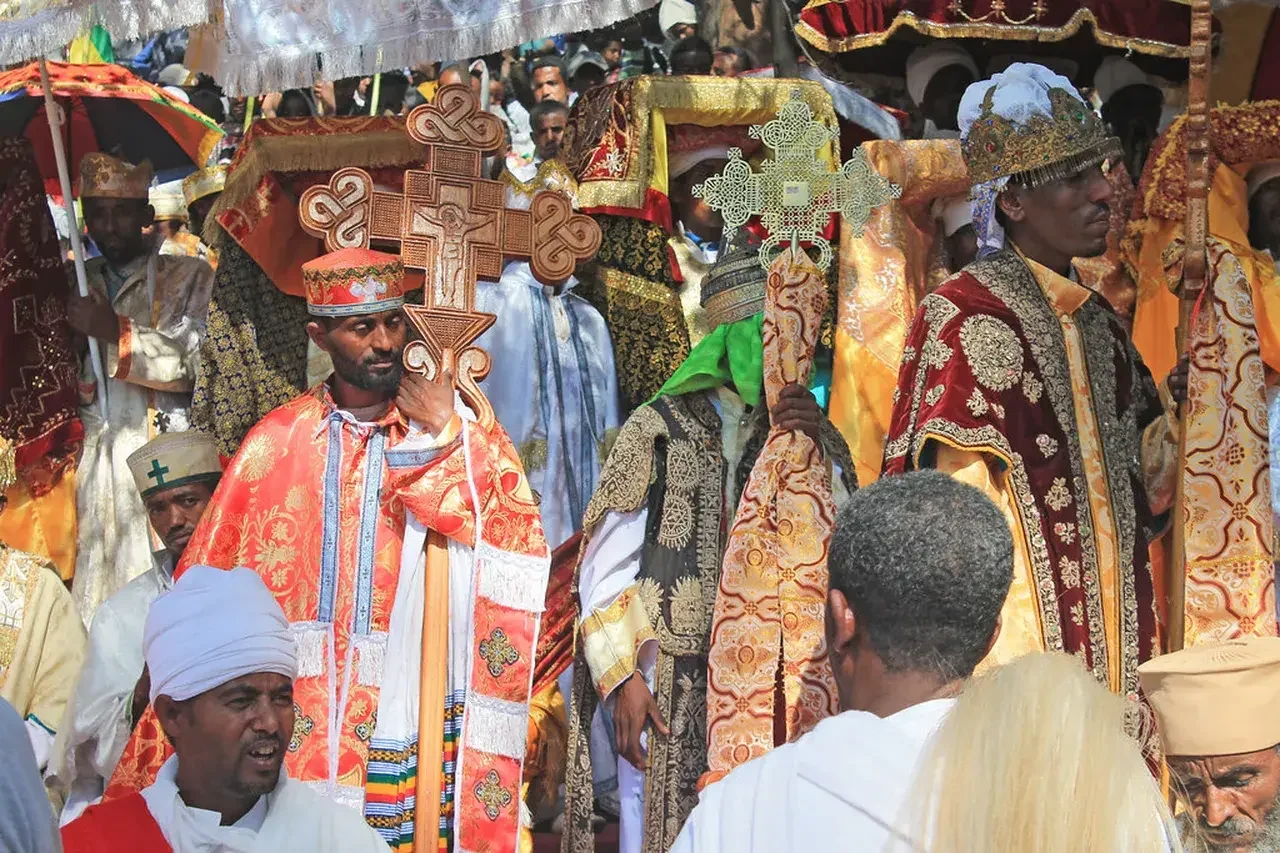
The climax: priests bless the water at dawn. Sprinkling turns to splashing; thousands dive in – men, women, and children – laughing, praying, and renewing.
In Gondar’s Fasilides Pool or Lalibela’s sites, scenes turn euphoric with splashing and cheers.
It’s spiritual yet wildly communal, washing away the old year.
People immerse in blessed waters during Timkat.
Best Places to Experience Timkat Today
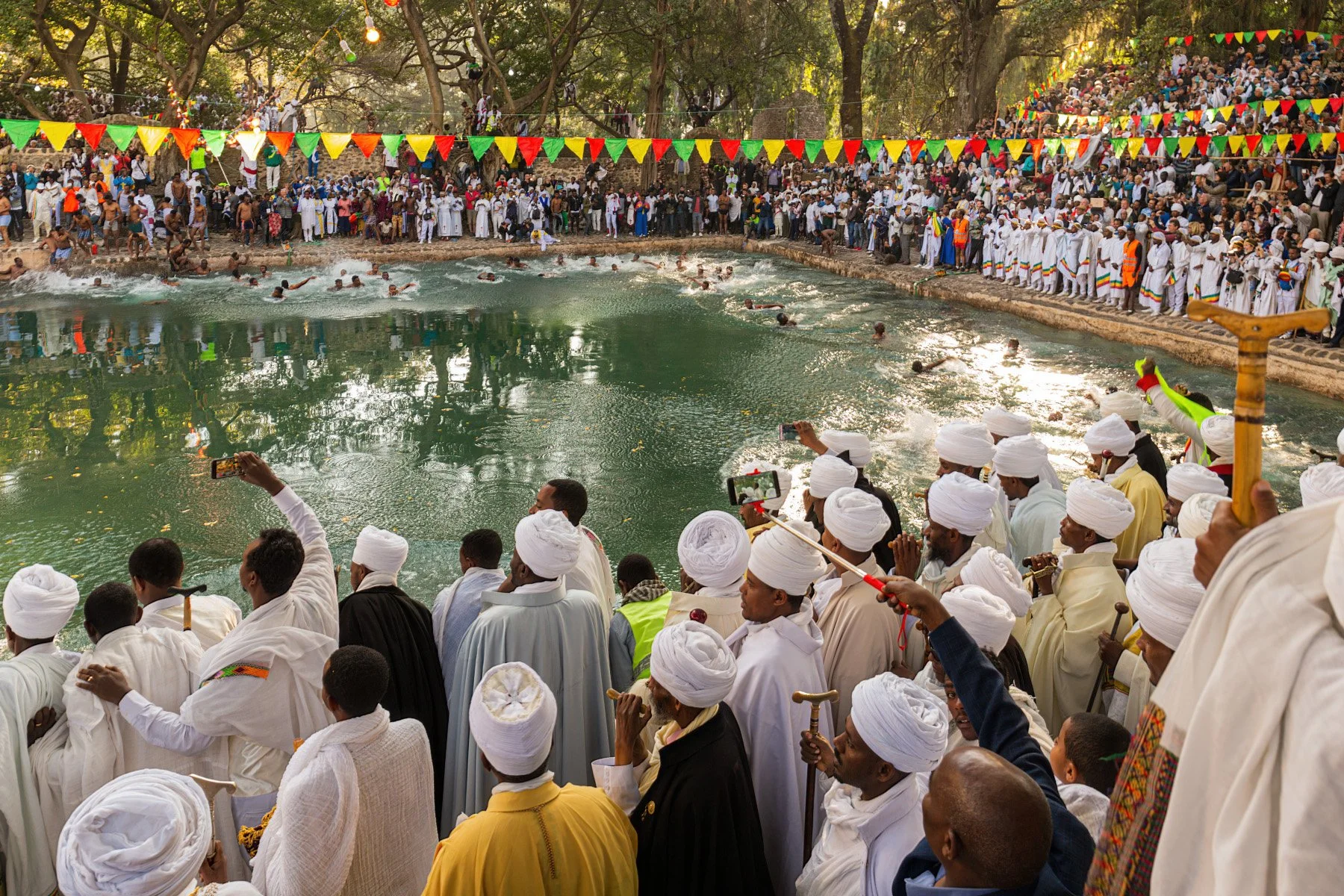
Gondar: Fasilides Bath hosts Ethiopia’s most famous celebration — dramatic, historic, packed.
Addis Ababa: Jan Meda draws huge urban crowds; processions wind through streets.
Lalibela: Rock-hewn churches add ancient mystique to the rituals.
Smaller towns offer intimate, authentic vibes without the crowds.
Recent celebrations show massive turnouts in Addis and Gondar.
Music, Dance, and White Robes: The Visual Explosion
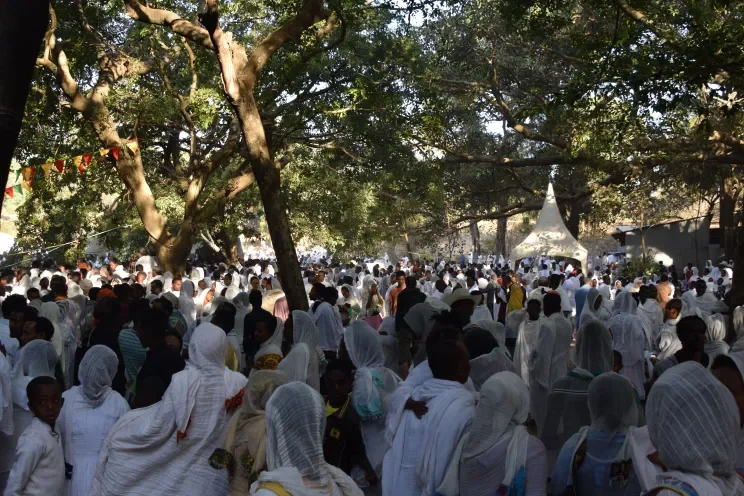
Participants wear netela or shamma (white cotton wraps), symbolizing purity.
Drums beat rhythms; young men leap in eskista dances; women ululate; everyone sings hymns.
The air carries frankincense and joy, a holy carnival in motion.
White-robed crowds dance and sing in the streets.
Modern Timkat: Unity, Tourism, and UNESCO Recognition
Timkat remains deeply authentic while drawing global visitors.
UNESCO inscribed Ethiopian Epiphany in 2019 as Intangible Cultural Heritage, honoring its living traditions.
It fosters national unity across regions and strengthens cultural ties in diaspora communities.
In 2026 celebrations, millions joined, blending faith with vibrant modern expressions.
Common Questions About Attending
Dress modestly in light clothing (white if possible). Bring sunscreen, water, and respect sacred spaces.
Arrive early for prime views; photography is common but avoid disrupting rituals.
FAQs
When is Timkat celebrated?
January 19 (or 20 in leap years) on the Gregorian calendar, following the Ethiopian Orthodox tradition.
What does Timkat mean in Amharic?
It translates to “baptism,” directly referencing Jesus’ baptism in the Jordan.
Is Timkat only in big cities?
No, celebrated nationwide, though Gondar, Addis Ababa, and Lalibela draw the largest crowds.
Can non-Orthodox join the immersions?
Many observe respectfully; full immersion is for the faithful, but blessings reach everyone.
Why do people wear white during Timkat?
White garments symbolize purity and renewal tied to the baptism theme.
How has Timkat changed in modern times?
It stays traditional yet incorporates phones for selfies and wider tourism while preserving core rituals.
Conclusion
Timkat captures Ethiopia’s soul: ancient faith meeting unstoppable joy. Priests with Tabots, dancing streets, holy water flying; it’s a living testament to community, heritage, and renewal. Experiencing it leaves you changed, connected to something timeless.
Want to go deeper into Ethiopian traditions? NKENNE’s guides and Amharic lessons open doors to more cultural layers. Your exploration continues here.