
Swahili Doors: Why These Carved Masterpieces Are Architectural Love Letters
By: Chimdindu Ken-Anaukwu
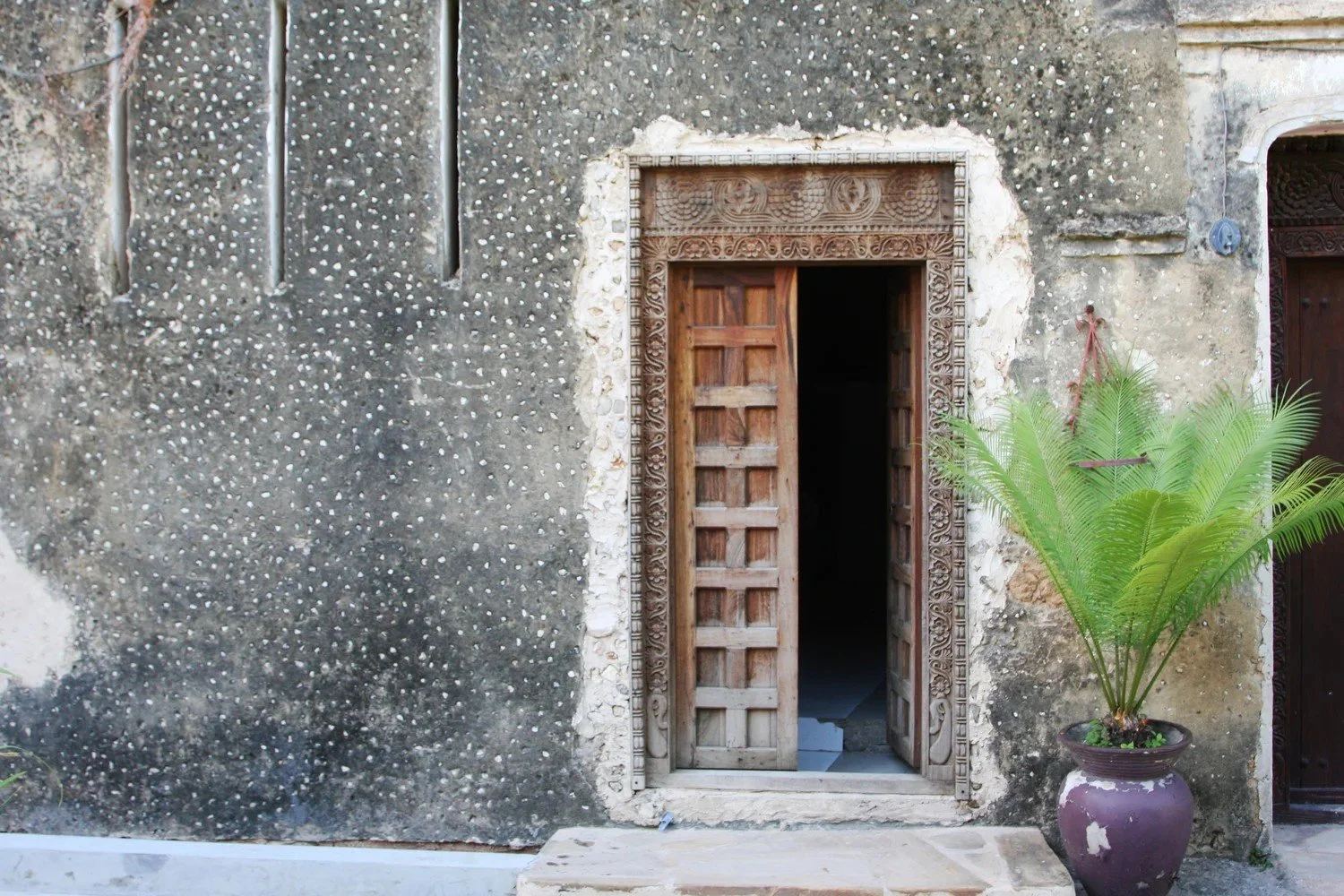
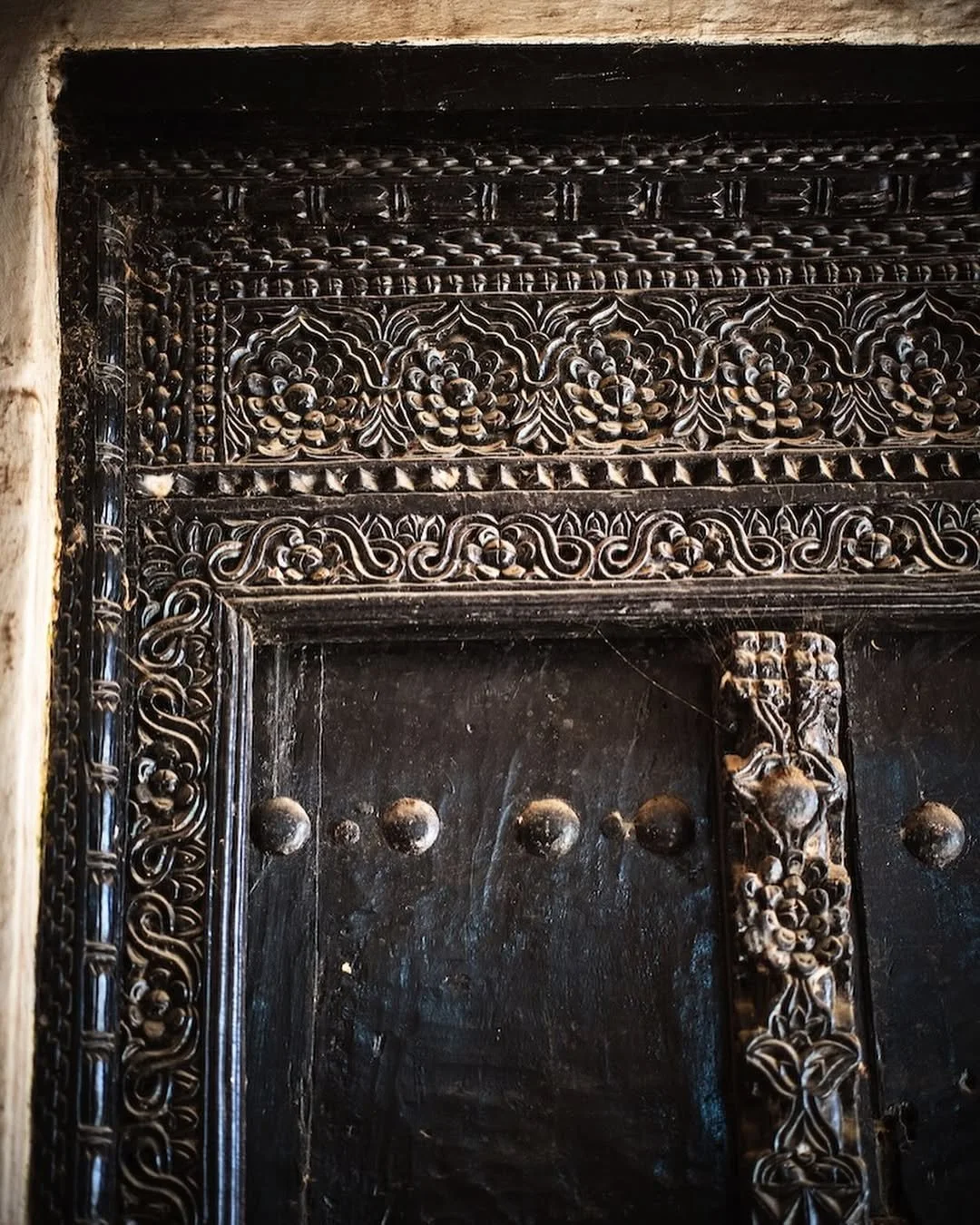
Walk through the narrow streets of Stone Town in Zanzibar or the ancient alleys of Lamu, and you will notice something striking. Almost every house has a massive, beautifully carved wooden door. These are not ordinary entrances. Swahili doors are works of art, symbols of status, protection, and cultural pride.
With their intricate geometric patterns and deep historical roots, these doors tell stories without using a single word. In this post, you will discover why Swahili doors are considered architectural love letters, what their designs really mean, and why they continue to be handcrafted with care today.
The Story Behind Swahili Doors
Swahili doors have a long and rich history. They emerged between the 15th and 19th centuries during the height of Indian Ocean trade. As merchants from Arabia, Persia, and India settled along the East African coast, they brought new ideas about architecture and craftsmanship.
Local Swahili builders combined these influences with their own Bantu woodworking skills. The result was a unique style of heavy, double-sided wooden doors that became a signature feature of Swahili architecture in Zanzibar, Lamu, Mombasa, and other coastal towns.
Why Geometric Patterns Only?
One of the most noticeable features of Swahili doors is the complete absence of human or animal figures. This is due to strong Islamic influence. In many interpretations of Islamic art, living beings are not depicted in sacred or important spaces to avoid idolatry.
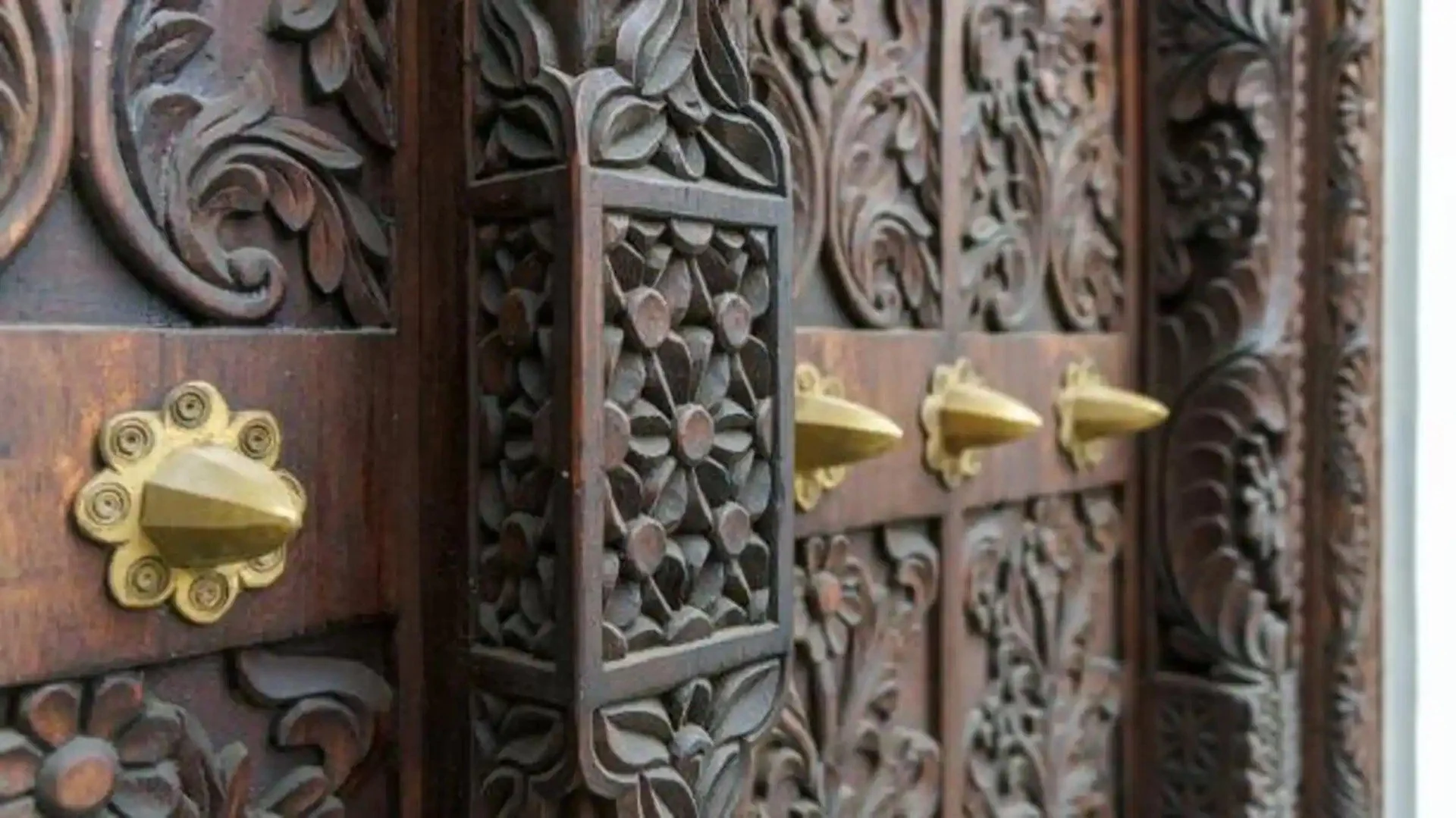
Instead, artisans focused on complex geometric patterns, floral motifs, and calligraphy. You will see repeating squares, circles, chains, rosettes, and lotus flowers. These patterns create a sense of infinity and harmony that feels both calming and powerful.
Hidden Meanings and Symbolism
Every detail on a Swahili door carries meaning:
Lotus flowers symbolize purity and rebirth.
Chains represent strength and unity.
Rosettes and circles stand for eternity and the cycle of life.
Arabic calligraphy often includes Quranic verses or blessings for protection and prosperity.
The central brass knobs (called "vita" or "piga") were not just decorative. In earlier times they helped strengthen the door against attacks. Today they remain a striking visual element.
Doors as Symbols of Status and Wealth
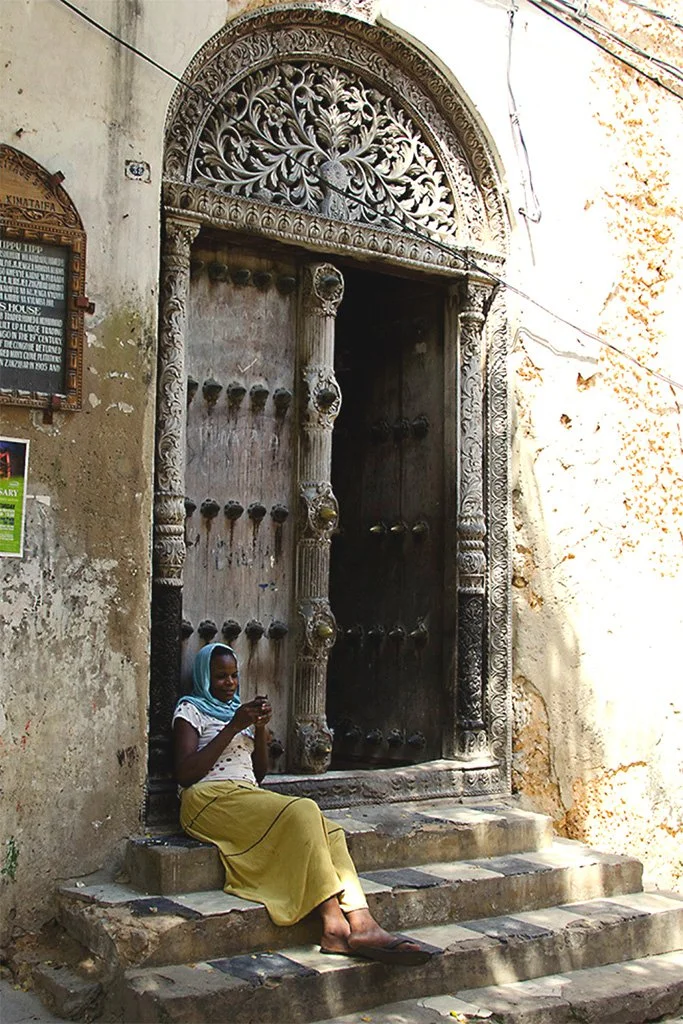
In Swahili society, your door said a lot about who you were. Wealthy merchants and important families competed to have the most impressive doors. Larger size, finer carving, and expensive brass fittings showed high social status.
A beautifully carved door announced: “This is a successful household.” Even today, many families take great pride in restoring or commissioning new Swahili-style doors for their homes.
Protection and Spiritual Beliefs
Beyond beauty and status, these doors were believed to offer spiritual protection. The intricate patterns and Quranic inscriptions were thought to keep evil spirits away and bring baraka (blessings) to the home.
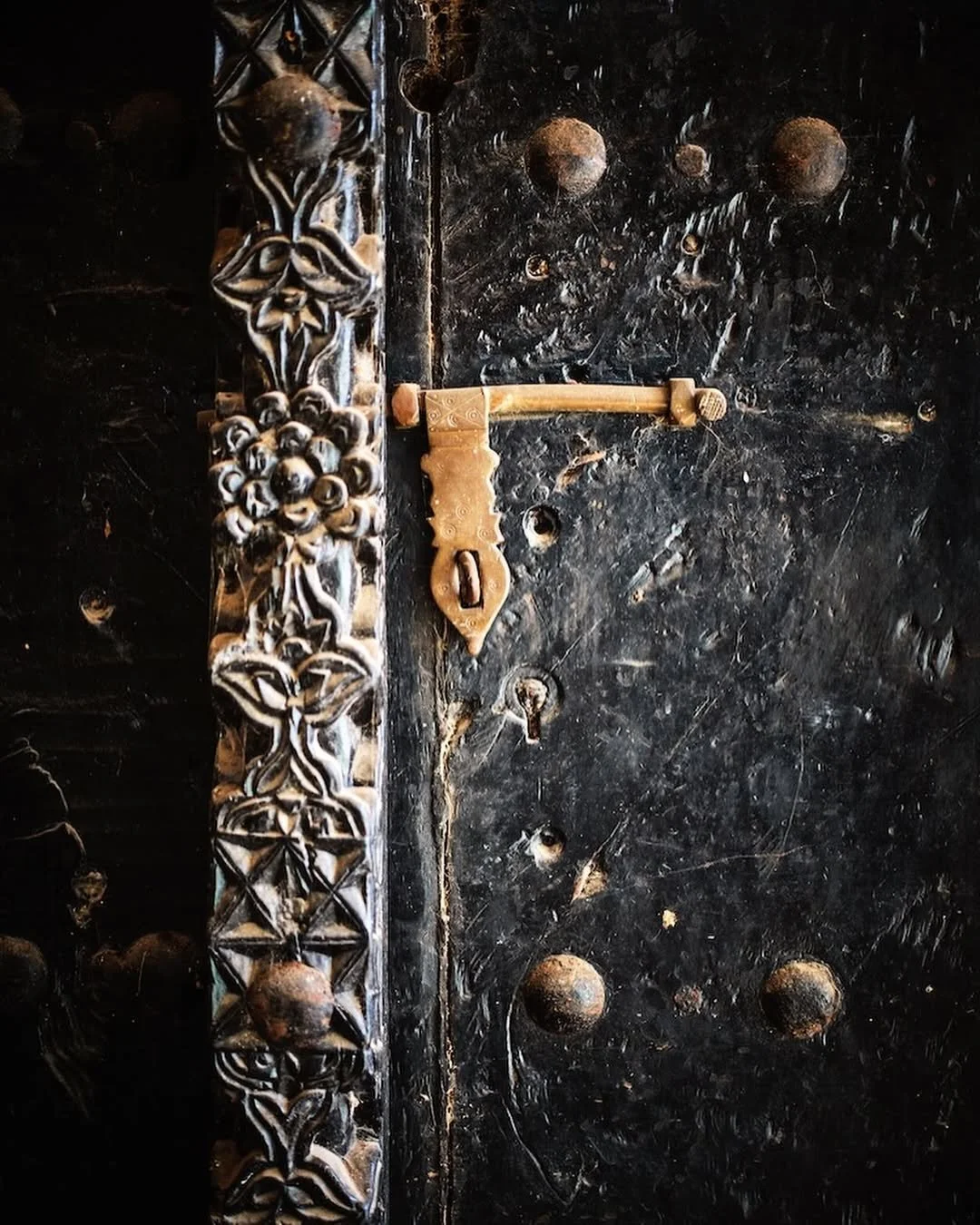
The heavy wooden construction, often made from durable mangrove or teak, also provided real physical security in a time when coastal towns faced threats from pirates and rival traders.
How Swahili Doors Are Made Today
Traditional craftsmanship is still alive. Skilled carpenters in Zanzibar and Lamu continue to make doors using hand tools and time-honored techniques.
Modern artisans often use:
Solid hardwood such as mvule or mahogany
Hand-carved geometric designs passed down through generations
Traditional brass studs and knockers
While some contemporary versions use machines for precision, the best doors are still largely handmade. Many young artisans are learning the trade to keep this important part of Swahili heritage alive.
Where to See the Most Beautiful Swahili Doors
If you ever visit the Swahili coast, make sure to explore:
Stone Town, Zanzibar (especially the narrow streets behind the Old Fort)
Lamu Old Town (a UNESCO World Heritage Site)
The historic areas of Mombasa Old Town
Many doors are still in daily use. Others are preserved in museums or sold in high-end shops to collectors and new homeowners.



FAQs About Swahili Doors
Why don’t Swahili doors have images of people or animals?
Islamic artistic traditions generally avoid depicting living beings. Artisans use geometric and floral patterns instead.
What do the brass knobs on Swahili doors mean?
They were originally added for strength and protection. Today they are mainly decorative and add character to the door.
What kind of wood is traditionally used?
Mangrove, teak, mvule, and other hardwoods that can withstand coastal weather and insects.
Are new Swahili doors still being made?
Yes. Skilled craftsmen in Zanzibar and Lamu continue to hand-carve doors using traditional methods.
Can I buy a real Swahili door?
Yes. Many workshops sell both antique restored doors and newly made ones, though authentic old doors are becoming rare and expensive.
Do Swahili doors only exist in Zanzibar?
No. You can find them in Lamu, Mombasa, Pemba, and other Swahili coastal towns, though Zanzibar has the highest concentration.
Swahili doors are far more than entrances. They are beautiful expressions of history, faith, status, and artistry. Every curve and pattern carries centuries of cultural wisdom and pride.
Next time you see a beautifully carved Swahili door, take a moment to appreciate it. You are looking at a true architectural love letter from the Swahili coast.
Want to go deeper into Swahili culture and language? NKENNE offers engaging lessons that connect language learning with rich cultural stories like this one. Start exploring today and discover more of what makes Swahili heritage so special. Karibu!