
Asking & Giving Basic Directions in Wolof: Fan nga jëm? and Everyday Navigation
By: Chimdindu Ken-Anaukwu
Getting lost in Dakar or a Wolof-speaking village is not scary. It becomes an invitation to connect. Locals enjoy helping, and starting with a simple "Fan nga jëm?" (Where are you going?) often turns directions into friendly conversation. This guide teaches core phrases for asking and giving directions, key place words like kër (house), marse (market), and ekool (school), plus practical tips to sound natural and respectful.
Why Directions Matter in Wolof Culture
In Senegal, asking for directions is not rushed. It forms part of teranga (hospitality). People often walk you partway or explain with landmarks such as mosques, baobab trees, or busy corners. Starting with a greeting shows respect, and a quick "Jërëjëf" (thank you) seals the exchange. Mastering these basics opens doors to real conversations.
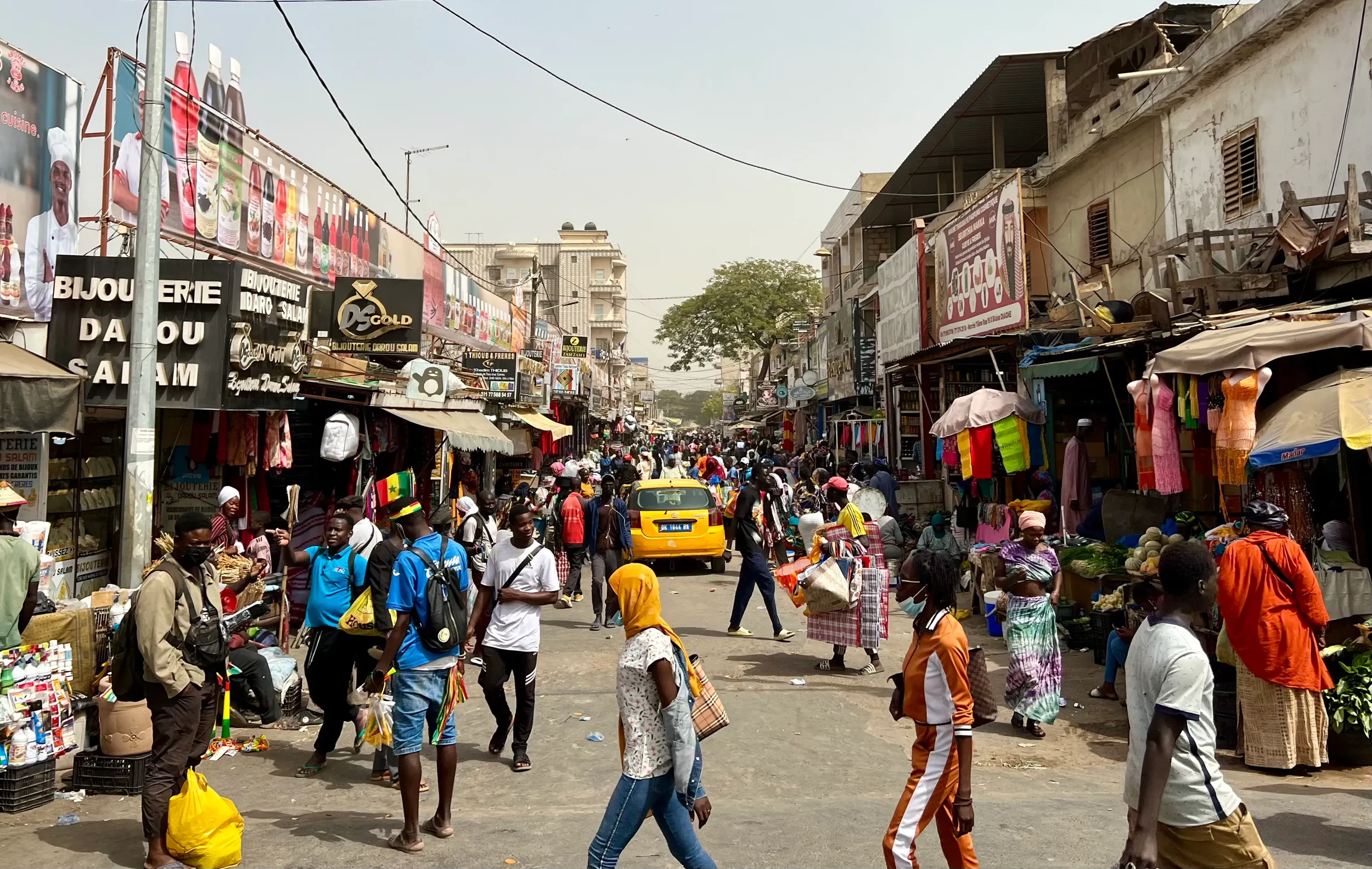
Busy Dakar streets show why clear directions help. Crowds, taxis, and markets make navigation lively.
This vibrant market scene captures the energy of marse (market), a common destination in Wolof directions.
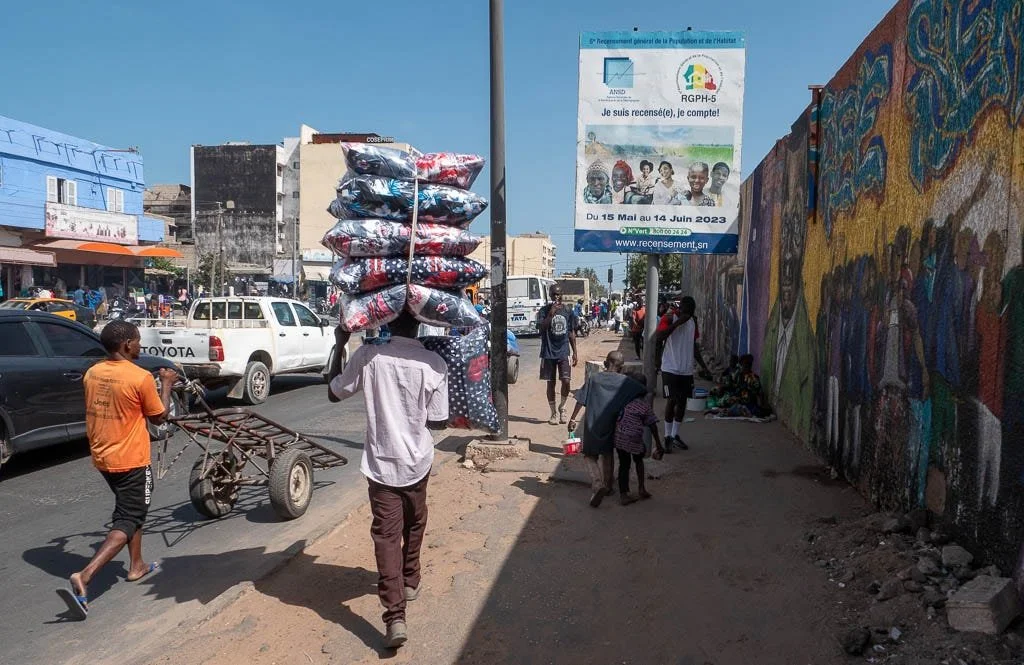
Another view of bustling Dakar streets. It is perfect for practicing "fan nga jëm?" with passersby.
Core Phrase: Fan nga jëm? (Where are you going?)
"Fan nga jëm?" (fahn ngah jem) is the classic opener. It literally means "Where are you going?" It is polite, common, and invites response.
Response examples: Maa ngi dem kër gi. (Mah ngi dem kair gee. I am going home.) Maa ngi dem marse bi. (Mah ngi dem mar-seh bee. I am going to the market.)
Use it casually with strangers or friends. It often leads to "Fan nga jëm?" coming back at you. Answer simply to keep the flow going.
Asking for Specific Places
Once greetings flow, ask directly:
Ana kër gi? (Ah-nah kair gee? Where is the house?) Ana marse bi? (Ah-nah mar-seh bee? Where is the market?) Ana ekool bi? (Ah-nah eh-kool bee? Where is the school?) Fan nga jëm ci marse? (Where are you going toward the market?) This is useful for route help.
Other useful asks: Ana wanaag wi? (Where is the toilet?) Handy in markets. Dama seet kër gi. (I am looking for the house.)
Giving Directions: Key Verbs and Phrases
Wolof directions use simple verbs and landmarks:
Dem (go) Dem ci ndeyjoor. (Go right.)
Dem ci cammooñ. (Go left.)
Jëm (head toward)
Jëm ci cammooñ. (Head left.)
Topp (follow)
Topp yoon wi. (Follow the road.)
Gën a jege (turn)
Gën a jege ci ndeyjoor. (Turn right.)
Fii rekk (right here)
Kër gi fii rekk la. (The house is right here.)
Topp naa la (I will follow you / come with me) Offer to guide someone.
More examples:
Nekk na ci kanam. (It is in front.)
Nekk na ci ginnaaw. (It is behind.)
Demal ci tool bi. (Go toward the field.)
Practice example: If someone says "Ana marse bi?" reply "Dem ci ndeyjoor, topp yoon wi, marse bi fii rekk la."
Common Places Vocabulary
Build your map with these words:
Kër (house/home)
Marse (market)
Ekool (school)
Tool (field/farm)
Moske (mosque)
Tabax (building)
Yoon (road/path)
Ndex (street)
Ndakaaru (Dakar) Capital reference.
Coastal fish market in M'bour. A great spot to ask "Ana marse bi?" and get directions.
Traditional market crowds show community help in giving directions.
Practical Tips and Etiquette
Start with a greeting: "Salaam aleekum" or "Na nga def?" Smile and use hand gestures. Pointing helps. If lost, say "Dama lost" (mix English) or "Dama seet…" Thank often: "Jërëjëf torop!" (Big thanks!) In rural areas, directions use trees or mosques as landmarks.
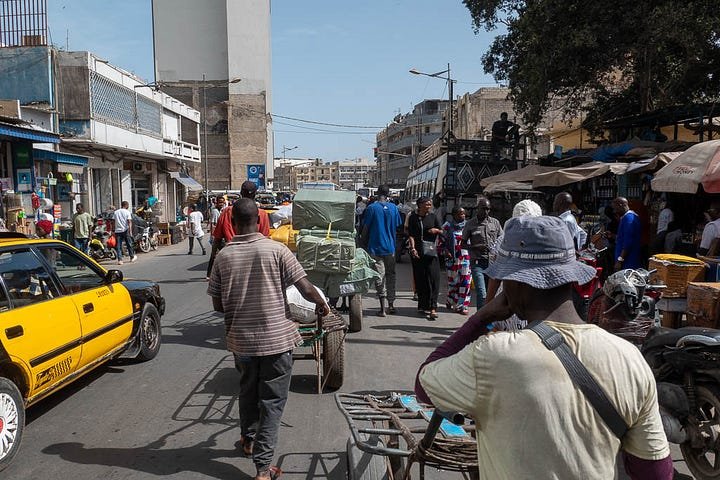
These busy streets highlight how Wolof speakers guide visitors warmly.
FAQ: Questions About Wolof Directions
How do you say "Where are you going?" in Wolof?
"Fan nga jëm?" A friendly opener used everywhere.
What does "kër" mean in Wolof directions?
"Kër" means house or home. It is very common in asking "Ana kër gi?" (Where is the house?)
How do you say "go right" or "turn left"?
"Dem ci ndeyjoor" (go right), "Dem ci cammooñ" (go left), or "Gën a jege ci cammooñ" (turn left).
Is "marse" the word for market?
Yes. "Marse bi" (the market). Ask "Ana marse bi?" when shopping.
How polite is asking directions in Wolof?
Very polite. People enjoy helping. Add "jërëjëf" (thank you) and a smile.
What if I mix up words?
No problem. Locals often switch to French or gestures. Effort earns goodwill.
Wrapping Up: Navigate Like a Local
Basic directions in Wolof, starting with "Fan nga jëm?" and knowing places like kër, marse, and ekool, turn navigation into connection. These phrases carry Senegal's welcoming spirit and make every interaction warmer.
Practice them on your next walk, and you will feel the culture come alive. NKENNE's Wolof courses build on this with audio drills and real dialogues. Start speaking confidently today.